
Loading, please wait...
LOT 0570
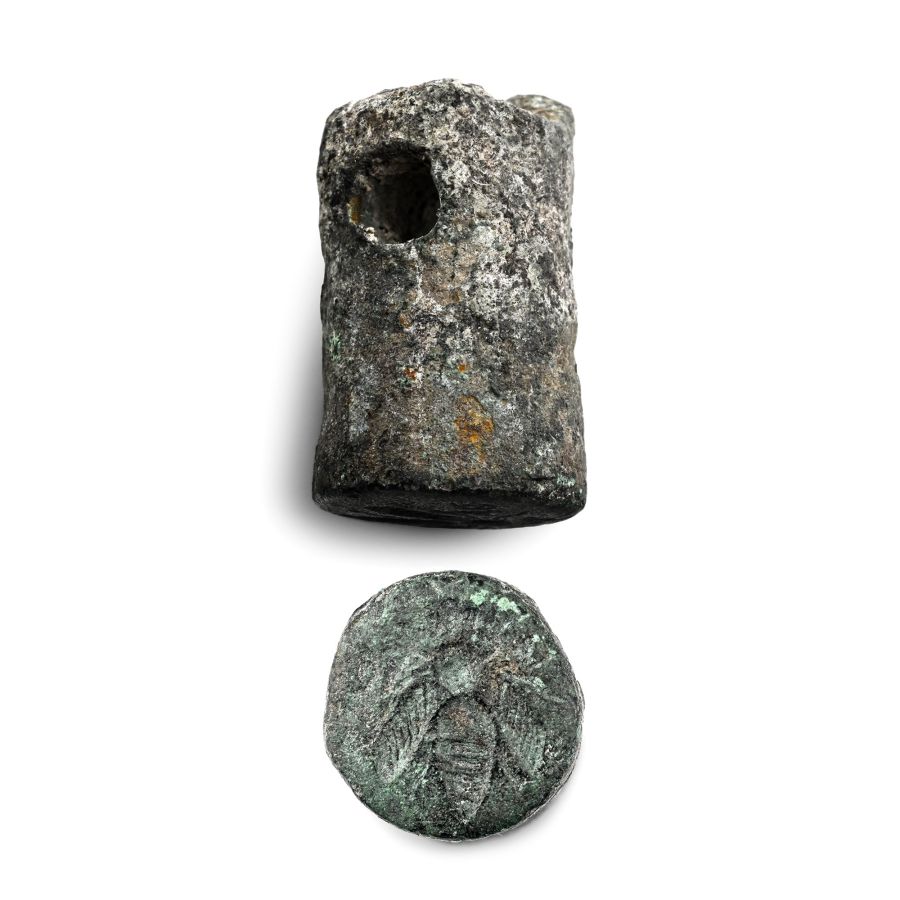
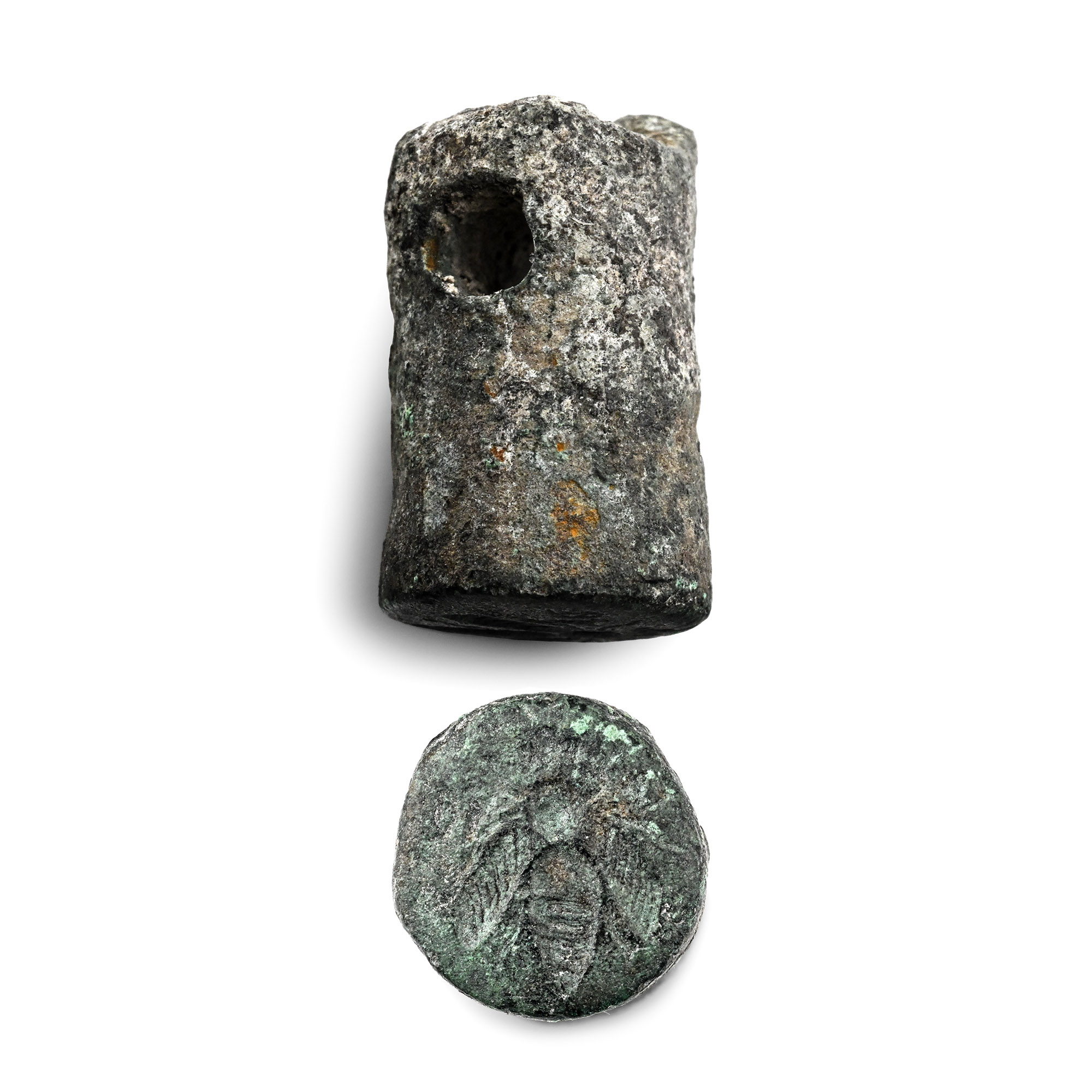
Greek Die with Ephesus Bee
2ND-1ST CENTURY B.C.
3/4 in. (13.71 grams, 19 mm).
A copper-lead alloy columnar block with broad piercing, a transverse channel to the upper face; incuse bee image with enigmatic text. [No Reserve]
ProvenanceFrom the collection of a gentleman, acquired on the London art market in the 1990s.
CONDITIONTimeLine Auctions follows a vetting process to ensure the authenticity and legality of all items, reinforcing our commitment to integrity and responsible trading. Each antiquity, antique, and coin lot undergoes thorough examination by a vetting committee of at least ten external specialists, professional trade association members, scientists, and archaeologists: Our Vetting Process
AUCTIONS:
TimeLine is a leading auction house specialising in antiquities, ancient art, collectables, natural history, coins, medals, and books. Our auctions offer museums, collectors, historians, and enthusiasts the opportunity to acquire unique and historically significant pieces.
-
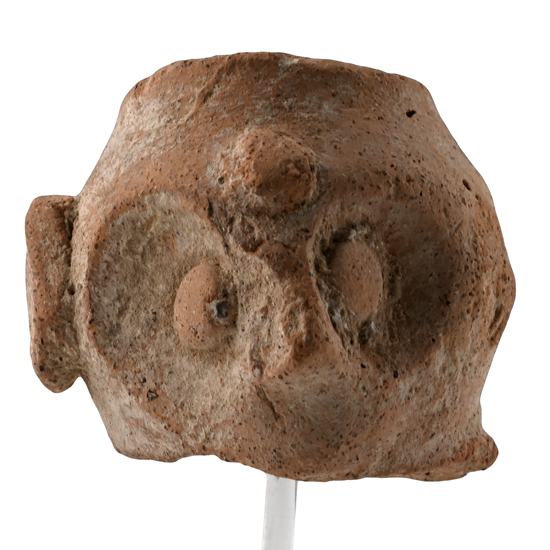
Greek Terracotta Votive Head
Mediterranean, circa 700 B.C.Sold for (Inc. bp): £65
Bulbous head with stylised owl-like facial features, large applied pupils and ear; mounted on a custom-made display stand. 96 grams total, 46 mm (65 mm high including stand)
Acquired from Vanessa Purcell & Company, Manchester, UK, in 1993. From the collection of Mr & Mrs J.G.W. Lee, late Herefordshire collectors, their collection having been established from the 1990s. Accompanied by an original sales receipt. -
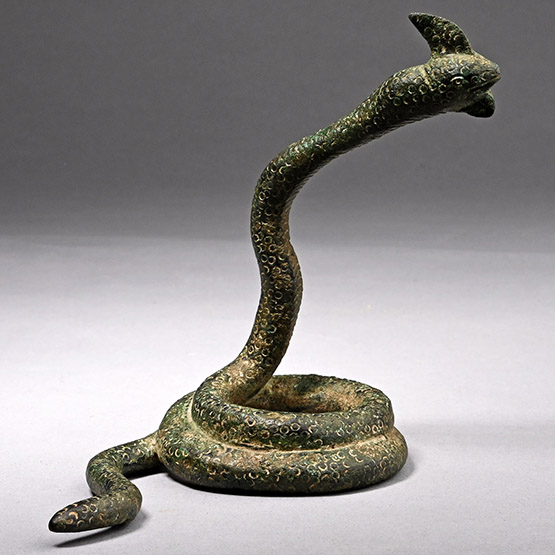
Archaic Greek Bronze Statuette of a Coiled and Rearing Snake
Archaic, 6th-5th century B.C.Estimate: £5,000 - 7,000 (‡+bp*)
Opening Bid: £2,500
Modelled in the round with coiled body and rearing head, barbed fin to the forehead, punched annulet texturing on the body. 312 grams, 11 cm
Private collection, Neuchâtel, Switzerland, assembled in the 1980s. Acquired in 1995 by a European private collector. Private collection, since the late 1990s. This lot has been checked against the Interpol Database of stolen works of art and is accompanied by a search certificate number no.12856-241689.
Snakes were important symbols in ancient Greek culture and were often linked with protection, healing, and renewal. Because they shed their skin, they were seen as a sign of rebirth and new life. They were also connected with gods and spirits of the earth and underworld, and in some cases were thought to protect the home or sacred places. In Greek art, a snake could therefore carry both religious and symbolic meaning. -
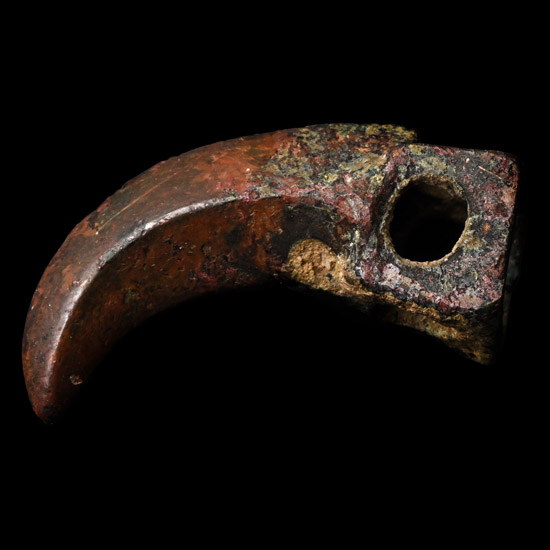
Scythian Bronze Eagle's Talon Pendant
Circa 6th century B.C.Sold for (Inc. bp): £156
Curved square-section hook with cuboid finial pierced on all four sides and to the top. 12.45 grams, 36.19 mm
From the private collection of a European gentleman (1942-2024), formed since the 1970s.
