
Loading, please wait...
LOT 0076
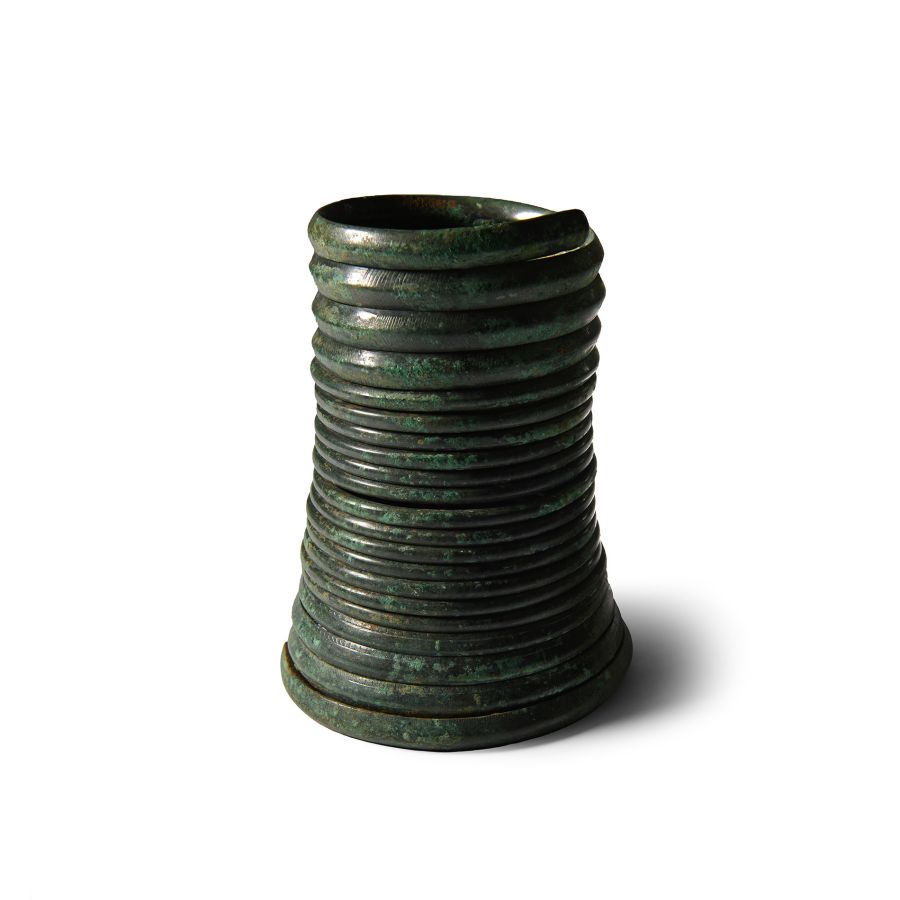
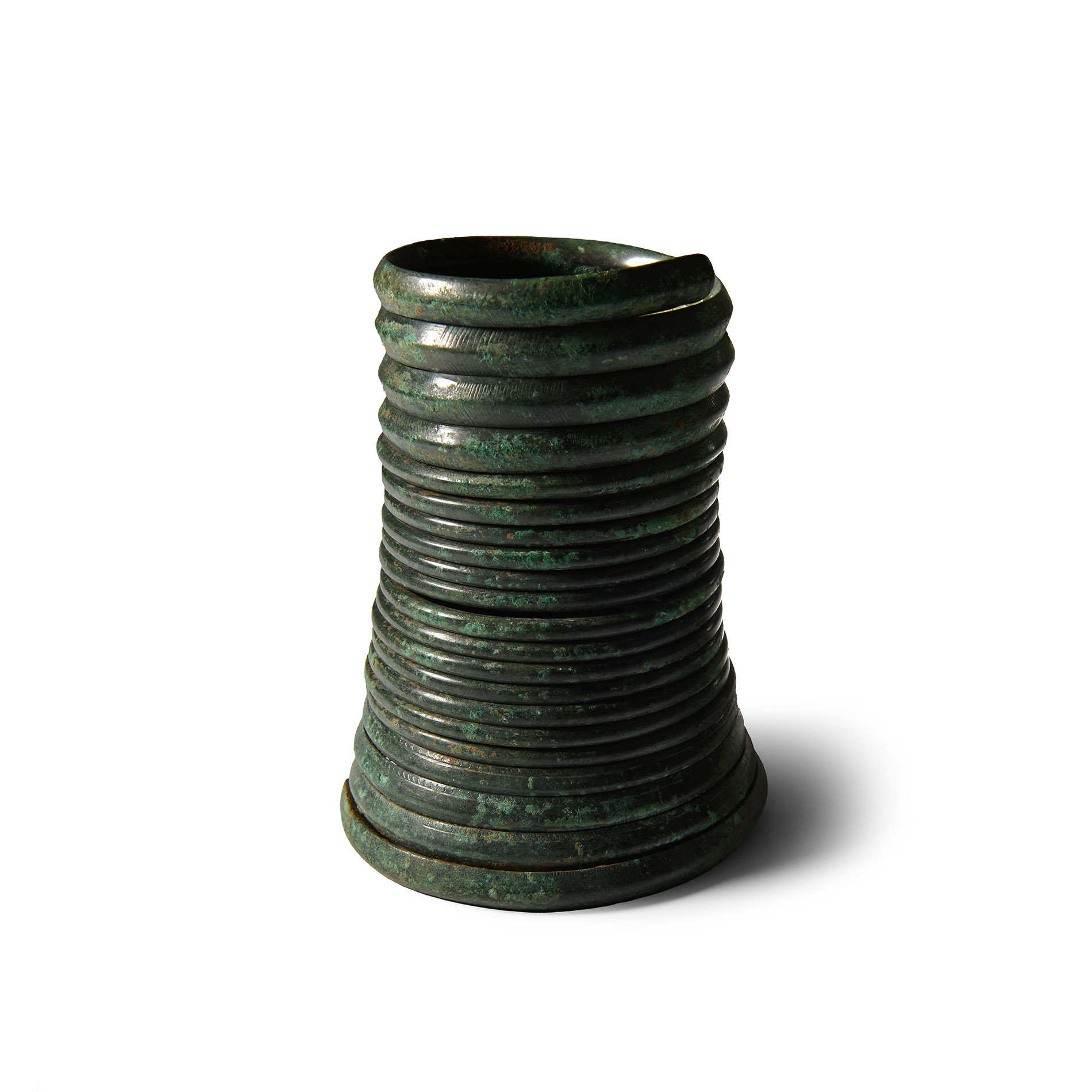
Greek Decorated Bronze Spiral Bracelet
8TH-7TH CENTURY B.C.
4 1/2 in. (685 grams, 11.5 cm).
Formed as a spiral D-section rod with waisted profile, hatched and notched ornament to the edges.
ProvenancePrivate Swiss collection, acquired 2002.
LiteratureCf. similar item in the British Museum, London, under accession number 1856,1226.722.
CONDITIONTimeLine Auctions follows a vetting process to ensure the authenticity and legality of all items, reinforcing our commitment to integrity and responsible trading. Each antiquity, antique, and coin lot undergoes thorough examination by a vetting committee of at least ten external specialists, professional trade association members, scientists, and archaeologists: Our Vetting Process
AUCTIONS:
TimeLine is a leading auction house specialising in antiquities, ancient art, collectables, natural history, coins, medals, and books. Our auctions offer museums, collectors, historians, and enthusiasts the opportunity to acquire unique and historically significant pieces.
-
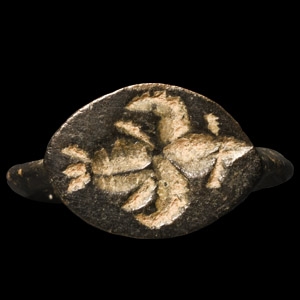
Hellenistic Bronze Ring with Flying Bird
Circa 4th-2nd century B.C.Sold for (Inc. bp): £52
With carinated hoop, scaphoid bezel, intaglio bird in flight. 4.71 grams, 24.38 mm overall, 18.80 mm internal diameter (approximate size British R 1/2, USA 8 3/4, Europe 19.38, Japan 18)
Ex old English collection. London art market, pre 2000. Property of a London, UK, gentleman. -
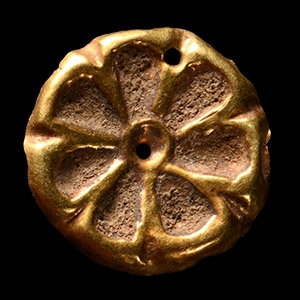
Greek Gold Floral Mount
Circa 4th-2nd century B.C.Sold for (Inc. bp): £104
The repoussé flower with seven petals and pierced through the pistil and once between the petals. 0.36 grams, 14 mm wide
Property of a UK gentleman, acquired 20 November 1981. Property of an East Sussex, UK, gentleman. -
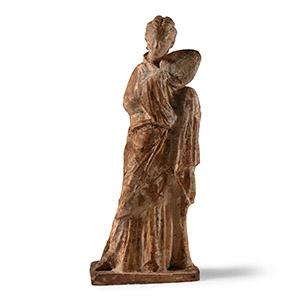
Greek Tanagra Female Figure with Fan
4th-3rd century B.C.Sold for (Inc. bp): £1,690
Modelled robed with a palmette fan; rectangular slot to reverse, hollow underside; with traces of white engobe and polychromy; recomposed from fragments. 189 grams, 16 cm high
Private collection Adry de Carbuccia, Sainte-Maxime, France, acquired prior to 1975. with Eurl Eve, Paris, 11 December 2013, lot 30. Accompanied by a copy of an Art Loss Register certificate number S00085753, dated 26 March 2014. Accompanied by a copy of a French cultural passport no.1537836. Accompanied by a copy of an original thermoluminescence analysis report no.QED1340/FG-0404 from QED Laboratoire. Accompanied by a copy of the relevant Eurl Eve catalogue pages.
