
Loading, please wait...
LOT 0089
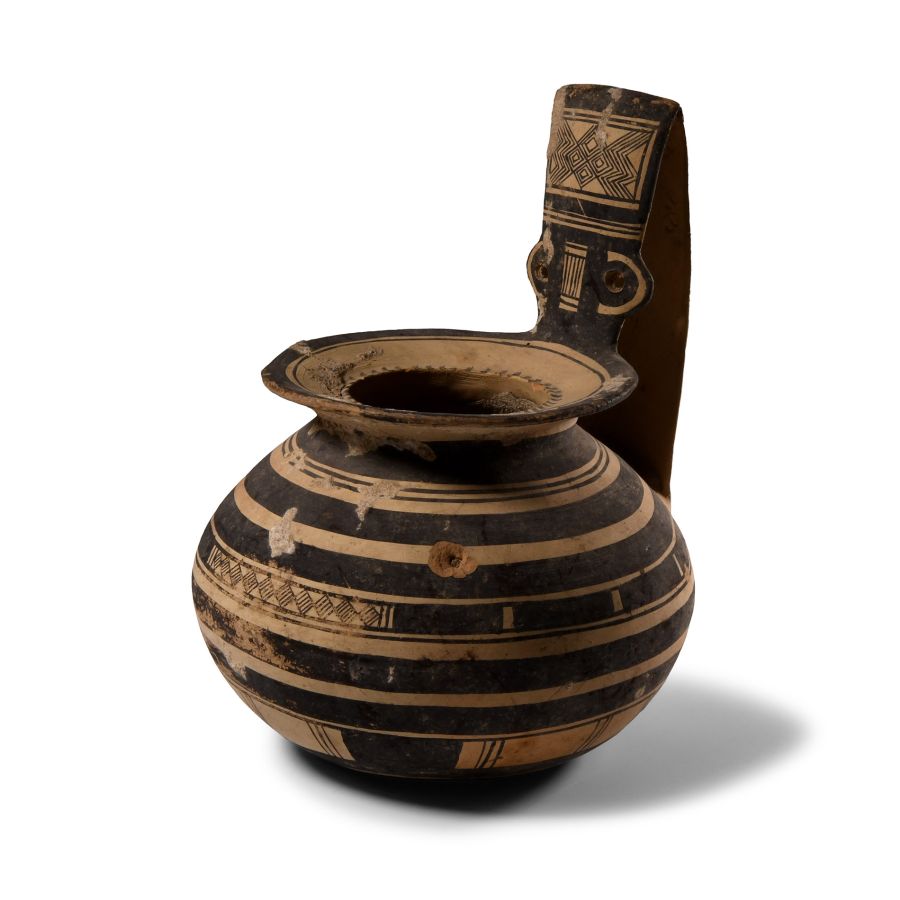
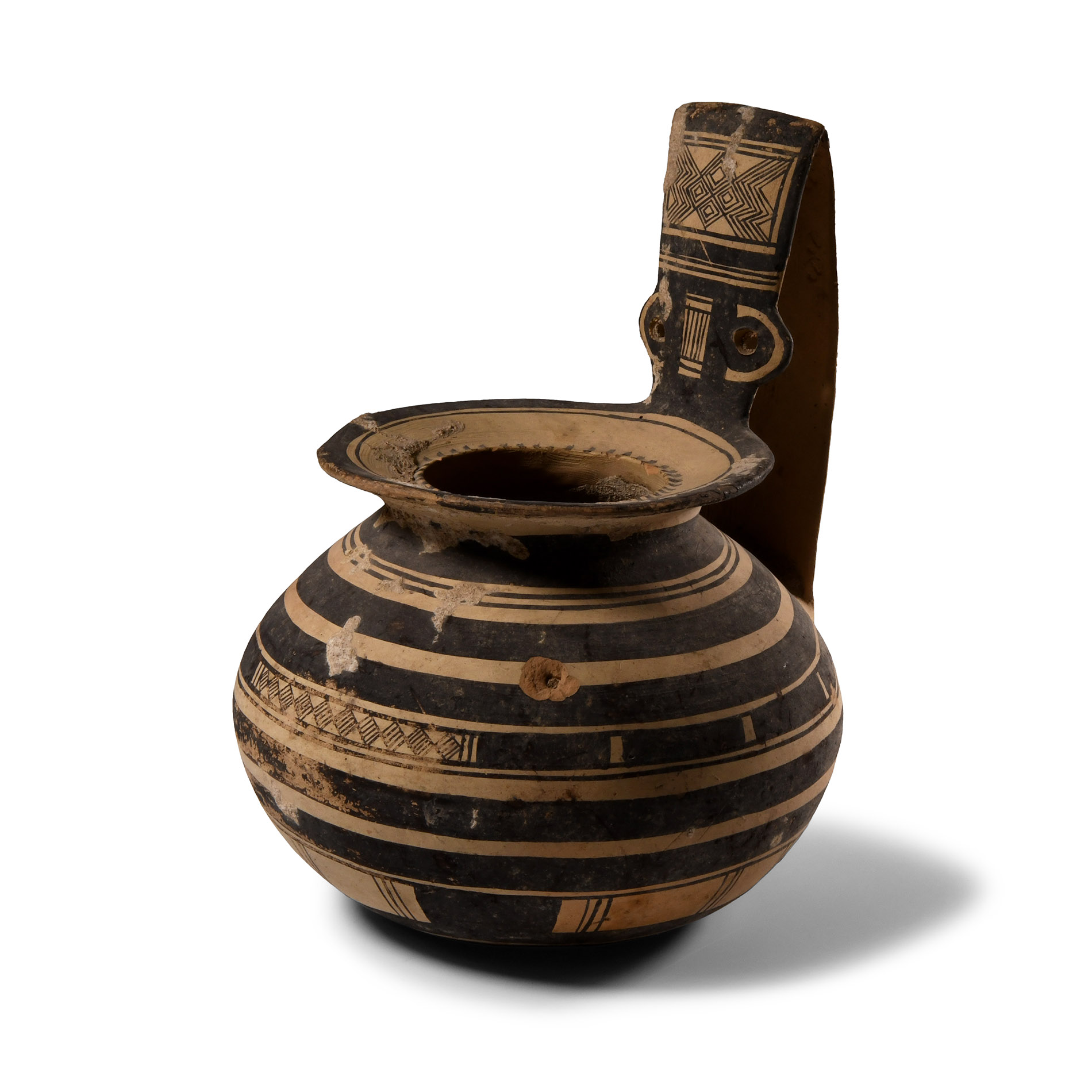
Greek Daunian Painted Ceramic Vessel
7TH-5TH CENTURY B.C.
8 3/4 in. (888 grams, 22.2 cm high).
With squat bulbous body, short neck, slightly dished flared rim and high strap handle to the rear with pierced lobes; bands of geometric painted ornament.
ProvenanceFrom the Steel family collection, 1950s-late 1990s.
LiteratureCf. similar in the collection of the British Museum under accession no.1912,1220.22, with polychrome decoration.
CONDITIONTimeLine Auctions follows a vetting process to ensure the authenticity and legality of all items, reinforcing our commitment to integrity and responsible trading. Each antiquity, antique, and coin lot undergoes thorough examination by a vetting committee of at least ten external specialists, professional trade association members, scientists, and archaeologists: Our Vetting Process
AUCTIONS:
TimeLine is a leading auction house specialising in antiquities, ancient art, collectables, natural history, coins, medals, and books. Our auctions offer museums, collectors, historians, and enthusiasts the opportunity to acquire unique and historically significant pieces.
-
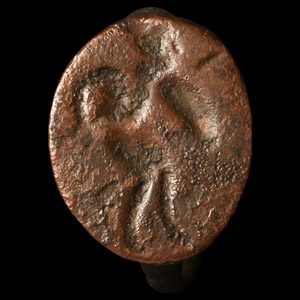
Hellenistic Bronze Ring with Hoplite
Circa 2nd-1st century B.C.Sold for (Inc. bp): £78
Ellipsoid bezel with low-relief image of a warrior with pilos helmet, shield and xiphos short-sword. 6.93 grams, 22.90 mm overall, 20.17 mm internal diameter (approximate size British Q, USA 8, Europe 17.46, Japan 16)
Ex old English collection. London art market, pre 2000. Property of a London, UK, gentleman. -
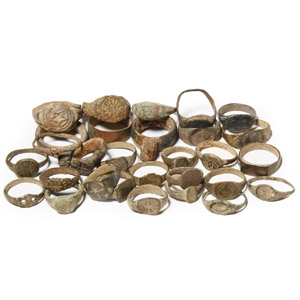
Hellenistic and Later Bronze Ring Group
Circa 2nd century B.C.-20th century A.D.Sold for (Inc. bp): £117
Comprising mainly examples with bezels, most with incised decoration including star, geometric and vegetal motifs. 74 grams total,16-29 mm
Acquired on the German art market before 2000. Property of a Surrey, UK, collector. -
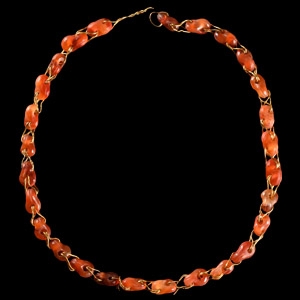
Greek Gold and Carnelian Necklace
1st century B.C.-1st century A.D.Estimate: £2,000 - 3,000 (‡+bp*)
Opening Bid: £1,000
A section of a necklace of carnelian drop-shaped beads, each pierced in two planes and linked loop-in-loop with thin twisted gold wires, possibly later. 8.16 grams, 26 cm long
The Gans collection, Hebling Dec, Berlin, 1929. with Christie's, New York, 8 December 1999, lot 51. Accompanied by a copy of the relevant Christie's catalogue pages. This lot has been checked against the Interpol Database of stolen works of art and is accompanied by search certificate no.11608-198969.
