
Loading, please wait...
LOT 0565
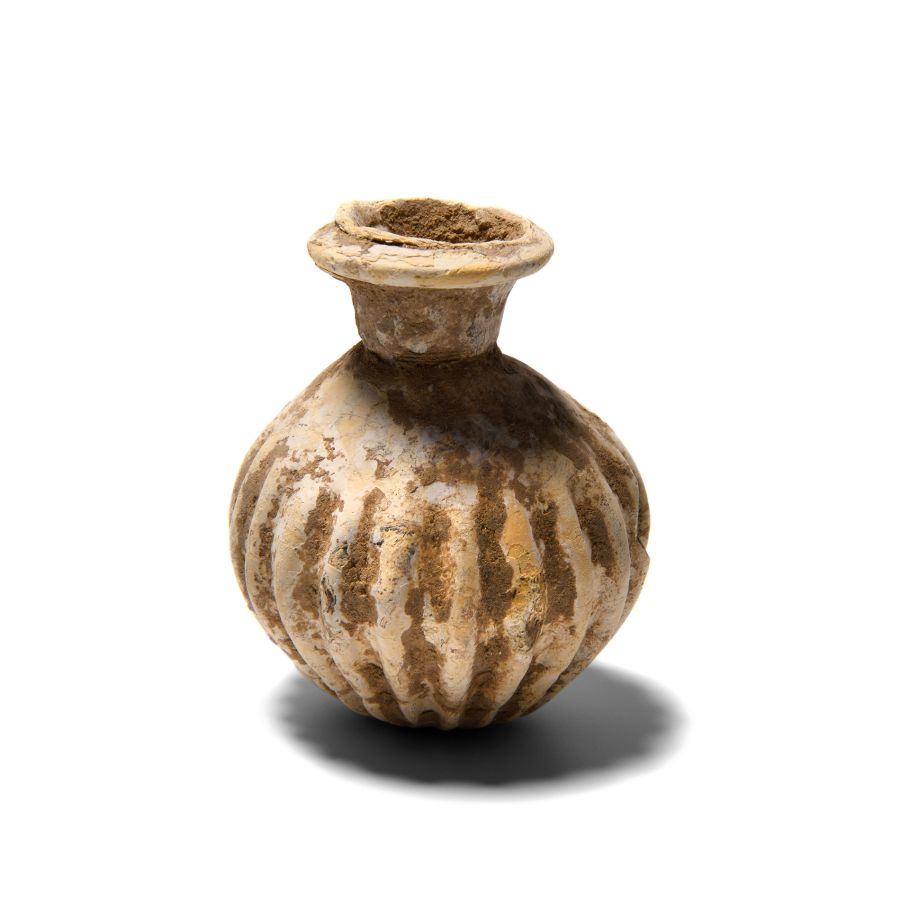
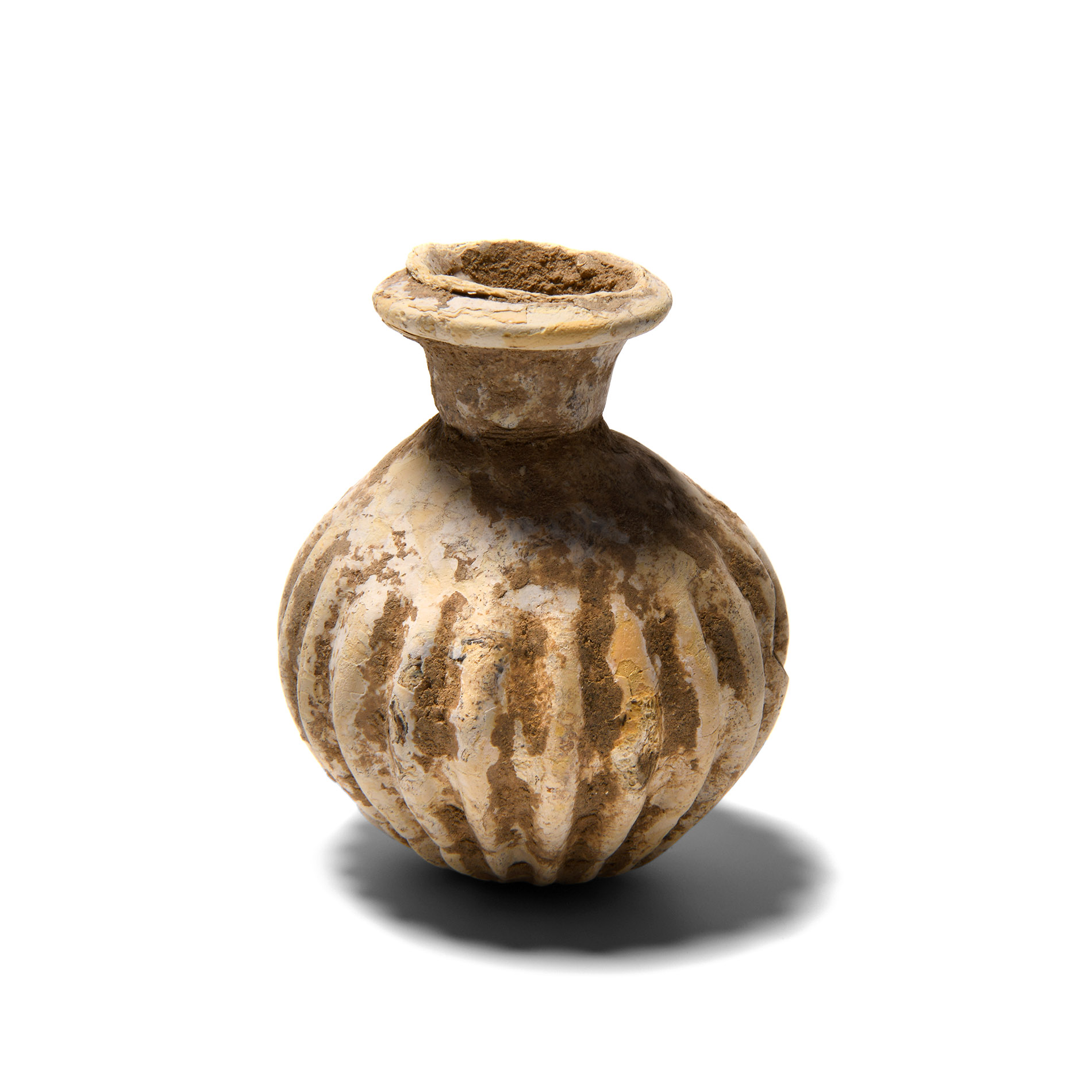
Greek Cream Glass Ribbed Bottle
LATE 1ST MILLENNIUM B.C.
2 7/8 in. (76 grams, 73 mm high).
An opaque cream-coloured glass bottle with vertical ribbing around the globular body, trumpet-style neck and mouth with rolled rim.
ProvenanceAcquired early 1990s.
Ex private American collection; thence by descent.
Private collection since 1998.
TimeLine Auctions follows a vetting process to ensure the authenticity and legality of all items, reinforcing our commitment to integrity and responsible trading. Each antiquity, antique, and coin lot undergoes thorough examination by a vetting committee of at least ten external specialists, professional trade association members, scientists, and archaeologists: Our Vetting Process
AUCTIONS:
TimeLine is a leading auction house specialising in antiquities, ancient art, collectables, natural history, coins, medals, and books. Our auctions offer museums, collectors, historians, and enthusiasts the opportunity to acquire unique and historically significant pieces.
LOT 0565
Greek Cream Glass Ribbed Bottle
Estimate £200 - 300€230 - 350 (for guidance only)$270 - 410 (for guidance only)
-
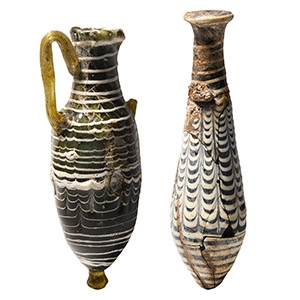
Greek Festooned Glass Vessel Group
2nd-1st century B.C. and laterEstimate: £300 - 400 (‡+bp*)
Opening Bid: £150
A pair of glass vessels: an opaque blue alabastron with white spiralling trails to base and neck, marvering between; a green-amber coloured amphoriskos decorated with white trails, knop foot and remains of one applied handle; both fragmentary. 213 grams total, 13.6-14 cm high
Acquired early 1990s. Ex private American collection; thence by descent. Private collection since 1998. -
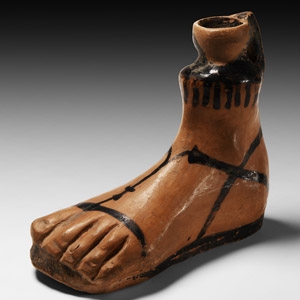
Greek Terracotta Foot-Shaped Aryballos
6th century B.C.Sold for (Inc. bp): £2,210
A ceramic vessel shaped as a human foot with sandal; cup-shaped mouth above the ankle with strap to the rear, painted strap detailing; restored. 118 grams, 10.8 cm
Ex Léon Rodrigues-Ely (1924-1973), Marseille, France. with Christie's, Paris, Collection of Léon Rodrigues-Ely-Joseph Soustiel et à Divers, 6 May 2015, lot 32. Accompanied by a copy of a French cultural passport no.163295. -
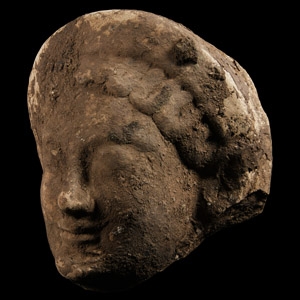
Greek Terracotta Protome
6th century B.C.Sold for (Inc. bp): £338
A terracotta protome modelled as a female head with semi-naturalistic facial features and dressed hair beneath headwear; concave reverse. 215 grams, 90 mm high
Acquired early 1990s. Ex private American collection; thence by descent. Private Swiss collection since 1998.
