
Loading, please wait...
LOT 0487
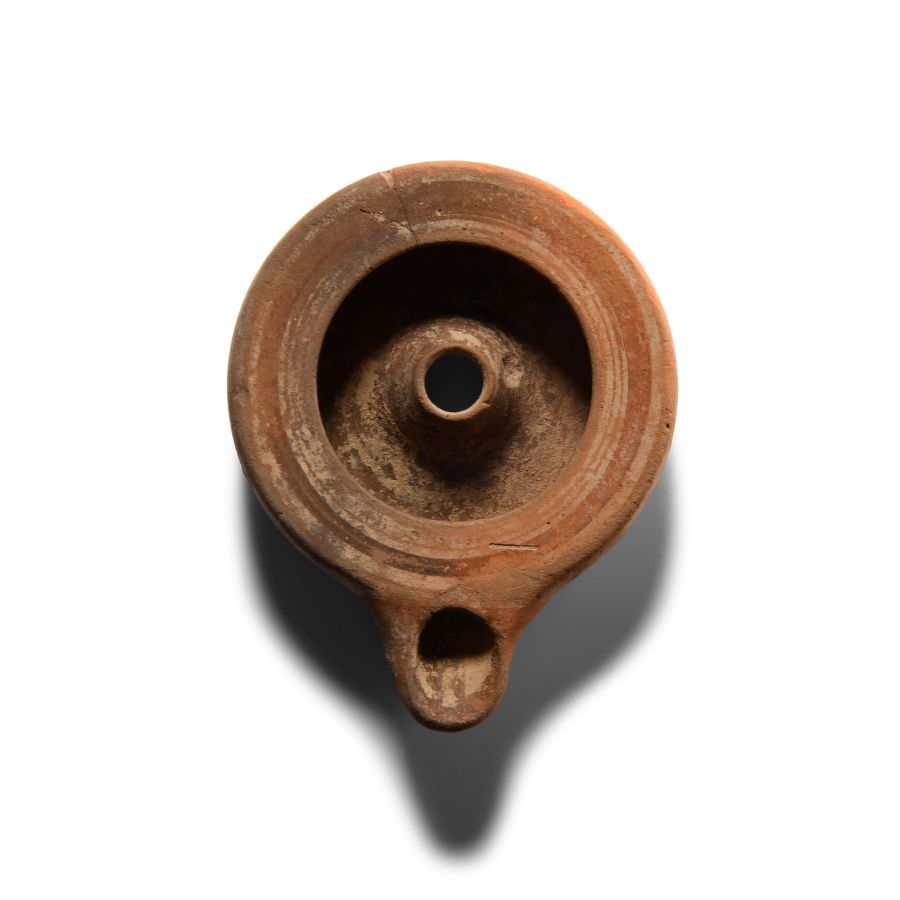
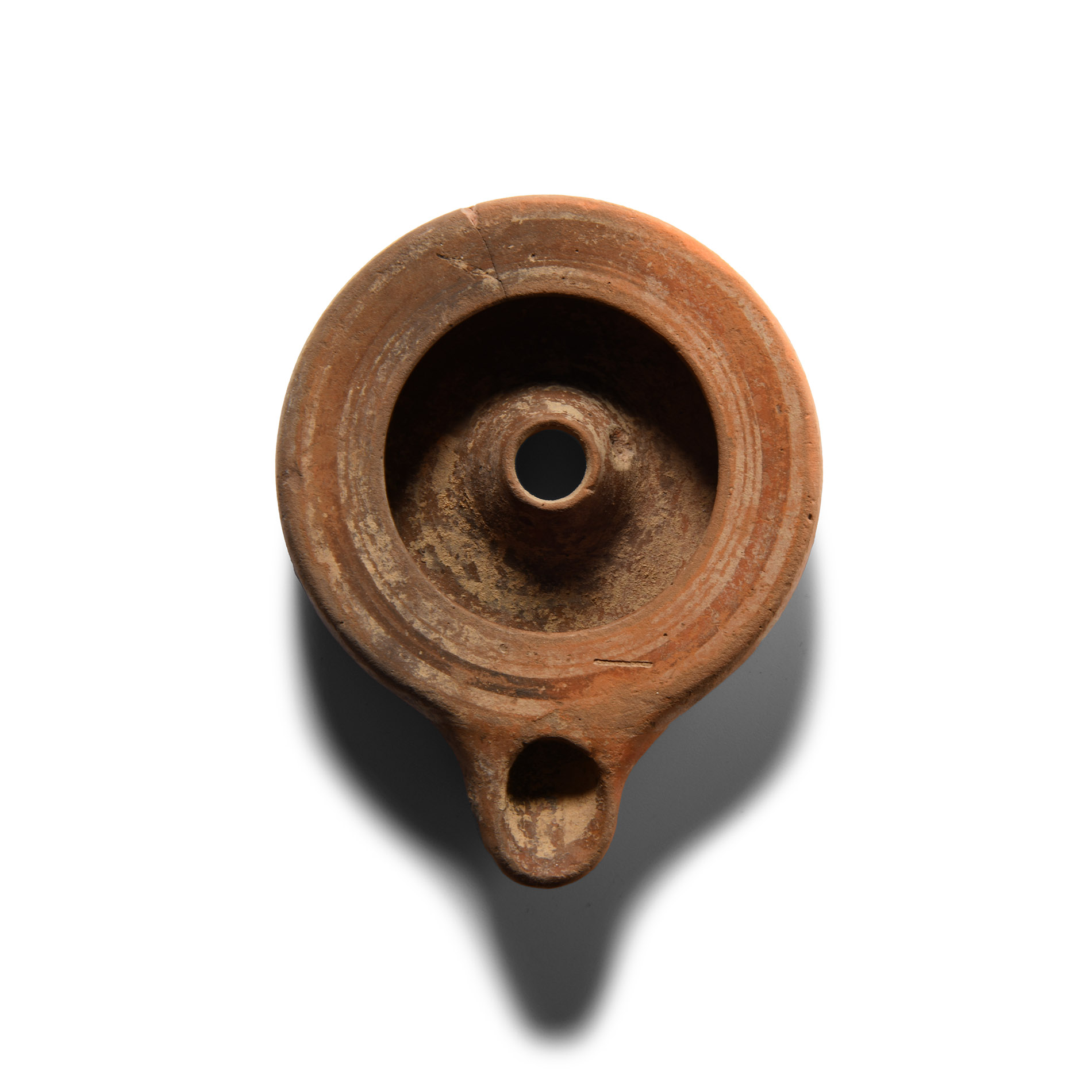
Greek Corinthian Terracotta Oil Lamp
CIRCA 5TH-3RD CENTURY B.C.
4 1/4 in. (113 grams, 10.7 cm wide).
With short nozzle, open reservoir with central cone open beneath; orange and brown pigment.
ProvenanceAcquired before 1990s/early 2000s.
From the family collection of Jack Lyttle (1944-2023), Kilmacolm, Scotland; thence by descent to his granddaughter.
Property of an East Sussex, UK, gentleman.
TimeLine Auctions follows a vetting process to ensure the authenticity and legality of all items, reinforcing our commitment to integrity and responsible trading. Each antiquity, antique, and coin lot undergoes thorough examination by a vetting committee of at least ten external specialists, professional trade association members, scientists, and archaeologists: Our Vetting Process
AUCTIONS:
TimeLine is a leading auction house specialising in antiquities, ancient art, collectables, natural history, coins, medals, and books. Our auctions offer museums, collectors, historians, and enthusiasts the opportunity to acquire unique and historically significant pieces.
-
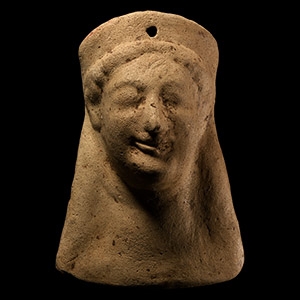
Greek Terracotta Protome Mask
Late 6th-early 5th century B.C.Sold for (Inc. bp): £156
Modelled as a female head with rounded oval face, slightly bulging eyes and pronounced chin, indistinct smiling mouth with thin lips, outline of ears; low straight polos with fastening hole. 142 grams, 13 cm
Acquired 1970s-1996. Property of a North American collector. London collection, 2016.
The figure belongs to a common type known from mainland Greece and the islands. The head clearly shows the so-called 'Archaic smile' visible on the dedicatory protomes of the same typology. They were terracotta votive offerings attached with a nail to the shrine of a goddess for ex-voto or to receive the grace of the represented goddess (Demeter?). -
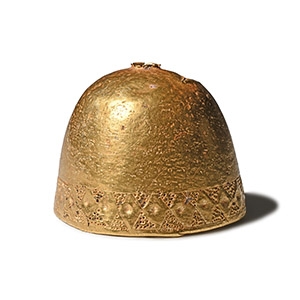
Scythian Decorated Gold Bell
1st millennium B.C.Sold for (Inc. bp): £780
Domed with a rolled rim and vent at the apex; decorative band above the rim with reserved lozenges on a pounced field each with an impressed dimple to the centre; cracked to one side. 19.47 grams, 48 mm
Cracked
Acquired early 1990s. Ex private American collection; thence by descent. Private Swiss collection since 1998. -
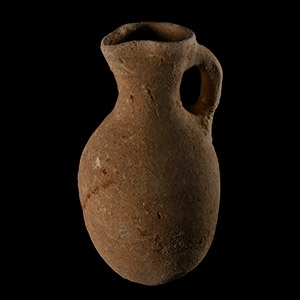
Eastern Mediterranean Terracotta Jug
Iron Age, circa 700-500 B.C.Sold for (Inc. bp): £72
With tapering rounded bottom, deep shoulder, tall neck pinched to a triangular shape spout, strap handle to the rear. 253 grams, 14.7 cm high
Acquired 1980-2015. Ex Abelita family collection.
