
Loading, please wait...
LOT 0485
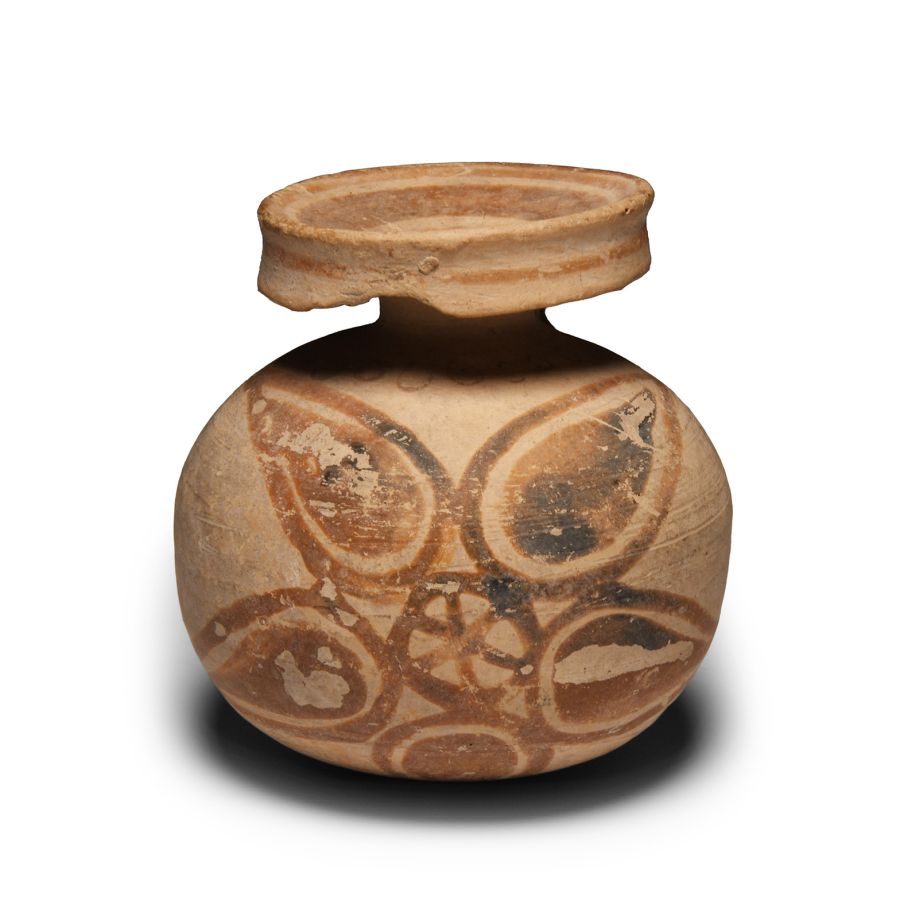
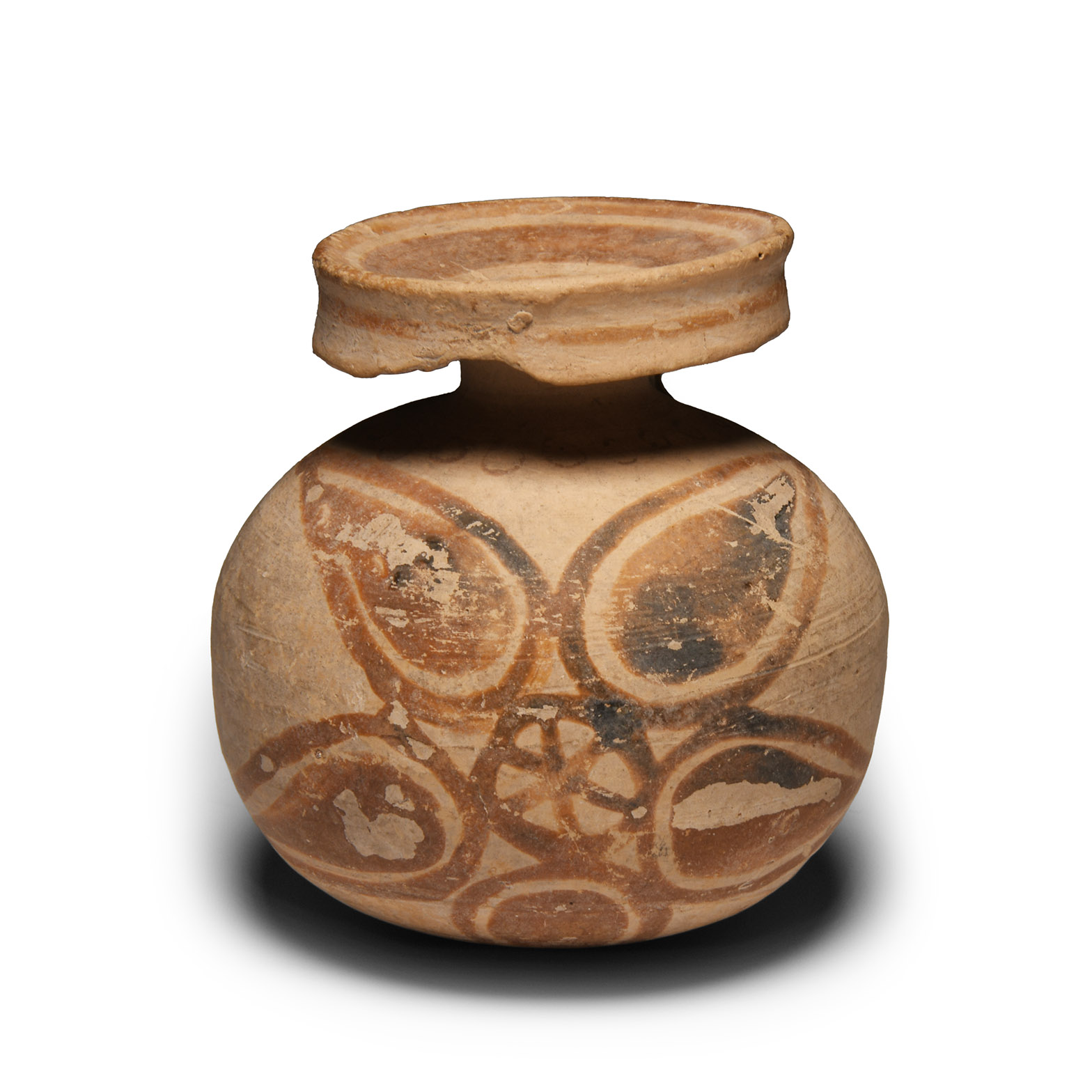
Greek Corinthian Terracotta Aryballos
CIRCA 6TH CENTURY B.C.
3 in. (96 grams, 77 mm high).
Bulbous-bodied with a short neck, deep rim and strap handle; polychrome roundels to the mouth, orange line to the rim, dots around the shoulder and a five-petalled lotus flower blossoming on the main body, a five-rayed wheel at the centre of the flower and on the opposite side.
ProvenanceEx P. A., Hertfordshire, UK, specialist collection of Greek art, 1980-1990s.
LiteratureCf. Amyx, D.A., Corinthian Vase Painting of the Archaic Period, Berkeley, London, New York, 1988, pp.237-238, pl.105 nos.3a, 3b and 4, pl.106 no.1a-c, for the shape; cf. aryballos with similar decoration in the Metropolitan Museum of Art, New York, Rogers Fund, 1941 (41.162.165).
FootnotesCorinthian aryballoi with floral quatrefoils or lotus flowers were produced in great numbers throughout the 6th century B.C. and probably into the 5th, and were also widely exported. The simple but distinctive decoration suggests that these vases may have had a specific contents, possibly used as an oil flask.
CONDITIONTimeLine Auctions follows a vetting process to ensure the authenticity and legality of all items, reinforcing our commitment to integrity and responsible trading. Each antiquity, antique, and coin lot undergoes thorough examination by a vetting committee of at least ten external specialists, professional trade association members, scientists, and archaeologists: Our Vetting Process
AUCTIONS:
TimeLine is a leading auction house specialising in antiquities, ancient art, collectables, natural history, coins, medals, and books. Our auctions offer museums, collectors, historians, and enthusiasts the opportunity to acquire unique and historically significant pieces.
-
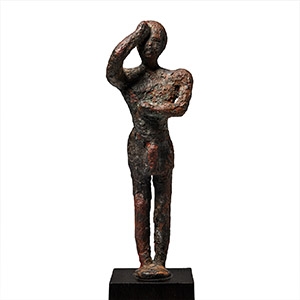
Minoan Bronze Votary Statue
Circa 3000–1100 B.C.Sold for (Inc. bp): £1,820
The figure standing on a small discoid base, wearing a short kilt, with broad chest and slender waist; the left arm bent across the chest and the right arm raised to the forehead in an act of worship; mounted on a custom-made stand. 447 grams total, 22.4 cm high including stand
British private collection, acquired by 2000. Accompanied by a copy of an old photograph showing this item on display in a display cabinet within the previous collectors home. This lot has been checked against the Interpol Database of stolen works of art and is accompanied by search certificate no.11950-210856. -
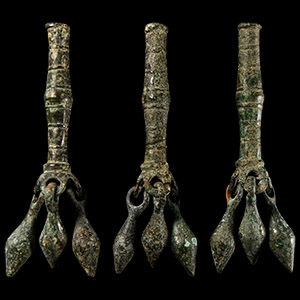
Etruscan Bronze Pendant Group
Circa 8th century B.C.Sold for (Inc. bp): £351
Comprising three pendant clusters, each a tube with balustered middle section and ribs, radiating loops at the lower end with suspended biconvex dangles. 90 grams total, 78 mm each
Acquired in the late 1970s. Ex Herr Bernhard Muller collection. with Galerie Ostracon, circa 2015. Accompanied by detailed collector's catalogue pages including description and photograph. -
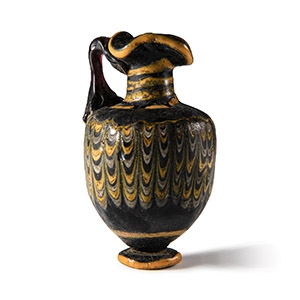
Greek Core-Formed Glass Juglet
Circa 4th-3rd century B.C.Sold for (Inc. bp): £1,170
Black glass with yellow dragged-trail detailing to the body, small disc foot; oinochoe-type pinched spout and applied strap handle to the rear; cracked and repaired. 67 grams, 74 mm high
Ex Korban Gallery, 1970s. Ex P. A., Hertfordshire, UK, specialist collection of Greek art, 1980-1990s.
