
Loading, please wait...
LOT 0527
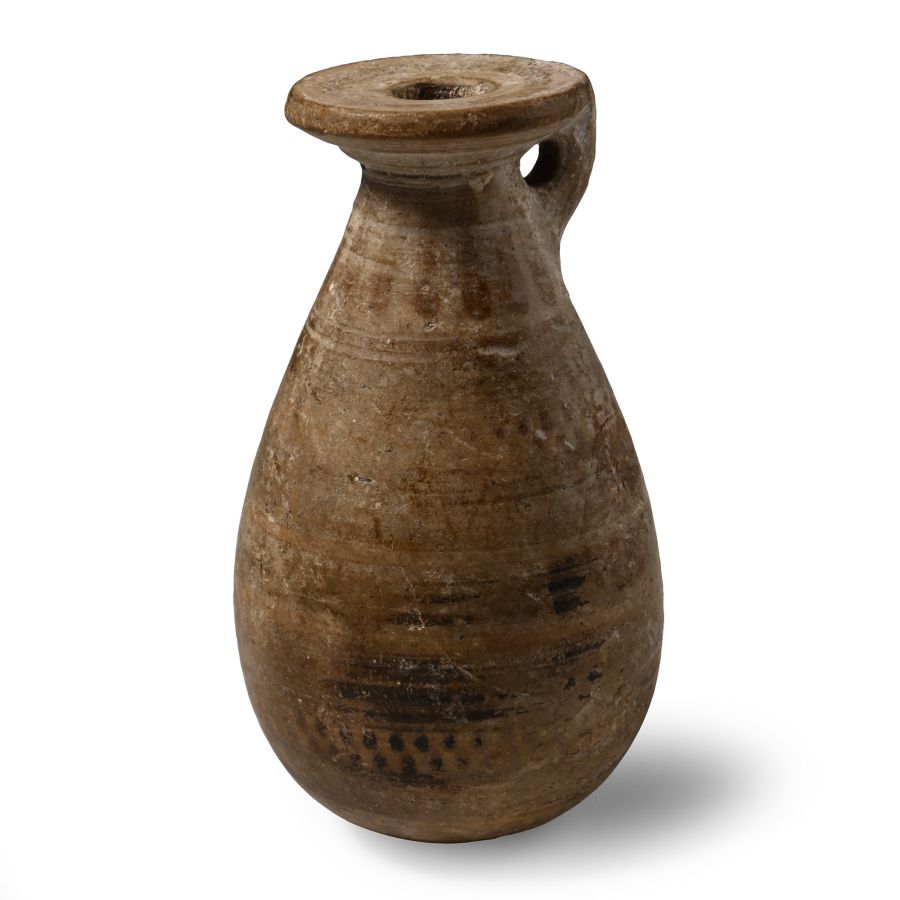
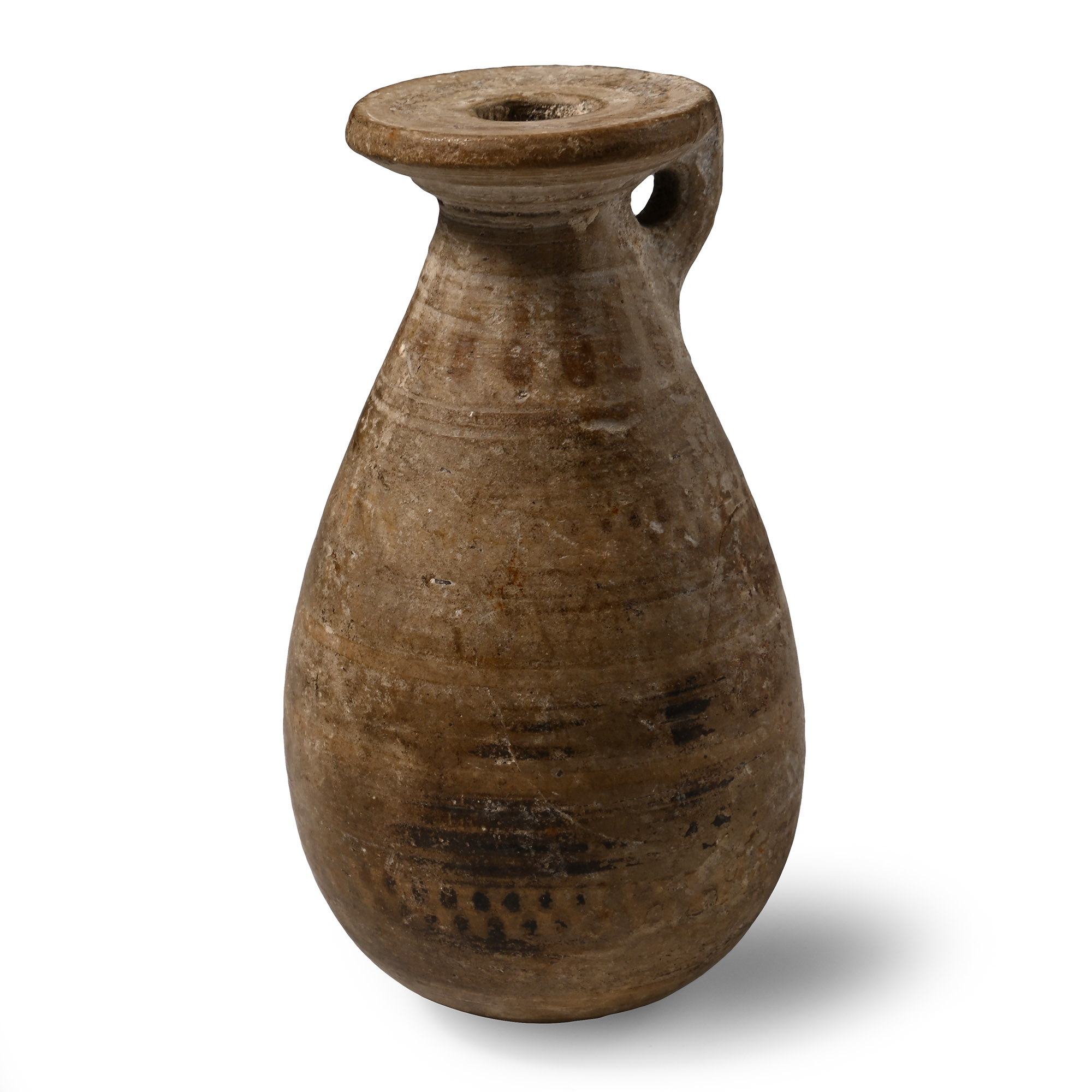
Greek Corinthian Terracotta Alabastron
ARCHAIC PERIOD, CIRCA 600-575 B.B.
3 in. (48.3 grams, 74 mm).
Ovoid body, short neck, disc-shaped rim, a vestigial handle with suspension hole, decorated with linear motifs such as tongues, lines and dots, all organised in zones. [No Reserve]
ProvenanceFrom the private collection of a Sussex, UK, gentleman.
LiteratureCf. a similar Etrusco-Corinthian alabastron in Princeton University Art Museum, inv. no.y1959-23.
CONDITIONTimeLine Auctions follows a vetting process to ensure the authenticity and legality of all items, reinforcing our commitment to integrity and responsible trading. Each antiquity, antique, and coin lot undergoes thorough examination by a vetting committee of at least ten external specialists, professional trade association members, scientists, and archaeologists: Our Vetting Process
AUCTIONS:
TimeLine is a leading auction house specialising in antiquities, ancient art, collectables, natural history, coins, medals, and books. Our auctions offer museums, collectors, historians, and enthusiasts the opportunity to acquire unique and historically significant pieces.
-
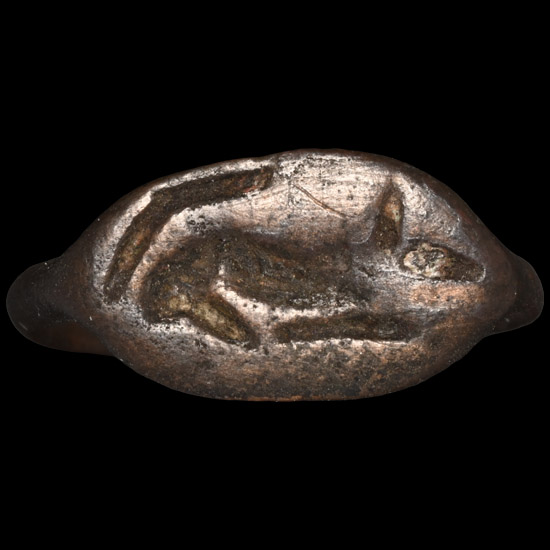
Greek Bronze Ring with Recumbent Mouse
Circa 3rd-2nd century B.C.Sold for (Inc. bp): £78
Comprising a D-section hoop and a lentoid bezel with a reclining mouse facing right with its long tail curled above its back. 2.41 grams, 22.24 mm overall, 18.88 mm internal diameter (approximate size British O, USA 7, Europe 14.98, Japan 14)
From the private collection of a European gentleman (1942-2024), formed since the 1970s. -
.jpg)
Greek Gold Ring and Carnelian Gemstone with Asclepius and Hygeia
Hellenistic, 1st century B.C.-1st century A.D.Sold for (Inc. bp): £2,340
Comprising a gold wire hoop with panels of baluster detailing, scrolled and securing a gold cell with an inset cabochon gemstone; to the domed face, the god Asclepius with caduceus symbol; to the flat face, goddess Hygeia standing holding a serpent; some usage wear. 2.12 grams, 22.48 mm overall, 14.21 x 16.13 mm internal diameter (approximate size British F 1/2, USA 3, Europe 4.3, Japan 4)
Private collection, UK. This lot has been checked against the Interpol Database of stolen works of art and is accompanied by search certificate number no.13357- 259200.
Asclepius, son of Apollo and Coronis, was the Graeco-Roman god of medicine, healing and prophecy. He had two daughters with Epione, the goddess of soothing - Hygeia (goddess of health) and Panacea (goddess of healing). -
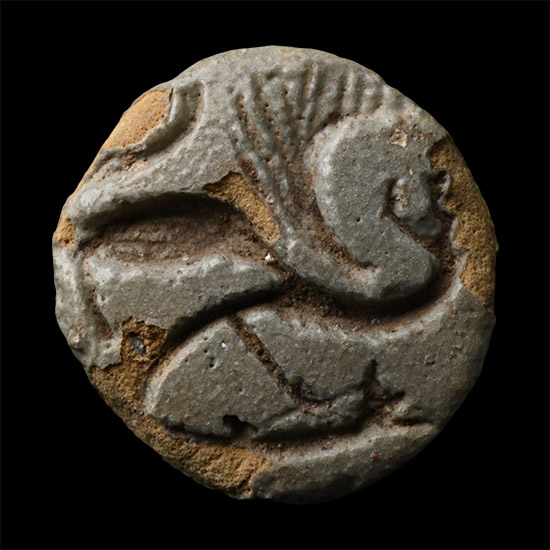
Mycenaean Glazed Terracotta Conical Shaped Stamp Seal with Animal
Circa 1st millennium B.C.Sold for (Inc. bp): £299
Conical body pierced through the top, the underside with an incuse seated beast with open wings facing back; accompanied by a museum-quality impression. 4.55 grams, 20 mm wide
UK private collection before 2000. London collection, acquired on the UK art market.
