
Loading, please wait...
LOT 0627
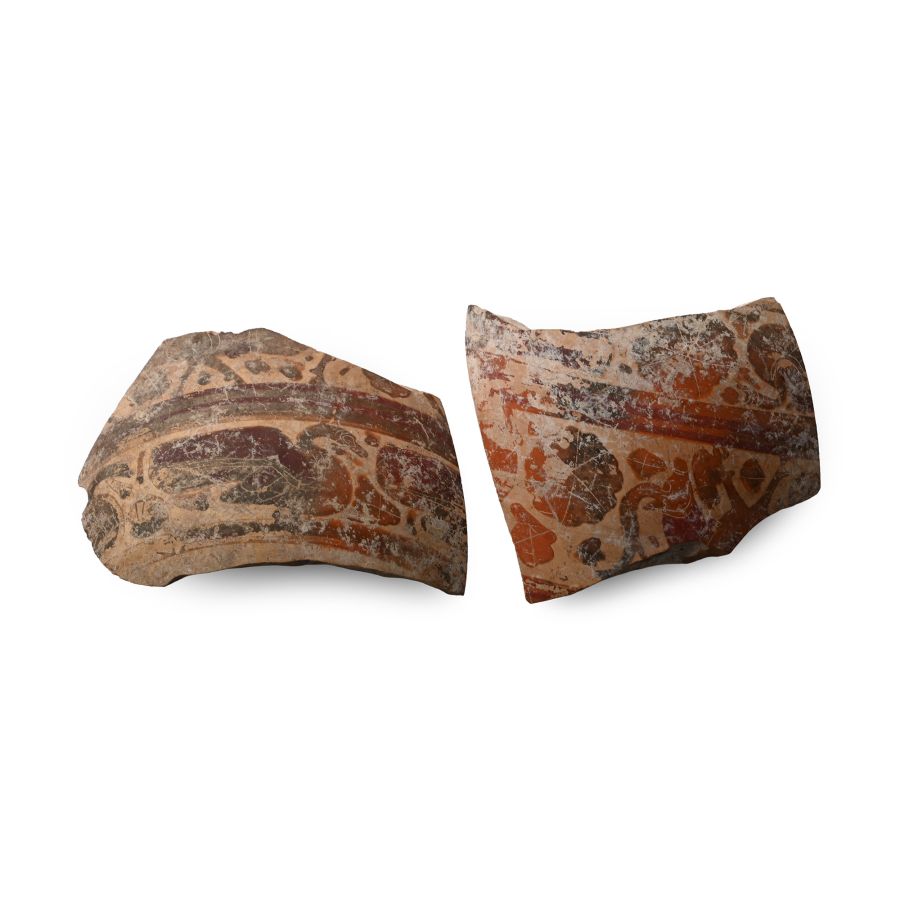
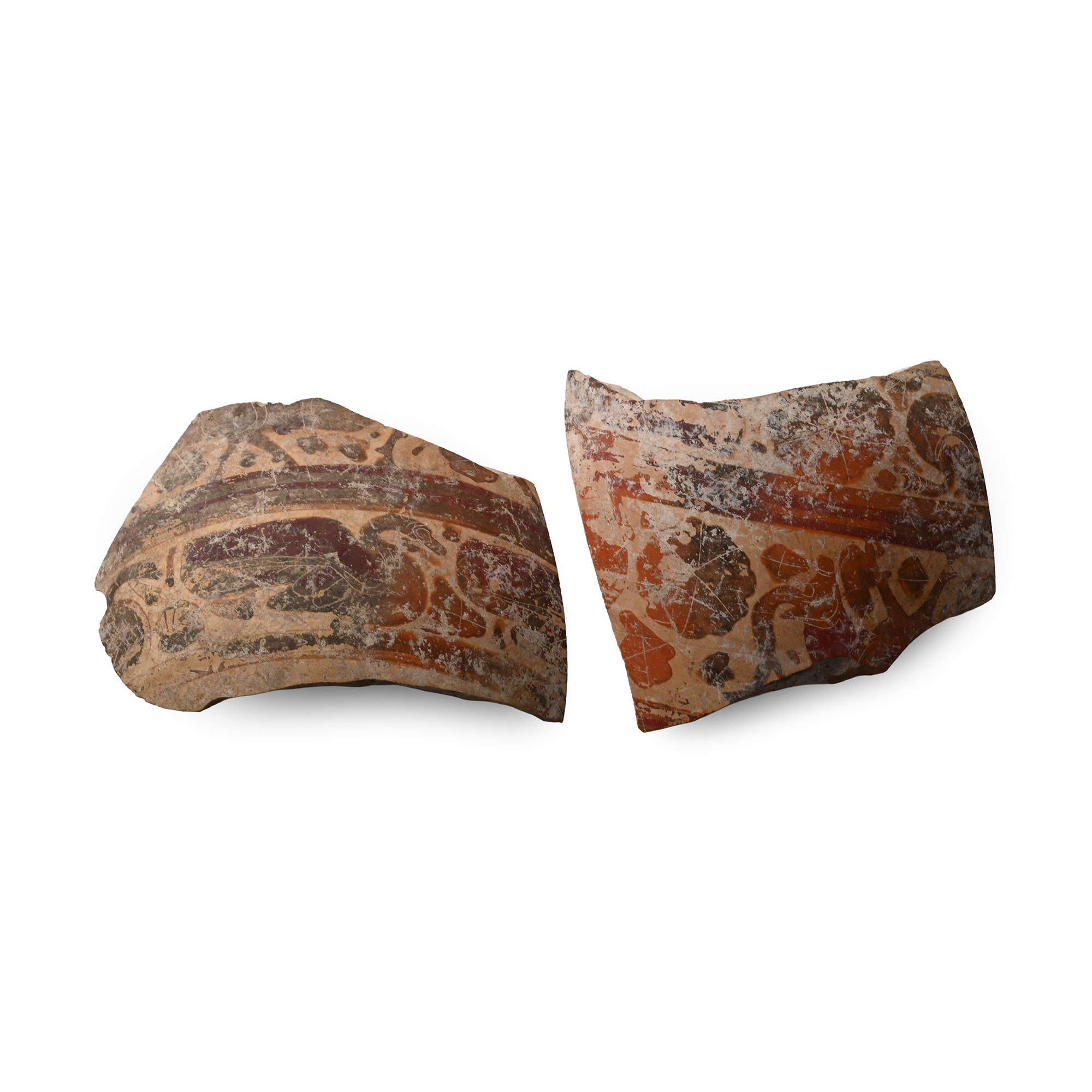
Greek Corinthian Shard Group
6TH CENTURY B.C.
3 5/8 - 4 1/4 in. (132 grams total, 9.2-10.8 cm).
Comprising of two polychrome shards with painted floral, bull and swan motifs. [2, No Reserve]
ProvenanceFrom the private family collection of Ersula Barter-Hemmerich, the longest serving member of staff working at the United Nations, her private collection formed in the 1950s and 1960s; thence by descent to her grandson.
This lot is accompanied by an illustrated lot declaration signed by the Head of the Antiquities Department, Dr Raffaele D'Amato.
TimeLine Auctions follows a vetting process to ensure the authenticity and legality of all items, reinforcing our commitment to integrity and responsible trading. Each antiquity, antique, and coin lot undergoes thorough examination by a vetting committee of at least ten external specialists, professional trade association members, scientists, and archaeologists: Our Vetting Process
AUCTIONS:
TimeLine is a leading auction house specialising in antiquities, ancient art, collectables, natural history, coins, medals, and books. Our auctions offer museums, collectors, historians, and enthusiasts the opportunity to acquire unique and historically significant pieces.
-
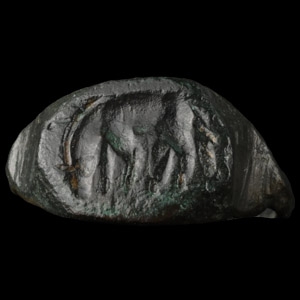
Greek Bronze Ring with Grazing Horse
4th-3rd century B.C.Sold for (Inc. bp): £182
Ellipsoid bezel with incuse image of a horse with head lowered. 4.23 grams, 21.71 mm overall, 18.78mm internal diameter (approximate size British O, USA 7, Europe 14.98, Japan 14)
Ex German art market, 2000s. Acquired from an EU collector living in London. From the collection of a Surrey, UK, gentleman. This lot is accompanied by an illustrated lot declaration signed by the Head of the Antiquities Department, Dr Raffaele D'Amato. -
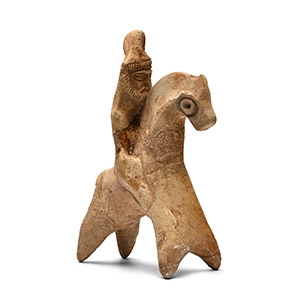
Parthian Terracotta Horse and Rider Statue
3rd-1st century B.C.Sold for (Inc. bp): £390
Figure of a horseman with carefully modelled facial features, stylised body and horse. 153 grams, 12.5 cm
Fine condition, repaired.
Property of a Dutch gentleman; formerly in an old collection formed in the 1970s. From the private collection of John Meredith, acquired since the 1990s; thence by descent. This lot is accompanied by an illustrated lot declaration signed by the Head of the Antiquities Department, Dr Raffaele D'Amato. -
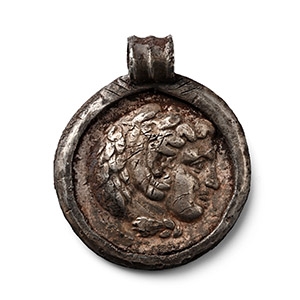
Greek Alexander the Great Tetradrachm in Silver Pendant
3rd-2nd century B.C.Sold for (Inc. bp): £442
Coin encased in silver frame with ribbed suspension loop; bust of Alexander the Great to obverse, seated figure holding a bird to reverse with 'ΑΛΕΞΑΝΔΟΣ' legend. 16.66 grams, 34 mm
Ex German art market, 2000s. Acquired from an EU collector living in London. From the collection of a Surrey, UK, gentleman. This lot is accompanied by an illustrated lot declaration signed by the Head of the Antiquities Department, Dr Raffaele D'Amato.
