
Loading, please wait...
LOT 0565
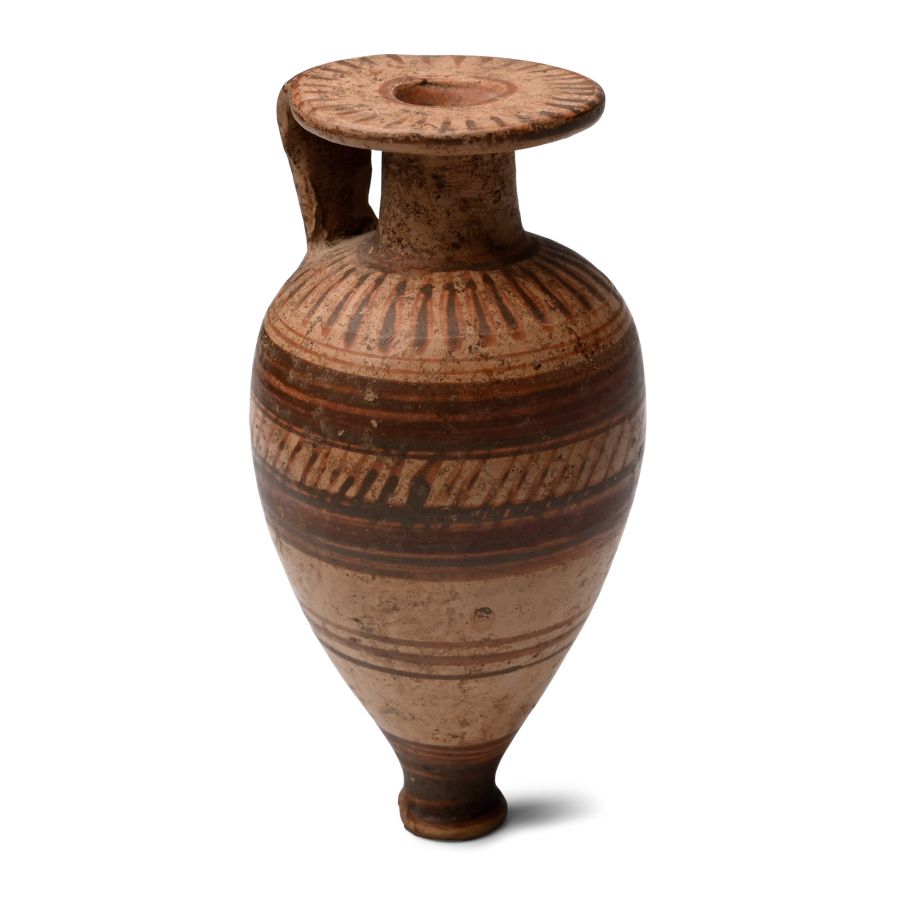
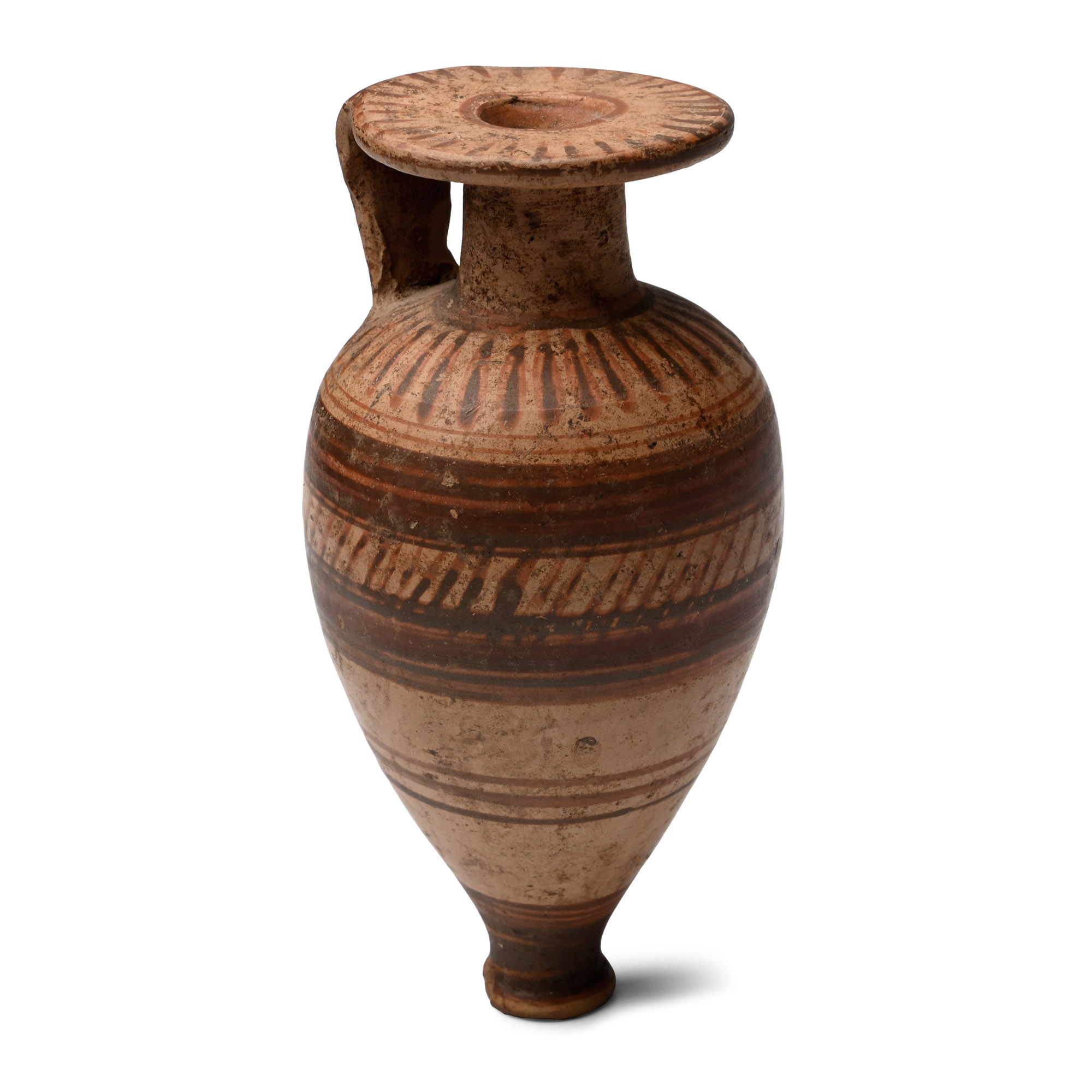
Greek Corinthian Piriform Terracotta Aryballos
CIRCA 625-600 B.C.
4 in. (59 grams, 10.3 cm).
Comprising a piriform body with small flared foot, narrow neck and broad flat mouth, strap handle to rear. [No Reserve]
ProvenanceFrom the private collection of a Canadian gentleman living in Essex, UK, formed since the 1920s-circa 1990.
Property of an Essex lady until the late 1990s; thence by descent.
From the private collection of an Essex gentleman since the late 1990s.
This lot is accompanied by an illustrated lot declaration signed by the Head of the Antiquities Department, Dr Raffaele D'Amato.
Cf. similar item in the Metropolitan Museum of Art, New York, under accession no.62.11.11.
CONDITIONTimeLine Auctions follows a vetting process to ensure the authenticity and legality of all items, reinforcing our commitment to integrity and responsible trading. Each antiquity, antique, and coin lot undergoes thorough examination by a vetting committee of at least ten external specialists, professional trade association members, scientists, and archaeologists: Our Vetting Process
AUCTIONS:
TimeLine is a leading auction house specialising in antiquities, ancient art, collectables, natural history, coins, medals, and books. Our auctions offer museums, collectors, historians, and enthusiasts the opportunity to acquire unique and historically significant pieces.
-
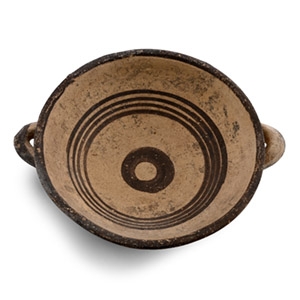
Greek Cypriot Two-Handled Terracotta Painted Bowl
Iron Age, 1050-480 B.C.Sold for (Inc. bp): £247
Shallow with disc foot and two lateral loop handles, painted concentric rings to inner face, Maltese cross to base. 78 grams, 11.7 cm
From the private collection of a Canadian gentleman living in Essex, UK, formed since the 1920s-circa 1990. Property of an Essex lady until the late 1990s; thence by descent. From the private collection of an Essex gentleman since the late 1990s. This lot is accompanied by an illustrated lot declaration signed by the Head of the Antiquities Department, Dr Raffaele D'Amato. -
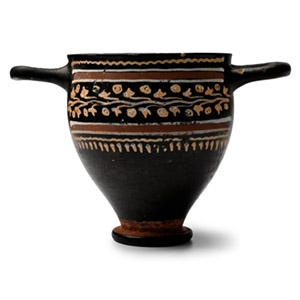
Greek Apulian Gnathian Ware Skyphos
Magna Graecia, 5th-3rd century B.C.Sold for (Inc. bp): £390
With tiered foot and two square handles; to one face a garland of ovolo below the rim, in white with ivy leaves; bands of pellets to the reverse. 96 grams, 12.7 cm wide
From the private collection of a Canadian gentleman living in Essex, UK, formed since the 1920s-circa 1990. Property of an Essex lady until the late 1990s; thence by descent. From the private collection of an Essex gentleman since the late 1990s. This lot is accompanied by an illustrated lot declaration signed by the Head of the Antiquities Department, Dr Raffaele D'Amato. -
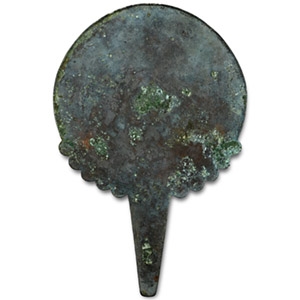
Sarmatian Bronze Decorated Mirror
3rd century B.C.-1st century A.D.Sold for (Inc. bp): £442
Discoid with lobes to the lower edge and trapezoidal handle; incised concentric rings to the lobes. 103 grams, 19.7 cm
Acquired on the UK art market, early 2000s. This lot is accompanied by an illustrated lot declaration signed by the Head of the Antiquities Department, Dr Raffaele D'Amato.
