
Loading, please wait...
LOT 0086
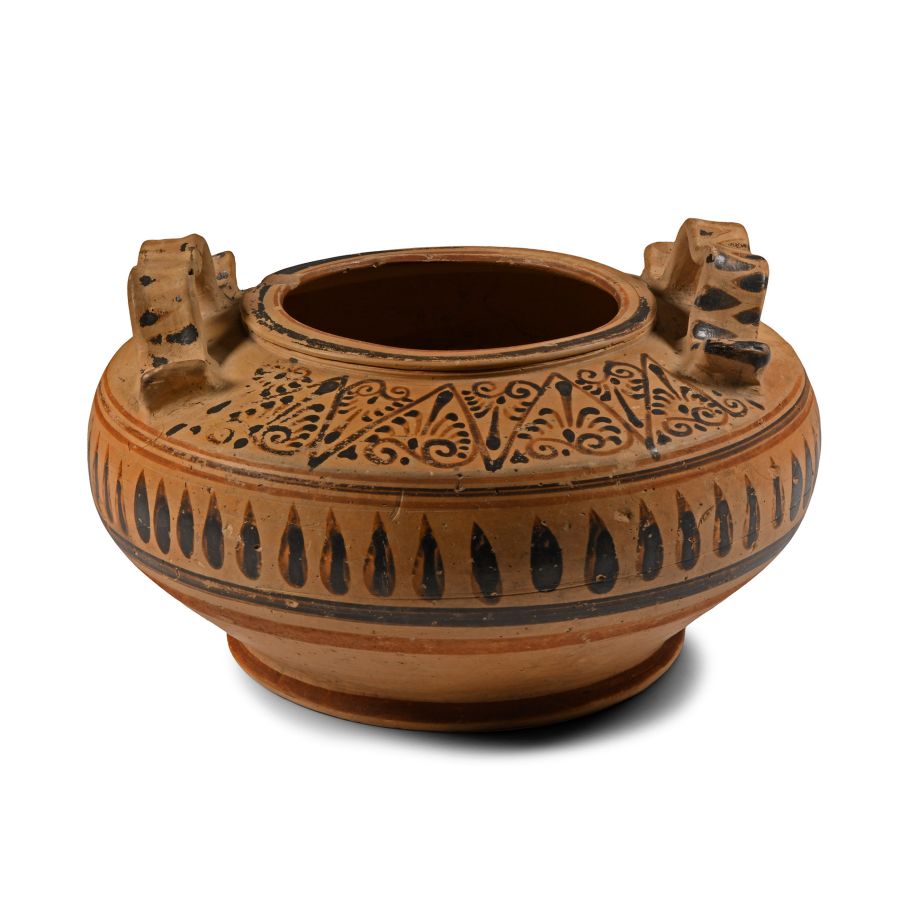
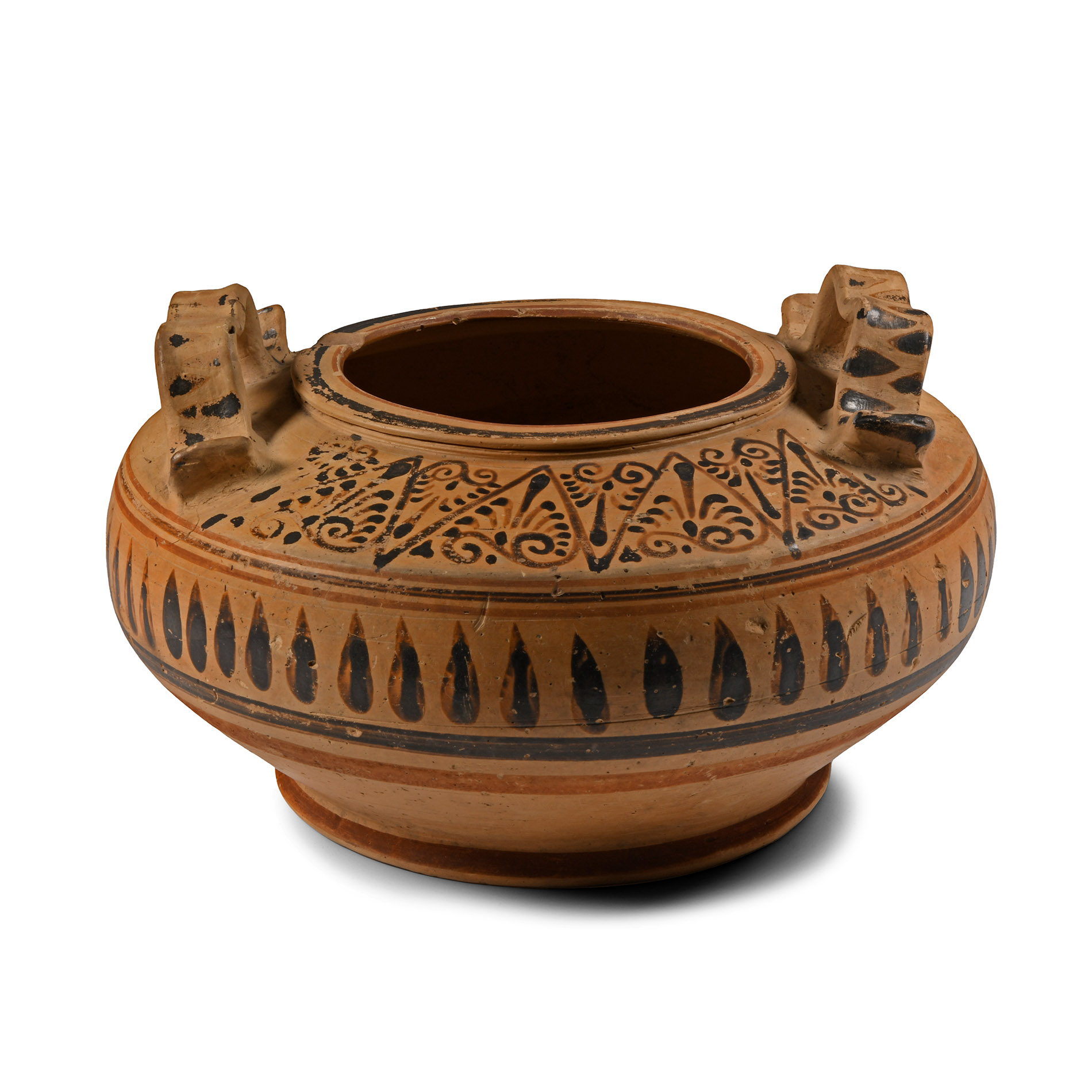
Greek Corinthian Decorated Pyxis
5TH CENTURY B.C.
7 1/2 in. (514 grams, 19 cm wide).
Squat profile, broad body with low sidewall, black and red coloured bands and teardrops; applied strap handles to shoulder amid painted palmettes and scrolls; raised rim.
ProvenanceAcquired from Charles Ede, London, 1986.
with Christie's London, 27 October 2004, lot 451.
with Christie ́s London, 20 April 2005, lot 314.
Accompanied by a copy of an Art Loss Register certificate number S00085809, dated 27 March 2014.
Accompanied by copies of the relevant Christie's catalogue pages.
TimeLine Auctions follows a vetting process to ensure the authenticity and legality of all items, reinforcing our commitment to integrity and responsible trading. Each antiquity, antique, and coin lot undergoes thorough examination by a vetting committee of at least ten external specialists, professional trade association members, scientists, and archaeologists: Our Vetting Process
AUCTIONS:
TimeLine is a leading auction house specialising in antiquities, ancient art, collectables, natural history, coins, medals, and books. Our auctions offer museums, collectors, historians, and enthusiasts the opportunity to acquire unique and historically significant pieces.
-
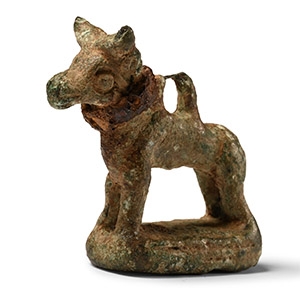
Greek Bronze Dog Seal with Animal Matrix
8th-6th century B.C.Sold for (Inc. bp): £130
Comprising a quadruped modelled in the round, possibly a dog or a bull, with an iron collar around its neck and loop to the back; standing on a rectangular matrix with a stylised dog. 13.1 grams, 27 mm
Private collection formed in the 1990s. UK art market. Property of an Essex gentleman. -
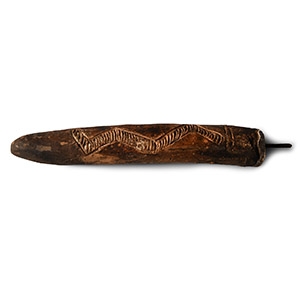
Cypriot Terracotta Votive Horn
2100-1850 B.C.Sold for (Inc. bp): £221
Tapering round-section votive with reserved zigzag bands of dense linear hatching; modern mounting pin. 71 grams, 13.5 cm
From the celebrated personal collection of art formed by the famous anthropologist, artist, and television presenter Desmond Morris. with Christie’s, South Kensington, 14 May 2002, lot 19 (part). -
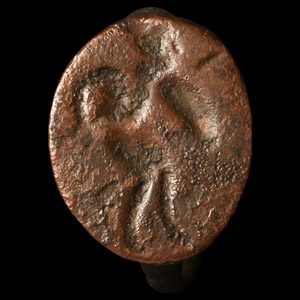
Hellenistic Bronze Ring with Hoplite
Circa 2nd-1st century B.C.Sold for (Inc. bp): £78
Ellipsoid bezel with low-relief image of a warrior with pilos helmet, shield and xiphos short-sword. 6.93 grams, 22.90 mm overall, 20.17 mm internal diameter (approximate size British Q, USA 8, Europe 17.46, Japan 16)
Ex old English collection. London art market, pre 2000. Property of a London, UK, gentleman.
