
Loading, please wait...
LOT 0053
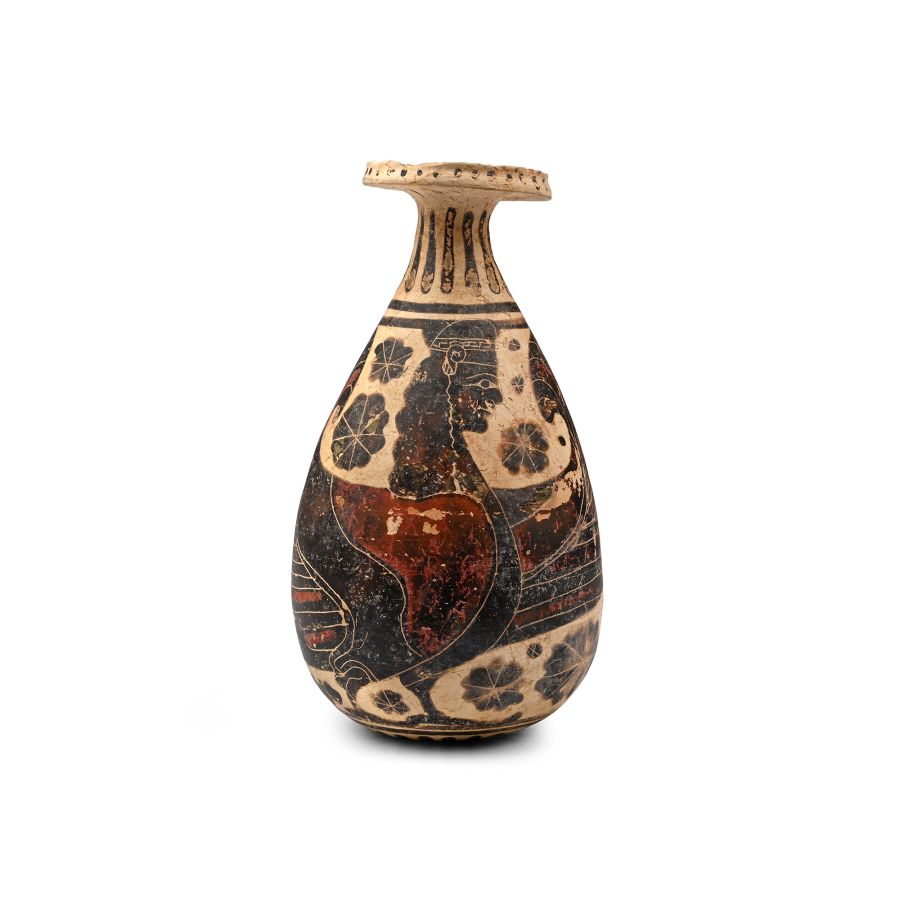
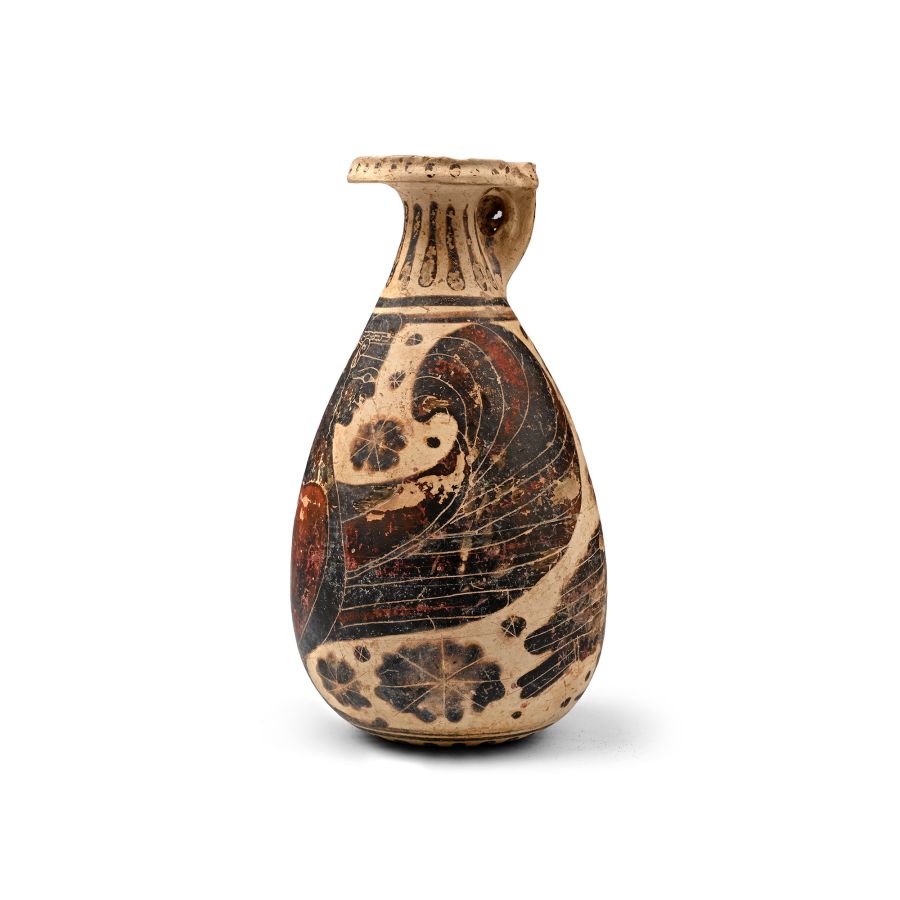
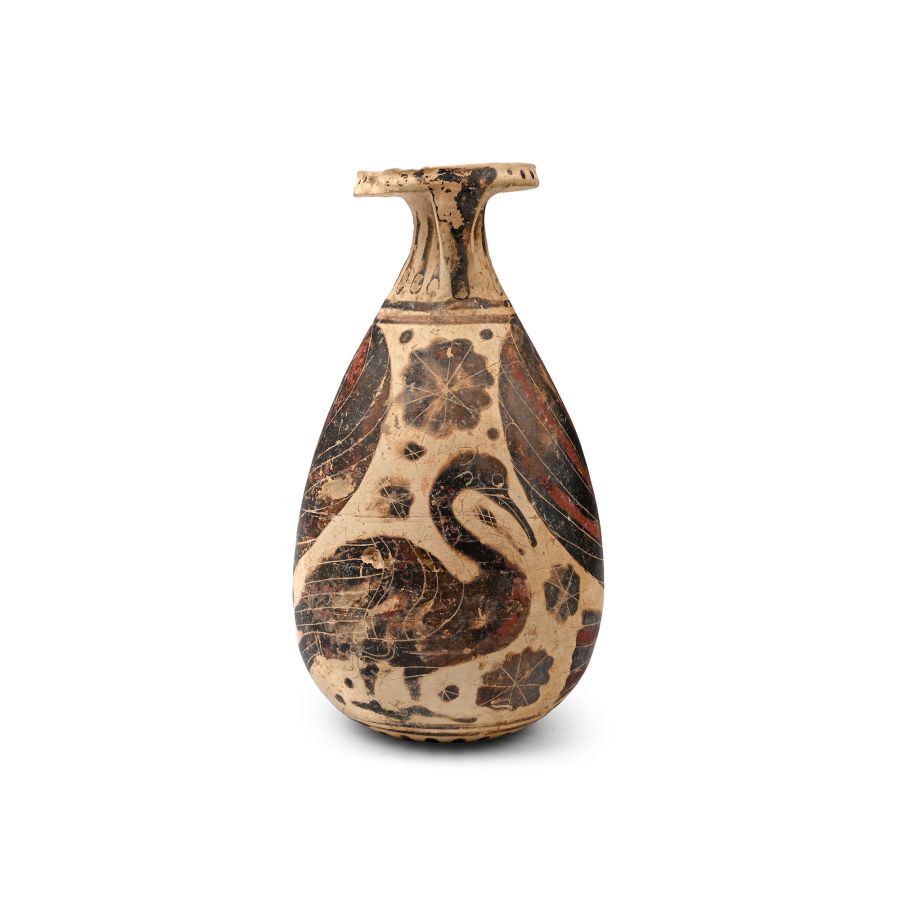
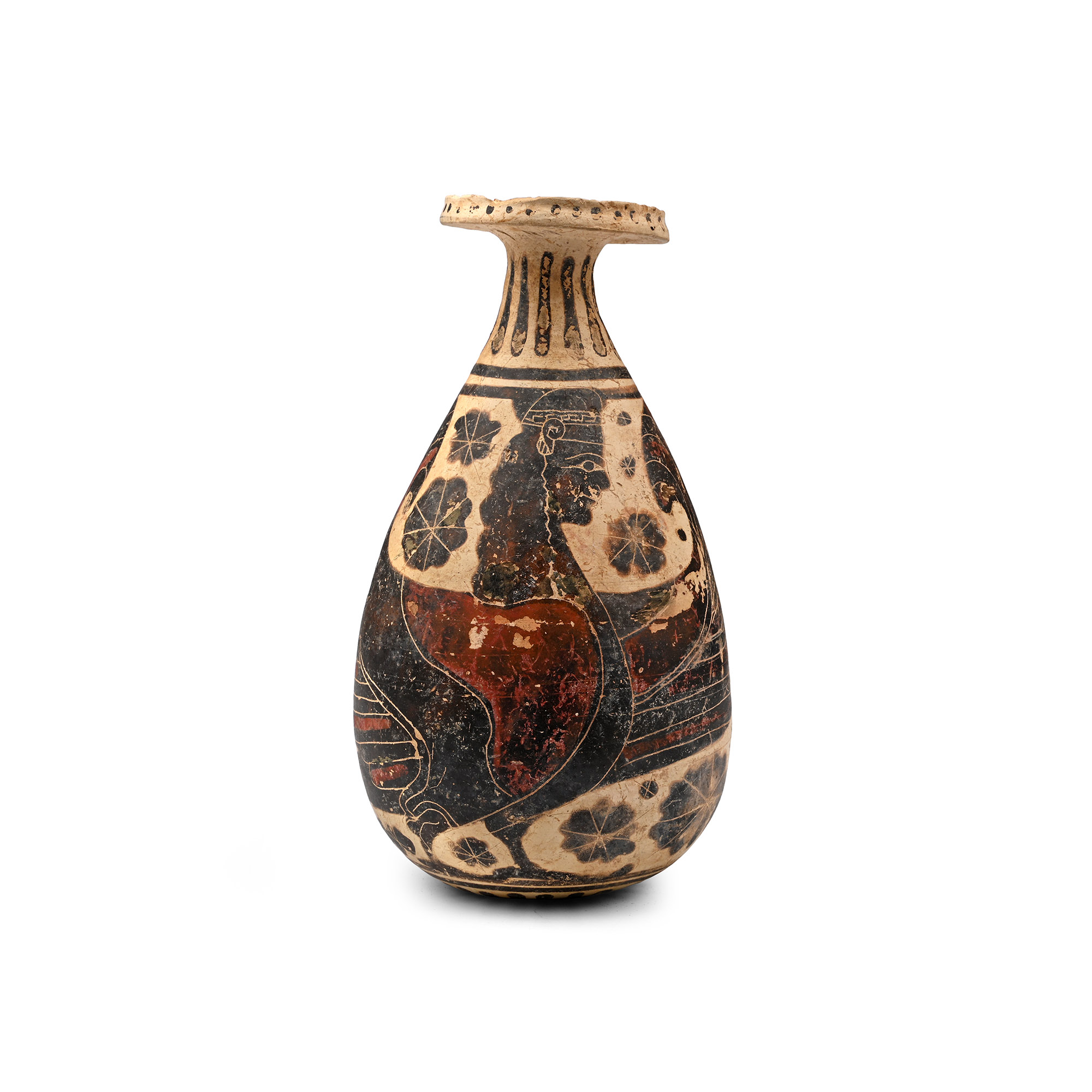
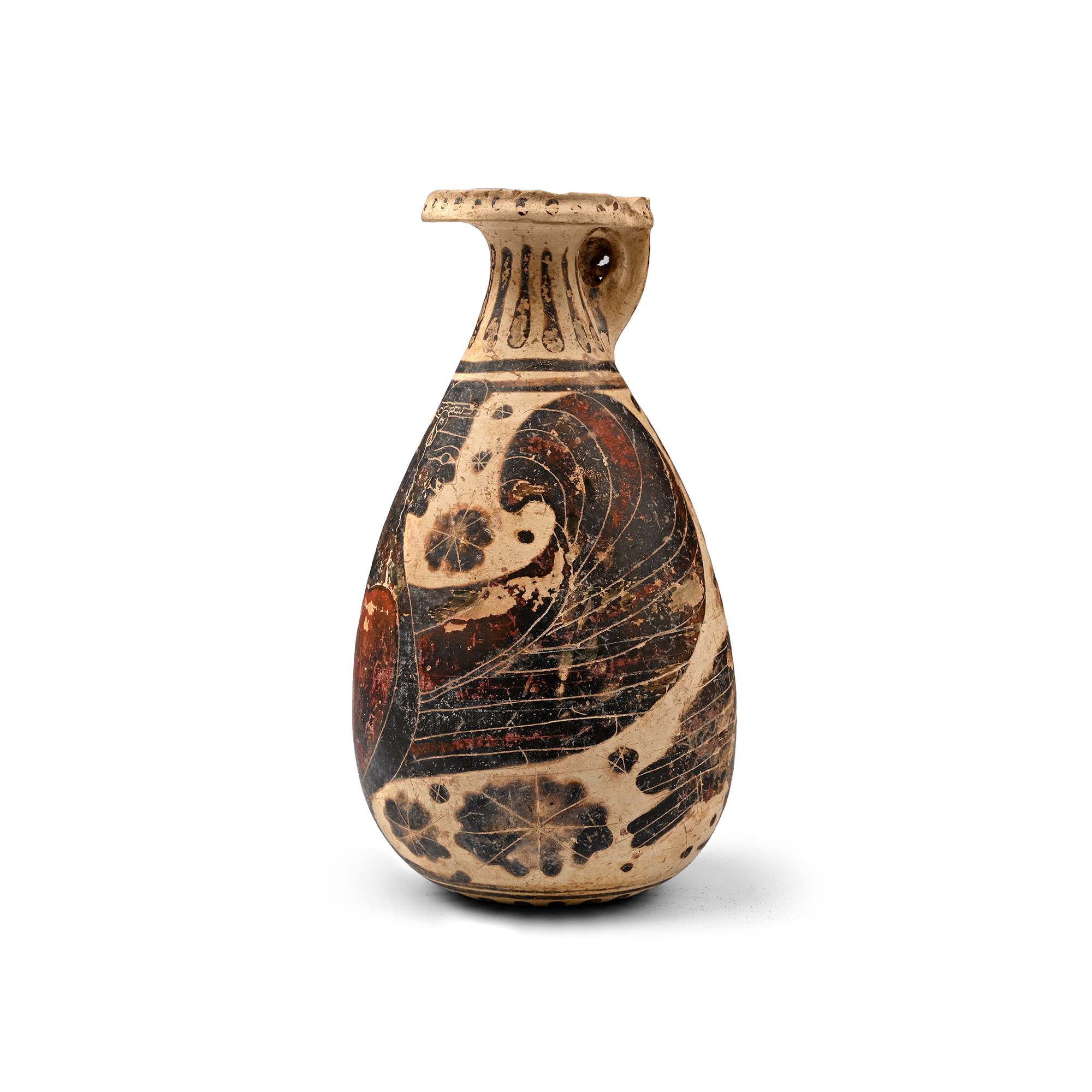
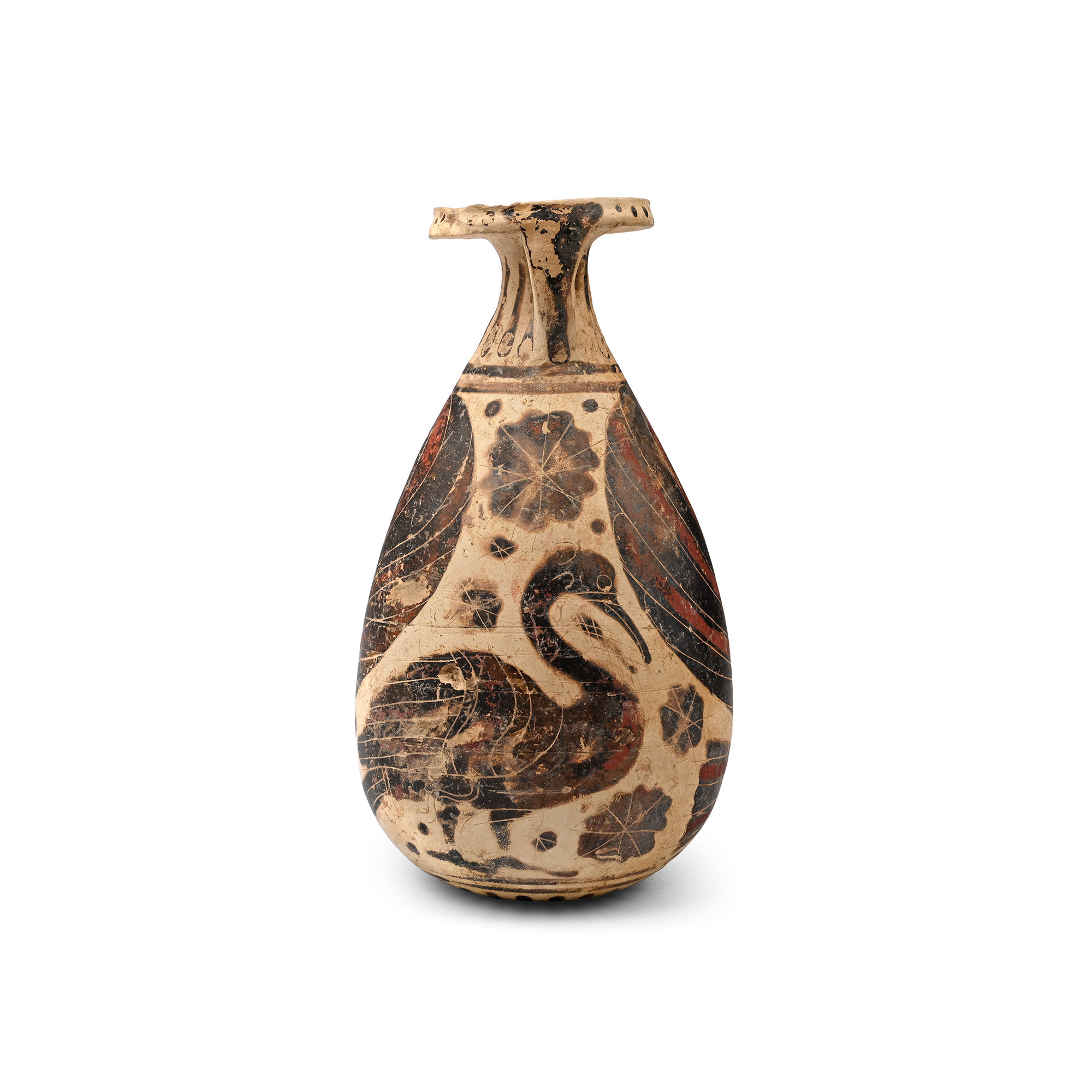
Greek Corinthian Aryballos with Winged Deity and Swan
7TH-6TH CENTURY B.C.
5 3/4 in. (180 grams, 14.7 cm).
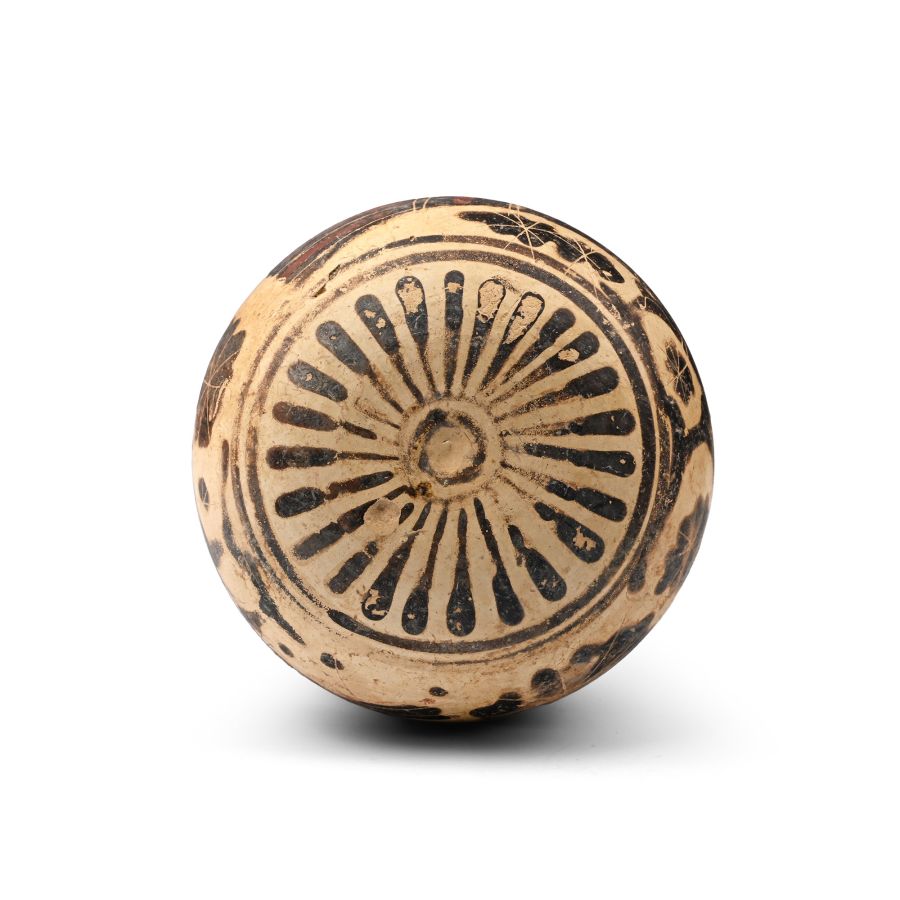
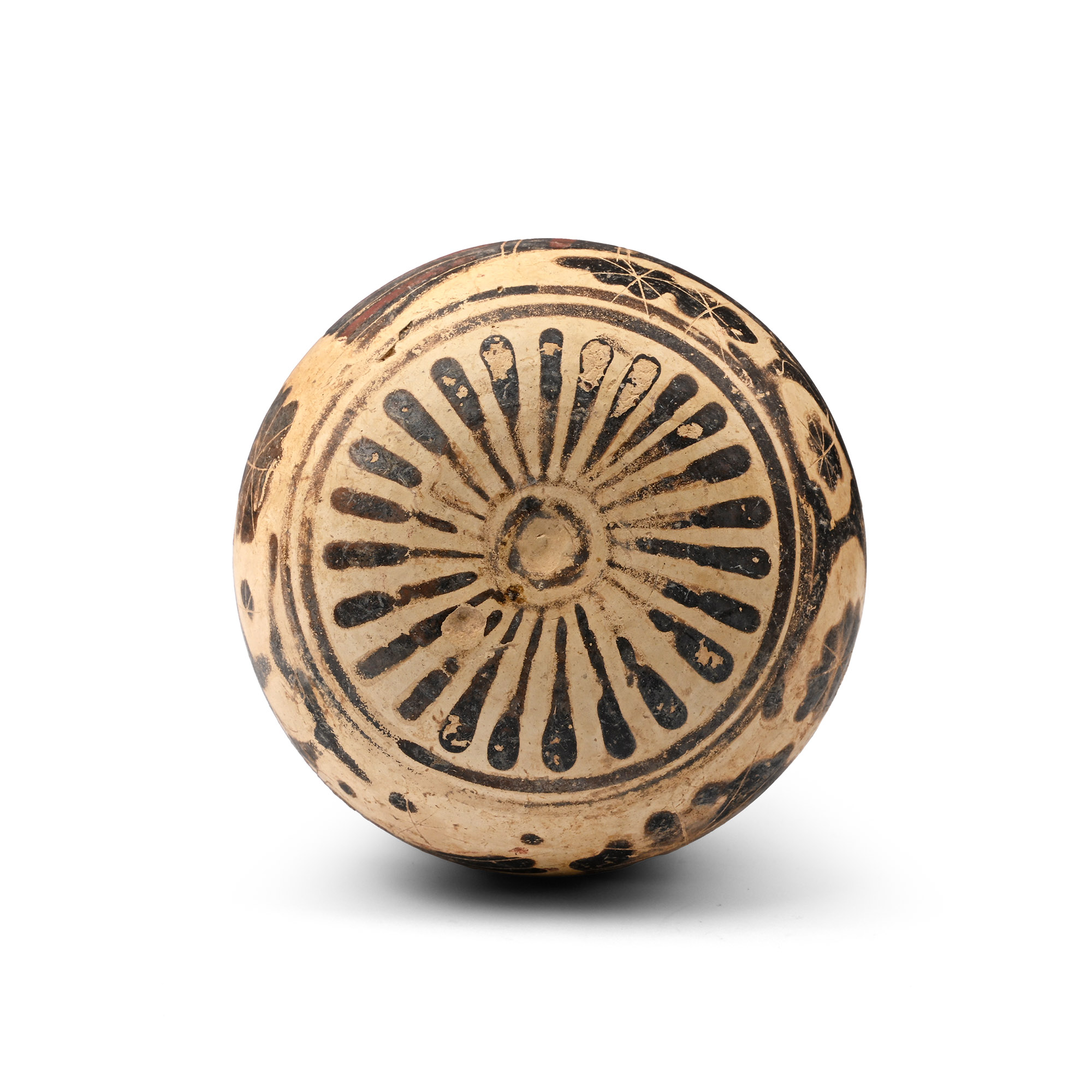
Piriform in shape with flattened bottom and rosette; the neck narrow with wide flat rim, pierced lug handle; the body with lively decoration featuring a central winged harpy with head in profile, body turned to the right and wings spread, rosettes in the field, all painted in a dark brown and purplish brown slip with sgraffito highlights; reverse with standing swan with sgraffito detailing.
ProvenanceAcquired on the European art market in the early 2000s.
with Galerie Rhéa, Zurich, Switzerland.
This lot is accompanied by an illustrated lot declaration signed by the Head of the Antiquities Department, Dr Raffaele D'Amato.
TimeLine Auctions follows a vetting process to ensure the authenticity and legality of all items, reinforcing our commitment to integrity and responsible trading. Each antiquity, antique, and coin lot undergoes thorough examination by a vetting committee of at least ten external specialists, professional trade association members, scientists, and archaeologists: Our Vetting Process
AUCTIONS:
TimeLine is a leading auction house specialising in antiquities, ancient art, collectables, natural history, coins, medals, and books. Our auctions offer museums, collectors, historians, and enthusiasts the opportunity to acquire unique and historically significant pieces.
LOT 0053
Greek Corinthian Aryballos with Winged Deity and Swan
Sold for (Inc. bp): £1,404
-
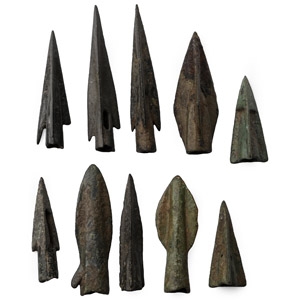
Greek Period High Quality Bronze Arrowhead Collection
5th-3rd century B.C.Sold for (Inc. bp): £156
Mainly triangular-section and leaf-shaped types. 21 grams total, 20-36 mm
From an English collection formed before 2000. This lot is accompanied by an illustrated lot declaration signed by the Head of the Antiquities Department, Dr Raffaele D'Amato. -
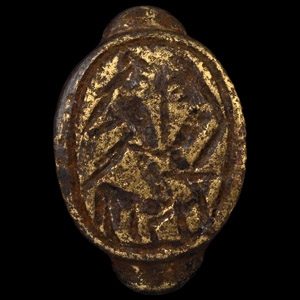
Parthian Bronze Ring with Courtship Scene
247 B.C.-224 A.D.Sold for (Inc. bp): £124
With stepped shoulders flanking an ellipsoid bezel, incised scene of two opposed figures embracing above a quadruped. 5.63 grams, 24.15 mm overall, 19.99 mm internal diameter (approximate size British O, USA 7, Europe 14.98, Japan 14)
Acquired on the European art market in the 1990s. From the collection of G.M.R.H., London, UK. This lot is accompanied by an illustrated lot declaration signed by the Head of the Antiquities Department, Dr Raffaele D'Amato. -
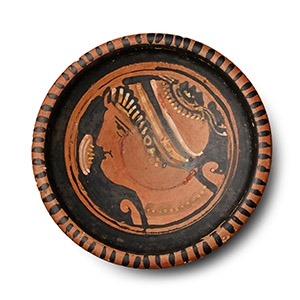
Greek Apulian Red-Figure Plate with Lady of Fashion
South Italic, circa 4th century B.C.Sold for (Inc. bp): £390
Discoid with raised rim, carinated profile and low foot; rim with radiating black lentoid strokes, tondo with reserved ring enclosing a profile female bust with white detailing to the necklace, stephane and sakkos. 139 grams, 12.9 cm
From the private collection of a Canadian gentleman living in Essex, UK, formed since the 1920s-circa 1990. Property of an Essex lady until the late 1990s; thence by descent. From the private collection of an Essex gentleman since the late 1990s. This lot is accompanied by an illustrated lot declaration signed by the Head of the Antiquities Department, Dr Raffaele D'Amato.
