
Loading, please wait...
LOT 0112
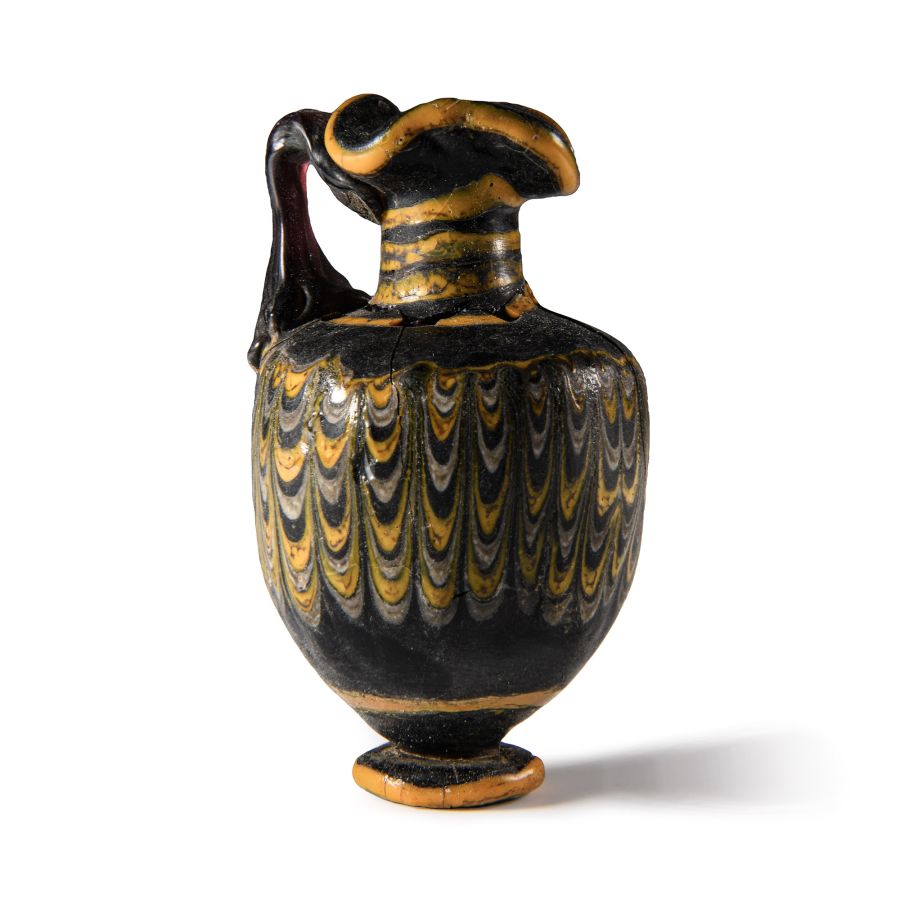
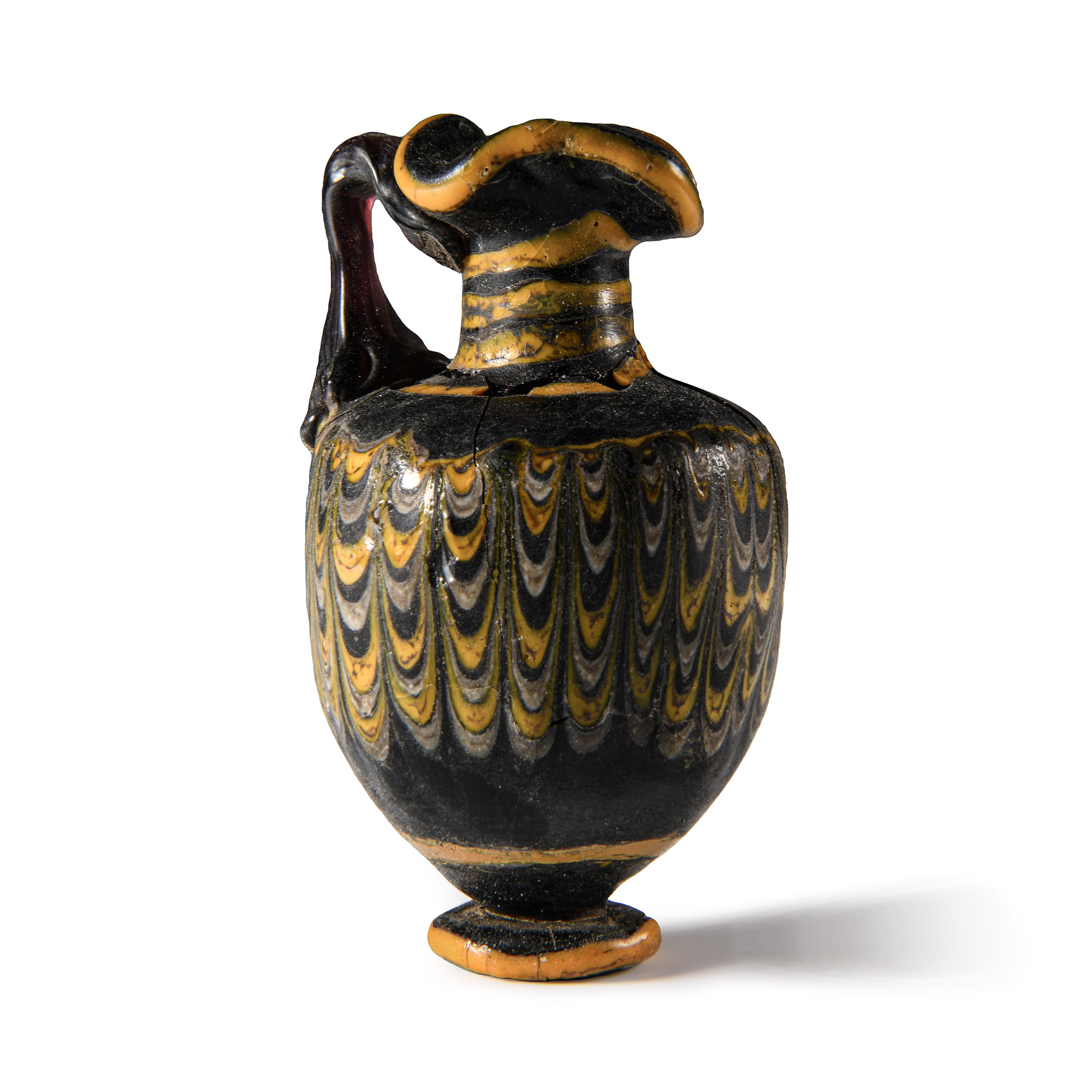
Greek Core-Formed Glass Juglet
CIRCA 4TH-3RD CENTURY B.C.
3 in. (67 grams, 74 mm high).
Black glass with yellow dragged-trail detailing to the body, small disc foot; oinochoe-type pinched spout and applied strap handle to the rear; cracked and repaired.
ProvenanceEx Korban Gallery, 1970s.
Ex P. A., Hertfordshire, UK, specialist collection of Greek art, 1980-1990s.
TimeLine Auctions follows a vetting process to ensure the authenticity and legality of all items, reinforcing our commitment to integrity and responsible trading. Each antiquity, antique, and coin lot undergoes thorough examination by a vetting committee of at least ten external specialists, professional trade association members, scientists, and archaeologists: Our Vetting Process
AUCTIONS:
TimeLine is a leading auction house specialising in antiquities, ancient art, collectables, natural history, coins, medals, and books. Our auctions offer museums, collectors, historians, and enthusiasts the opportunity to acquire unique and historically significant pieces.
-
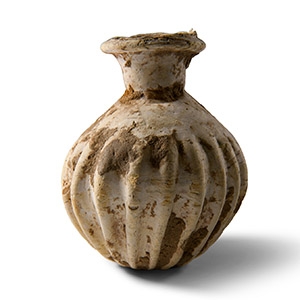
Greek Cream Frit Ribbed Bottle
4th-2nd century B.C.Estimate: £120 - 170 (‡+bp*)
Opening Bid: £60
Opaque with vertical ribbing around the globular body, trumpet-style neck and mouth with rolled rim. 76 grams, 73 mm high
Acquired early 1990s. Ex private American collection; thence by descent. Private collection since 1998. -
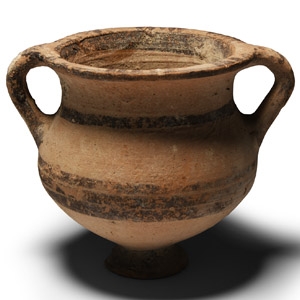
Cypriot Painted Terracotta Amphora
Circa 8th-5th century B.C.Sold for (Inc. bp): £169
In black-painted geometric buffware, with wide bands of black painted decoration on the ovoid body and on the rim, loop handles. 164 grams, 11.8 cm wide
Ex P.A., Hertfordshire, UK, specialist collection of Greek art, 1980-1990s. Accompanied by a copy of an old typed catalogue slip.
The type is well known on Cyprus from 850 B.C. The simplification of the geometric ornaments in panels on the neck and shoulder suggest that the present specimen is later than the Geometric Period. -
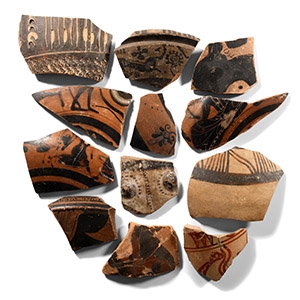
Greek Terracotta Vessel Fragment Group
Circa 7th-3rd century B.C.Sold for (Inc. bp): £442
Comprising a variety decorated fragments including: four figural black-figure fragments; one with raised line decoration; one with raised bosses; a fragment with a gazelle facing back; one with painted motifs in red; and three other fragments with painted motifs. 264 grams total, 5.3-10.5 cm
Acquired early 20th century. Ex property of UK lady by descent. Property of a Nottinghamshire gentleman.
