
Loading, please wait...
LOT 0063
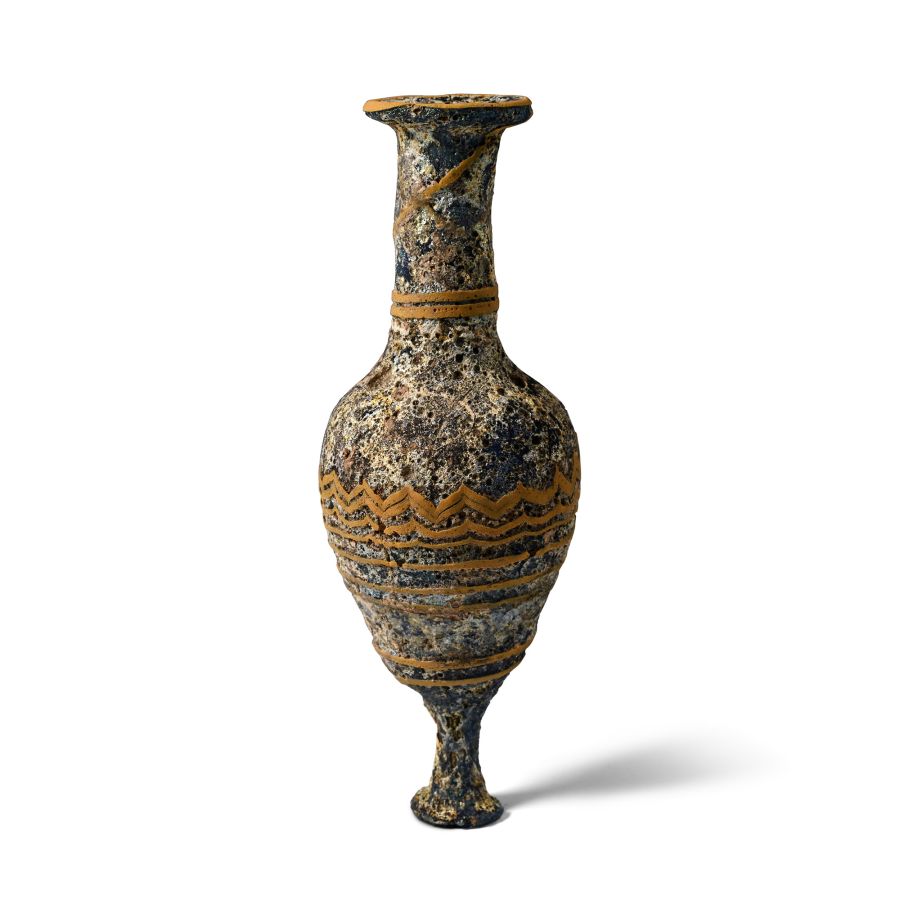
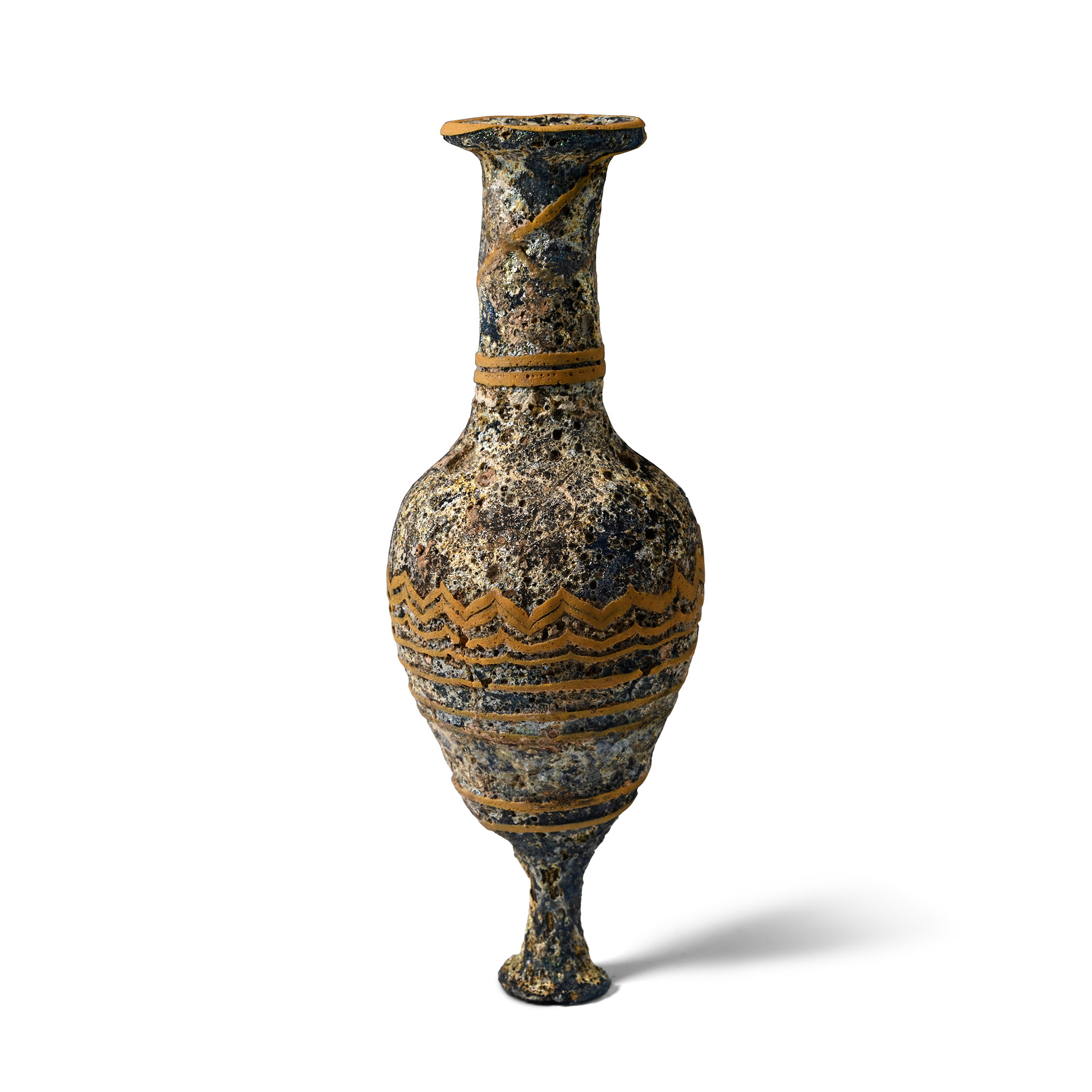
Greek Core-Formed Glass Amphoriskos
5TH-3RD CENTURY B.C.
4 3/4 in. (35 grams, 12 cm high).
With applied yellow festooning and trails, knop foot and everted rim to the mouth.
ProvenanceAcquired on the UK art market, 1990s.
Private collection, New York, USA.
Cf. The Metropolitan Museum, accession number 74.51.322, for type.
CONDITIONTimeLine Auctions follows a vetting process to ensure the authenticity and legality of all items, reinforcing our commitment to integrity and responsible trading. Each antiquity, antique, and coin lot undergoes thorough examination by a vetting committee of at least ten external specialists, professional trade association members, scientists, and archaeologists: Our Vetting Process
AUCTIONS:
TimeLine is a leading auction house specialising in antiquities, ancient art, collectables, natural history, coins, medals, and books. Our auctions offer museums, collectors, historians, and enthusiasts the opportunity to acquire unique and historically significant pieces.
-
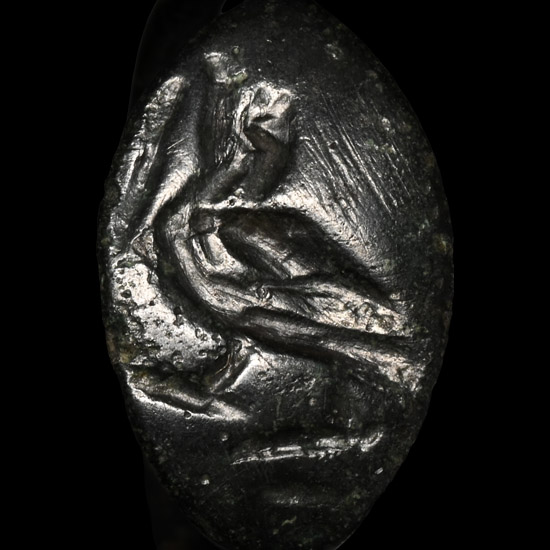
Greek Bronze Ring with Bird
3rd-2nd century B.C.Sold for (Inc. bp): £39
Comprising a slender hoop and an oval hoop with a large advancing bird. 1.71 grams, 21.43 mm overall, 19.29 mm internal diameter (approximate size British P 1/2, USA 7 3/4, Europe 16.86, Japan 16)
From a UK collection formed in the 1980s. Property of an Essex, UK, gentleman. -
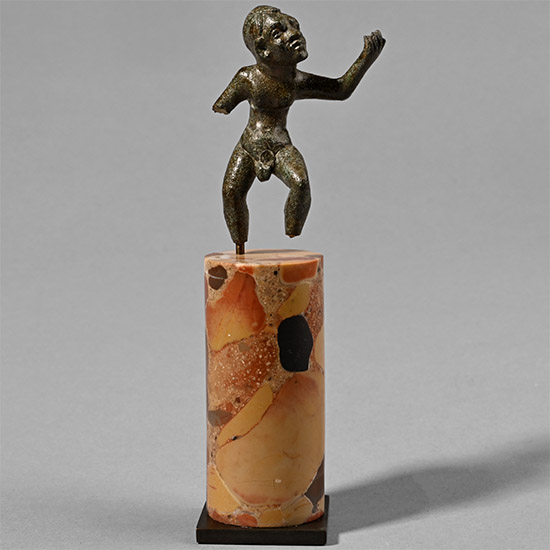
Greek Bronze Statuette of an Alexandrian Dancing Dwarf
Hellenistic, 1st century B.C.-1st century A.D.Estimate: £3,000 - 4,000 (+bp*)
Opening Bid: £1,500
In an active pose with both legs bent and left arm raised dramatically, head tilted to the left; exaggerated facial features, short trimmed hair, slim body with developed pectoral muscles and pronounced kyphosis; mounted on a columnar stand. 295 grams total, 15 cm high imcluding stand
Belgian private art collection of M.A., Brussels, Belgium, 1995. with Gorny and Mosch, 14 December 2011, no.82. This lot has been checked against the Interpol Database of stolen works of art and is accompanied by search certificate number no.13330-258951.
Such figures are often described as ‘grotesques’, yet typically constituted overstated representations of people with dwarfism. Such individuals are invariably shown with exaggerated features such as pot bellies, hunched backs, bald heads, large phalli and angry facial expressions. -
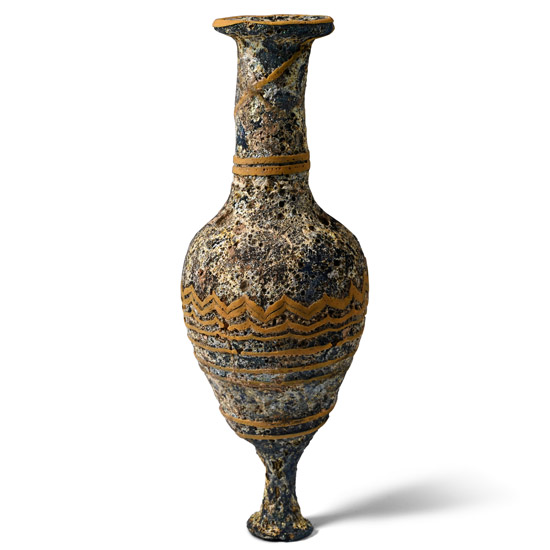
Greek Core-Formed Glass Amphoriskos
5th-3rd century B.C.Sold for (Inc. bp): £1,300
With applied yellow festooning and trails, knop foot and everted rim to the mouth. 35 grams, 12 cm high
Acquired on the UK art market, 1990s. Private collection, New York, USA.
