
Loading, please wait...

LOT 0086
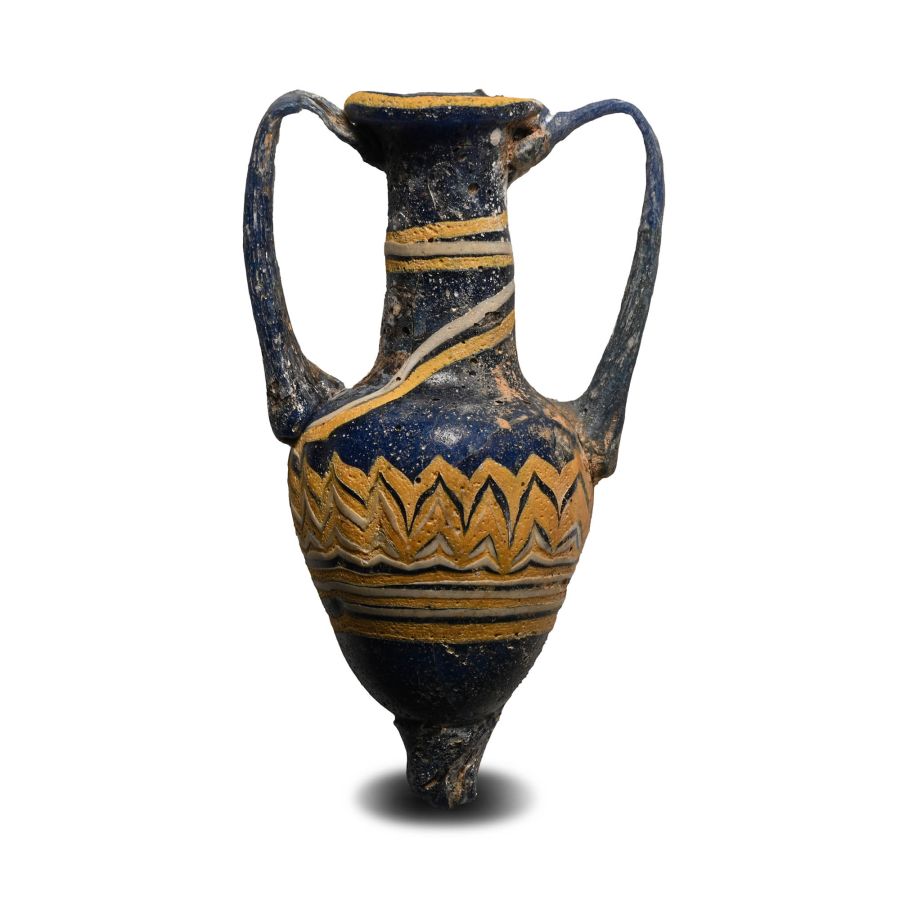
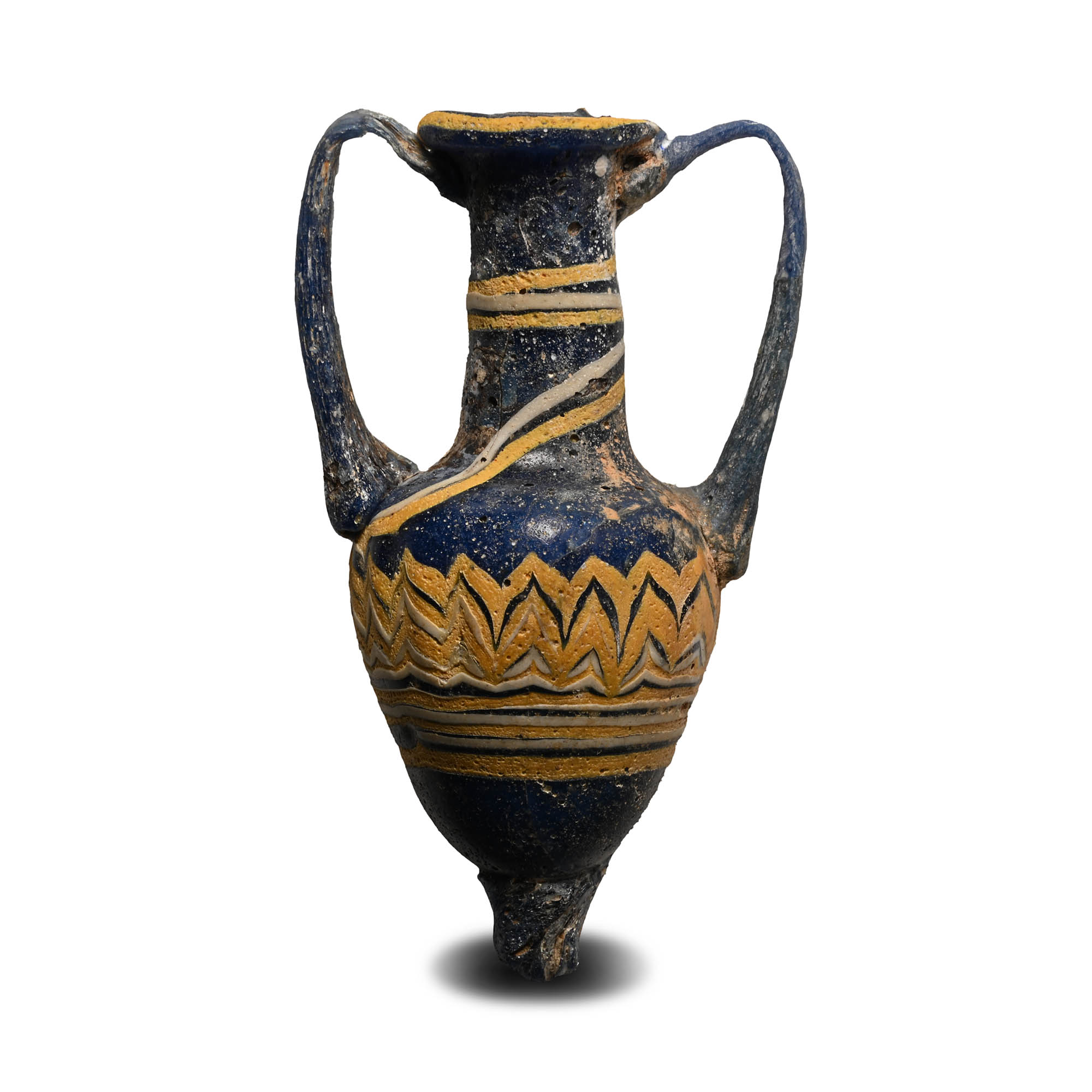
Greek Core-Formed Glass Amphora
4TH-3RD CENTURY B.C.
3 1/4 in. (32.6 grams, 83 mm).
Polychrome glass amphora with applied trail decoration to the body and spirals around the neck, two applied handles to shoulder.
ProvenanceFormerly in North American collection, 1990s.
Ex Lyon and Turnbull, Edinburgh, Scotland.
Cf. The Metropolitan Museum, New York, accession number 74.51.320, for similar.
CONDITIONTimeLine Auctions follows a vetting process to ensure the authenticity and legality of all items, reinforcing our commitment to integrity and responsible trading. Each antiquity, antique, and coin lot undergoes thorough examination by a vetting committee of at least ten external specialists, professional trade association members, scientists, and archaeologists: Our Vetting Process
AUCTIONS:
TimeLine is a leading auction house specialising in antiquities, ancient art, collectables, natural history, coins, medals, and books. Our auctions offer museums, collectors, historians, and enthusiasts the opportunity to acquire unique and historically significant pieces.
-
.jpg)
Greek Terracotta Female Bust
Circa 6th century B.C.Sold for (Inc. bp): £1,040
Modelled in the round wearing a polos headdress and large disc earrings, the segmented hair retained by a diadem and falling to the shoulders; finely modelled facial features with lentoid eyes and full pouting lips; mounted on a custom-made stand. 1.4 kg total, 24.5 cm including stand
with Petit Musée, Montreal, Canada, 1995. Acquired Bonhams, London, 28 November 2017, lot 74. Private collection of Professor Kenneth Graham, London, UK. Accompanied by the original catalogue page and a copy of the original invoice. -
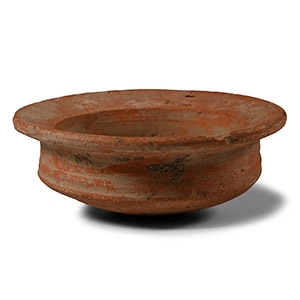
Italic Terracotta Cup
Circa 4th-2nd century B.C.Sold for (Inc. bp): £39
Squat in profile with broad flange rim, carinated profile, rounded underside. 355 grams, 14.5 cm
Acquired on the UK art market before 2000. Property of an Essex, UK, gentleman. -
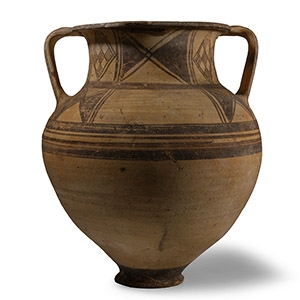
Very Large Cypriot Bichrome Amphora with Double Strap Handles
Archaic Period, circa 750 B.C.Sold for (Inc. bp): £1,300
With narrow trumpet-shaped foot, broad shoulder and ribbed lateral handles; painted circumferential bands to the inner neck, rim and body, hatched panels and labrys symbols to the shoulder. 7.3 kg, 45.5 cm high
From a collection acquired on the UK art market from various auction houses and collections mostly before 2000. From an important Cambridgeshire estate; thence by descent. Accompanied by an academic report by Dr Raffaele D'Amato. This lot has been checked against the Interpol Database of stolen works of art and is accompanied by search certificate number no.12313-218932.
