
Loading, please wait...
LOT 0084
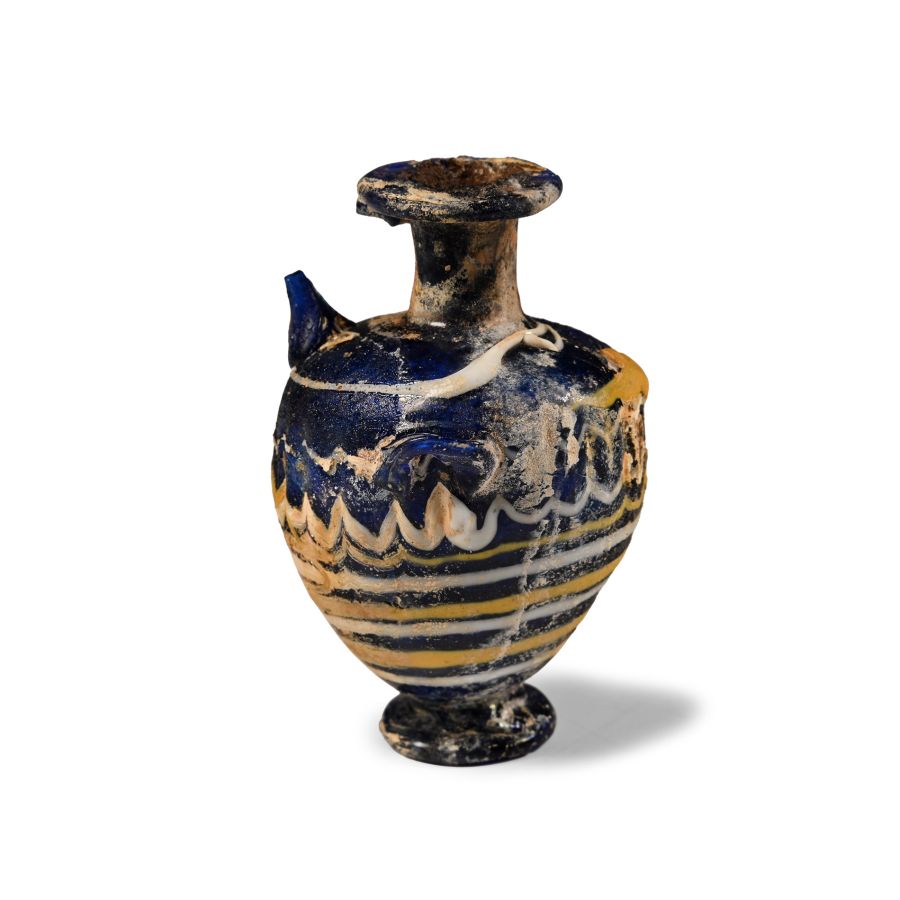
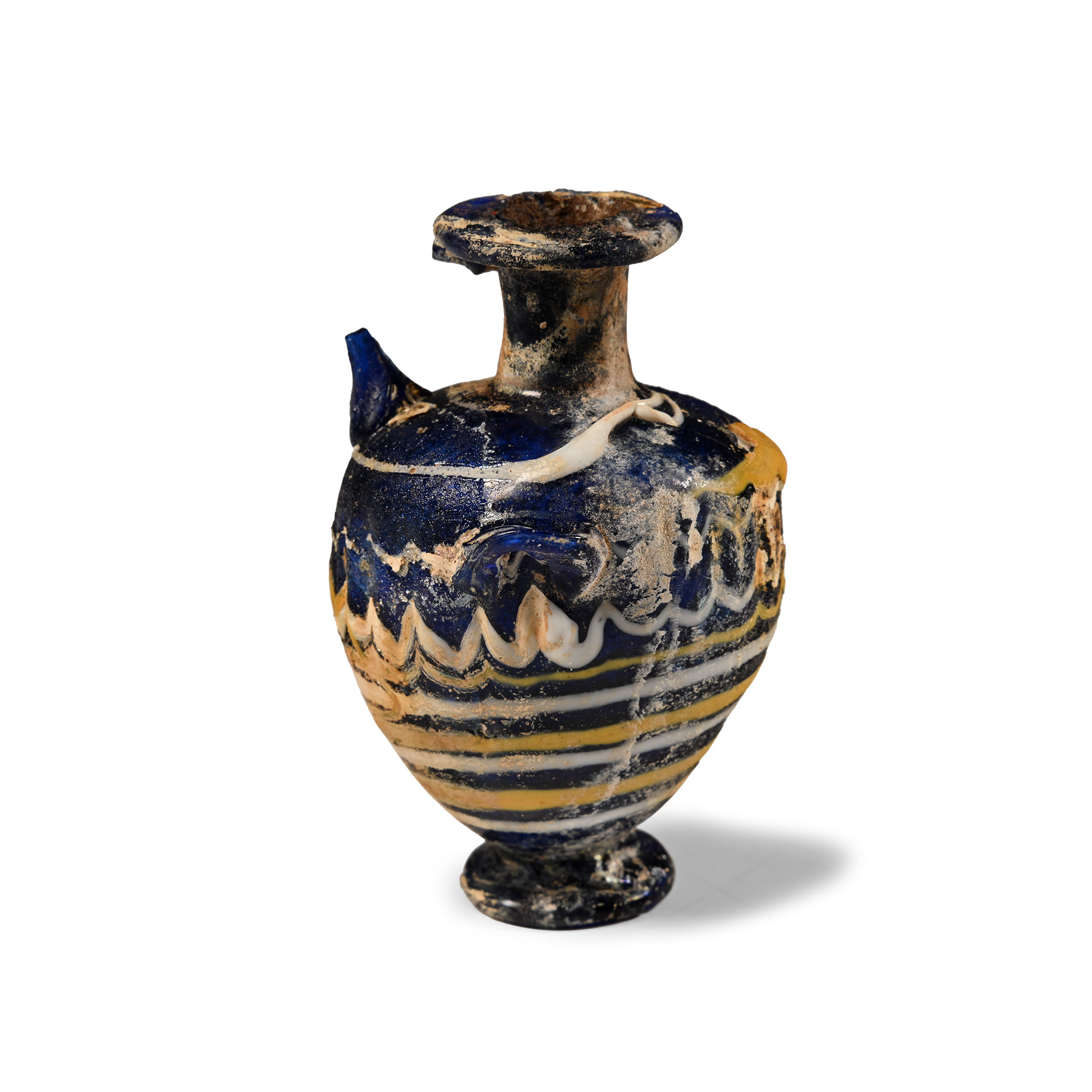
Greek Core-Formed Glass Amphora
6TH-5TH CENTURY B.C.
2 1/4 in. (17 grams, 57 mm).
Squat jar with applied ring to foot, deep carinated shoulder, two applied trail handles and spout, slender neck and flared mouth; inlaid zigzag trails to shoulder.
ProvenanceFrancesc Cambó i Batlle (1876-1947) a prominent Spanish politician, art patron and philanthropist.
Gifted to his friend, the archaeologist, Josep Gilbert i Buch.
Acquired from Gilbert's family by the present owner's grandfather in the early 1980s.
Private collection of a European noble.
Francesco Cambó i Batlle was a notable figure in early 20th-century Spain, best known for his role in politics as a leader of the Catalan nationalist movement and as a patron of the arts. He was a key benefactor of the Museo del Prado and left a significant legacy through his art collections. His deep connection to the cultural and artistic life of Spain makes items from his collection particularly valuable and historically significant.
CONDITIONTimeLine Auctions follows a vetting process to ensure the authenticity and legality of all items, reinforcing our commitment to integrity and responsible trading. Each antiquity, antique, and coin lot undergoes thorough examination by a vetting committee of at least ten external specialists, professional trade association members, scientists, and archaeologists: Our Vetting Process
AUCTIONS:
TimeLine is a leading auction house specialising in antiquities, ancient art, collectables, natural history, coins, medals, and books. Our auctions offer museums, collectors, historians, and enthusiasts the opportunity to acquire unique and historically significant pieces.
-
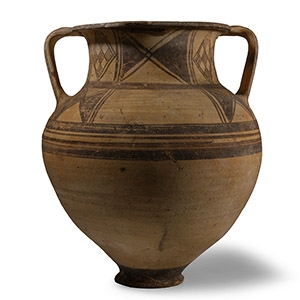
Very Large Cypriot Bichrome Amphora with Double Strap Handles
Archaic Period, circa 750 B.C.Sold for (Inc. bp): £1,300
With narrow trumpet-shaped foot, broad shoulder and ribbed lateral handles; painted circumferential bands to the inner neck, rim and body, hatched panels and labrys symbols to the shoulder. 7.3 kg, 45.5 cm high
From a collection acquired on the UK art market from various auction houses and collections mostly before 2000. From an important Cambridgeshire estate; thence by descent. Accompanied by an academic report by Dr Raffaele D'Amato. This lot has been checked against the Interpol Database of stolen works of art and is accompanied by search certificate number no.12313-218932. -
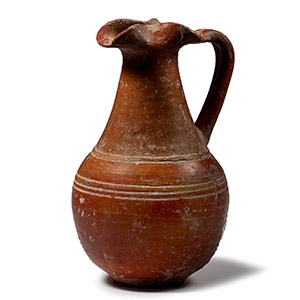
Phoenician Terracotta Jug with Handle
8th-7th century B.C.Estimate: £800 - 1,000 (‡+bp*)
Opening Bid: £400
With globular body decorated with circumferential banding, low foot, conical neck with pinched spout, strap handle to the rear. 395 grams, 18.5 cm
Acquired in the mid 1980s-1990s. Private collection, Switzerland, thence by descent. Private collection, since the late 1990s. -
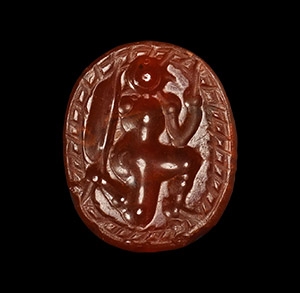
Etruscan Carnelian Scarab with Warrior
3rd century B.C.Sold for (Inc. bp): £1,170
With mouth and carapace detailing to the upper face, underside with intaglio image of a crouching warrior with a shield on his back, pelletted border. 0.78 grams, 10 mm
Acquired from Mr A.K. in 2012. Private collection, Europe.
