
Loading, please wait...
LOT 0111
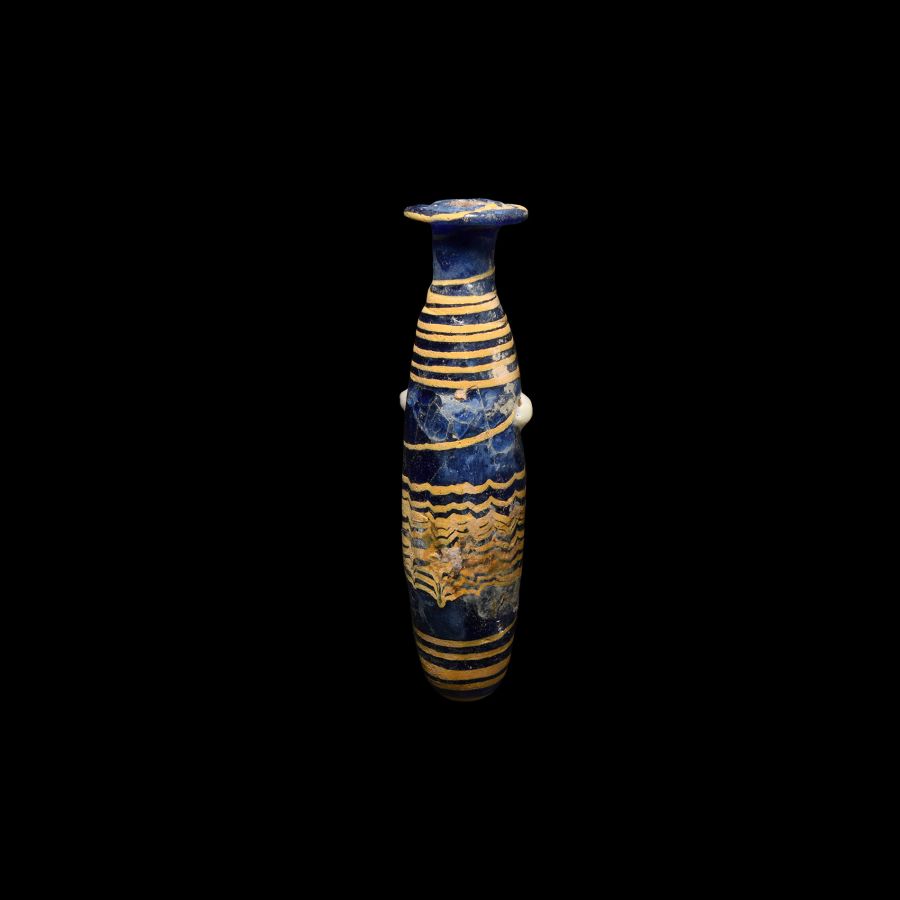
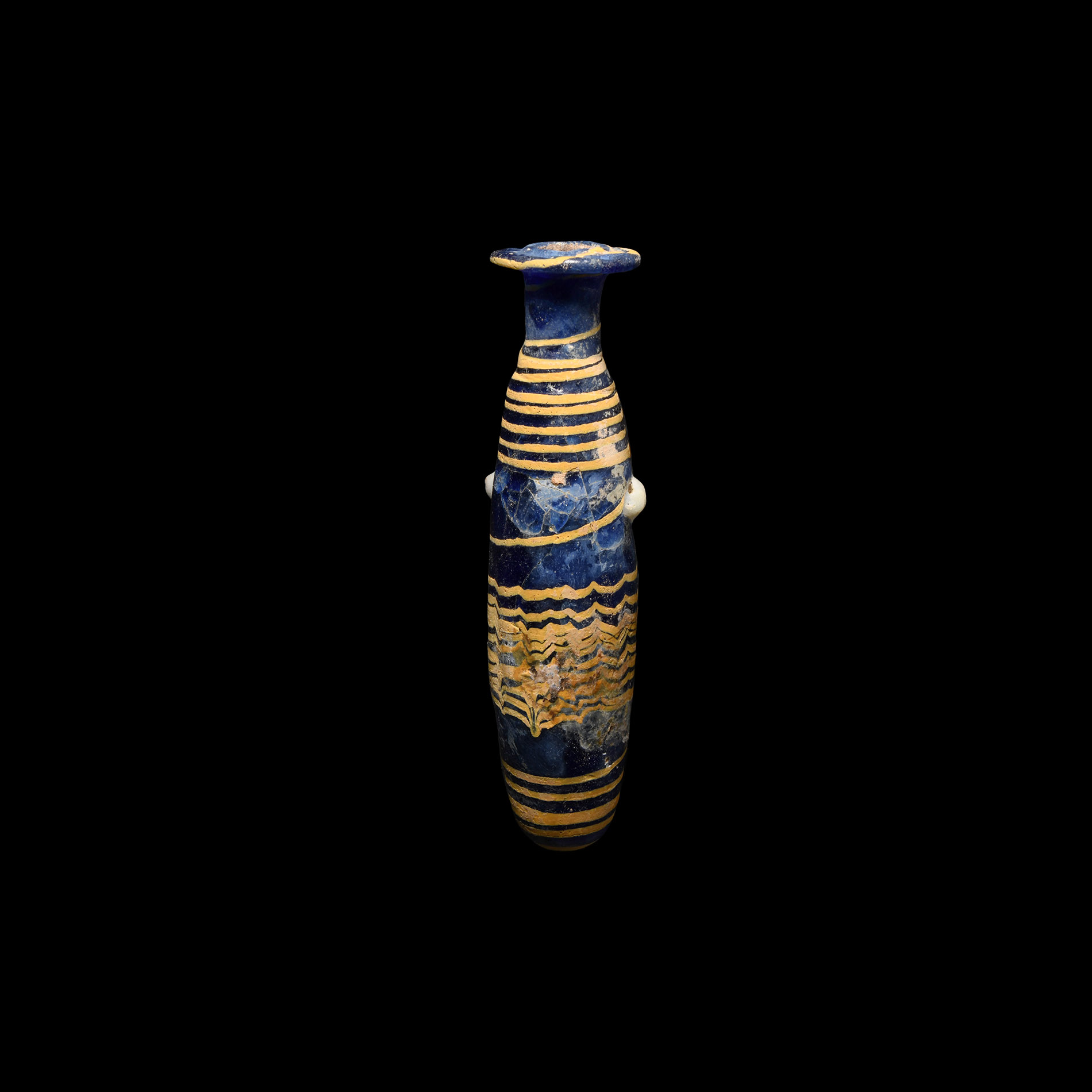
Greek Core-Formed Glass Alabastron
4TH-1ST CENTURY B.C.
5 1/2 in. (80 grams, 14 cm high).
Capsule-shaped with a blue body and yellow marvered trails and zigzags, cylindrical neck and flange rim, white knop handles to the shoulder; restored.
ProvenanceParis collection, 1990s.
From an important Paris gallery, France.
Ex private Parisian collection.
Cf. The Metropolitan Museum, accession number 81.10.302, for similar.
CONDITIONTimeLine Auctions follows a vetting process to ensure the authenticity and legality of all items, reinforcing our commitment to integrity and responsible trading. Each antiquity, antique, and coin lot undergoes thorough examination by a vetting committee of at least ten external specialists, professional trade association members, scientists, and archaeologists: Our Vetting Process
AUCTIONS:
TimeLine is a leading auction house specialising in antiquities, ancient art, collectables, natural history, coins, medals, and books. Our auctions offer museums, collectors, historians, and enthusiasts the opportunity to acquire unique and historically significant pieces.
LOT 0111
Greek Core-Formed Glass Alabastron
Estimate £1,000 - 1,400€1,160 - 1,620 (for guidance only)$1,350 - 1,890 (for guidance only)
-
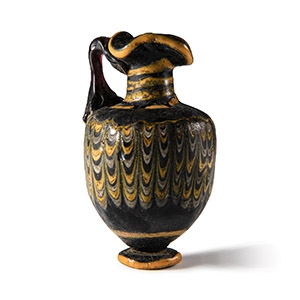
Greek Core-Formed Glass Juglet
Circa 4th-3rd century B.C.Sold for (Inc. bp): £1,170
Black glass with yellow dragged-trail detailing to the body, small disc foot; oinochoe-type pinched spout and applied strap handle to the rear; cracked and repaired. 67 grams, 74 mm high
Ex Korban Gallery, 1970s. Ex P. A., Hertfordshire, UK, specialist collection of Greek art, 1980-1990s. -
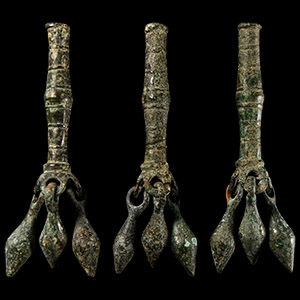
Etruscan Bronze Pendant Group
Circa 8th century B.C.Sold for (Inc. bp): £351
Comprising three pendant clusters, each a tube with balustered middle section and ribs, radiating loops at the lower end with suspended biconvex dangles. 90 grams total, 78 mm each
Acquired in the late 1970s. Ex Herr Bernhard Muller collection. with Galerie Ostracon, circa 2015. Accompanied by detailed collector's catalogue pages including description and photograph. -
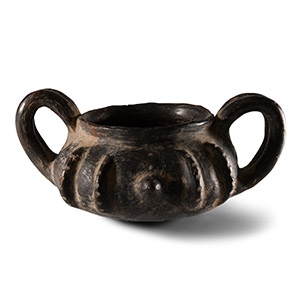
Etruscan Bucchero Kantharoid Vessel
Circa 7th-6th century B.C.Sold for (Inc. bp): £208
Blackware squat cup with applied vertical flanges and lugs to the body. low everted rim, lateral strap handles with median gusset; restored. 323 grams, 16 cm wide
From the Steel family collection, 1950s-late 1990s.
