
Loading, please wait...
LOT 0083
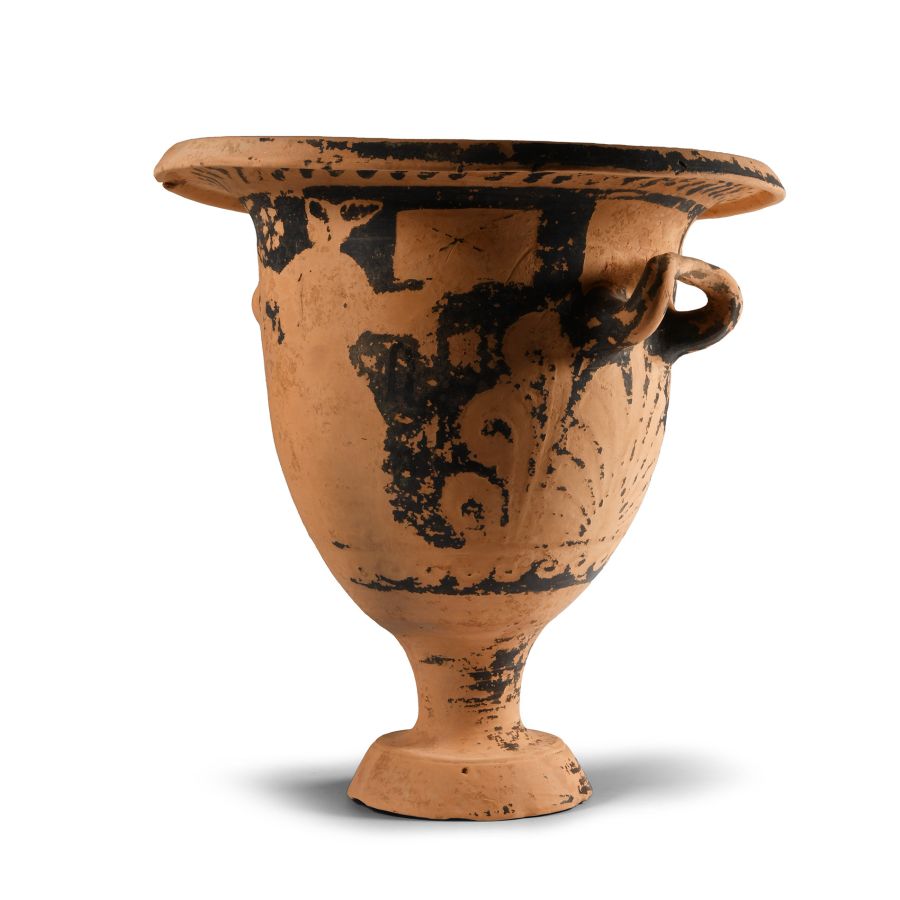
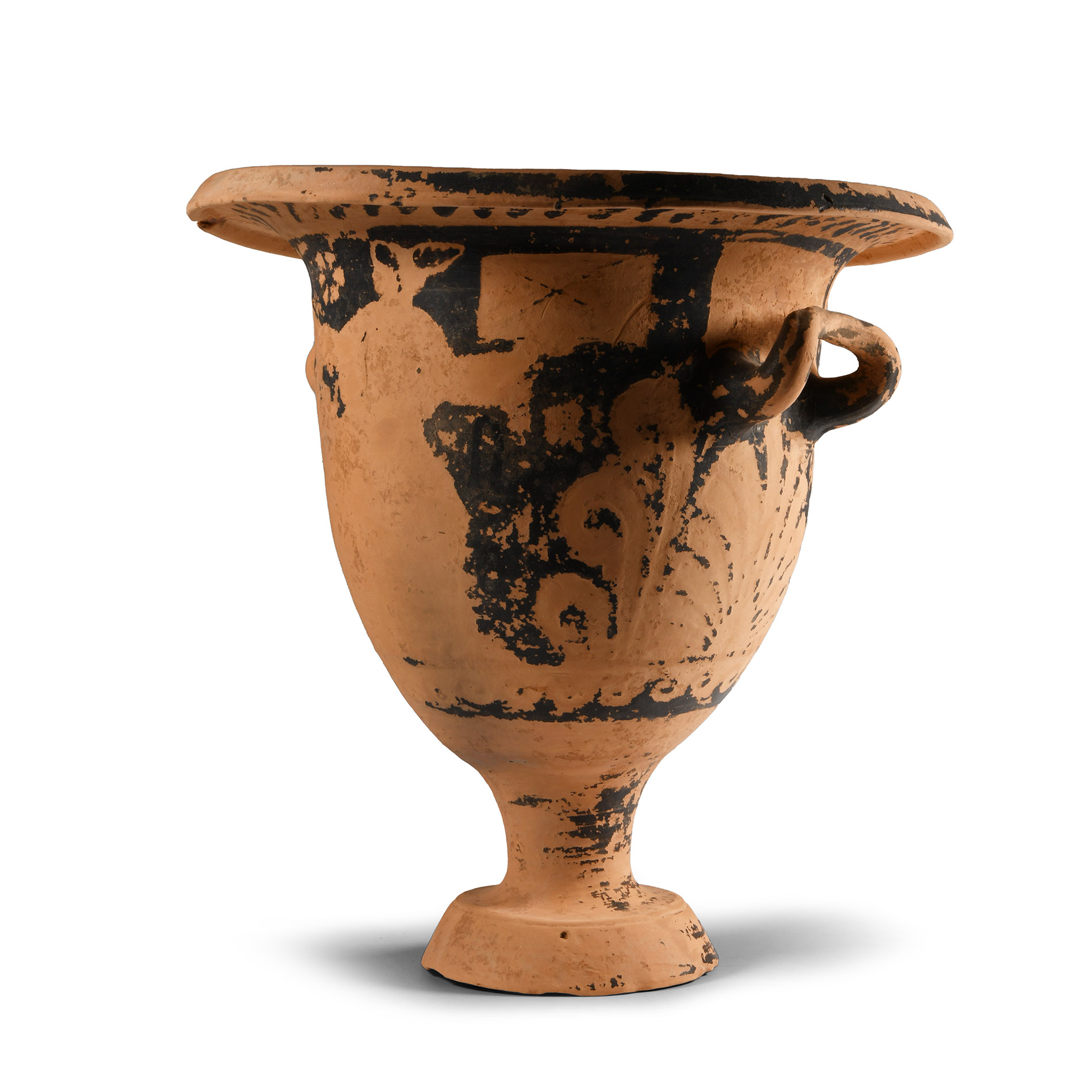
Greek Chevron Group Apulian Bell Krater
CIRCA 330 B.C.
10 1/2 in. (1.7 kg, 26.5 cm high).
With bell-shaped body and narrow chamfered foot, two lateral looped and folded handles, broad everted rim with chamfered edge; remains of black painted design with palmettes.
Provenancewith Galerie vom Parkberg, Hamburg, Germany, 1997.
Acquired Gerhard Hirsch, Munich, Germany, 24-28 September 2018, lot 677.
Accompanied by an original thermoluminescence report from Ralf Kotalla, no.190131, dated 10 March 1997.
Accompanied by a copy of the Gerhard Hirsch invoice and export licence.
TimeLine Auctions follows a vetting process to ensure the authenticity and legality of all items, reinforcing our commitment to integrity and responsible trading. Each antiquity, antique, and coin lot undergoes thorough examination by a vetting committee of at least ten external specialists, professional trade association members, scientists, and archaeologists: Our Vetting Process
AUCTIONS:
TimeLine is a leading auction house specialising in antiquities, ancient art, collectables, natural history, coins, medals, and books. Our auctions offer museums, collectors, historians, and enthusiasts the opportunity to acquire unique and historically significant pieces.
-
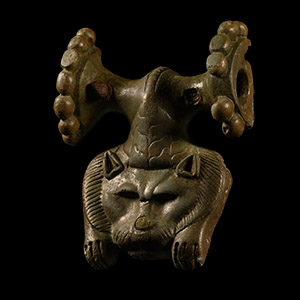
Greek Bronze Handle with Lion-Skin Head
Circa 5th-4th century B.C.Sold for (Inc. bp): £715
Formed as the skinned head and forepaws of a lion, together with two lateral handles with fastening holes surmounted by a pearled edge. 159 grams, 80 mm
Acquired on the UK art market 2000s.
The handle appears to be a device once attached to a wine vessel or pan-like vessels. The vessel handles were usually formed as divinities or animals linked with gods (ie. lions for Herakles). The lion's skin is hanging down as in representations of Herakles resting and drinking after his labours. -
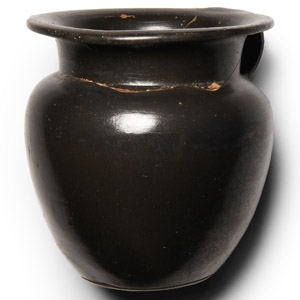
Greek Apulian Black-Glazed Mug
Circa 4th-3rd century B.C.Estimate: £300 - 400 (+bp*)
Opening Bid: £100
With a high-gloss black slip, ovoid body and a short wide neck with a flaring rim, a wide strap handle and a flat base. 144 grams, 95 mm wide
Ex P. A., Hertfordshire, UK, specialist collection of Greek art, 1980-1990s.
The black glaze technique uses the same glaze used by the Greeks on the red-figure and black-figure ceramics, but covering the entire piece, without figurative decoration. It was a transparent raw glaze, which took on its characteristic intense, glossy black tone after firing. -
.jpg)
Large Greek Attic Red Figure Skyphos
Circa 6th-4th century B.C.Sold for (Inc. bp): £3,380
With stepped foot and two loop handles to the rim, egg-and-dart border; Side A: female in loosely draped robe with fringe borders holding one corner of her robe in her raised left hand and advancing towards a male wearing a tight-fitting jacket and flared skirt, cap with straps flung wide; Side B: similar scene with the female standing with one hand on her hip, the male in the act of dancing; volute scroll beneath each handle. 1.02 kg, 30.5 cm wide
Ex P.A., Hertfordshire, UK, specialist collection of Greek art, 1980-1990s. Accompanied by an original thermoluminescence analysis report no.N123n52 from Oxford Authentication. This lot has been checked against the Interpol Database of stolen works of art and is accompanied by search certificate no.11952-210225.
