
Loading, please wait...
LOT 0093
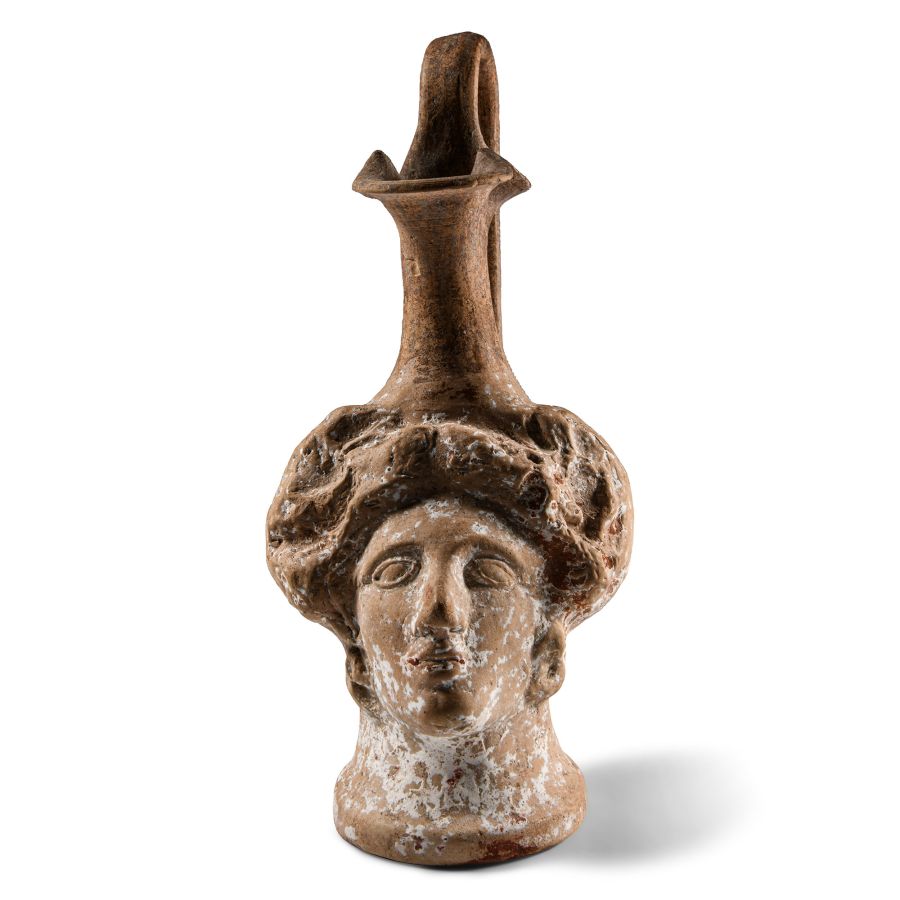
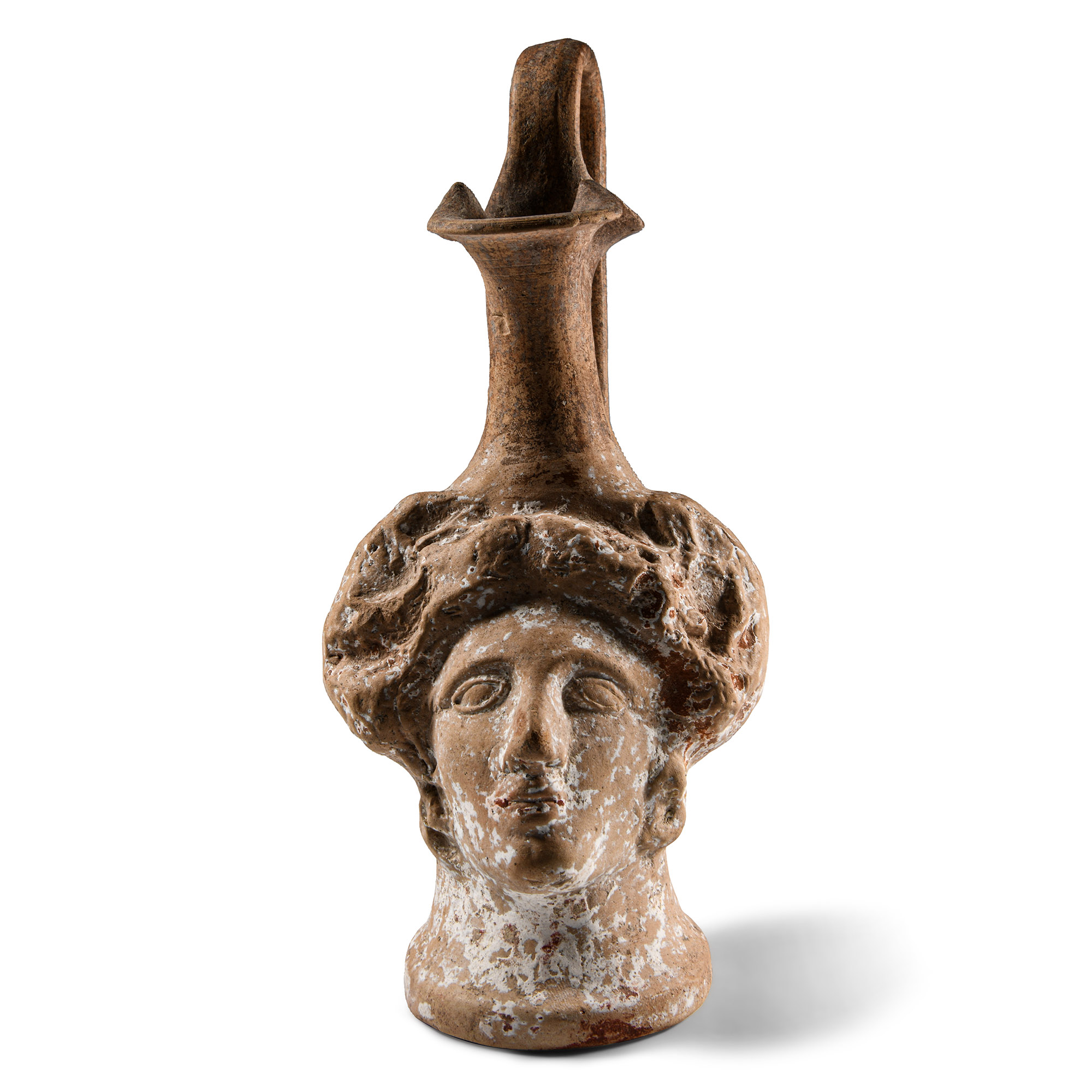
Greek Canosan Terracotta Anthropomorphic Oinochoe
CIRCA 4TH CENTURY B.C.
8 5/8 in. (446 grams, 22.2 cm high).
The body formed as a female bust with elaborately styled hair; discoid foot, tall stem with pinched rim giving a broad pouring lip, strap handle to the rear; some pigment remaining.
ProvenanceOld French private collection.
Swiss private collection, Basel-Landschaft.
Private collection of M. Tritten, Binningen, Switzerland.
Property of an East Sussex, UK, gentleman.
Cf. similar in the collection of Rhode Island School of Design under accession no.22.213.
CONDITIONTimeLine Auctions follows a vetting process to ensure the authenticity and legality of all items, reinforcing our commitment to integrity and responsible trading. Each antiquity, antique, and coin lot undergoes thorough examination by a vetting committee of at least ten external specialists, professional trade association members, scientists, and archaeologists: Our Vetting Process
AUCTIONS:
TimeLine is a leading auction house specialising in antiquities, ancient art, collectables, natural history, coins, medals, and books. Our auctions offer museums, collectors, historians, and enthusiasts the opportunity to acquire unique and historically significant pieces.
LOT 0093
Greek Canosan Terracotta Anthropomorphic Oinochoe
Estimate £800 - 1,000€930 - 1,160 (for guidance only)$1,080 - 1,350 (for guidance only)
-
.jpg)
Hellenistic Cut-Glass Skyphos
1st century B.C.-1st century A.D.Sold for (Inc. bp): £5,850
Drum-shaped frosted glass vessel on a low basal ring, lateral loop handles each with and angled spur below and fish-tail plaque above; 247 grams, 18 cm wide
Acquired in the 1980s. with Christopher Sheppard, London, UK. Acquired from the above in 2007. This lot has been checked against the Interpol Database of stolen works of art and is accompanied by search certificate no.11954-210906. -
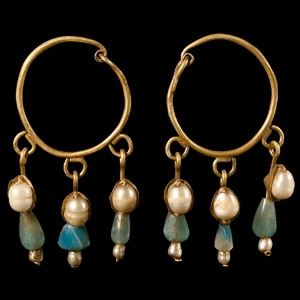
Hellenistic Gold Earrings with Beads and Pearls
Circa 2nd-1st century B.C.Estimate: £1,200 - 1,700 (+bp*)
Opening Bid: £625
Matched pair of gold hoop earrings with hook-and-eye closure; three applied loops to the lower edge each with a pearl in a cup setting, turquoise-coloured translucent gemstone beneath; restored. 12.27 grams total, 52-54 mm
From a collection of a London lady, acquired annually during 1990s-2000s.
The turquoise-coloured stones were artificially stained in antiquity. -
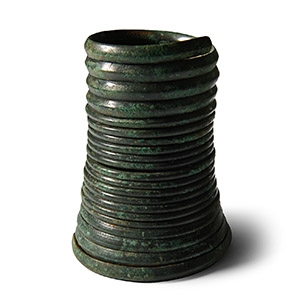
Greek Decorated Bronze Spiral Bracelet
8th-7th century B.C.Sold for (Inc. bp): £585
Formed as a spiral D-section rod with waisted profile, hatched and notched ornament to the edges. 685 grams, 11.5 cm
Private Swiss collection, acquired 2002.
