
Loading, please wait...
LOT 0502
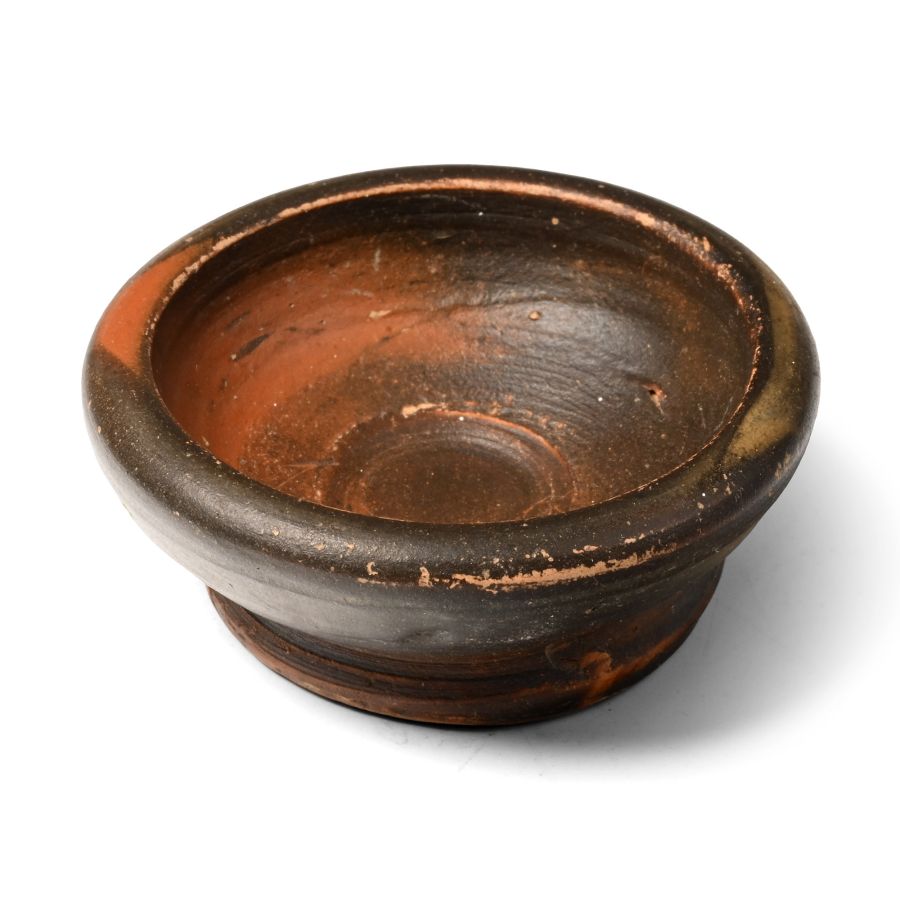
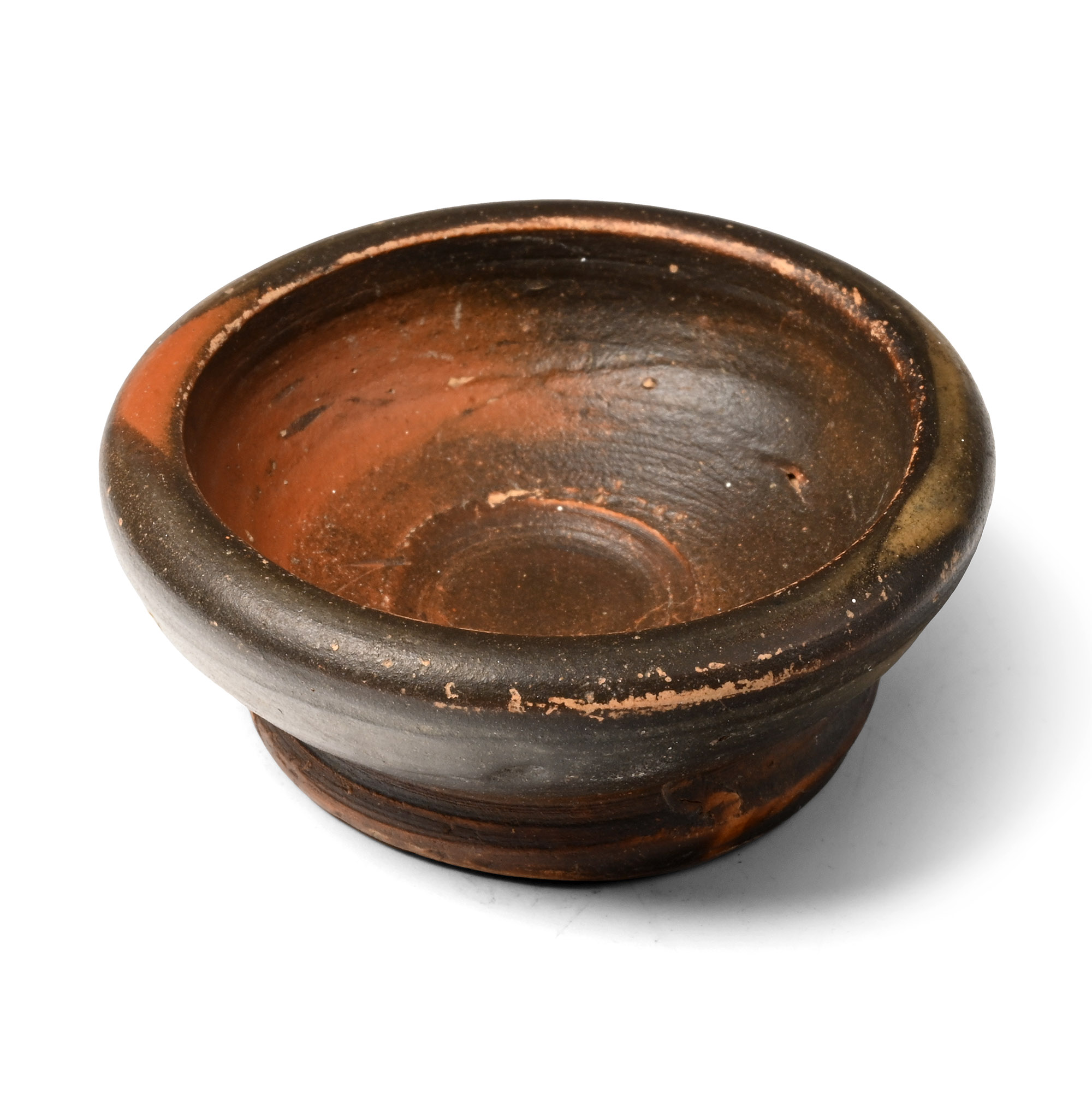
Greek Campanian Bowl
SOUTH ITALIAN, CIRCA 4TH-3RD CENTURY B.C.
1 3/4 in. (17.4 grams, 44 mm).
Broad and squat with thick rim and carinated foot. [No Reserve]
ProvenanceFrom the collection of David Donlan (1947-2025), a dedicated and lifelong collector with a passion for the ancient world and the natural sciences, forming his collection from 1960s onwards, using many reputable dealers across the United Kingdom, including the well-regarded Coincraft and The Parthenon Gallery.
CONDITIONTimeLine Auctions follows a vetting process to ensure the authenticity and legality of all items, reinforcing our commitment to integrity and responsible trading. Each antiquity, antique, and coin lot undergoes thorough examination by a vetting committee of at least ten external specialists, professional trade association members, scientists, and archaeologists: Our Vetting Process
AUCTIONS:
TimeLine is a leading auction house specialising in antiquities, ancient art, collectables, natural history, coins, medals, and books. Our auctions offer museums, collectors, historians, and enthusiasts the opportunity to acquire unique and historically significant pieces.
-
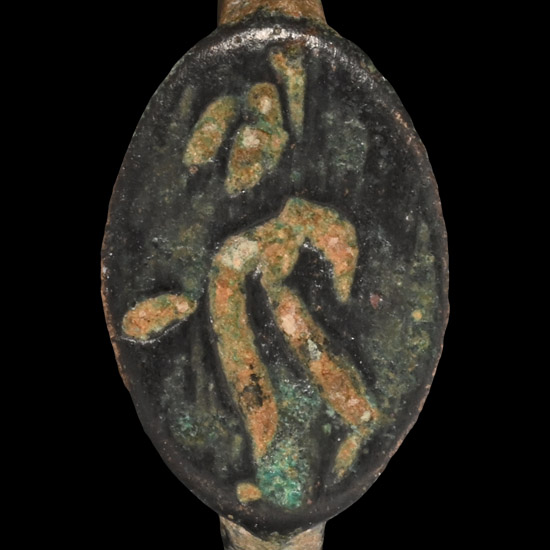
Greek Bronze Ring with Standing Figure
Circa 3rd-2nd century B.C.Sold for (Inc. bp): £46
Featuring a D-section hoop and an oval bezel with a stylised figure facing left. 1.58 grams, 18.07 mm overall, 14.74 mm internal diameter (approximate size British H, USA 3 3/4, Europe 6.18, Japan 6)
From the private collection of a European gentleman (1942-2024), formed since the 1970s. -
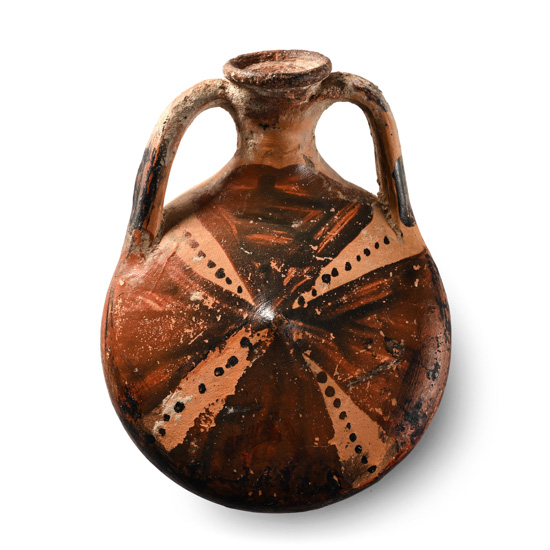
Mycenaean Painted Pottery Flask
14th-13th century B.C.Sold for (Inc. bp): £1,820
Comprising a circular body with a rounded base and two strap handles, a short neck with an everted rim; the body with a painted expanding cross motif with the arms separated by a band of pellets. 132 grams, 11.1 cm
Private collection, Switzerland, acquired in the 1994. Private family collection since the late 1990s. Accompanied by an academic report by Dr Raffaele D'Amato. This lot has been checked against the Interpol Database of stolen works of art and is accompanied by search certificate number no.13018-246795.
Mycenaean ceramics were influenced by Minoan shapes and decorative styles from the late Middle Helladic period. This close relationship – likely accompanied by the development of shared cultural practices and etiquette – creates the hypothesis that pilgrim flasks were introduced to Greece via Crete. Pilgrim flasks were produced in Mycenaean contexts from the Late Helladic IIA:1 period (1420-1390 B.C.). -
.jpg)
Greek Miniature Bronze Hydria
Geometric Period, 6th century B.C.Sold for (Inc. bp): £845
With a bulbous body, flared foot, lateral loop handles to the shoulder and a strap handle to the rear. 23.5 grams, 37 mm
Acquired by a Swiss family in the mid-1980s to late 1990s, thence by descent. Private collection, Switzerland, since the late 1990s.
The earliest Archaic Greek bronze hydriai enter the archaeological record in the last quarter of the seventh century. Although the appearance of bronze marks the first significant period of production in the Iron Age, these vessels represent a reawakening of an illustrious tradition dating back at least to the Helladic Bronze Age, if not considerably earlier.
