
Loading, please wait...
LOT 0539
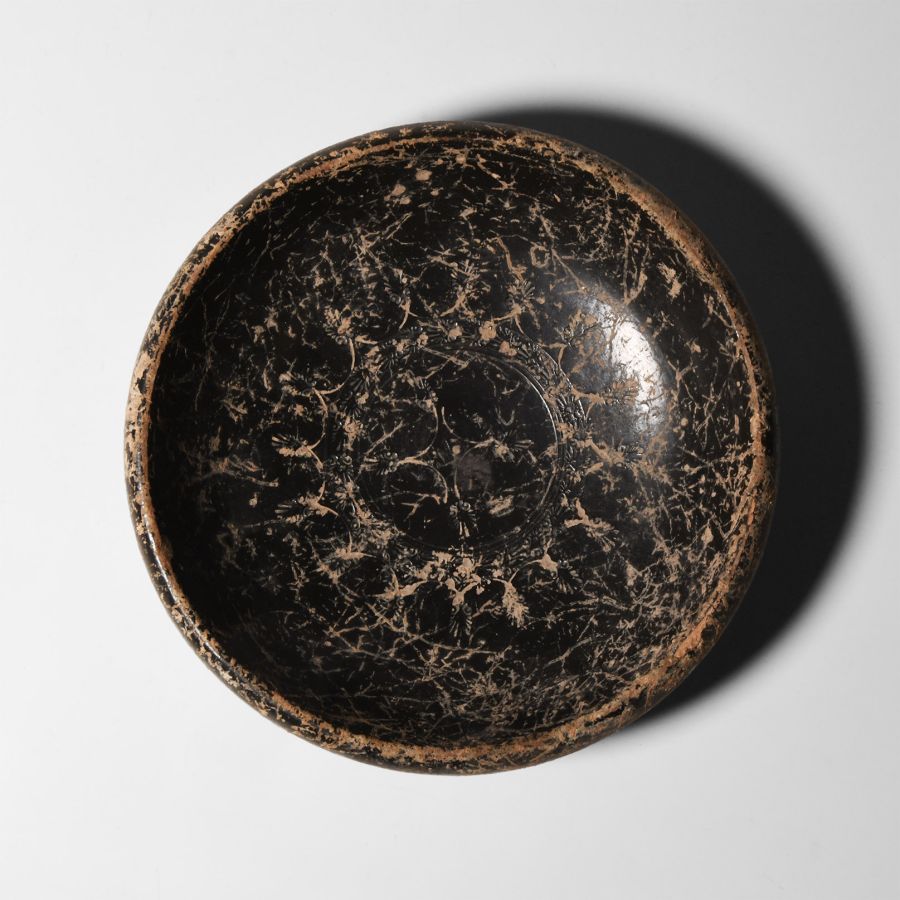
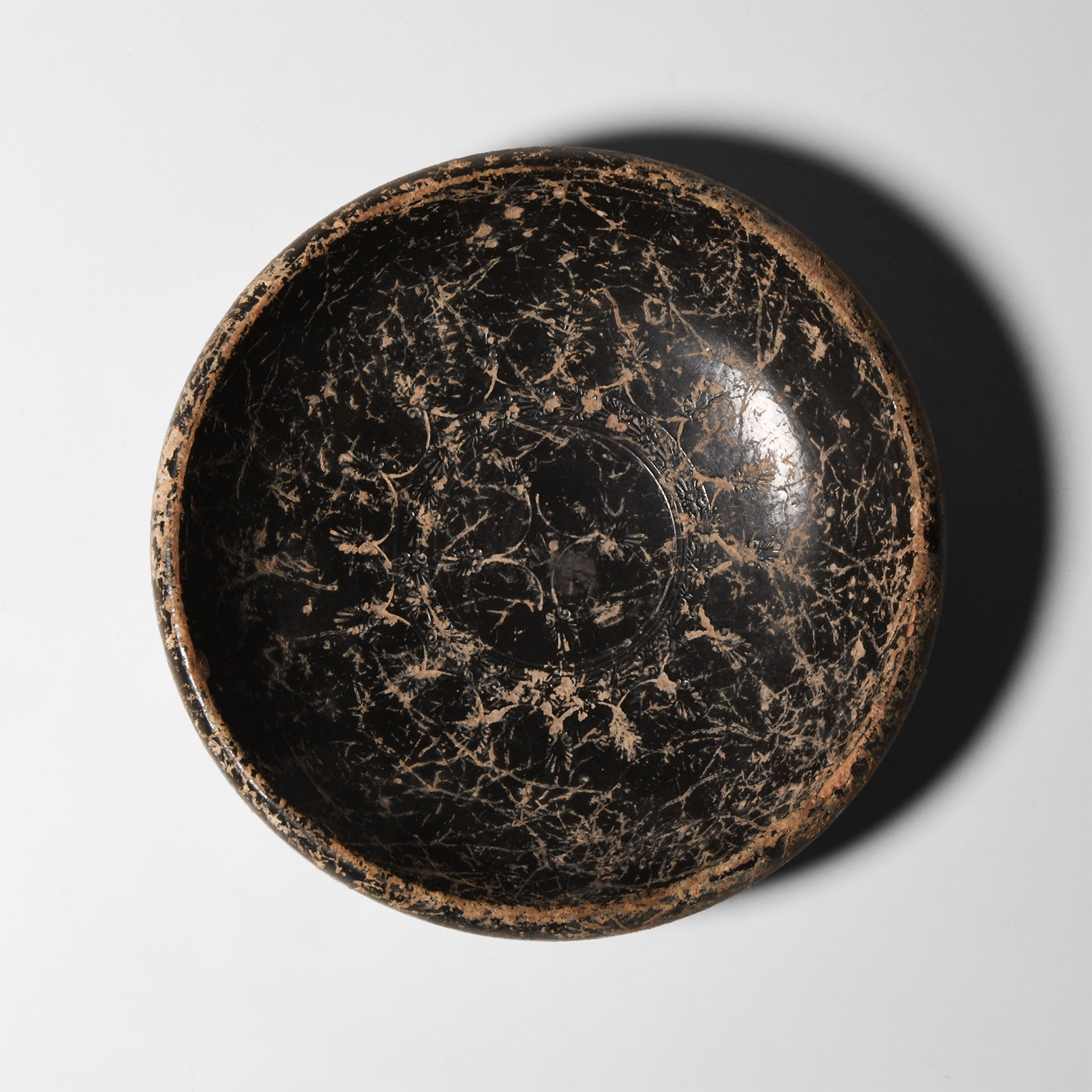
Greek Campanian Black Terracotta Bowl
4TH CENTURY B.C.
5 5/8 in. (223 grams, 14.2 cm).
A terracotta bowl or dish with broad inverted rim, squat convex body and carinated foot, covered in a black glaze and displaying a stylised radiating palmette leaf design to the interior base.
ProvenanceAcquired early 1990s.
Ex private American collection; thence by descent.
Private Swiss collection since 1998.
Cf. The Metropolitan Museum, New York, accession numbers X.21.38 and 17.194.1888, for very similar examples.
CONDITIONTimeLine Auctions follows a vetting process to ensure the authenticity and legality of all items, reinforcing our commitment to integrity and responsible trading. Each antiquity, antique, and coin lot undergoes thorough examination by a vetting committee of at least ten external specialists, professional trade association members, scientists, and archaeologists: Our Vetting Process
AUCTIONS:
TimeLine is a leading auction house specialising in antiquities, ancient art, collectables, natural history, coins, medals, and books. Our auctions offer museums, collectors, historians, and enthusiasts the opportunity to acquire unique and historically significant pieces.
-
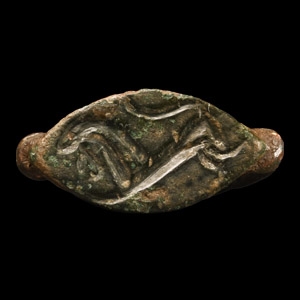
Greek Ring with Leaping Lion
Circa 4th-3rd century B.C.Sold for (Inc. bp): £124
A copper-alloy ring composed of a round-section hoop and ellipsoidal bezel displaying an incuse leaping lion motif, collars to shoulders. 4.23 grams, 26.35 mm overall, 19.34 mm internal diameter (approximate size British N, USA 6 1/2, Europe 13.72, Japan 13)
Early 1990s London collection. Acquired on the UK art market. From a private collection, Lancashire, UK. -
.jpg)
Greek Marble Head of a Female
4th-1st century B.C.Sold for (Inc. bp): £715
A head of a female carved in white marble, modelled in the round with semi-naturalistic facial features and hair tied back into a chignon at the nape of the neck. 163 grams, 59 mm high
Acquired early 1990s. Ex private American collection; thence by descent. Private collection since 1998. -
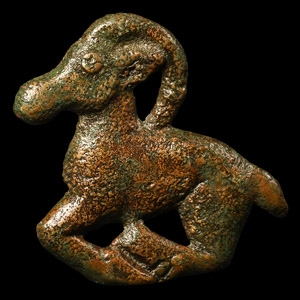
Scythian Ibex Mount
1st millennium B.C.Sold for (Inc. bp): £176
A bronze mount depicting an ibex in profile with the legs folded beneath the body, mounting lug to the reverse. 38.6 grams, 60 mm
Acquired 1980-2015. Ex Abelita family collection.
