
Loading, please wait...
LOT 0545
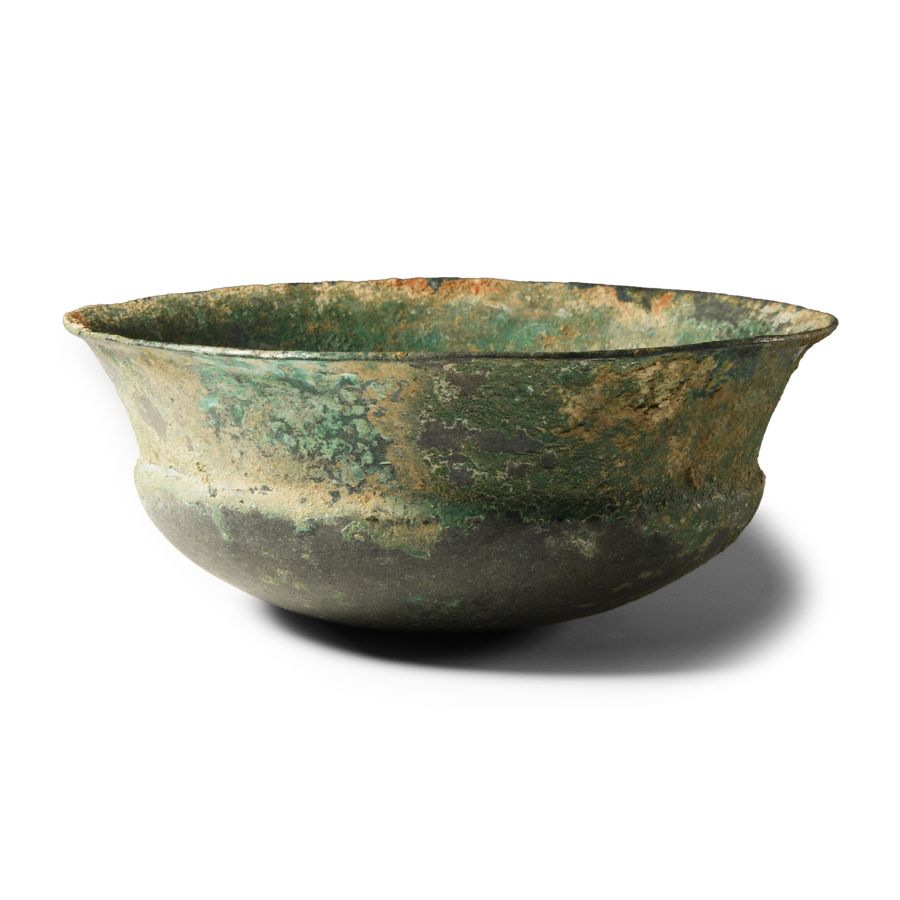
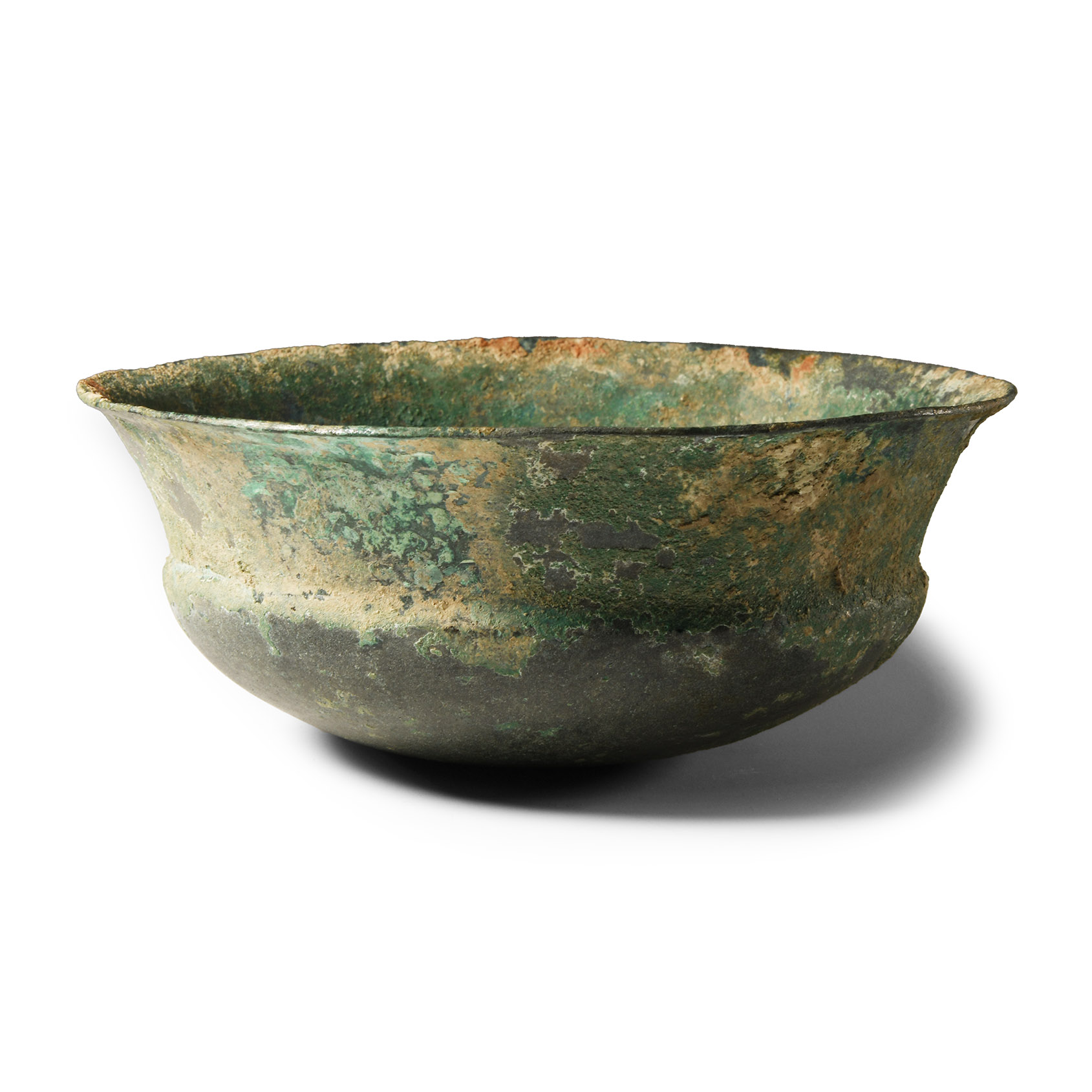
Greek Bronze Tiered Cup
CIRCA 4TH-3RD CENTURY B.C.
5 5/8 in. (171 grams, 14.2 cm wide).
Comprising a shallow carinated body with flared rim.
ProvenanceAcquired on the UK art market in the 1980s.
From an East Anglian private collection.
TimeLine Auctions follows a vetting process to ensure the authenticity and legality of all items, reinforcing our commitment to integrity and responsible trading. Each antiquity, antique, and coin lot undergoes thorough examination by a vetting committee of at least ten external specialists, professional trade association members, scientists, and archaeologists: Our Vetting Process
AUCTIONS:
TimeLine is a leading auction house specialising in antiquities, ancient art, collectables, natural history, coins, medals, and books. Our auctions offer museums, collectors, historians, and enthusiasts the opportunity to acquire unique and historically significant pieces.
LOT 0545
Greek Bronze Tiered Cup
Estimate £150 - 200€170 - 230 (for guidance only)$200 - 270 (for guidance only)
-
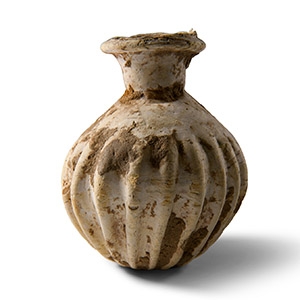
Greek Cream Frit Ribbed Bottle
4th-2nd century B.C.Estimate: £120 - 170 (‡+bp*)
Opening Bid: £60
Opaque with vertical ribbing around the globular body, trumpet-style neck and mouth with rolled rim. 76 grams, 73 mm high
Acquired early 1990s. Ex private American collection; thence by descent. Private collection since 1998. -
.jpg)
Gold Necklace with Agate Pendant
1st century B.C.-2nd century A.D.Estimate: £15,000 - 20,000 (+bp*)
Opening Bid: £7,500
A Graeco-Roman or Phoenician chain of loop-in-loop links and thick suspension ring, gold dome with bands of applied granules capping an egg-shaped banded agate drop. 26.19 grams, 48 cm long
Acquired in the late 1980s-early 1990s. Important North West London collection. Accompanied by an academic report by Dr Raffaele D’Amato. This lot has been checked against the Interpol Database of stolen works of art and is accompanied by search certificate no.11935-210477.
Agate was appreciated in the Greek and Roman world for its magical virtues. A recently found agate gemstone from Imperial-era Anapa, which differs from the other similar agate stones in its spherical shape and large size, was inscribed with a text referring to traditional Greek expulsion rituals against evil and diseases, ending with a list of human head parts similar to the one found in the Hippocratic medical handbook. The gemstone was probably worn not only as an amulet, but also as a miniature handbook with instructions for making amulets. According to Pliny the Elder (NH, XXXVII, 47) a certain type of agate was protected against spiders and scorpions. -
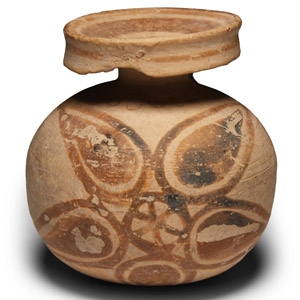
Greek Corinthian Terracotta Aryballos
Circa 6th century B.C.Sold for (Inc. bp): £416
Bulbous-bodied with a short neck, deep rim and strap handle; polychrome roundels to the mouth, orange line to the rim, dots around the shoulder and a five-petalled lotus flower blossoming on the main body, a five-rayed wheel at the centre of the flower and on the opposite side. 96 grams, 77 mm high
Ex P. A., Hertfordshire, UK, specialist collection of Greek art, 1980-1990s.
Corinthian aryballoi with floral quatrefoils or lotus flowers were produced in great numbers throughout the 6th century B.C. and probably into the 5th, and were also widely exported. The simple but distinctive decoration suggests that these vases may have had a specific contents, possibly used as an oil flask.
