Loading, please wait...

Use mousewheel to zoom in and out, click to enlarge

Details

LOT 0572

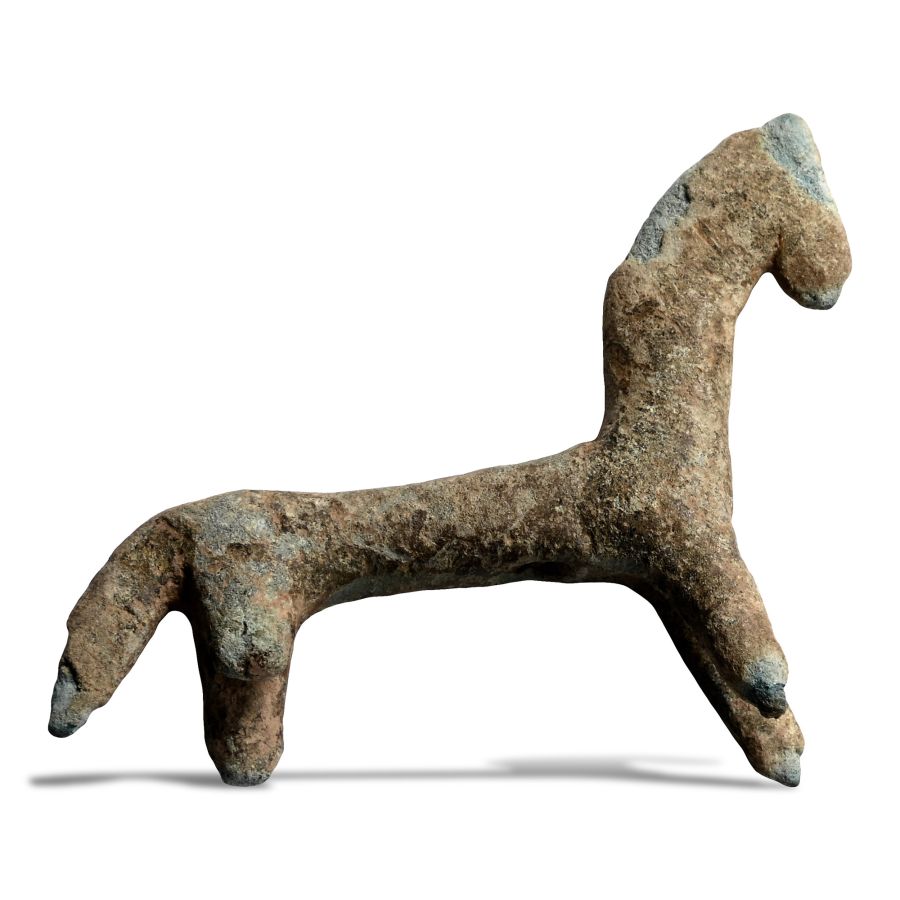
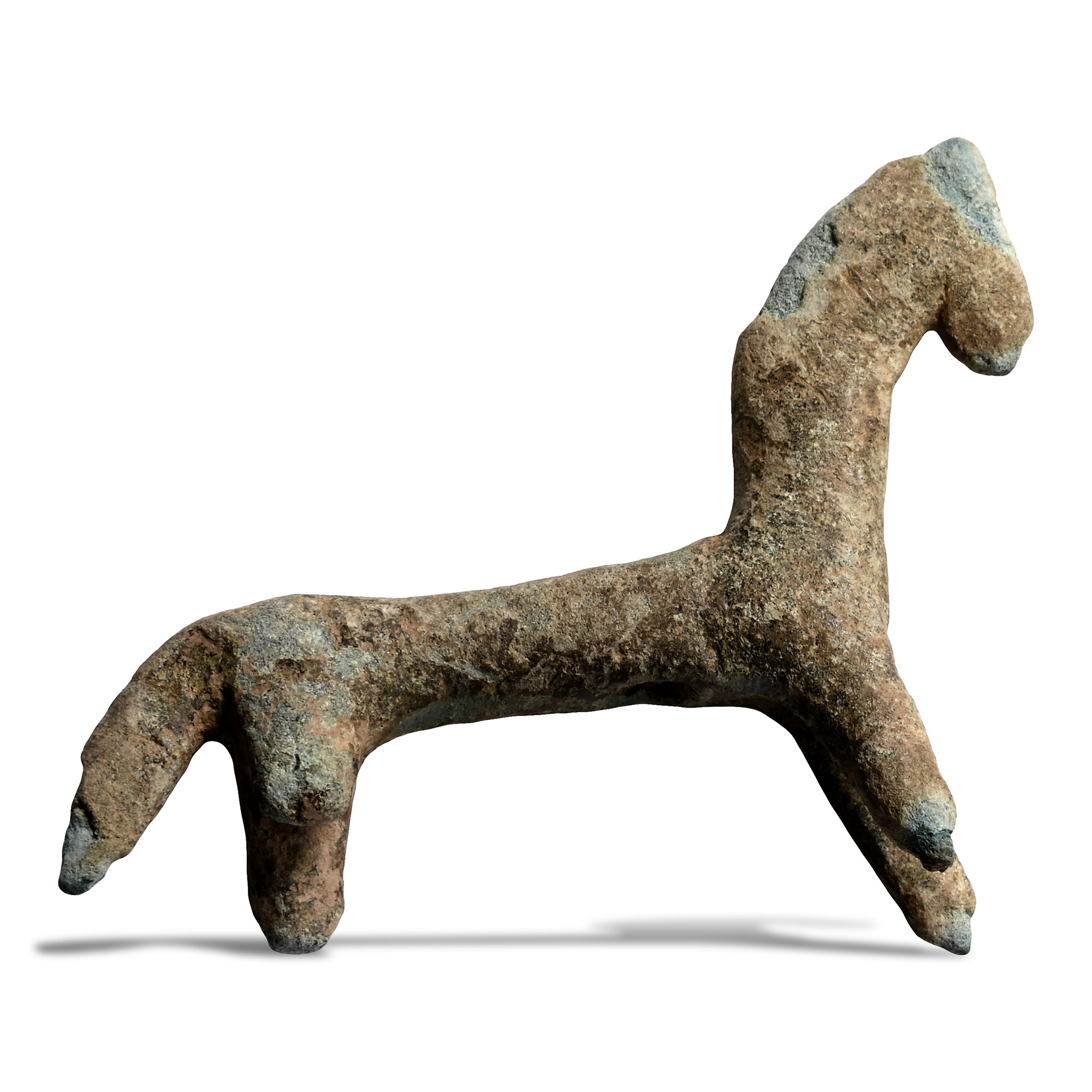
Greek Bronze Statuette of a Horse

ANATOLIA, CIRCA 5TH-3RD CENTURY B.C.

2 1/2 in. (18.75 grams, 62.08 mm).

Modelled in the round with vertical piercing at the chest.

Provenance

Ex Abelita family collection, 1980s-2000s.

CONDITION

VETTING:

TimeLine Auctions follows a rigorous vetting process to ensure the authenticity and legality of all items, reinforcing our commitment to integrity and responsible trading. Each antiquity, antique, and coin lot undergoes thorough examination by a vetting committee of at least ten external specialists, professional trade association members, scientists, and archaeologists: Our Vetting Process


AUCTIONS:

TimeLine is a leading auction house specialising in antiquities, ancient art, collectables, natural history, coins, medals, and books. Our auctions offer museums, collectors, historians, and enthusiasts the opportunity to acquire unique and historically significant pieces.

Live Auction

LOT 0572

Greek Bronze Statuette of a Horse

Sold for (Inc. bp): £234

Print page

Previous Lot
Next Lot

RELATED LOTS

  • Lydian Silver Ribbed Jug with Spout and Handle
    Lydian Silver Ribbed Jug with Spout and Handle
    Archaic, 6th century B.C.

    Estimate: £6,000 - 8,000 (+bp*)

    Opening Bid: £3,000

    Comprising a squat body with a median band of vertical ribbing, a short neck with a broad flared rim, and a thickened outer rim, a flared foot; fluted strap handle and a U-section spout flared at the outer end. 211 grams, 14 cm


    UK private collection before 2000. Acquired on the UK art market. Private collection, London, UK. This lot has been checked against the Interpol Database of stolen works of art and is accompanied by search certificate number no.13266-253452.

    This jug can plausibly be placed in the Lydian world of western Anatolia during the Archaic period, when Lydia stood at the crossroads of the Greek and Near Eastern worlds. Far from being culturally isolated, Lydia was deeply involved in the exchange of artistic forms, luxury materials, and metalworking traditions that moved across the eastern Mediterranean in the 7th and 6th centuries B.C. The attribution, therefore, suggests more than geography alone: it points to a wealthy and outward-looking culture in which prestige objects in precious metal carried both social and economic weight. Silver was especially important in this period. Before coinage became widespread, it functioned as a recognised store of value and circulated in weighed forms across the Mediterranean and Near East. In Lydia, its importance is sharpened by the region’s close association with the early history of coinage: ancient sources and modern scholarship alike connect the Lydians with the development of some of the earliest coined money, first in electrum and soon after in distinct gold and silver issues. A vessel such as this would therefore have been more than a practical object. Its material alone marked it as a possession of consequence, while its workmanship placed it firmly within the culture of elite display.

    Lot Details

  • Etruscan Stone Animal Figure Group
    Etruscan Stone Animal Figure Group
    Circa 6th century B.C.

    Sold for (Inc. bp): £65

    Comprising two stylised figures, one with an elongated body and one with a stocky body. 11.3 grams total, 26.3-46 mm


    From the private collection of a European gentleman (1942-2024), formed since the 1970s.

    Lot Details

  • Greek Terracotta White-Ground Painted Lekythos Attributed to the Athena Painter
    With Thermoluminescence Analysis Report
    Greek Terracotta White-Ground Painted Lekythos Attributed to the Athena Painter
    Circa 510-500 B.C.

    Sold for (Inc. bp): £5,460

    Cylindrical with stepped foot, five palmettes above the shoulder, dynamic frieze of two men visiting two hetairai, each of the figures dressed in long pleated garments, at the centre of the scene, a hetaira on the right reaching towards the bearded male and gently touching his chin with her open hand, a tall draped table behind her with an amphora underneath and a standing bird on the top. 459 grams, 26.4 cm


    H.A.C. (Herbert A. Cahn), 19 October 1979. Private collection, Bern, Switzerland. Accompanied by an original thermoluminescence analysis report no.N125q45 by Oxford Authentication. This lot has been checked against the Interpol Database of stolen works of art and is accompanied by a search certificate number no.12644-236376.

    The Athena Painter is known as the painter who designed several Greek black-figure pottery works using the 5th-century BC white-ground technique. He specialised in lekythoi and refers to Athena as the main subject in his works. Together with the Theseus Painter, they continued the tradition of painting large lekythoi. His black figures are of high quality, and in addition to lekythoi, he decorated other potteries such as oenochoai. Some archaeologists say that he may have been the same person as the Bowdoin Painter of red-figure pottery, although they may have just worked in the same workshop.

    Lot Details

Stay up-to-date with the latest from TimeLine Auctions by joining our mailing list