
Loading, please wait...
LOT 0789
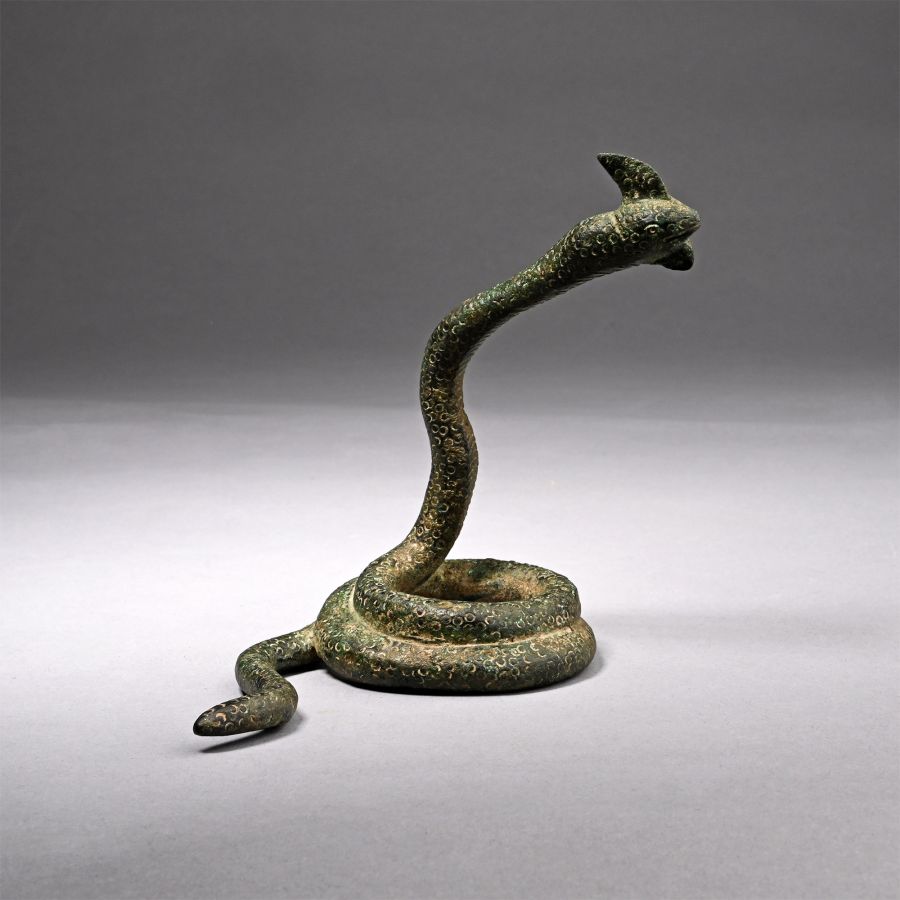
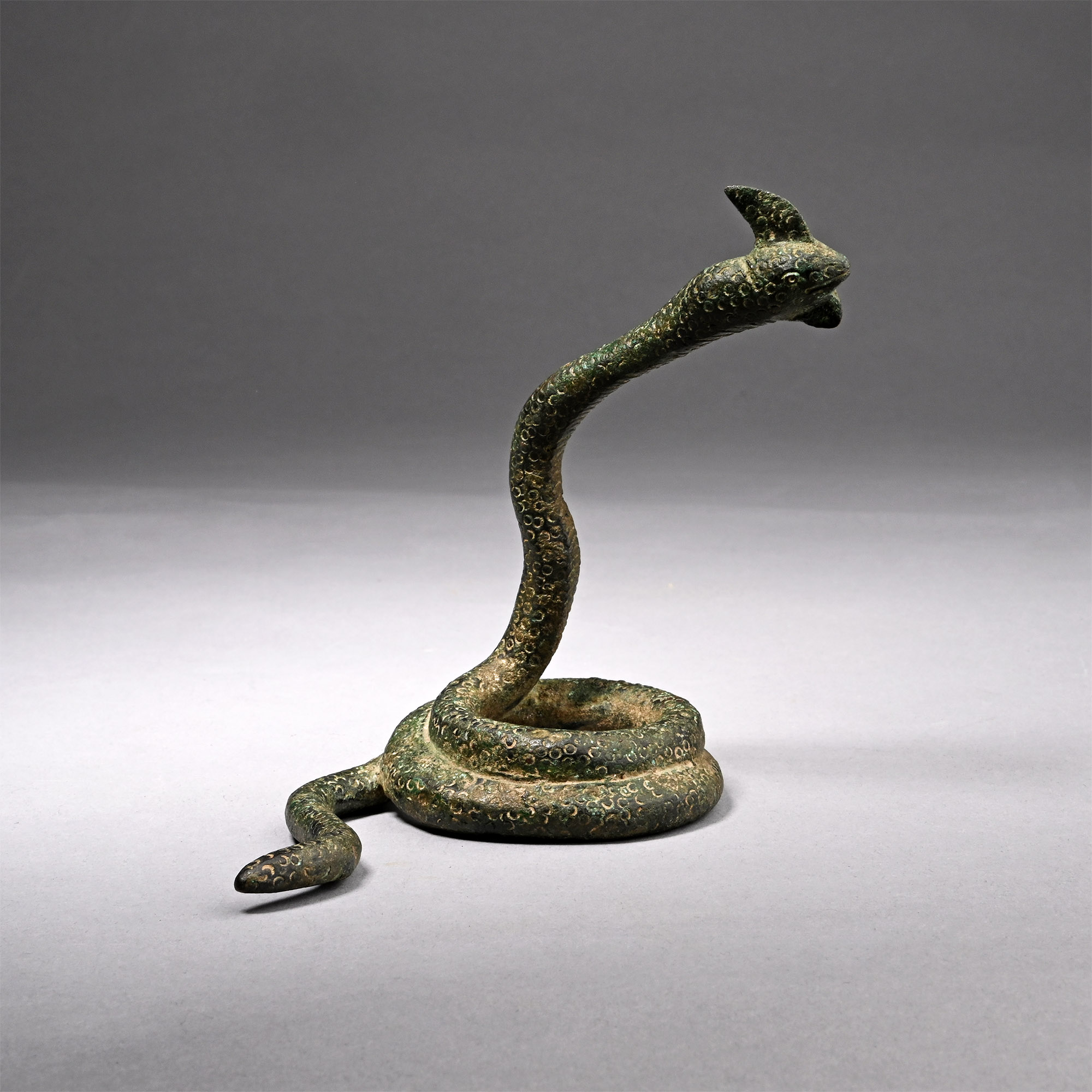
Greek Bronze Statuette of a Coiled and Rearing Snake
ARCHAIC, 6TH-5TH CENTURY B.C.
4 1/4 in. (312 grams, 11 cm).
Modelled in the round with coiled body and rearing head, barbed fin to the forehead, punched annulet texturing on the body.
ProvenancePrivate collection, Neuchâtel, Switzerland, assembled in the 1980s.
Acquired in 1995 by a European private collector.
Private collection, since the late 1990s.
This lot has been checked against the Interpol Database of stolen works of art and is accompanied by a search certificate number no.12856-241689.
See Dallas Museum of Art, object number 1969.7.
FootnotesSnakes were important symbols in ancient Greek culture and were often linked with protection, healing, and renewal. Because they shed their skin, they were seen as a sign of rebirth and new life. They were also connected with gods and spirits of the earth and underworld, and in some cases were thought to protect the home or sacred places. In Greek art, a snake could therefore carry both religious and symbolic meaning.
CONDITIONTimeLine Auctions follows a vetting process to ensure the authenticity and legality of all items, reinforcing our commitment to integrity and responsible trading. Each antiquity, antique, and coin lot undergoes thorough examination by a vetting committee of at least ten external specialists, professional trade association members, scientists, and archaeologists: Our Vetting Process
AUCTIONS:
TimeLine is a leading auction house specialising in antiquities, ancient art, collectables, natural history, coins, medals, and books. Our auctions offer museums, collectors, historians, and enthusiasts the opportunity to acquire unique and historically significant pieces.
LOT 0789
Greek Bronze Statuette of a Coiled and Rearing Snake
Estimate £4,000 - 6,000€4,640 - 6,960 (for guidance only)$5,400 - 8,100 (for guidance only)
Opening Bid
£2,222 (EUR 2,578; USD 3,000) ‡+BP*
-
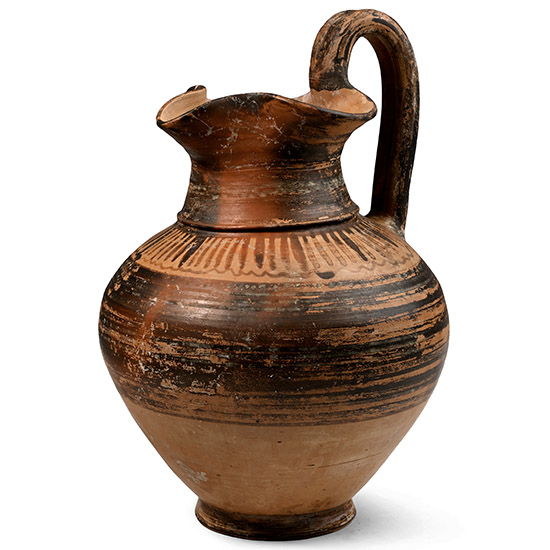
Etruscan Oinochoe with Tongue Frieze
7th-6th century B.C.Estimate: £1,800 - 2,400 (‡+bp*)
Opening Bid: £825
Bulbous in profile with a high, double-ribbed handle from the trefoil mouth to the shoulder; carinated collar above frieze of radiating tongues in glaze on the shoulder; two wavy bands on the neck, lines on the belly in opaque white. 1.04 kg, 28 cm
Ex Prof. A., Basel, Switzerland; thence by descent. This lot has been checked against the Interpol Database of stolen works of art and is accompanied by search certificate no.13535-263127.
Greek influence in the Etruscan world emerged during the Orientalizing period with the introduction of wine, likely an Eastern variety, following the tradition of spiced Syro-Phoenician wines that had been significant in the preceding era. This involved not merely the importation of the product itself, but also the introduction and subsequent local production of the associated ceramic vessels used for its consumption, such as this oinochoe. This is significant, given that the banquet custom and the ritual of the symposium,in which participants reclined while dining, would not emerge in Etruria until later. -
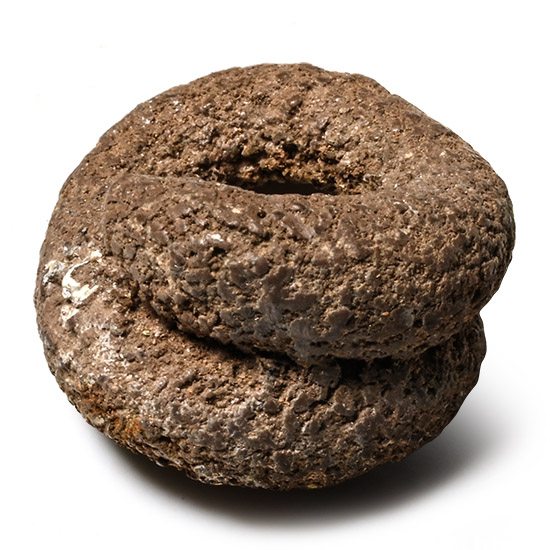
Greek Silver Hair Ring
1st millennium B.C.Estimate: £40 - 60 (+bp*)
Opening Bid: £5
Round in section with overlapping snake-head finals. 5.87 grams, 16 mm
From the private collection of a European gentleman (1942-2024), formed since the 1970s. -
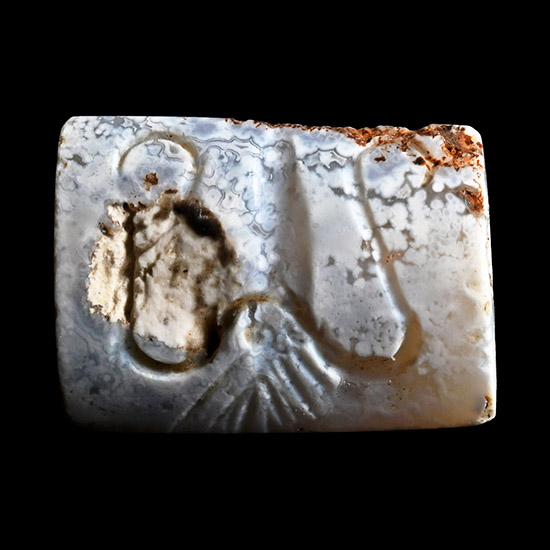
Minoan Agate Seal with Squid
2nd millennium B.C.Estimate: £3,000 - 4,000 (+bp*)
Opening Bid: £1,500
Ellipsoid in section and rectangular in plan with incuse squid motif; pierced for use as a bead, but the end-holes not joined; supplied with a museum-quality impression. 2.53 grams, 19.1 mm
Private collection, 1980s. Acquired on the UK art market. Private collection, London, UK. This lot has been checked against the Interpol Database of stolen works of art and is accompanied by search certificate no.13484-262458.
In a relatively large number of Minoan seals, it is difficult to determine unequivocally the exact type of animal depicted. Some are hybrid figures with hooves, animal legs or are posed with a frontal face. Some figures are crudely scratched in the field; others are more carefully modelled.
