
Loading, please wait...
LOT 0500
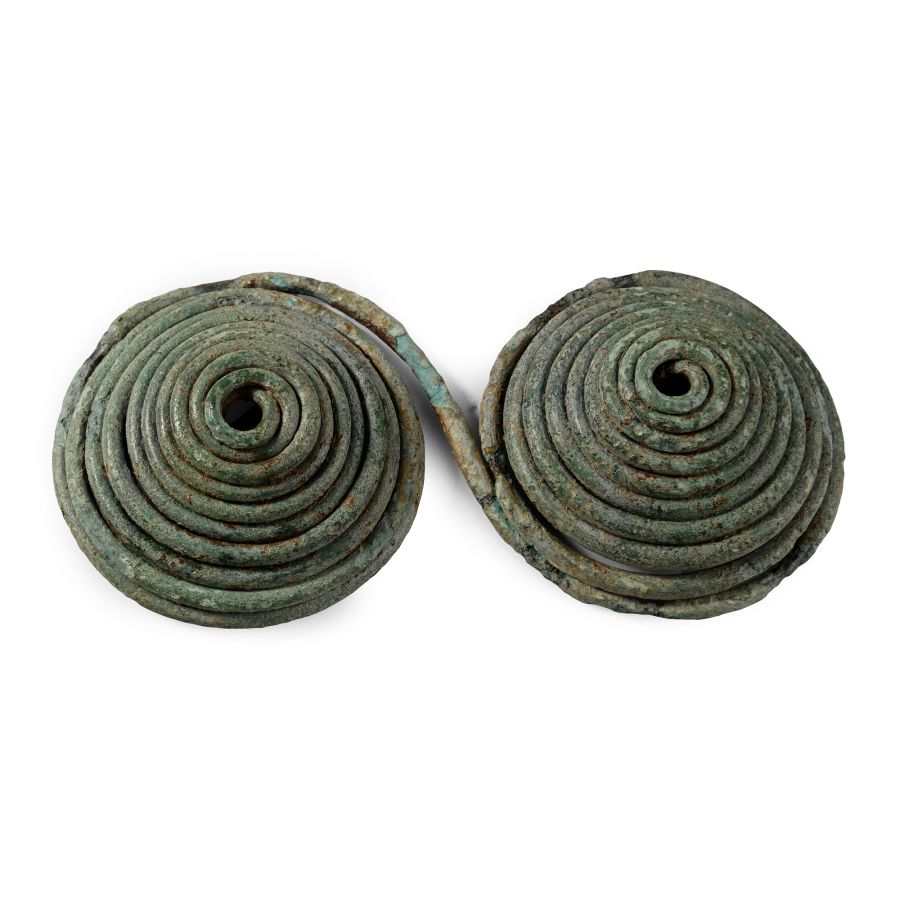
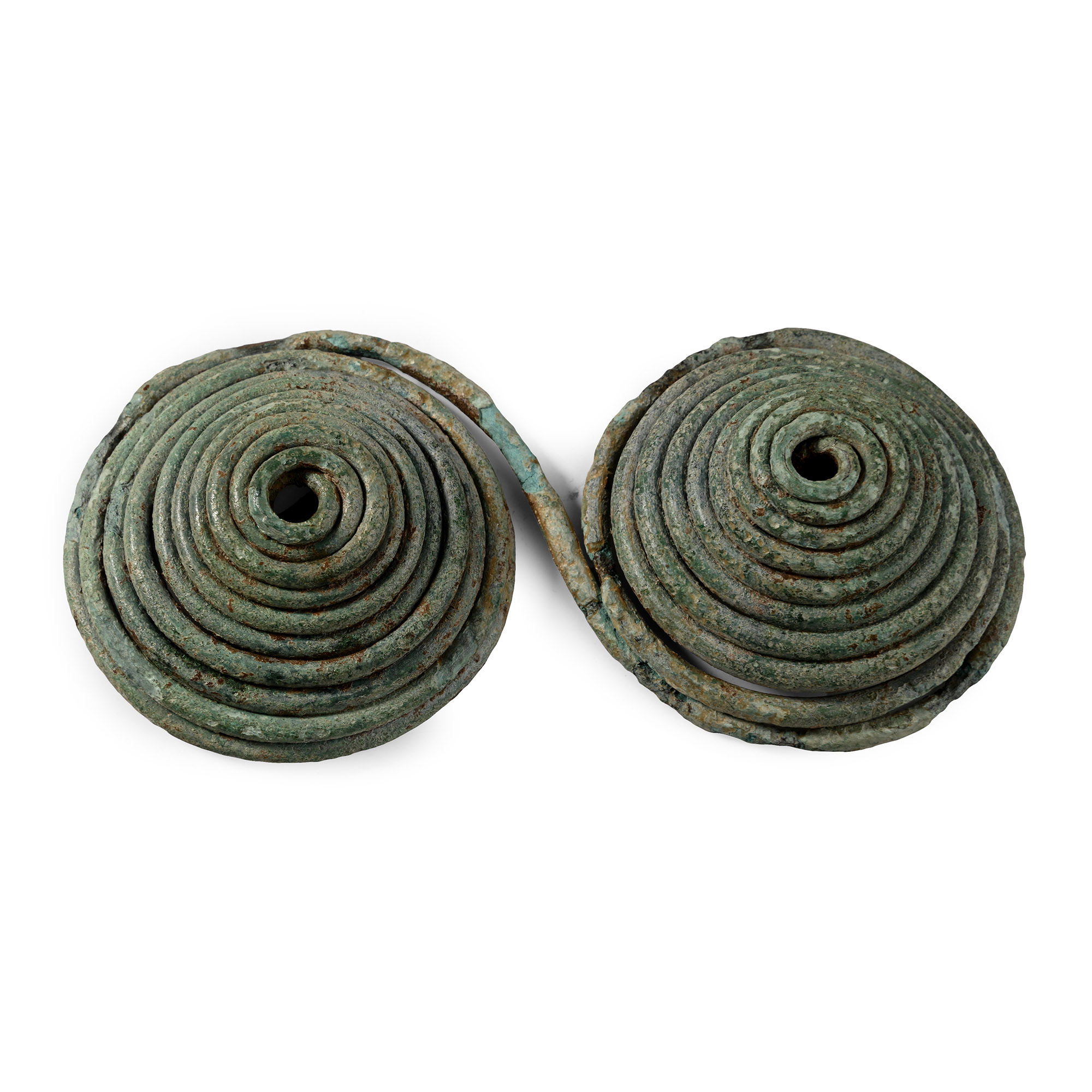
Greek Bronze Spectacle Brooch
BRONZE AGE, CIRCA 8TH CENTURY B.C.
4 3/4 in. (121 grams, 12 cm).
Formed as a single rod in two large tightly-wound domed coils with integral catch to reverse of each dome.
ProvenanceFrom a UK collection formed in the 1980s.
Property of an Essex, UK, gentleman.
Cf. The Metropolitan Museum of Art, accession number 37.11.18, for similar.
CONDITIONTimeLine Auctions follows a vetting process to ensure the authenticity and legality of all items, reinforcing our commitment to integrity and responsible trading. Each antiquity, antique, and coin lot undergoes thorough examination by a vetting committee of at least ten external specialists, professional trade association members, scientists, and archaeologists: Our Vetting Process
AUCTIONS:
TimeLine is a leading auction house specialising in antiquities, ancient art, collectables, natural history, coins, medals, and books. Our auctions offer museums, collectors, historians, and enthusiasts the opportunity to acquire unique and historically significant pieces.
-
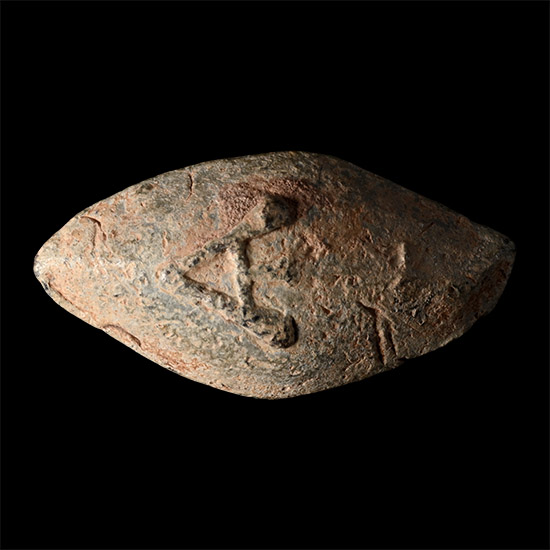
Greek Lead Slingshot with Alpha
1st century B.C.Sold for (Inc. bp): £104
Lenticular type with casting seam to the rim, raised iconic Greek letter A (alpha) on one side and the other side with a thunderbolt(?). 26.2 grams, 32 mm
Ex German art market, 2000s. Acquired from an EU collector living in London. From the collection of a Surrey, UK, gentleman. -
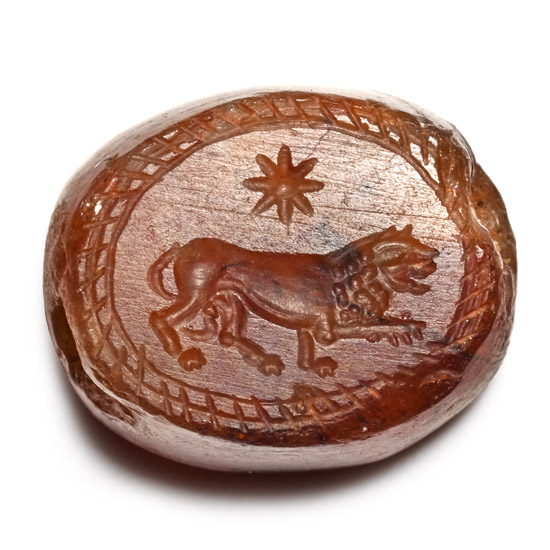
Eastern Greek Variegated Agate Gemstone with Lion
6th-4th century B.C.Sold for (Inc. bp): £312
Scaraboid type with incuse design to the underside of a lion advancing beneath a star inside a ropework border; supplied with a museum-quality impression. 2.53 grams, 15 mm
From the private collection of a European gentleman (1942-2024), formed since the 1970s. -
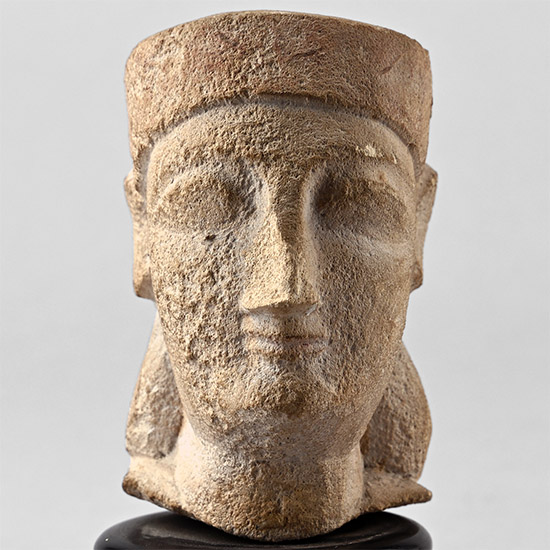
'The Metropolitan Museum of Art' Cypriot Limestone Votive Head of a Man
Circa 5th century B.C.Sold for (Inc. bp): £2,860
Finely carved votive head with almond-shaped eyes and strong nose, lips set to a gentle smile, typical of the Greek kouroi of this period, wearing a conical headdress leaving the ears exposed; set on its original base from the Metropolitan Museum of Art, New York, with item number '163' and three sale labels on the base. 367 grams total, 13.1 cm high including stand
Likely discovered by Luigi Palma di Cesnola in Cyprus, 1860s-70s. Collection of The Metropolitan Museum of Art, New York, likely acquired from the above in 1872. Collection of Ira Martin, New York, acquired from the above on 12 March 1926. with Christie’s, New York, Antiquities, 5 June 1998, no.133. Private collection, thence by descent.
