
Loading, please wait...
LOT 0486
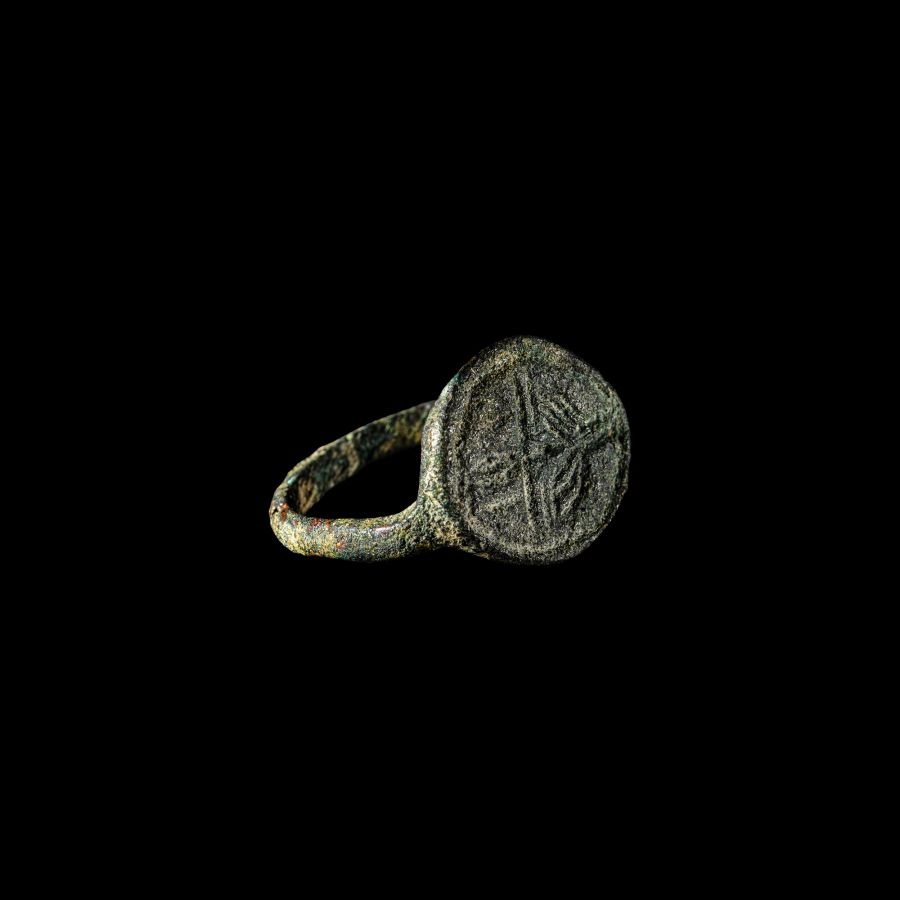
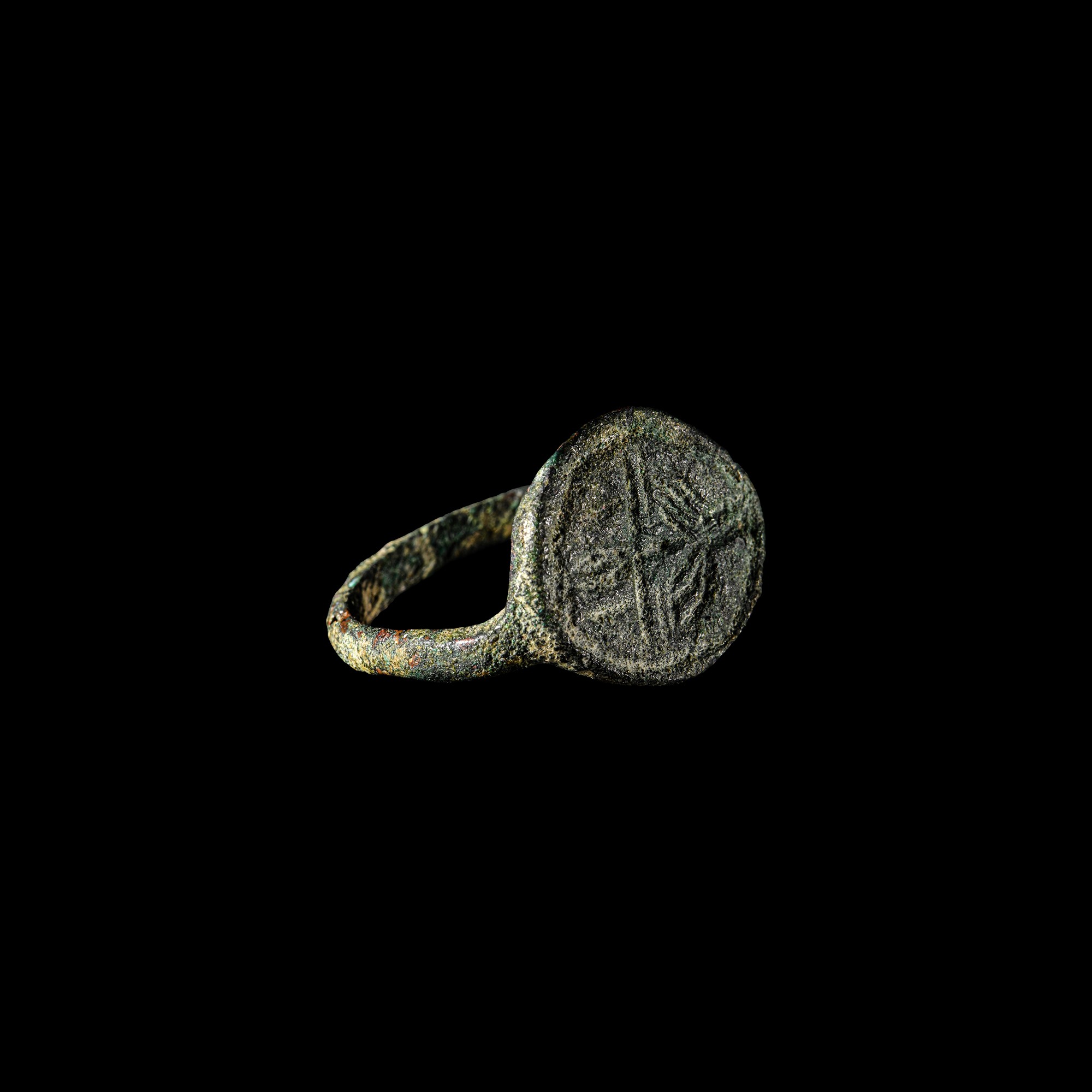
Greek Bronze Signet Ring
CIRCA 4TH-2ND CENTURY B.C.
7/8 in. (2.89 grams, 23.01 mm overall, 19.79 mm internal diameter (approximate size British O, USA 7, Europe 14.98, Japan 14)).
With a D-section hoop, large rounded bezel with a geometric motif. [No Reserve]
ProvenanceProperty of a UK gentleman, acquired 20 November 1981.
Property of an East Sussex, UK, gentleman.
Accompanied by an old handwritten identification ticket.
TimeLine Auctions follows a vetting process to ensure the authenticity and legality of all items, reinforcing our commitment to integrity and responsible trading. Each antiquity, antique, and coin lot undergoes thorough examination by a vetting committee of at least ten external specialists, professional trade association members, scientists, and archaeologists: Our Vetting Process
AUCTIONS:
TimeLine is a leading auction house specialising in antiquities, ancient art, collectables, natural history, coins, medals, and books. Our auctions offer museums, collectors, historians, and enthusiasts the opportunity to acquire unique and historically significant pieces.
-
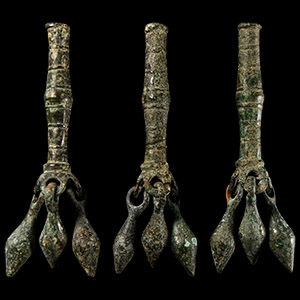
Etruscan Bronze Pendant Group
Circa 8th century B.C.Sold for (Inc. bp): £351
Comprising three pendant clusters, each a tube with balustered middle section and ribs, radiating loops at the lower end with suspended biconvex dangles. 90 grams total, 78 mm each
Acquired in the late 1970s. Ex Herr Bernhard Muller collection. with Galerie Ostracon, circa 2015. Accompanied by detailed collector's catalogue pages including description and photograph. -
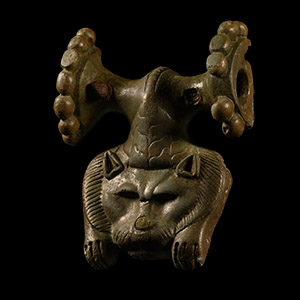
Greek Bronze Handle with Lion-Skin Head
Circa 5th-4th century B.C.Sold for (Inc. bp): £715
Formed as the skinned head and forepaws of a lion, together with two lateral handles with fastening holes surmounted by a pearled edge. 159 grams, 80 mm
Acquired on the UK art market 2000s.
The handle appears to be a device once attached to a wine vessel or pan-like vessels. The vessel handles were usually formed as divinities or animals linked with gods (ie. lions for Herakles). The lion's skin is hanging down as in representations of Herakles resting and drinking after his labours. -
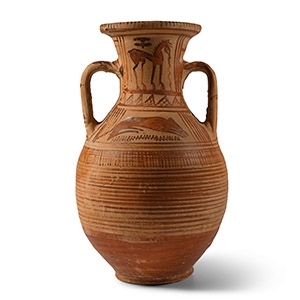
Greek Attic-Geometric Ceramic Neck Amphora
Late 8th century B.C.Estimate: £12,000 - 17,000 (+bp*)
Opening Bid: £5,500
With piriform body and trumpet-shaped mouth, two lateral strap handles; red linear hatching to the body, panels to the shoulder with recumbent dogs, above them profile horses with erect manes; stripes to the mouth and handles. 989 grams, 28 cm
Private collection Leontine Goldschmidt, née Leontine Porges Edle von Portheim, 17 February 1863 Prag-25 August 1942, Heidelberg, thence Prof. Dr. Hampe. Accompanied by a copy of an Art Loss Register certificate number S00019378, dated 31 October 2008. Accompanied by an original thermoluminescence analysis report no.N123n67 from Oxford Authentication. Accompanied by a copy of the relevant Kunst der Antike catalogue pages where it is published. This lot has been checked against the Interpol Database of stolen works of art and is accompanied by search certificate no.11951-210764.
