
Loading, please wait...
LOT 0561
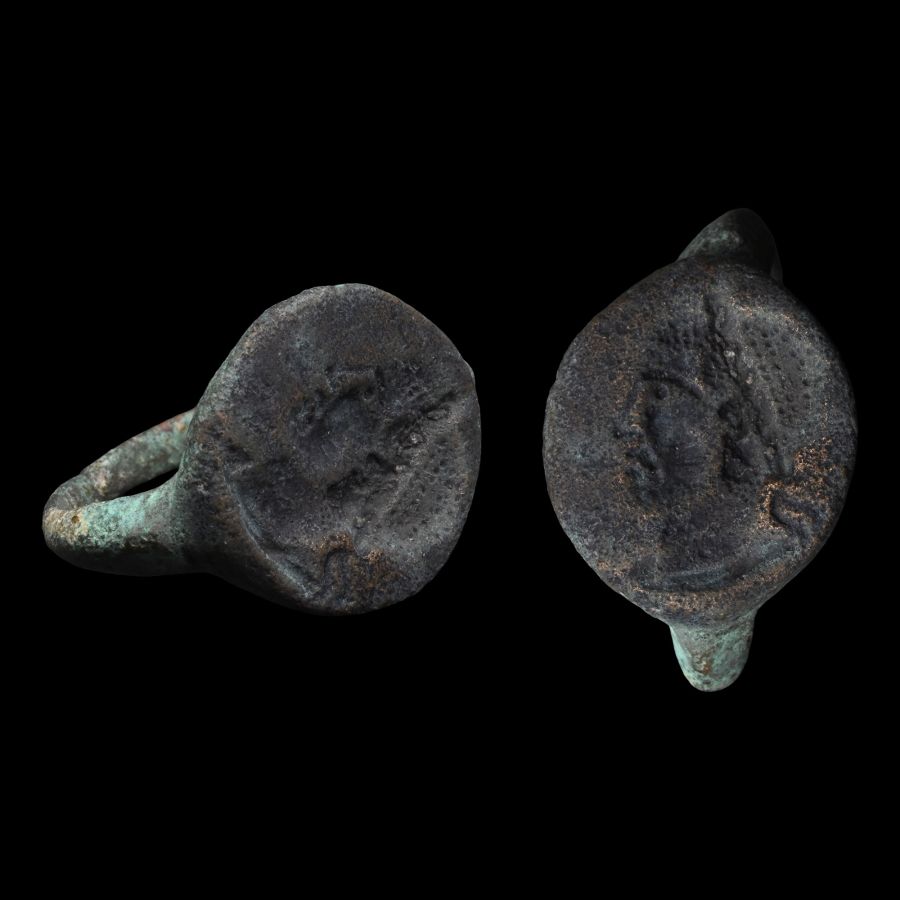
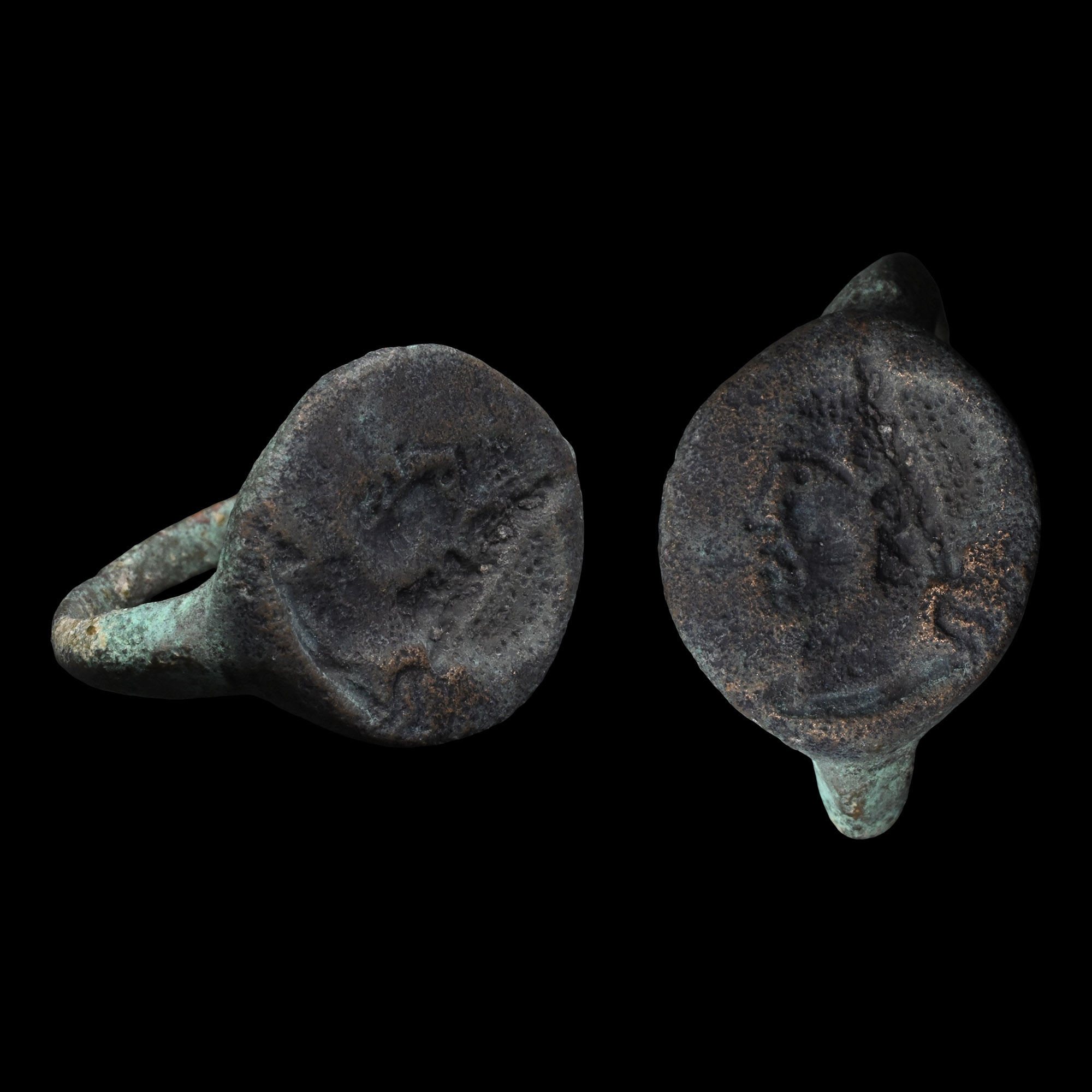
Greek Bronze Signet Ring with Portrait
4TH-3RD CENTURY B.C.
1 in. (6.57 grams, 25.86 mm overall, 20.08 x 15.91 mm internal diameter (approximate size British N, USA 6 1/2, Europe 13.72, Japan 13)).
Discoid bezel with slender hoop, incuse profile bust with a stephane to the hair.
ProvenanceFrom the collection of a gentleman, acquired on the London art market in the 1990s.
LiteratureCf. Chadour, A.B., Rings. The Alice and Louis Koch Collection, volume I, Leeds, 1994, item 70, for type.
CONDITIONTimeLine Auctions follows a vetting process to ensure the authenticity and legality of all items, reinforcing our commitment to integrity and responsible trading. Each antiquity, antique, and coin lot undergoes thorough examination by a vetting committee of at least ten external specialists, professional trade association members, scientists, and archaeologists: Our Vetting Process
AUCTIONS:
TimeLine is a leading auction house specialising in antiquities, ancient art, collectables, natural history, coins, medals, and books. Our auctions offer museums, collectors, historians, and enthusiasts the opportunity to acquire unique and historically significant pieces.
LOT 0561
Greek Bronze Signet Ring with Portrait
Estimate £300 - 400€350 - 460 (for guidance only)$410 - 540 (for guidance only)
-
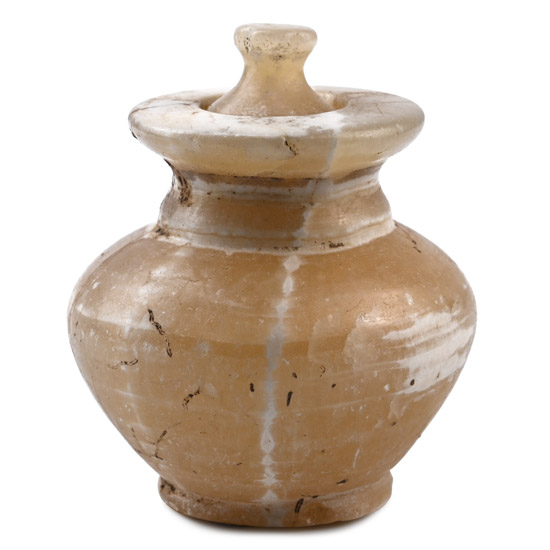
Greek Alabaster Cosmetic Pyxis with Lid
1st millennium B.C.Sold for (Inc. bp): £351
Barrel-shaped in profile with flared foot, broad shoulder and gusseted neck, flange to the mouth; knop handle to lid. 168 grams, 68 mm
Acquired in Switzerland, early 2000. Private collection, 2010. -
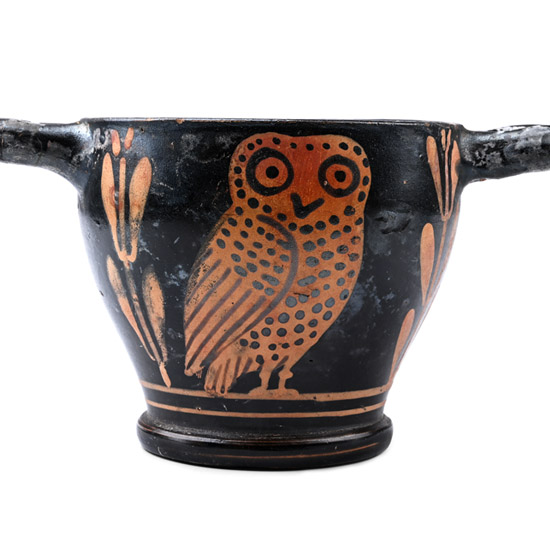
Large Greek Red-Figure Skyphos with Owl
South Italian, 5th-4th century B.C.Sold for (Inc. bp): £2,600
With mammiform body, pedestal base and two loop handles; each side with a facing image of an owl between laurel fronds. 239 grams, 17.5 cm
Swiss private collection, assembled in the 1960s-1970s. Private collection, acquired in 2013. Accompanied by a thermoluminescence analysis report no.N126a14 from Oxford Authentication. This lot has been checked against the Interpol Database of stolen works of art and is accompanied by a search certificate number no.12854-241751.
Bubo was the holy beloved magical owl of the goddess Athena, and it was a common subject on Greek painted ceramics. The owl-skyphos, originally produced in 5th century Athens, was extremely popular and was exported from Athens to other parts of the Greek world, including southern Italy and Etruria. Local imitations have been excavated at Corinth, and during the fourth century, or perhaps even slightly earlier, skyphoi similar to those from Athens were produced in Apulia and Etruria. -
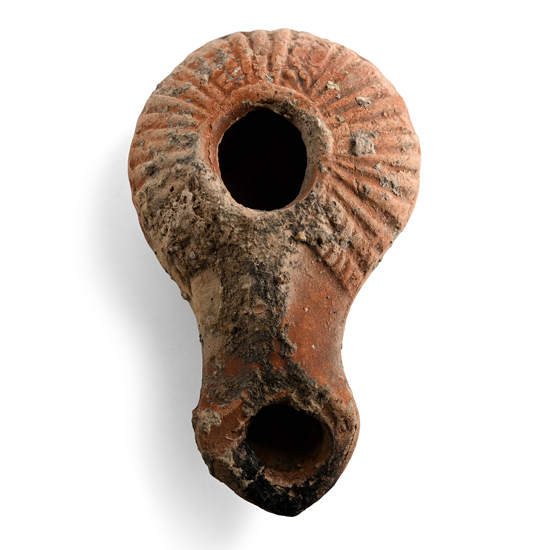
Greek Terracotta Oil Lamp
Hellenistic, late 2nd-1st century B.C.Sold for (Inc. bp): £78
Piriform body with volute nozzle, radiating linear decoration to the shoulder. 38.5 grams, 89 mm
From a collection of lamps from a late Scottish gentleman, 1970-1990s.
