
Loading, please wait...
LOT 0063
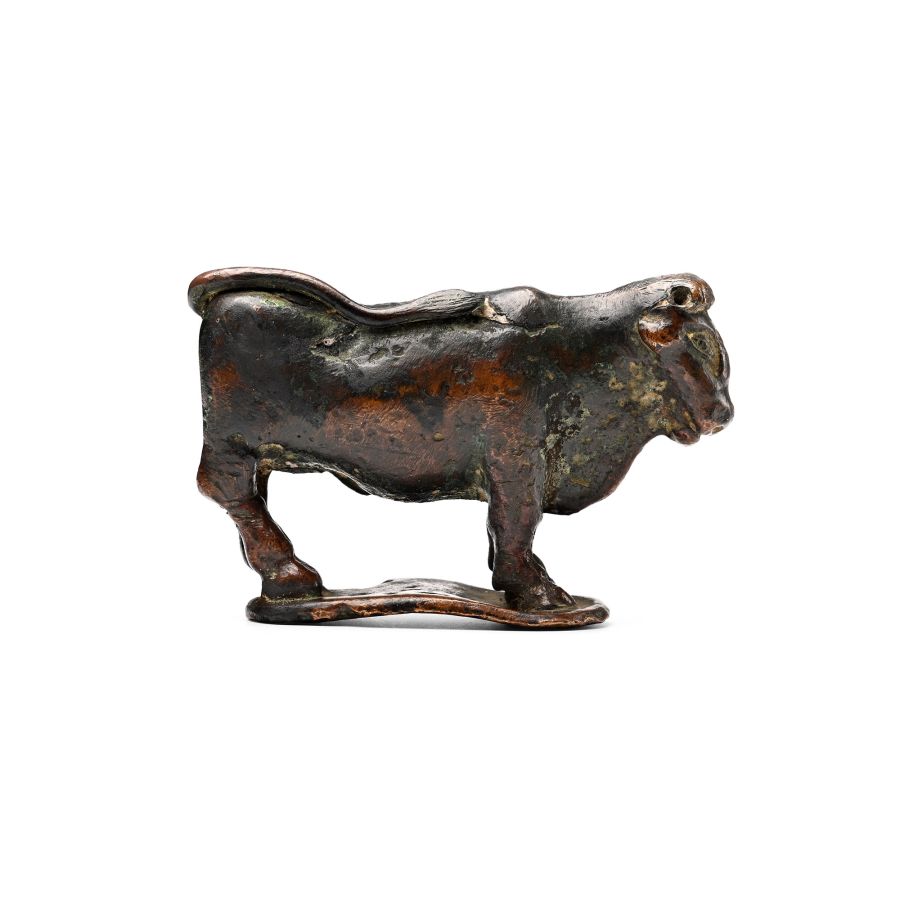
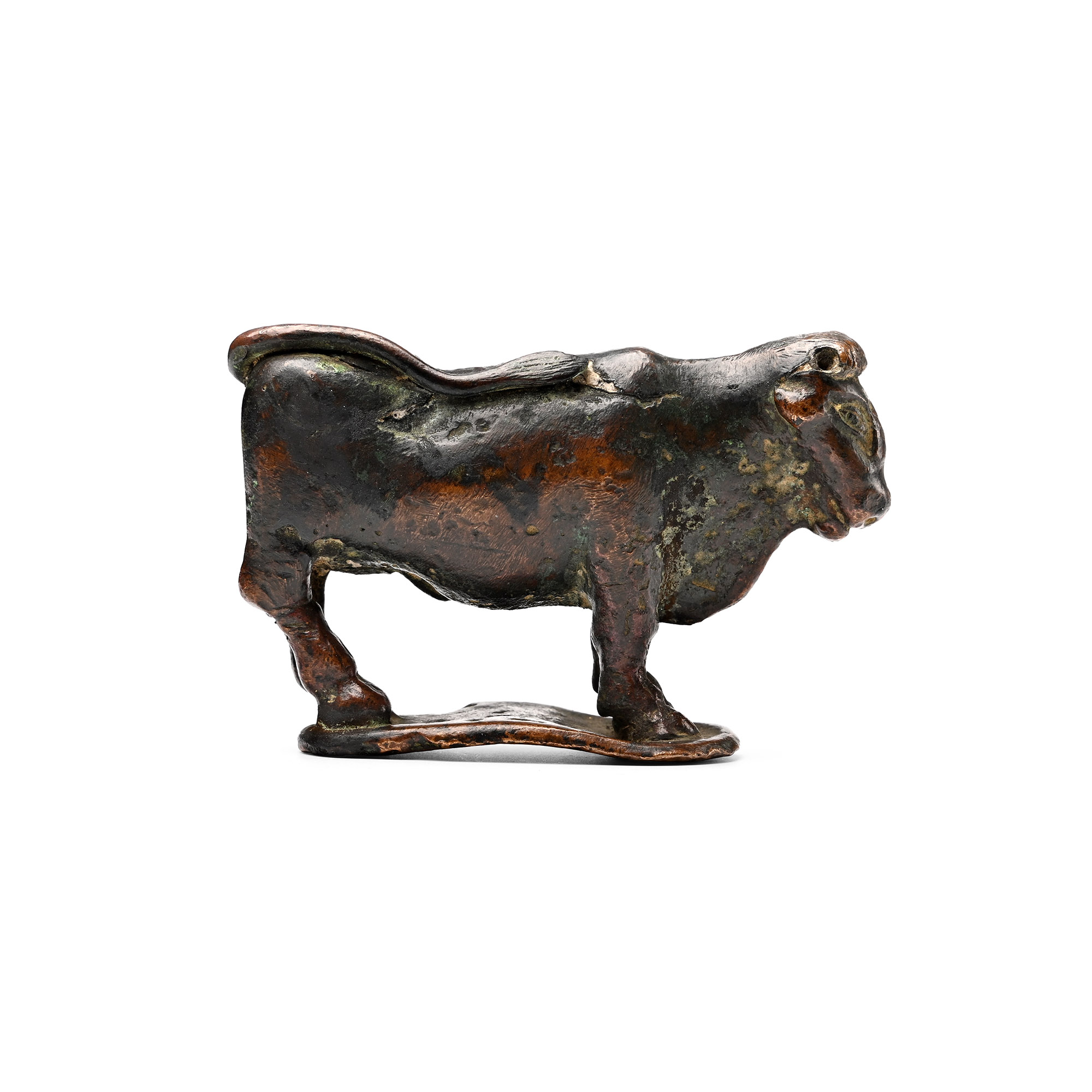
Greek Bronze Sacred Bull Statuette
4TH-3RD CENTURY B.C.
3 1/4 in. (331 grams, 82 mm).
Modelled standing on an ellipsoid base, sockets to the brow to accept separately modelled horns.
ProvenanceAcquired on the European art market in the early 2000s.
with Galerie Rhéa, Zurich, Switzerland.
This lot is accompanied by an illustrated lot declaration signed by the Head of the Antiquities Department, Dr Raffaele D'Amato.
TimeLine Auctions follows a vetting process to ensure the authenticity and legality of all items, reinforcing our commitment to integrity and responsible trading. Each antiquity, antique, and coin lot undergoes thorough examination by a vetting committee of at least ten external specialists, professional trade association members, scientists, and archaeologists: Our Vetting Process
AUCTIONS:
TimeLine is a leading auction house specialising in antiquities, ancient art, collectables, natural history, coins, medals, and books. Our auctions offer museums, collectors, historians, and enthusiasts the opportunity to acquire unique and historically significant pieces.
-
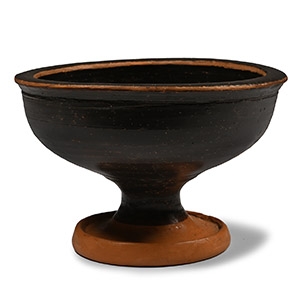
Greek Terracotta Blackware Chalice
4th century B.C.Sold for (Inc. bp): £234
Bucchero stemmed footed cup, bell-shaped in profile with carination, stem and lipped foot, raised horizontal concentric bands. 195 grams, 11.6 cm wide
with Rolf Wegmüller, Switzerland. Acquired in the 2000s from H.U.S. Humbel, Kilchberg. This lot is accompanied by an illustrated lot declaration signed by the Head of the Antiquities Department, Dr Raffaele D’Amato. This lot is accompanied by an illustrated lot declaration signed by the Head of the Antiquities Department, Dr Raffaele D'Amato. -
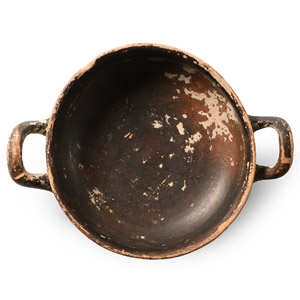
Greek Black-Glazed Skyphos
South Italian, 5th-4th century B.C.Sold for (Inc. bp): £182
Broad and squat with carination below the rim, two lateral loop handles, basal ring. 36 grams, 10.2 cm wide
Acquired in Münich in 2012. European private collection. This lot is accompanied by an illustrated lot declaration signed by the Head of the Antiquities Department, Dr Raffaele D’Amato. This lot is accompanied by an illustrated lot declaration signed by the Head of the Antiquities Department, Dr Raffaele D'Amato. -
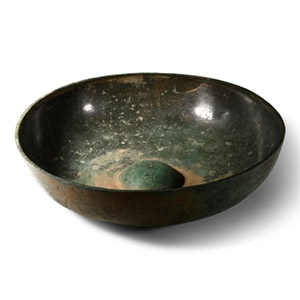
Late Lydian Bronze Phiale with Boss
600-400 B.C.Estimate: £500 - 700 (‡+bp*)
Opening Bid: £278
Broad and squat with thickened rim, central boss to the base. 536 grams, 24 cm wide
Acquired in the mid 1980s-1990s. Private collection, Switzerland, thence by descent. Private collection, since the late 1990s. This lot has been cleared against the Art Loss Register database, and is accompanied by an illustrated lot declaration signed by the Head of the Antiquities Department, Dr Raffaele D'Amato. This lot is accompanied by an illustrated lot declaration signed by the Head of the Antiquities Department, Dr Raffaele D'Amato.
