Loading, please wait...

Use mousewheel to zoom in and out, click to enlarge

Details

LOT 0556

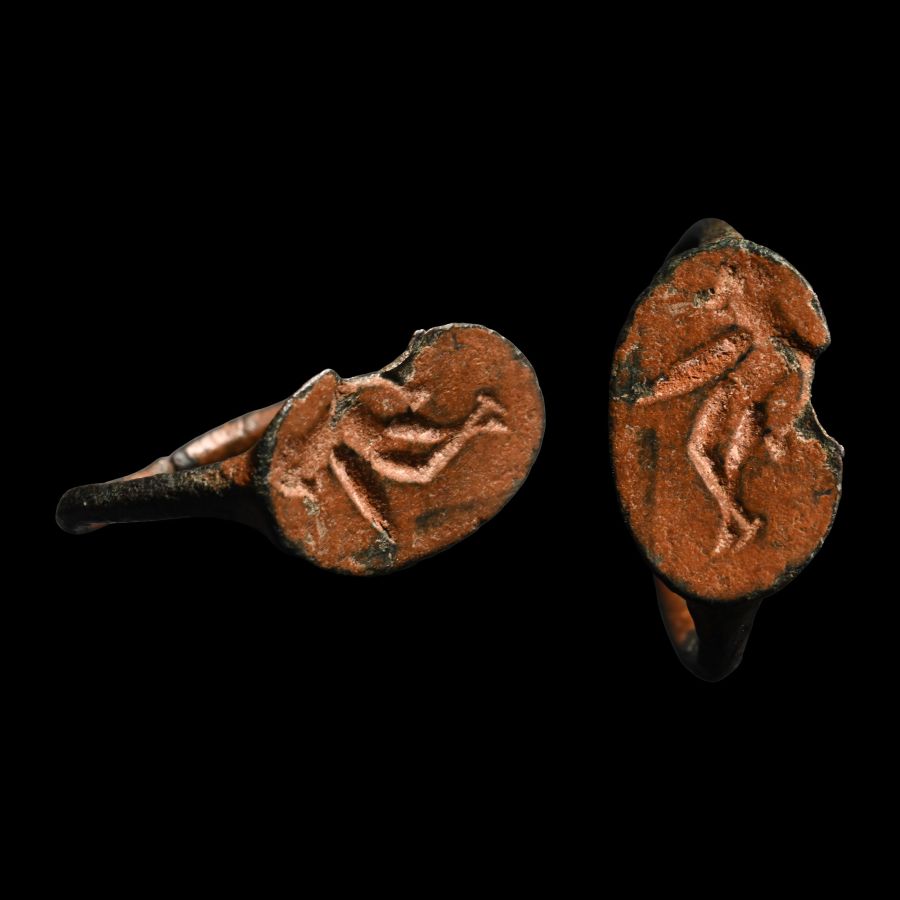
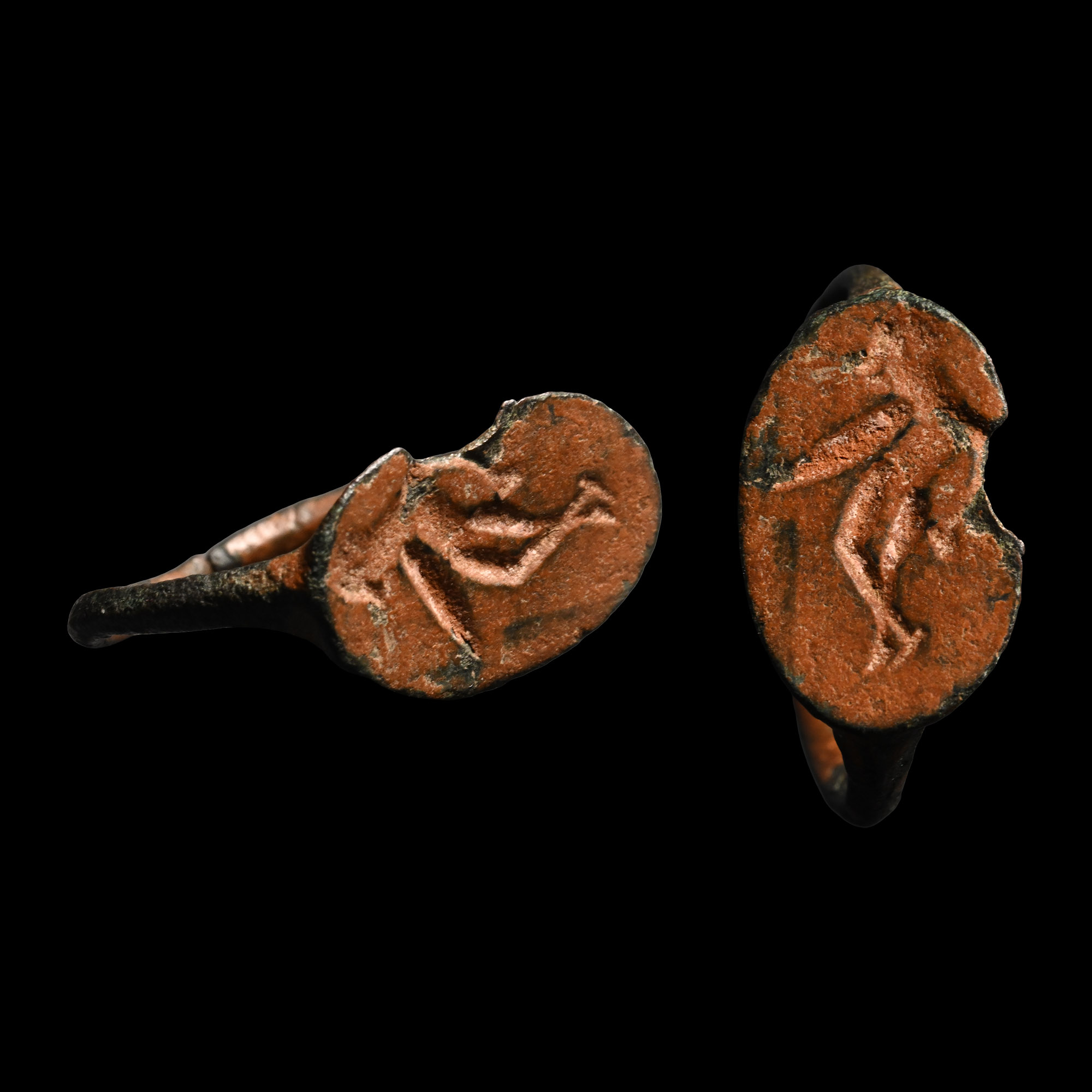
Greek Bronze Ring with Standing Goddess

CIRCA 4TH-2ND CENTURY B.C.

3/4 in. (1.55 grams, 20.58 mm overall, 14.22x17.30 mm internal diameter (approximate size British J, USA 4 3/4, Europe 8.69, Japan 8)).

Comprising a slender hoop and an oval bezel with a stylised nude goddess, possibly Venus. [No Reserve]

Provenance

From the private collection of a European gentleman (1942-2024), formed since the 1970s.

CONDITION

VETTING:

TimeLine Auctions follows a vetting process to ensure the authenticity and legality of all items, reinforcing our commitment to integrity and responsible trading. Each antiquity, antique, and coin lot undergoes thorough examination by a vetting committee of at least ten external specialists, professional trade association members, scientists, and archaeologists: Our Vetting Process


AUCTIONS:

TimeLine is a leading auction house specialising in antiquities, ancient art, collectables, natural history, coins, medals, and books. Our auctions offer museums, collectors, historians, and enthusiasts the opportunity to acquire unique and historically significant pieces.

LOT 0556

Greek Bronze Ring with Standing Goddess

Sold for (Inc. bp): £20

Print page

RELATED LOTS

  • Greek Terracotta Red-Figure Hydria Depicting Offering Scene
    Greek Terracotta Red-Figure Hydria Depicting Offering Scene
    Apulian, 3rd-2nd century B.C.

    Sold for (Inc. bp): £2,600

    With cylindrical body and broad bevelled shoulder, stepped foot, lateral squared loop handles and strap handle to shoulder, broad mouth; Side A: seated female in himation holding an offering bowl in her extended left hand; white detailing to the diadem, necklace, earrings, mirror in her right hand, rim of the bowl and elsewhere; Side B: reserved palmette motif extending to the shoulder and neck; repainted. 771 grams, 23 cm high


    Acquired on the art market between the late 1990s and mid-2000s. Estate of the late Barry Paul Buxton (1944–2024), Oakham, Rutland. Acquired on the UK art market, 2025. Accompanied by a thermoluminescence analysis report no.N126a16 from Oxford Authentication.

    Apulian red-figure had a strong influence on other Italian ceramics of the late 5th century B.C. and an even greater effect from around the middle of the 4th century, with potters and painters apparently migrating to Italic centres throughout Apulia, as well as to Metaponto, Paestum and other parts of Campania. Although it is most probable that Taranto was the main centre of production for Apulian red-figure, the recent extensive finds at Canosa, Melfi and other sites suggest that there were numerous Apulian centres of manufacture.

    Lot Details

  • Greek Terracotta Alabastron
    Greek Terracotta Alabastron
    Etrusco-Corinthian, circa 6th century B.C.

    Sold for (Inc. bp): £468

    Piriform body with narrow neck and flaring rim with a small loop handle below, decorated with radiating strokes below the neck, followed by eight rows of dot decoration flaked by red and black circumferential bands. 88 grams, 11.1 cm


    From the collection of the late Sir Clinton Charles Donald Cory, 5th Baronet of Coryton. Ex Philip Auction House, 24 September 1985. Accompanied by two previous information cards.

    Lot Details

  • Greek and Roman Bronze Statue Collection
    Greek and Roman Bronze Statue Collection
    4th century B.C.-4th century A.D.

    Sold for (Inc. bp): £1,560

    Comprising: an Etruscan figure of Turms (Greek Hermes), standing and holding a patera in his right hand, original lead mounting beneath; a standing figure of nude Aphrodite, possibly later; a figure of Baubo with her legs bent and right hand touching her genitals; two standing bronze figures holding offerings. 352 grams total, 63-96 mm


    Hermes from the estate of a Swiss gentleman, Ticino, before 1970. Sardinian figure ex private collection of Prof. Dr Hans (1918-1984) and Dr Ines (1922-2013) Jucker, classical archaeologists, Bern, Switzerland. with Galerie Rhéa, Zurich, Switzerland. This lot has been checked against the Interpol Database of stolen works of art and is accompanied by a search certificate number no.12669-236450.

    Baubo was a minor divinity of Greek mythology, linked to the cult of Demeter and Persephone. The Egyptian Baubo figures are split into two groups. In some of these figurines her right hand is touching her genitalia. All these statuettes were votive offerings to the gods, and many of them were used as amulets.

    Lot Details

Stay up-to-date with the latest from TimeLine Auctions by joining our mailing list