
Loading, please wait...
LOT 0562
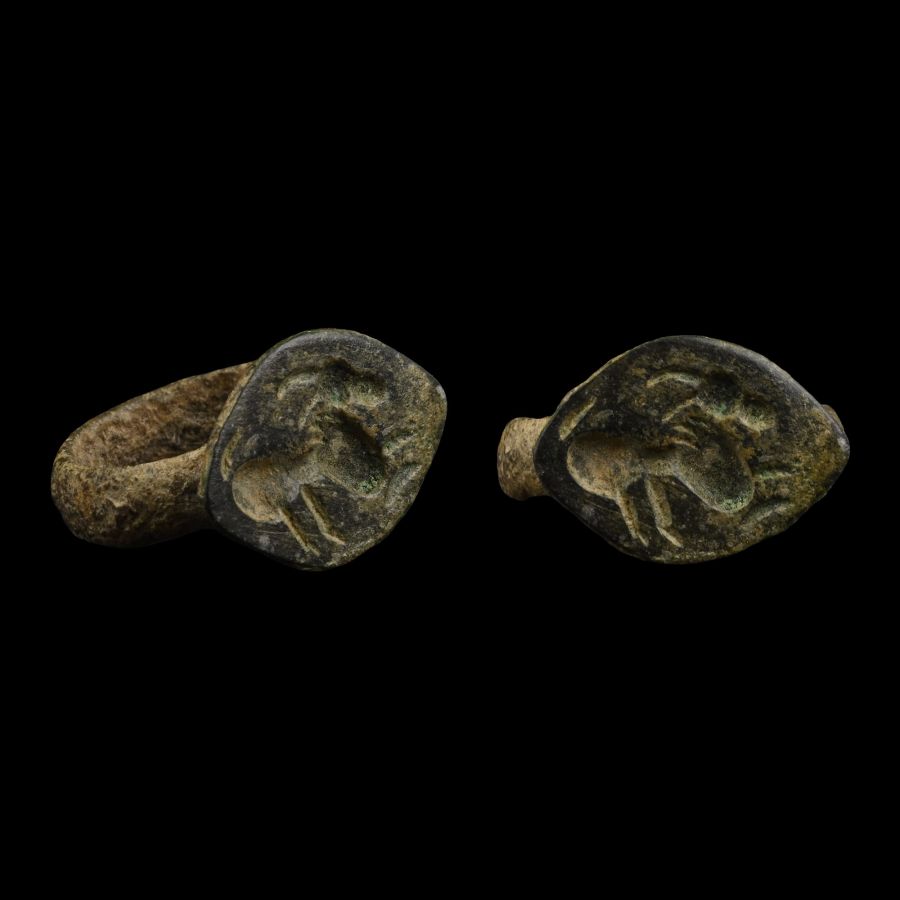
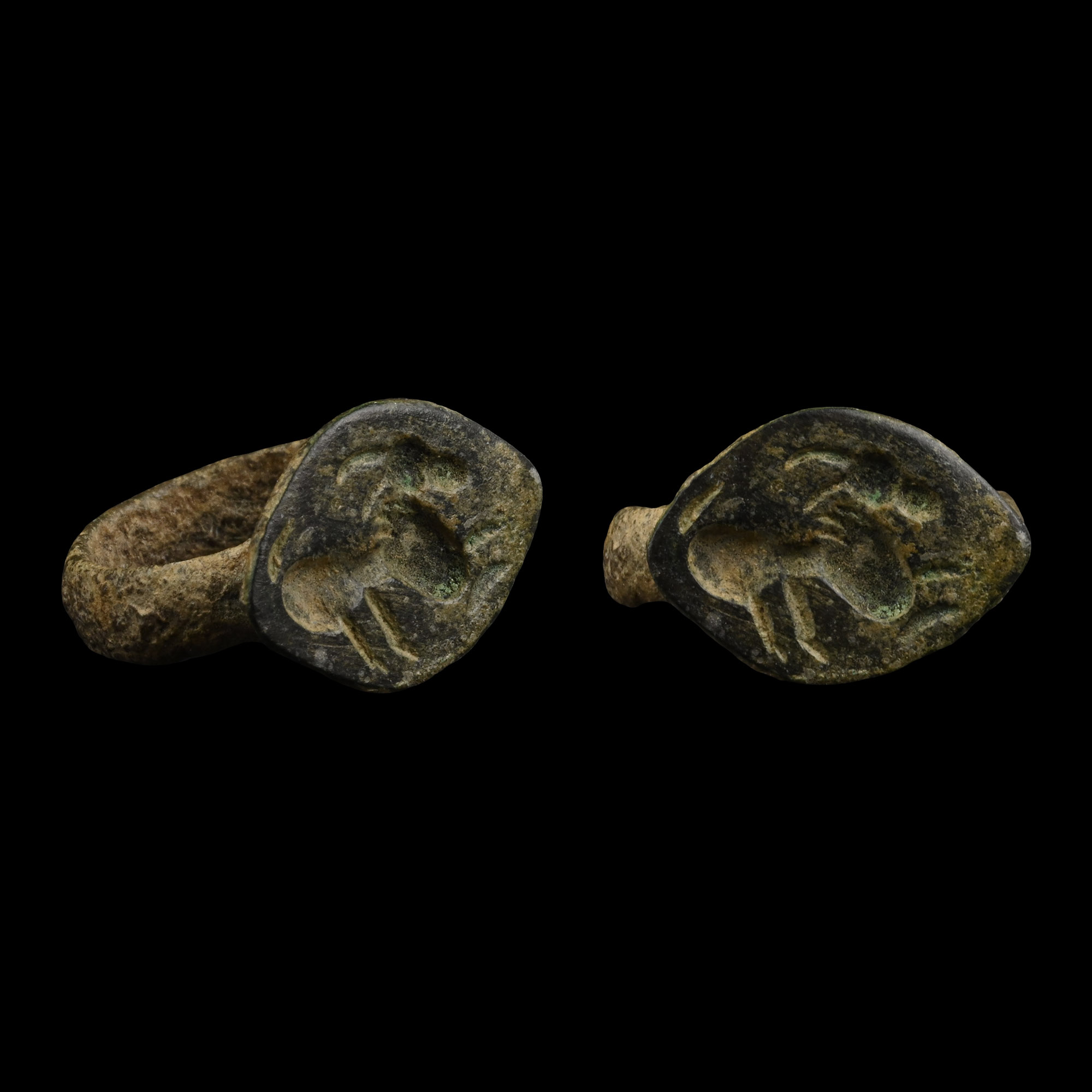
Greek Bronze Ring with Standing Antelope
3RD-2ND CENTURY B.C.
3/4 in. (2.72 grams, 18.41 mm overall, 14.62 mm internal diameter (approximate size British G 1/2, USA 3 1/2, Europe 5.55, Japan 5)).
An interphalangial ring with a lentoid bezel with a stylised antelope facing right. [No Reserve]
ProvenanceAcquired on the UK and EU art market before 2000.
From the private collection of a Surrey, UK, gentleman.
This category of rings shows a narrow band-like hoop and a slightly convex exterior surface, undecorated, retaining its width all around. The large bezel is in the form of a pointed oval.
CONDITIONTimeLine Auctions follows a vetting process to ensure the authenticity and legality of all items, reinforcing our commitment to integrity and responsible trading. Each antiquity, antique, and coin lot undergoes thorough examination by a vetting committee of at least ten external specialists, professional trade association members, scientists, and archaeologists: Our Vetting Process
AUCTIONS:
TimeLine is a leading auction house specialising in antiquities, ancient art, collectables, natural history, coins, medals, and books. Our auctions offer museums, collectors, historians, and enthusiasts the opportunity to acquire unique and historically significant pieces.
-
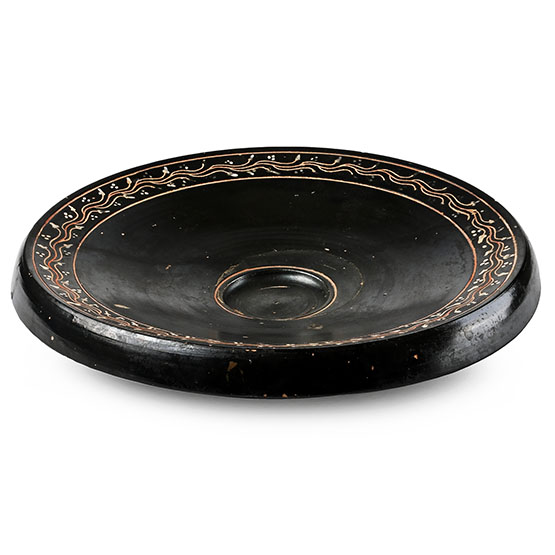
Large Greek Teano-Ware Fish Plate
Hellenistic, early 3rd century B.C.Sold for (Inc. bp): £1,235
Broad face with incised rings outlining the painted border of running vinescroll in red and white; with a shallow central socket outlined in red, broad carinated rim and low foot. 834 grams, 26.5 cm
Acquired at auction, London, UK, 1990s, no.233. Private collection, Suffolk, UK. Accompanied by a copy of the relevant catalogue page.
'Teano ware' is a type of ceramic produced from the late 4th century to the early 3rd century BC. Its modern name derives from Teanum Sidicinum, in northern Campania, the main centre of production. White and red pigment was used for the painted decoration on the black surface. It was probably used for votive or funerary purposes. -
.jpg)
Greek Terracotta of Drunken Silenus Seated on a Ram
South Italian, 3rd century B.C.Sold for (Inc. bp): £1,300
Hollow-formed and modelled in the round figure of a shaggy ram standing on a rectangular base with the slouching figure of Silenus on his back, clutching a large drinking horn in his right hand; white and red pigment; hollow underside. 257 grams, 12.2 cm
with Fortuna, Galerie fur alte Kunst, Zurich, 1998. Private collection, Zurich, acquired from the above in 2002. with Bonhams, New Bond Street, London, 1 December 2020, no.67. Private collection, UK. Accompanied by copies of the relevant Fortuna, Galerie fur alte Kunst catalogue pages. Accompanied by copies of the relevant Bonhams catalogue pages. -
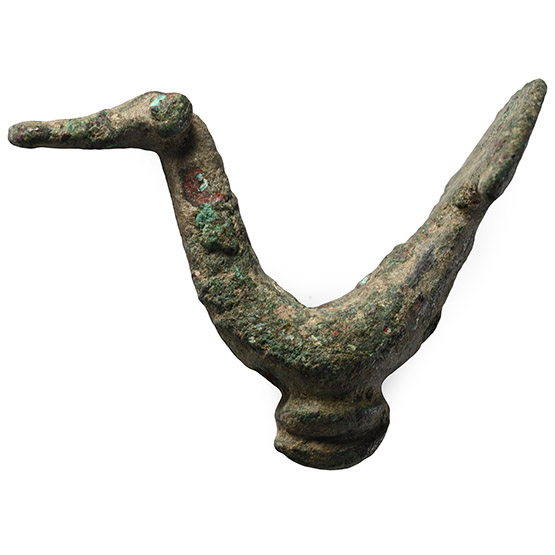
Greek Bronze Bird
Geometric, 8th-6th century B.C.Sold for (Inc. bp): £117
Modelled in the round with pelta-shaped tail, columnar neck and pellet eyes; pierced through chest and back for attachment. 11.16 grams, 38 mm
Ex collection Mr K.H., Germany. Private collection, acquired in 2012.
