
Loading, please wait...
LOT 0562
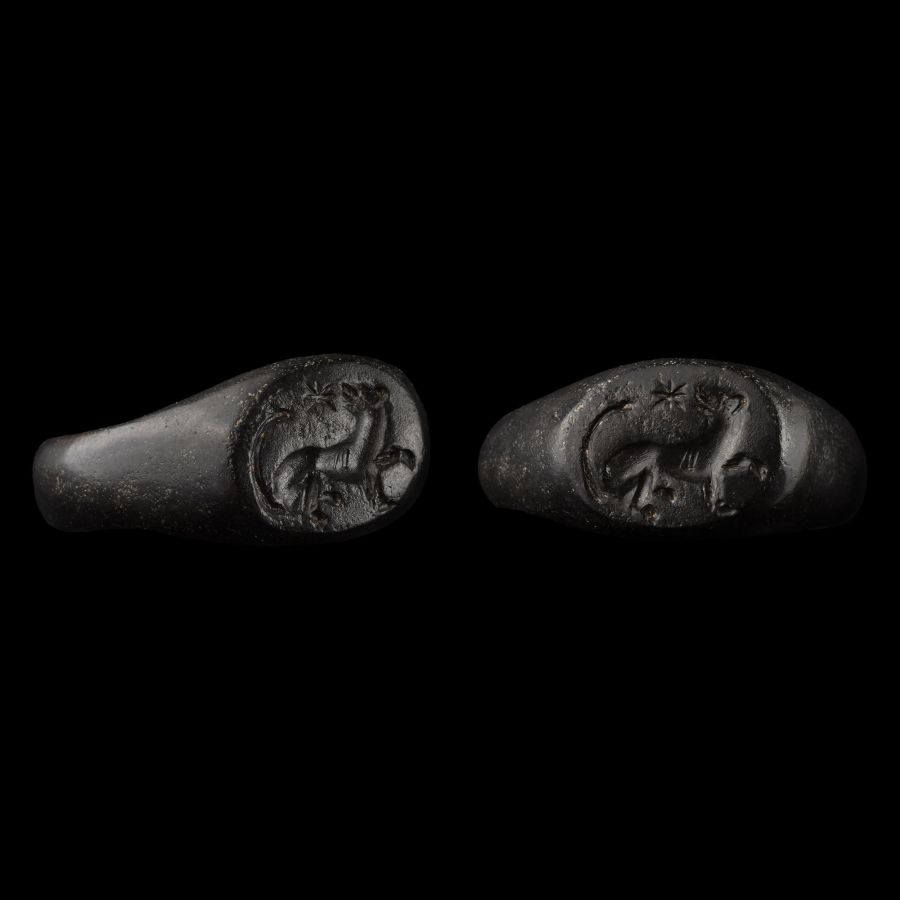
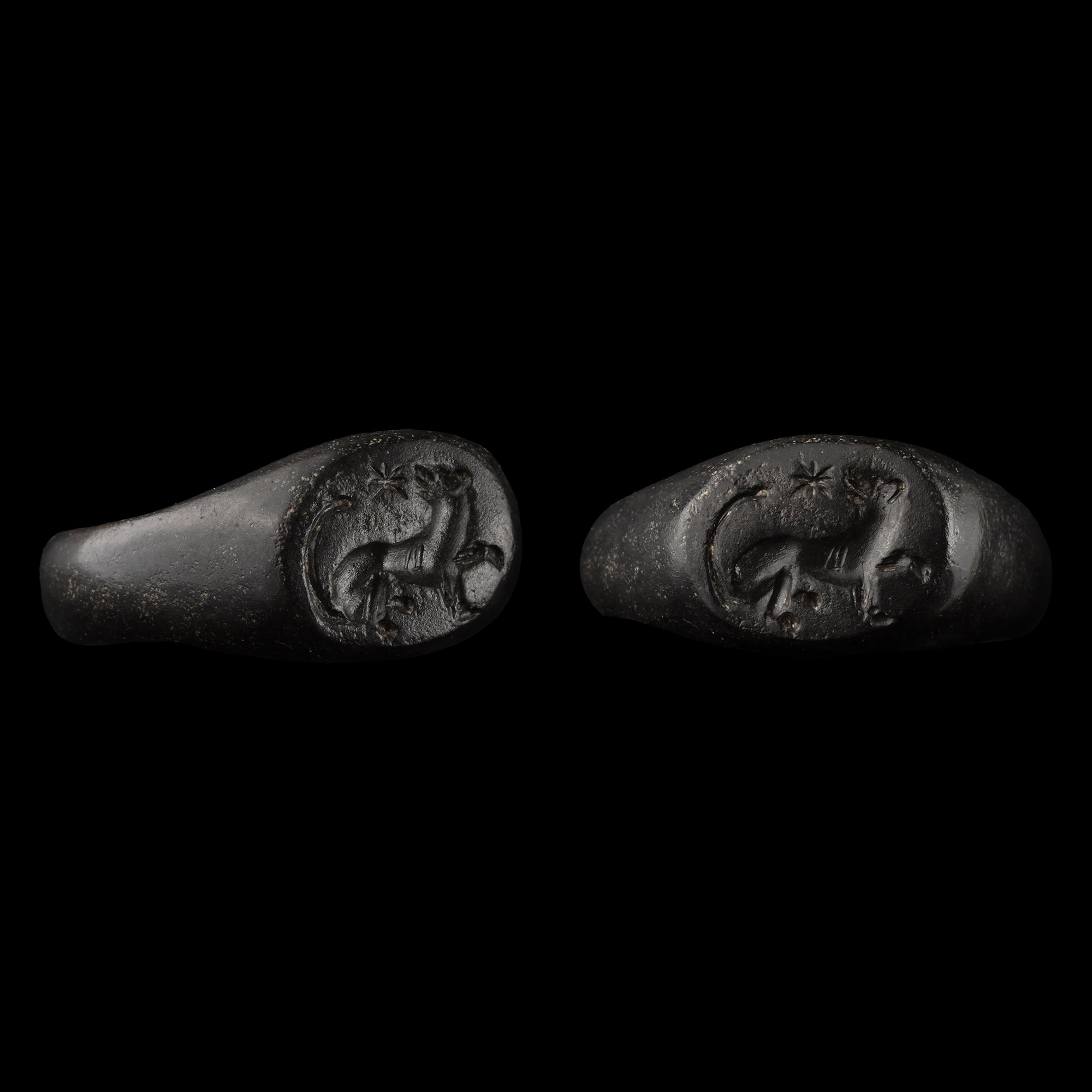
Greek Bronze Ring with Panther
4TH-3RD CENTURY B.C.
1 in. (9.06 grams, 25.09 mm overall, 18.69 mm internal diameter (approximate size British R, USA 8 1/2, Europe 18 3/4, Japan 18)).
With incuse design of a panther with one foreleg raised looking towards a star above.
ProvenanceEx German art market, 2000s.
Acquired from an EU collector living in London.
From the collection of a Surrey, UK, gentleman.
This lot is accompanied by an illustrated lot declaration signed by the Head of the Antiquities Department, Dr Raffaele D'Amato.
TimeLine Auctions follows a vetting process to ensure the authenticity and legality of all items, reinforcing our commitment to integrity and responsible trading. Each antiquity, antique, and coin lot undergoes thorough examination by a vetting committee of at least ten external specialists, professional trade association members, scientists, and archaeologists: Our Vetting Process
AUCTIONS:
TimeLine is a leading auction house specialising in antiquities, ancient art, collectables, natural history, coins, medals, and books. Our auctions offer museums, collectors, historians, and enthusiasts the opportunity to acquire unique and historically significant pieces.
-
.jpg)
Minoan Carnelian Stamp Seal
2nd millennium B.C.Sold for (Inc. bp): £3,900
Discoid type with incuse motif of two stags placed symmetrically with their horns pointing inwards to the centre; supplied with a museum-quality impression. 1.98 grams, 14 mm
From the private collection of the late R Priday, Brookman Hall, Hertfordshire, UK; thence by descent. This lot has been checked against the Interpol Database of stolen works of art and is accompanied by search certificate number no.12808-240846. This lot has been cleared against the Art Loss Register database, and is accompanied by an illustrated lot declaration signed by the Head of the Antiquities Department, Dr Raffaele D'Amato. -
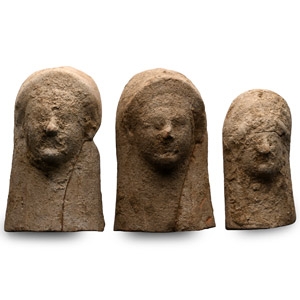
Greek Terracotta Female Protome Group
Early 5th century B.C.Sold for (Inc. bp): £208
Each tongue-shaped in plan and hollow to the reverse, female bust in high-relief with palla head-covering. 350 grams total, 9.5-11.4 cm
with H.A.C., Basel, prior 1999. This lot is accompanied by an illustrated lot declaration signed by the Head of the Antiquities Department, Dr Raffaele D'Amato. -
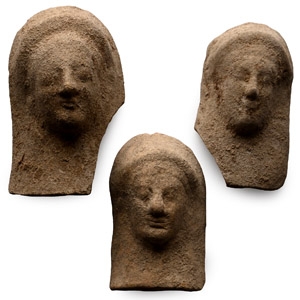
Greek Terracotta Female Protome Group
Early 5th century B.C.Sold for (Inc. bp): £260
Each tongue-shaped in plan and hollow to the reverse, female bust in high-relief with palla head-covering. 154 grams total, 75-91 mm
with H.A.C., Basel, prior 1999. This lot is accompanied by an illustrated lot declaration signed by the Head of the Antiquities Department, Dr Raffaele D'Amato.
