
Loading, please wait...
LOT 0518
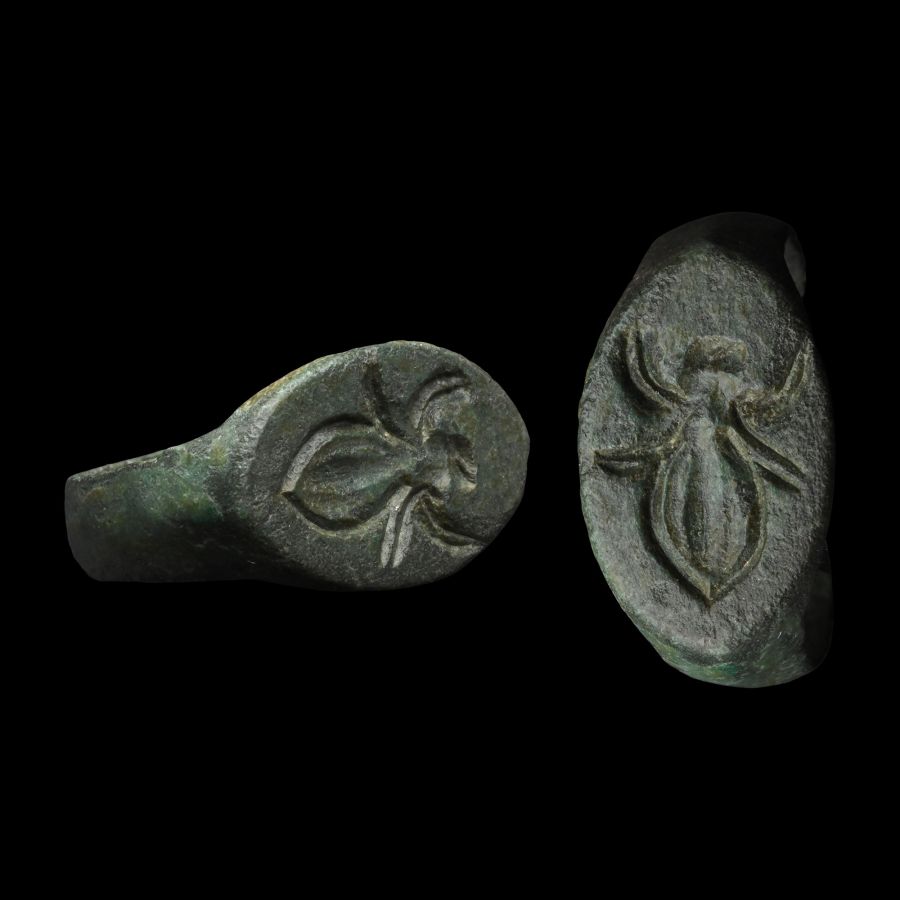
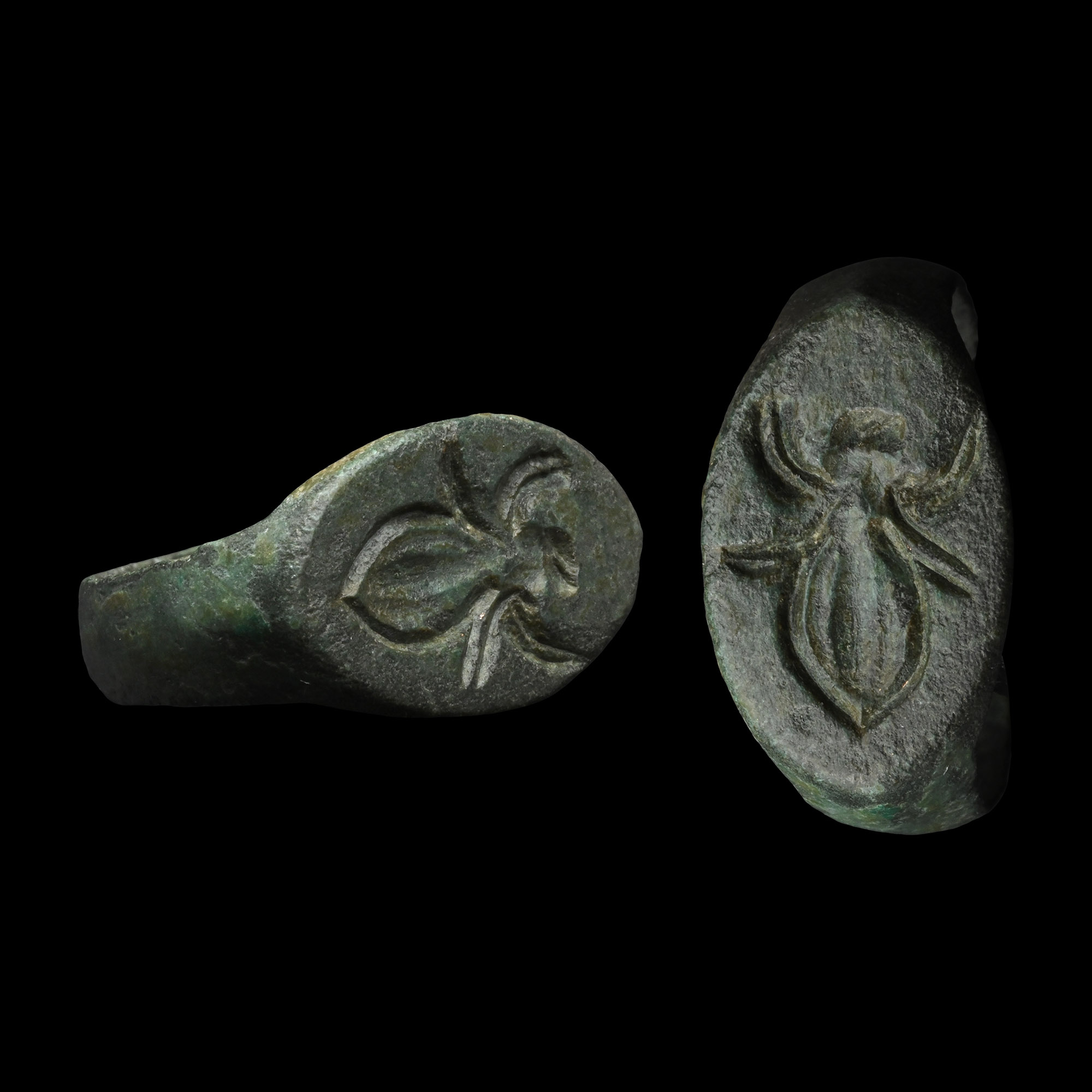
Greek Bronze Ring with Insect
3RD-2ND CENTURY B.C.
7/8 in. (3.73 grams, 21.04 mm overall, 18.65 mm internal diameter (approximate size British N, USA 6 1/2, Europe 13.72, Japan 13)).
D-section hoop and a lentoid bezel with an insect, likely a spider with a large abdomen.
ProvenanceEx German art market, 2000s.
Acquired from an EU collector living in London.
From the collection of a Surrey, UK, gentleman.
TimeLine Auctions follows a vetting process to ensure the authenticity and legality of all items, reinforcing our commitment to integrity and responsible trading. Each antiquity, antique, and coin lot undergoes thorough examination by a vetting committee of at least ten external specialists, professional trade association members, scientists, and archaeologists: Our Vetting Process
AUCTIONS:
TimeLine is a leading auction house specialising in antiquities, ancient art, collectables, natural history, coins, medals, and books. Our auctions offer museums, collectors, historians, and enthusiasts the opportunity to acquire unique and historically significant pieces.
-
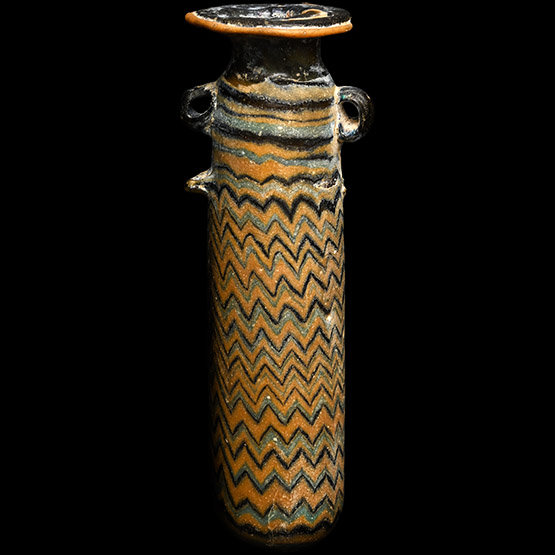
Greek Core-Formed Tall Glass Alabastron
6th-5th century B.C.Estimate: £4,000 - 6,000 (‡+bp*)
Opening Bid: £2,000
With a fusiform body, slender neck and broad flange rim, decorated with marvered feathering and spiralling trails; two lateral loop handles and a pinched lateral lug. 36.69 grams, 91 mm
Anonymous sale, Binoche & Giquello, Paris, 30th May 2012, no.124. Private collection, Switzerland. Accompanied by a copy of French passport no.0150269. This lot has been checked against the Interpol Database of stolen works of art and is accompanied by search certificate number no.13188-249220.
Alabastra of this typology, core-formed, trail-decorated and tooled, are typical of the Eastern Mediterranean. They were diminutive examples of a shape popularly produced for perfumed oils in the Greek world. Larger forms are known in both glass and ceramics. -
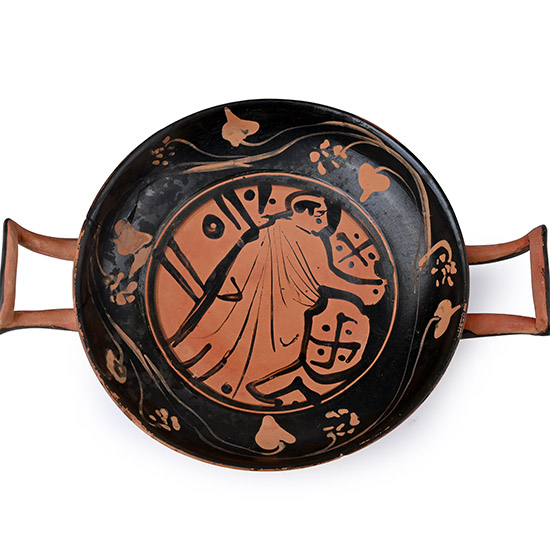
Greek Red-Figure Kylix with Youth in the Tondo from the Group of Vienna 116
Attic, circa 375-350 B.C.Sold for (Inc. bp): £1,300
Broad and shallow with two strap handles; ivy leaves and berries on the inside rim, tondo with cloaked figure surrounded by geometric motifs; outside with palmettes, scrolls and other motifs; repaired. 220 grams, 22 cm wide
Acquired on the art market between the late 1990s and mid-2000s. Estate of the late Barry Paul Buxton (1944-2024), Oakham, Rutland. Acquired on the UK art market, 2025. -
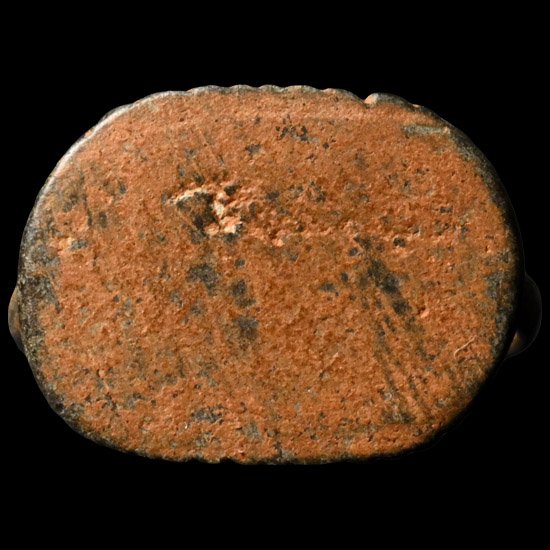
Graeco-Roman Bronze Ring
1st century B.C.-1st century A.D. or laterSold for (Inc. bp): £20
Comprising a slender hoop and a large oval bezel with a piecrust edge. 5.06 grams, 23.24 mm overall, 20.01 mm internal diameter (approximate size British Q, USA 8, Europe 17.49, Japan 16)
Acquired on the UK art market in 2013 Property of a West Northamptonshire, UK, gentleman.
