
Loading, please wait...


LOT 0759
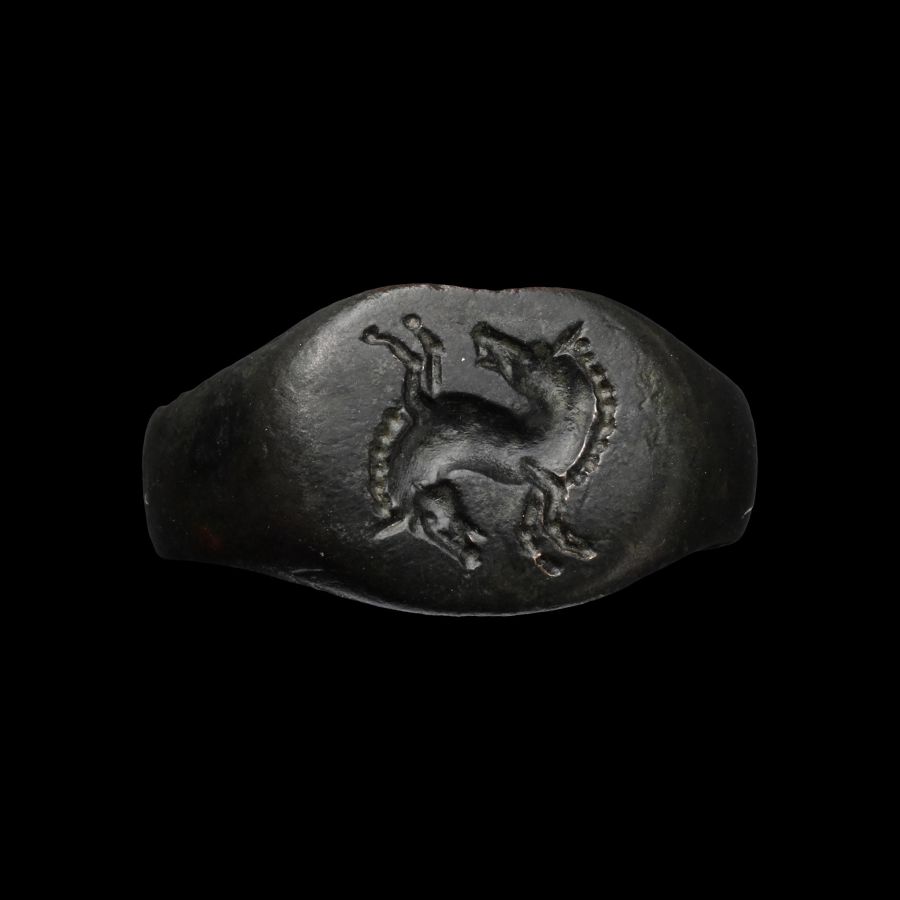
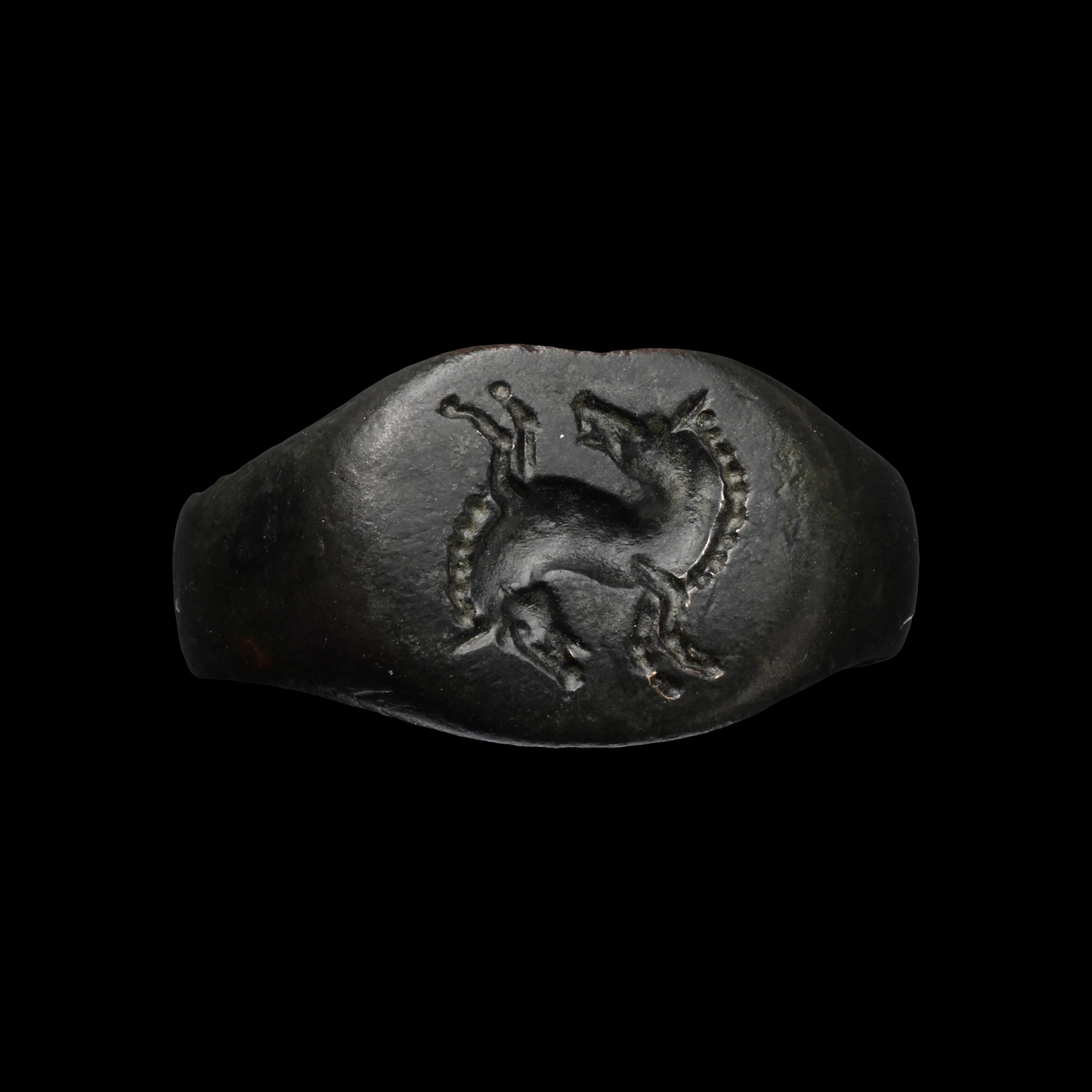
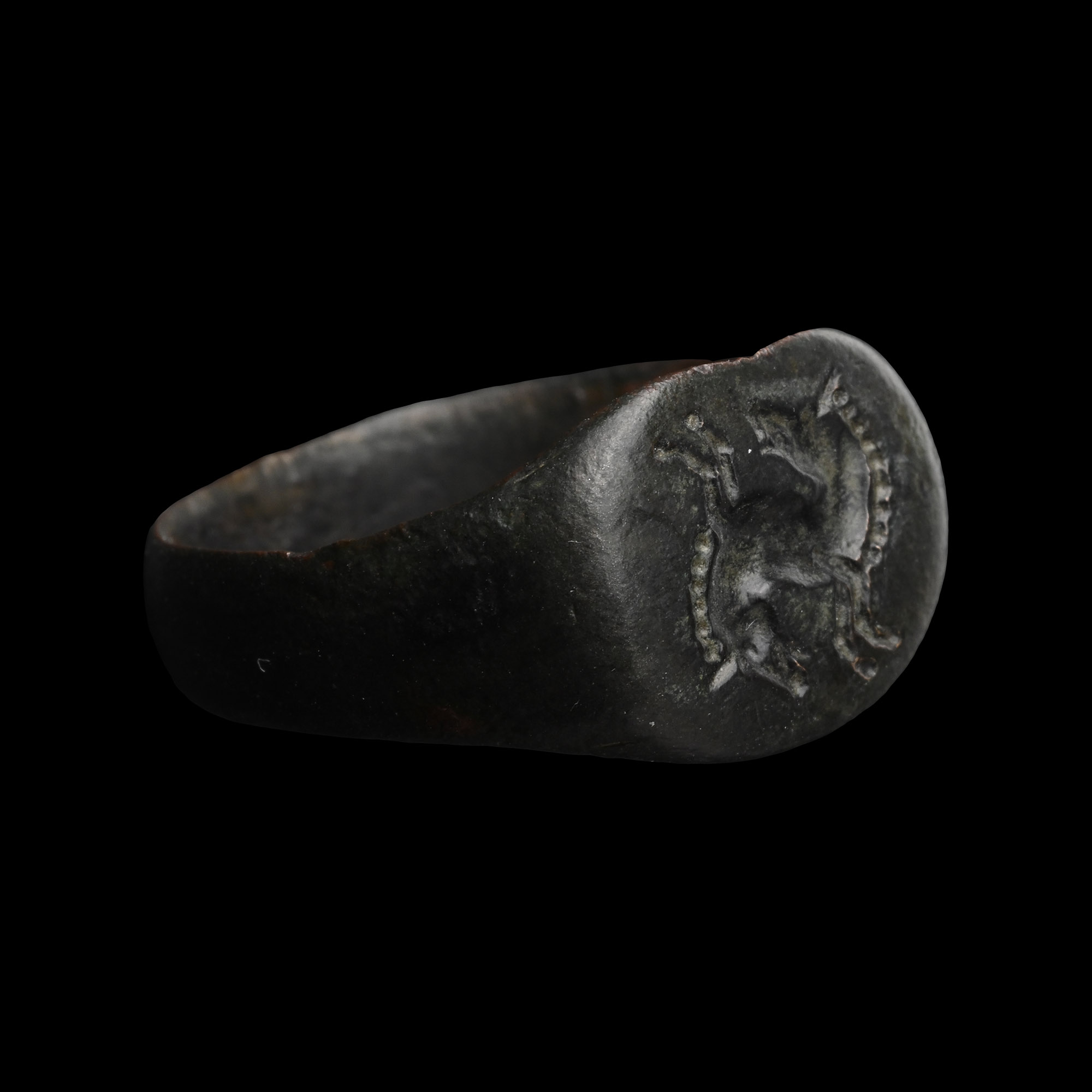
Greek Bronze Ring with Horse Protomes
HELLENISTIC, 2ND-1ST CENTURY B.C.
1 in. (6.79 grams, 25.48 mm overall, 21.72 x 21.92 mm internal diameter (approximate size British Y, USA 12, Europe 27.51, Japan 26)).
D-section hoop with expanding shoulders and discoid bezel, finely engraved two upper parts of horses joined as one into 'S' shape.
ProvenanceEx German art market, 2000s.
Acquired from an EU collector living in London.
From the collection of a Surrey, UK, gentleman.
TimeLine Auctions follows a vetting process to ensure the authenticity and legality of all items, reinforcing our commitment to integrity and responsible trading. Each antiquity, antique, and coin lot undergoes thorough examination by a vetting committee of at least ten external specialists, professional trade association members, scientists, and archaeologists: Our Vetting Process
AUCTIONS:
TimeLine is a leading auction house specialising in antiquities, ancient art, collectables, natural history, coins, medals, and books. Our auctions offer museums, collectors, historians, and enthusiasts the opportunity to acquire unique and historically significant pieces.
LOT 0759
Greek Bronze Ring with Horse Protomes
Estimate £150 - 200€170 - 230 (for guidance only)$200 - 270 (for guidance only)
-
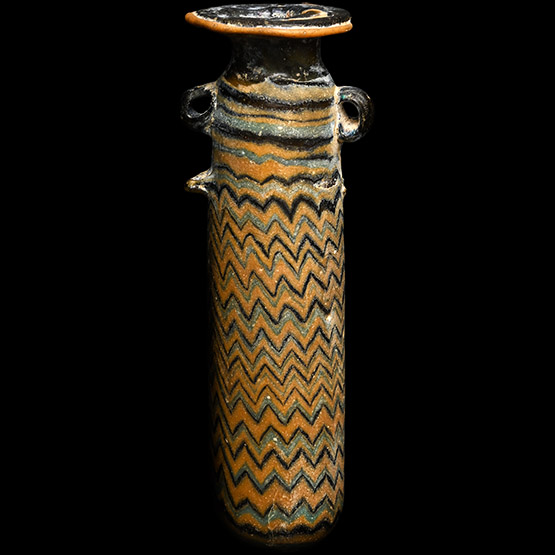
Greek Core-Formed Tall Glass Alabastron
6th-5th century B.C.Estimate: £3,500 - 4,500 (‡+bp*)
Opening Bid: £1,750
With a fusiform body, slender neck and broad flange rim, decorated with marvered feathering and spiralling trails; two lateral loop handles and a pinched lateral lug. 36.69 grams, 91 mm
Anonymous sale, Binoche & Giquello, Paris, 30th May 2012, no.124. Private collection, Switzerland. Accompanied by a copy of French passport no.0150269. This lot has been checked against the Interpol Database of stolen works of art and is accompanied by search certificate number no.13188-249220.
Alabastra of this typology, core-formed, trail-decorated and tooled, are typical of the Eastern Mediterranean. They were diminutive examples of a shape popularly produced for perfumed oils in the Greek world. Larger forms are known in both glass and ceramics. -
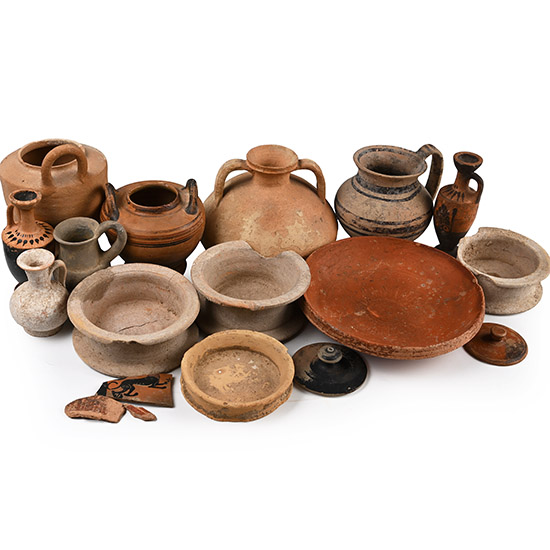
Greek Collection of Terracotta Vessels and Bases
5th-3rd century B.C.Estimate: £700 - 900 (‡+bp*)
Bids: 2 | Current Bid: £400
Mixed group of artefacts, including: a vessel fragment with a panther; a single-handled jug with painted circumferential bands; a low redware dish with an incised sunburst motif; a small lekythos with palmette design; a small lekythos with painted decoration; a squat vessel with two strap handles and a short neck, low relief spiral decoration on the base. 2.6 kg total, 3-17.5 cm
Ex Prof. Kurt Alder, Riehen; thence by descent. 1. two clay vessels and clay dish: ex Jacob Hirsch; with Galerie Fischer, Lucerne, Auction 17 November 1976, no.1493. 2. Apulian lekythos with palmettes: with Galerie Fischer, Lucerne, Auction 17 November 1976, no.1542. 3. Apulian lekythos: with Galerie Fischer, Lucerne, Auction 16–20, 1976, no.1542. 4. Daunian handled jug: with Galerie Koller, Zurich, Auction 34, no.2532. 5. potsherd fragment: with Münzen und Medaillen AG, Basel. 6. lebes with lid: acquired in September 1975. -
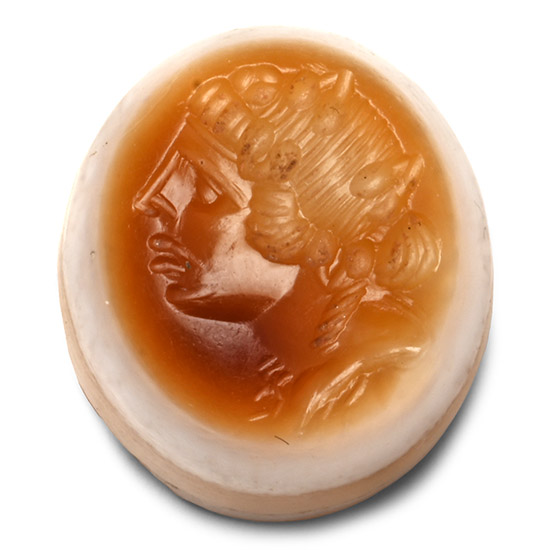
Greek Agate Gemstone with Maenad
Late Hellenistic, 1st century B.C.Estimate: £400 - 600 (‡+bp*)
Opening Bid: £180
Ellipsoid type with intaglio profile female head facing left, with parted lips and face looking slightly upwards, wearing an ivy wreath in a wavy hair bundled at the temple; supplied with a museum-quality impression. 1.25 grams, 12 mm
French art market, 2016.
