
Loading, please wait...
LOT 0560
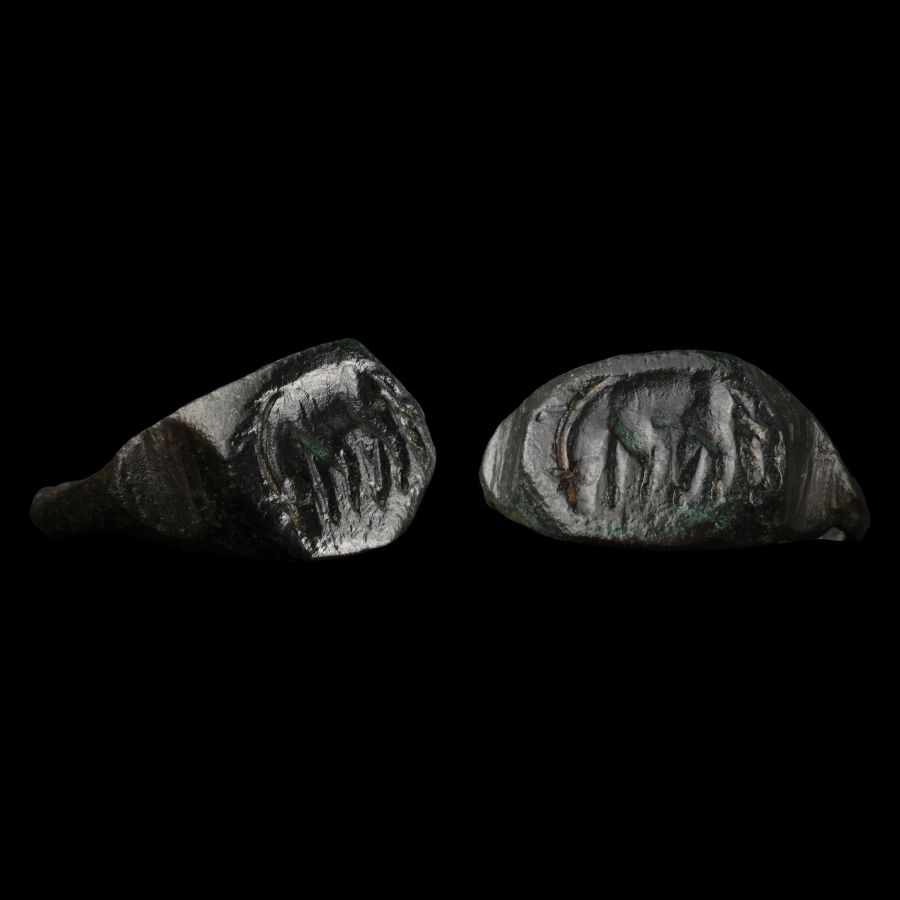
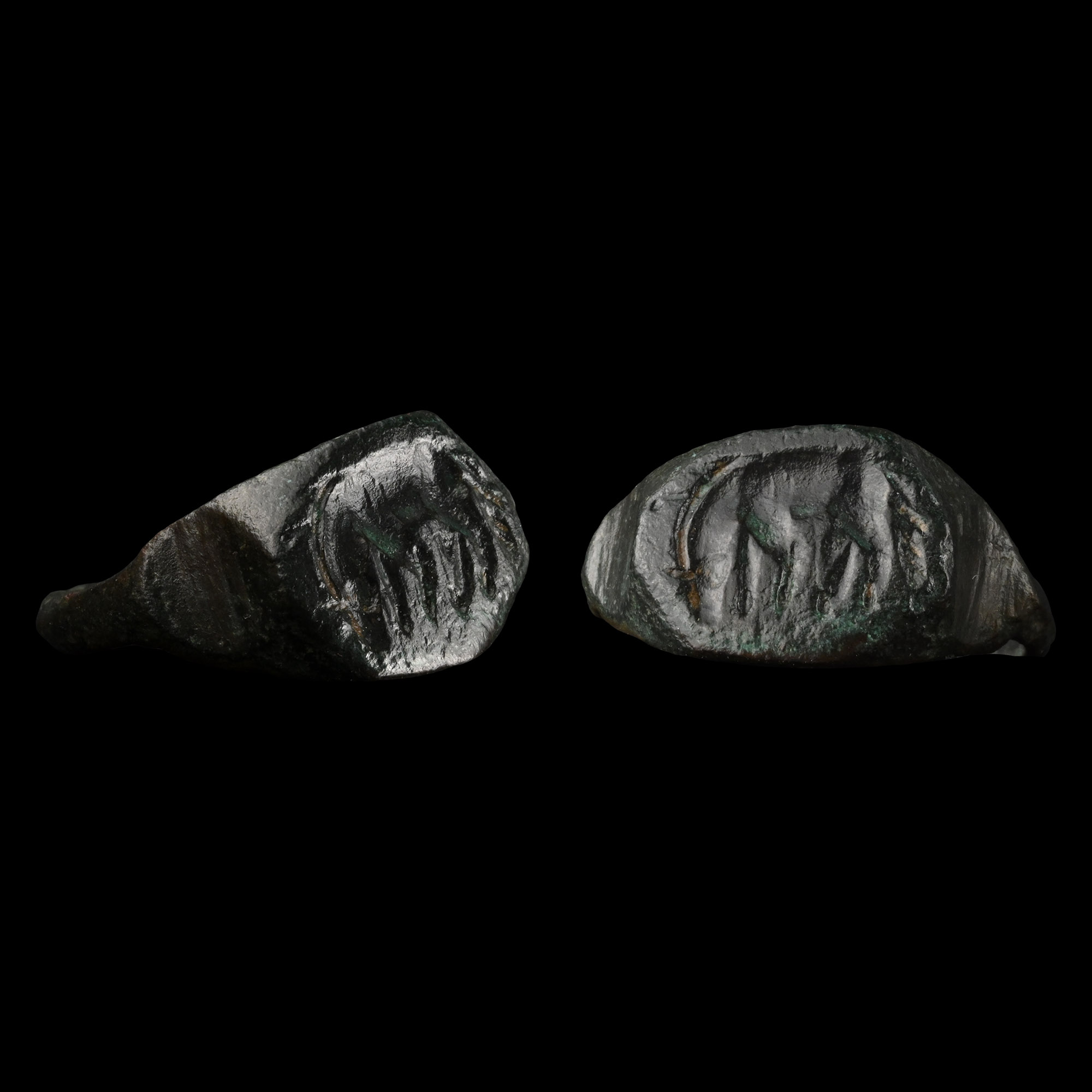
Greek Bronze Ring with Grazing Horse
4TH-3RD CENTURY B.C.
3/4 in. (4.23 grams, 21.71 mm overall, 18.78mm internal diameter (approximate size British O, USA 7, Europe 14.98, Japan 14)).
Ellipsoid bezel with incuse image of a horse with head lowered.
ProvenanceEx German art market, 2000s.
Acquired from an EU collector living in London.
From the collection of a Surrey, UK, gentleman.
This lot is accompanied by an illustrated lot declaration signed by the Head of the Antiquities Department, Dr Raffaele D'Amato.
TimeLine Auctions follows a vetting process to ensure the authenticity and legality of all items, reinforcing our commitment to integrity and responsible trading. Each antiquity, antique, and coin lot undergoes thorough examination by a vetting committee of at least ten external specialists, professional trade association members, scientists, and archaeologists: Our Vetting Process
AUCTIONS:
TimeLine is a leading auction house specialising in antiquities, ancient art, collectables, natural history, coins, medals, and books. Our auctions offer museums, collectors, historians, and enthusiasts the opportunity to acquire unique and historically significant pieces.
-
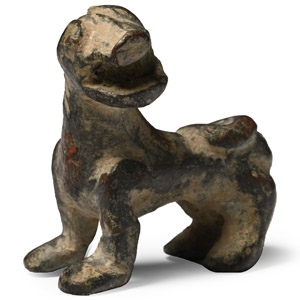
Parthian Bronze Lion Statuette
2nd-3rd century A.D.Sold for (Inc. bp): £111
Modelled standing on squat legs, long tail draped along the back, head turned to the left with open jaws, stylised mane detailing behind the neck. 40 grams, 32 mm
Ex German art market, 2000s. Acquired from an EU collector living in London. From the collection of a Surrey, UK, gentleman. This lot is accompanied by an illustrated lot declaration signed by the Head of the Antiquities Department, Dr Raffaele D'Amato. -
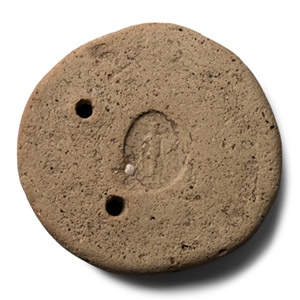
Greek Terracotta Pendant with Stamp
6th-4th century B.C.Sold for (Inc. bp): £85
Thick disc with rounded edge, two suspension holes, impressed ellipsoid panel with standing figure of Hermes. 90 grams, 76 mm
Acquired on the European art market in the early 2000s. with Galerie Rhéa, Zurich, Switzerland. This lot is accompanied by an illustrated lot declaration signed by the Head of the Antiquities Department, Dr Raffaele D'Amato. -
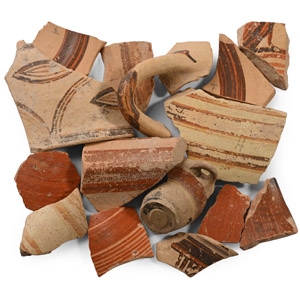
Daunian Pottery Collection
6th-4th century B.C.Sold for (Inc. bp): £78
Comprising various vessel fragments including a partial handle, most with linear decoration, some with old pencil inscriptions. 122 grams total, 29-61 mm
From a deceased estate, UK. Acquired on the UK art market. This lot is accompanied by an illustrated lot declaration signed by the Head of the Antiquities Department, Dr Raffaele D'Amato.
The fragments of Daunian ceramics presented here seem to belong both to the first vascular group of this type of ceramic, the most numerous, that of Herdonia, either to that of Canosa, which forms the second vascular group of Daunian ceramics. In the first group the two-tone decoration is limited to thin elements in red, interspersed with the rest of the decoration in a blackish-brown colour, consisting of minute and dense geometric motifs. The Canosa vases are instead generally monochrome, not lacking the sober use of red lines, having as a central motif a pendulous quadrangular panel, with three free sides of the decorative frame.
