
Loading, please wait...
LOT 0592
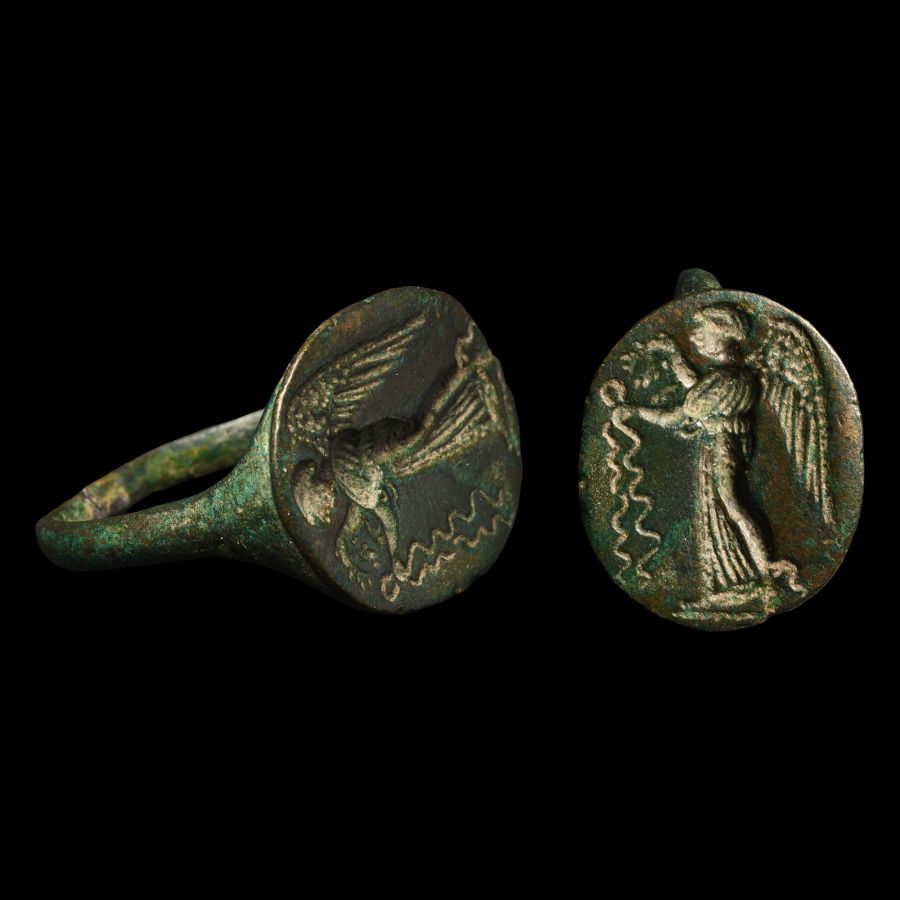
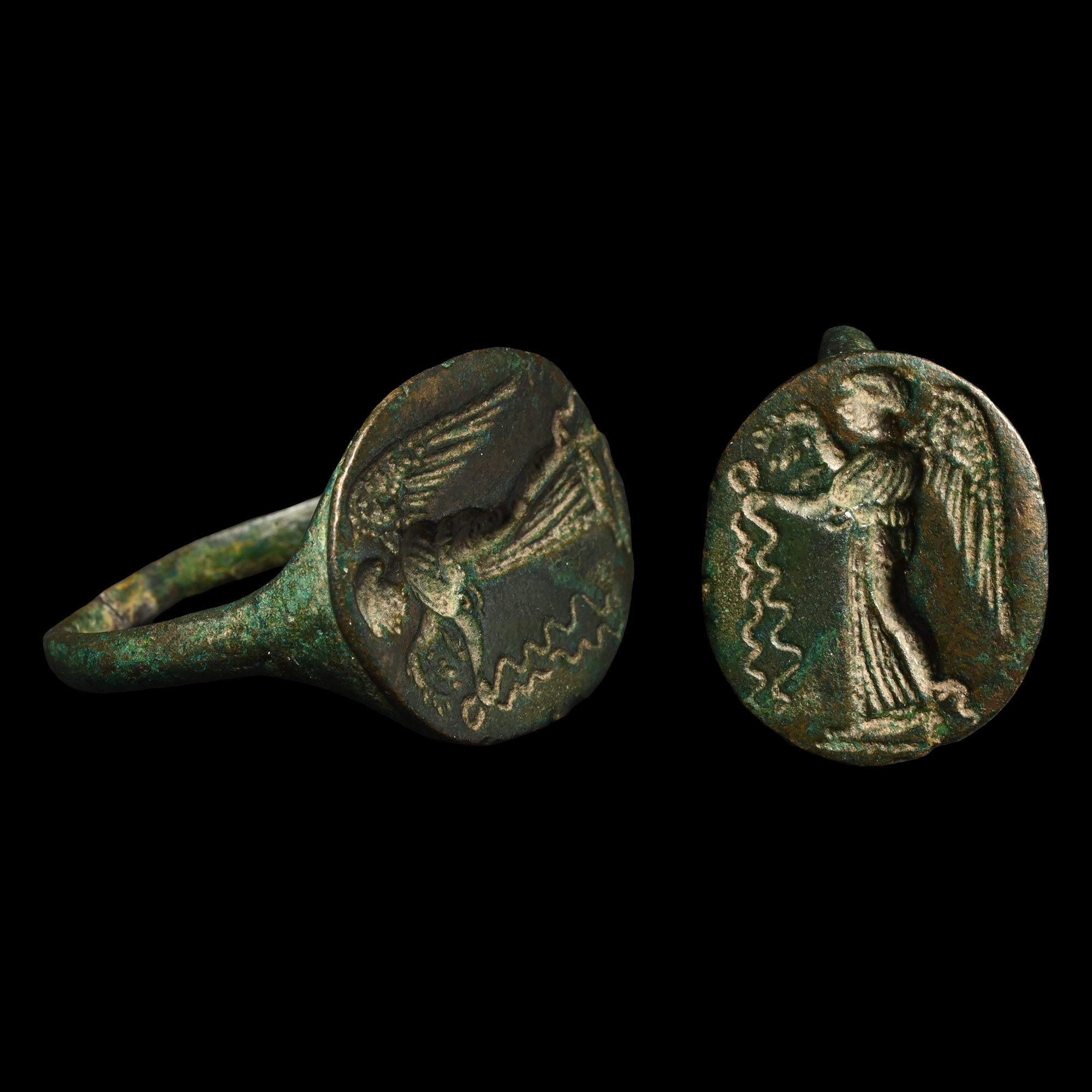
Greek Bronze Ring with Goddess Nike
4TH-2ND CENTURY B.C.
1 in. (8.87 grams, 25.51 mm overall, 22.53 x 21.73 mm internal diameter (approximate size British Y, USA 12, Europe 27.51, Japan 26)).
With discoid bezel, showing the Greek goddess of victory, Nike, holding a victory wreath in one hand, and the long ribbons of the latter in the other, the ring itself probably was part of a victory price for the winner of a contest (agon).
ProvenanceAcquired on the European art market in the 2000s.
Private collection, England.
Cf. Chadour, A.B., Rings. The Alice and Louis Koch Collection, volume I, Leeds, 1994, item 68, for type.
CONDITIONTimeLine Auctions follows a vetting process to ensure the authenticity and legality of all items, reinforcing our commitment to integrity and responsible trading. Each antiquity, antique, and coin lot undergoes thorough examination by a vetting committee of at least ten external specialists, professional trade association members, scientists, and archaeologists: Our Vetting Process
AUCTIONS:
TimeLine is a leading auction house specialising in antiquities, ancient art, collectables, natural history, coins, medals, and books. Our auctions offer museums, collectors, historians, and enthusiasts the opportunity to acquire unique and historically significant pieces.
-
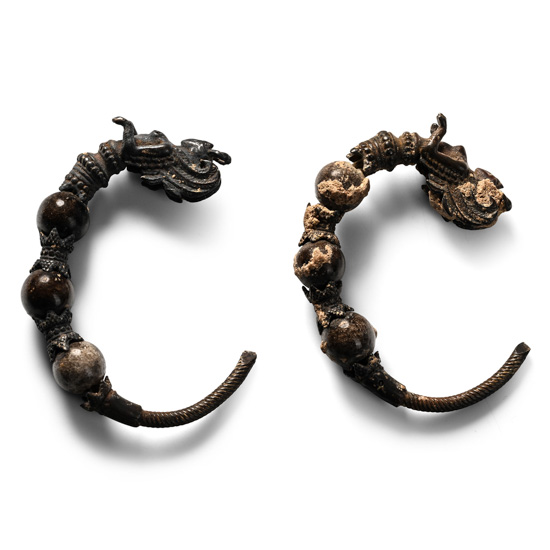
Greek Silver Earring Pair with Nike
3rd-2nd century B.C.Estimate: £600 - 800 (+bp*)
Opening Bid: £300
Each with a hook and spherical beads, applied collars and a winged figure of Nike with arms extended. 9.66 grams total, 34-37 mm
Acquired before 1983. Ex London gallery, 1990s. Private collection, London, UK. -
.jpg)
Greek Attic Red-Figure Fragment Collection
Early 5th century B.C.Sold for (Inc. bp): £1,950
Comprising four irregular, finely painted fragments depicting: an outstretched hand below a letter, a young male face in profile, and a pair of horseheads. 6.31 grams total, 18-26 mm
From the stock of a former UK antiquarian, acquired at trade fairs and from private collection formed in the 1980s-1990s. Private collection, Europe. -
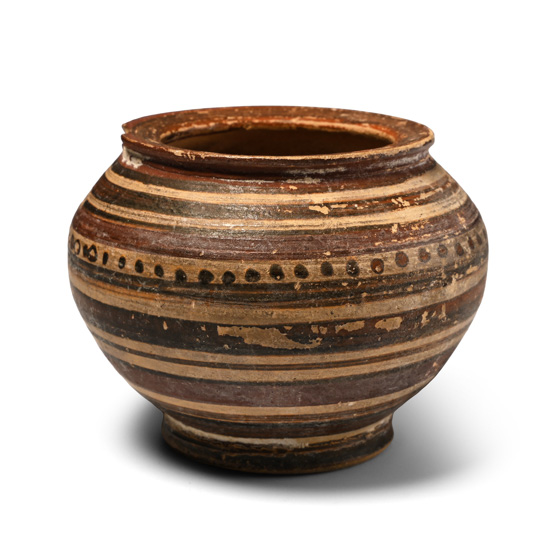
Greek Bowl with Crimson and Black Decorations
4th century B.C.Estimate: £1,000 - 1,400 (‡+bp*)
Opening Bid: £500
With a narrow basal ring, a flared rim, and painted circumferential bands. 49.2 grams, 63 mm
Private collection, Los Angeles, USA. Acquired on the American art market. European private collection.
