
Loading, please wait...
LOT 0507
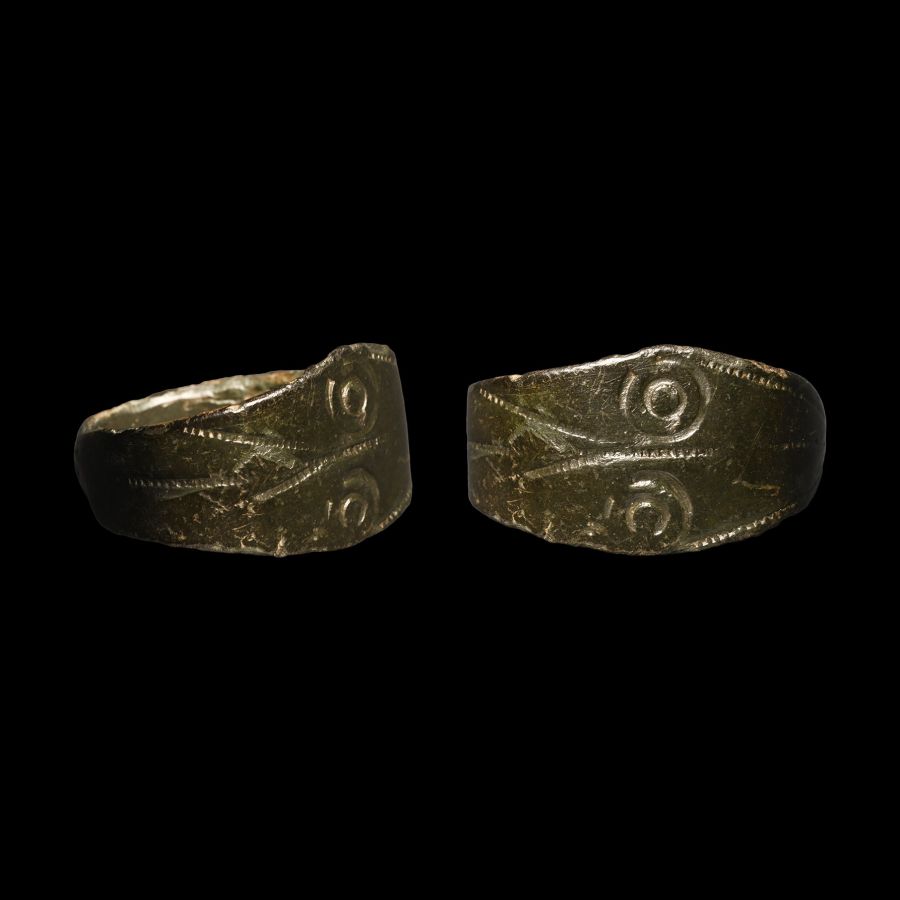
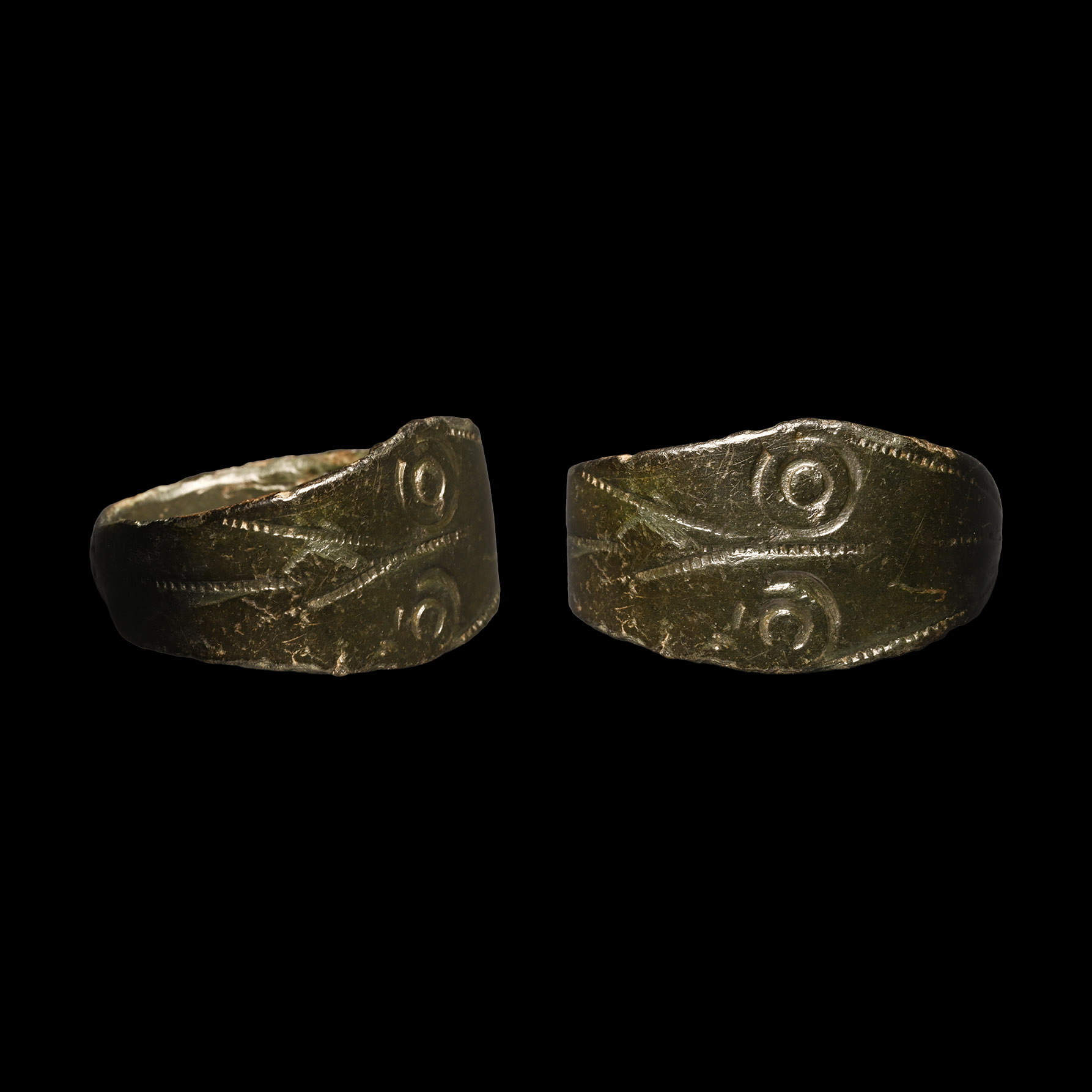
Greek Bronze Ring with Face
CIRCA 3RD-2ND CENTURY B.C.
1 in. (7.47 grams, 27.25 mm overall, 23.27 mm internal diameter (approximate size British Y 1/2, USA 12 1/4, Europe 28.2, Japan 27)).
With broad plaque, pointillé bands and roundels imitating a human mask.
ProvenanceFrom the collection of a High Wycombe, Buckinghamshire, UK, gentleman, circa 2000.
LiteratureCf. Chadour, A.B., Rings. The Alice and Louis Koch Collection, volume I, Leeds, 1994, item 70, for type.
CONDITIONTimeLine Auctions follows a vetting process to ensure the authenticity and legality of all items, reinforcing our commitment to integrity and responsible trading. Each antiquity, antique, and coin lot undergoes thorough examination by a vetting committee of at least ten external specialists, professional trade association members, scientists, and archaeologists: Our Vetting Process
AUCTIONS:
TimeLine is a leading auction house specialising in antiquities, ancient art, collectables, natural history, coins, medals, and books. Our auctions offer museums, collectors, historians, and enthusiasts the opportunity to acquire unique and historically significant pieces.
-
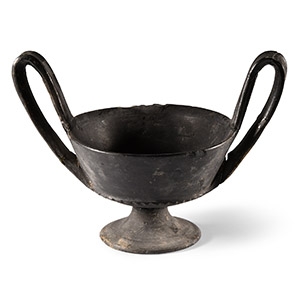
Etruscan Bucchero Kantharos Cup
Circa 7th-6th century B.C.Sold for (Inc. bp): £390
Black ceramic with broad bowl and two loop handles, short stem and trumpet-shaped foot; bowl with fluted carination; repaired. 339 grams, 18.5 cm wide
From the Steel family collection, 1950s-late 1990s. -
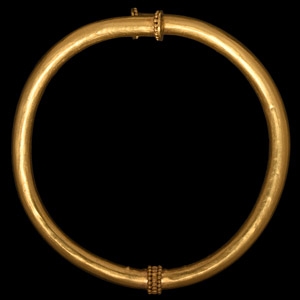
Greek Gold Clad Bracelet
5th-3rd century B.C. or laterSold for (Inc. bp): £3,510
Comprising a penannular hoop and discoid finials with applied filigree collars; the filigree ornament repeated at the centre. 41.68 grams, 70 mm
Previously in the Mansees collection; formed 1950s-early 1990s. From a large American collection formed in Chicago, Illinois, USA, in 1995. Ex European collection. Accompanied by an academic report by Dr Raffaele D’Amato. This lot has been checked against the Interpol Database of stolen works of art and is accompanied by a search certificate no.11731-200431. -
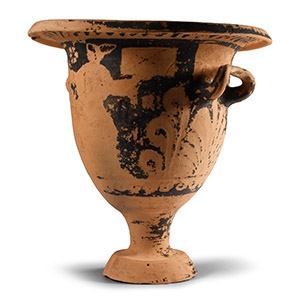
Greek Chevron Group Apulian Bell Krater
Circa 330 B.C.Sold for (Inc. bp): £910
With bell-shaped body and narrow chamfered foot, two lateral looped and folded handles, broad everted rim with chamfered edge; remains of black painted design with palmettes. 1.7 kg, 26.5 cm high
with Galerie vom Parkberg, Hamburg, Germany, 1997. Acquired Gerhard Hirsch, Munich, Germany, 24-28 September 2018, lot 677. Accompanied by an original thermoluminescence report from Ralf Kotalla, no.190131, dated 10 March 1997. Accompanied by a copy of the Gerhard Hirsch invoice and export licence.
