
Loading, please wait...

LOT 0539
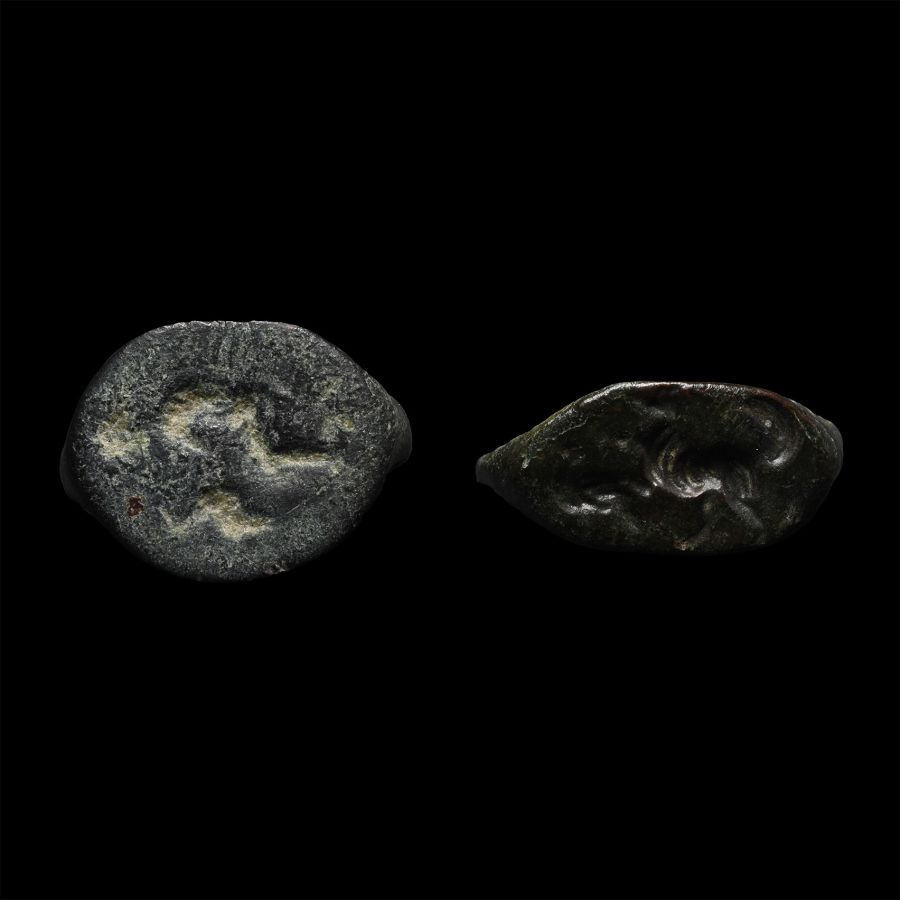
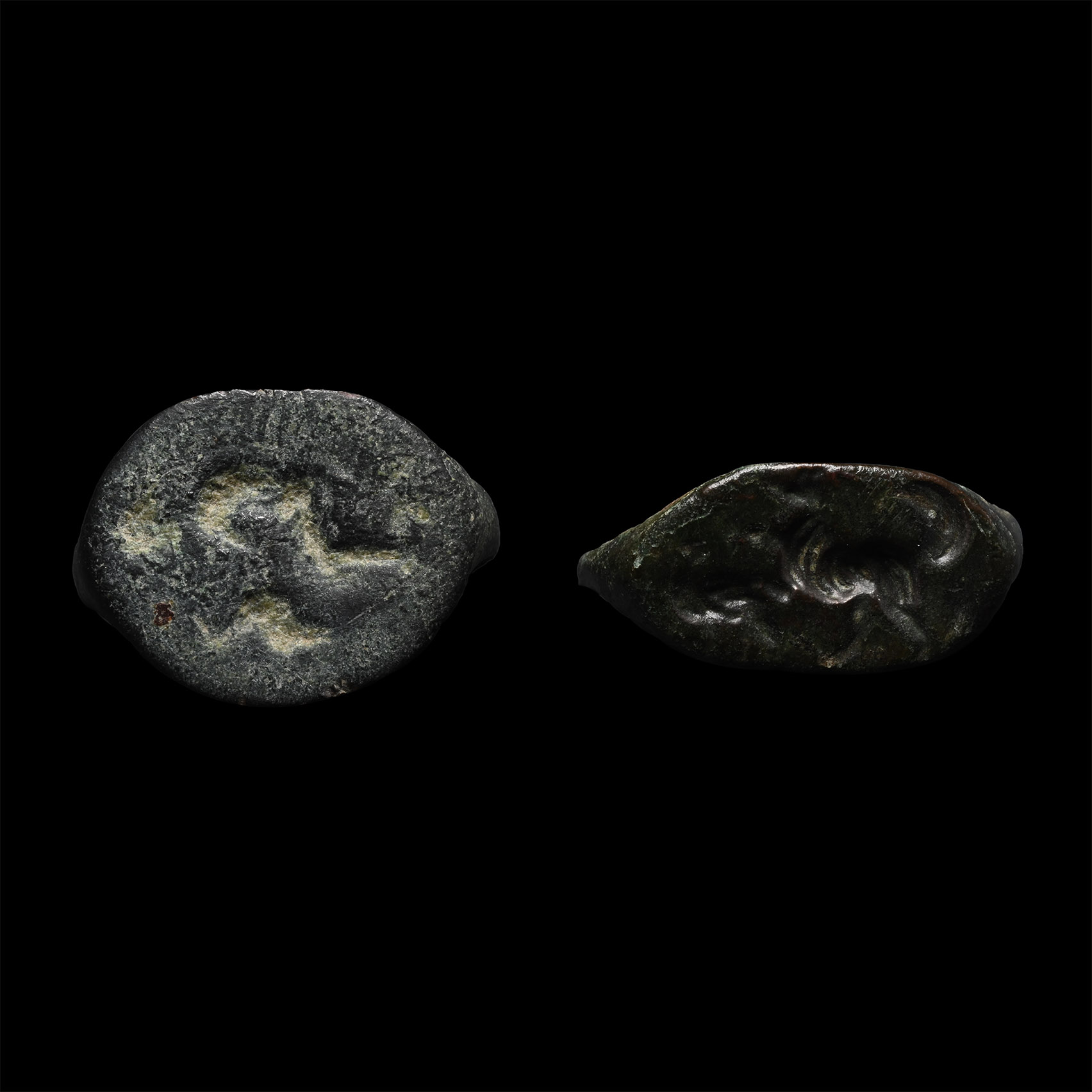
Greek Bronze Ring Bezel Group
4TH-3RD CENTURY B.C.
3/4 in. (4.8 grams total, 20-21 mm).
Comprising two discoid bezels, one with a dog pouncing on a bird, the other with a seated figure holding a bird in his hand, possibly depicting Zeus. [2, No Reserve]
ProvenanceEx German art market, 2000s.
Acquired from an EU collector living in London.
From the collection of Surrey, UK, gentleman.
TimeLine Auctions follows a vetting process to ensure the authenticity and legality of all items, reinforcing our commitment to integrity and responsible trading. Each antiquity, antique, and coin lot undergoes thorough examination by a vetting committee of at least ten external specialists, professional trade association members, scientists, and archaeologists: Our Vetting Process
AUCTIONS:
TimeLine is a leading auction house specialising in antiquities, ancient art, collectables, natural history, coins, medals, and books. Our auctions offer museums, collectors, historians, and enthusiasts the opportunity to acquire unique and historically significant pieces.
-
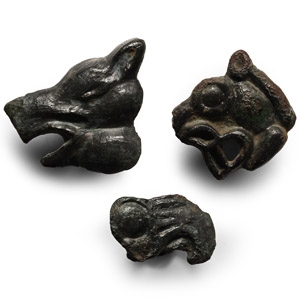
Scythian Bronze Animal Mount Group
Circa 5th-3rd century B.C.Estimate: £200 - 300 (+bp*)
Opening Bid: £100
Comprising three mounts in the shape of an eagle with hooked beak, a wolf, and a leopard; each with D-shaped loop to the reverse. 7.1 grams total, 15-21 mm
Ex German art market, 2000s. Acquired from an EU collector living in London. From the collection of Surrey, UK, gentleman. -
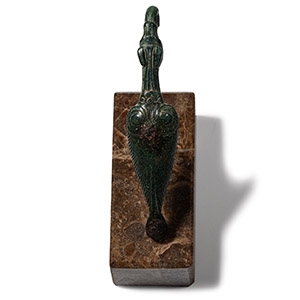
Etruscan Bronze Decorated Belt Mount
5th-3rd century B.C.Sold for (Inc. bp): £338
With domed plaque and ribbed hook; the plaque formed as the pinions and folded wings of a bird of prey, the ribbed neck extending to a dog's head with ears folded back, hook protruding from the mouth; palmette decoration to finial; mounted on a custom-made stand. 149 grams total, 86 mm wide including stand
English private collection. with ArtAncient Ltd, 2013. Private collection, London. -
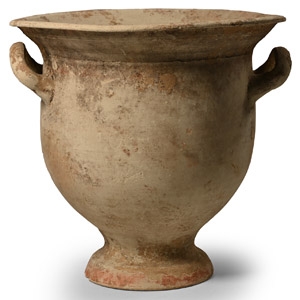
Greek Buff Ware Bell Krater
Circa 4th century B.C.Sold for (Inc. bp): £182
With stepped foot and rounded body, deep flange rim, two arched loop handles; traces of red and other pigment. 717 grams, 17 cm
From a family collection mostly formed in the 1940s-1950s, thence by descent.
