
Loading, please wait...
LOT 0514
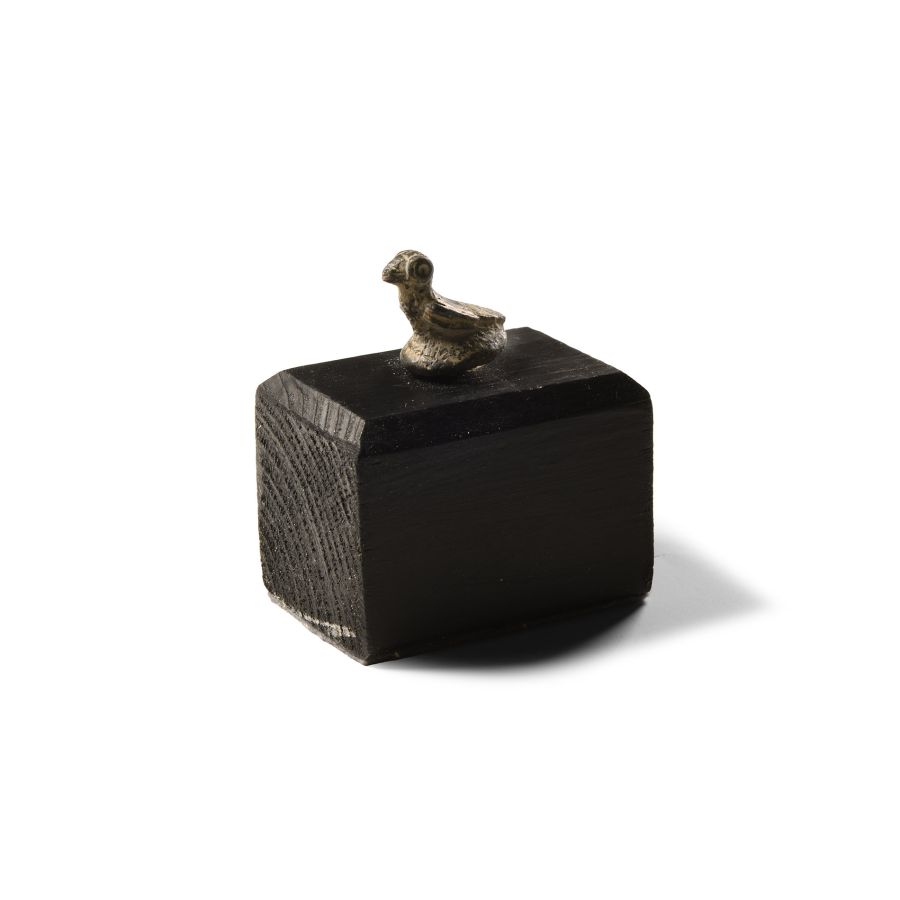
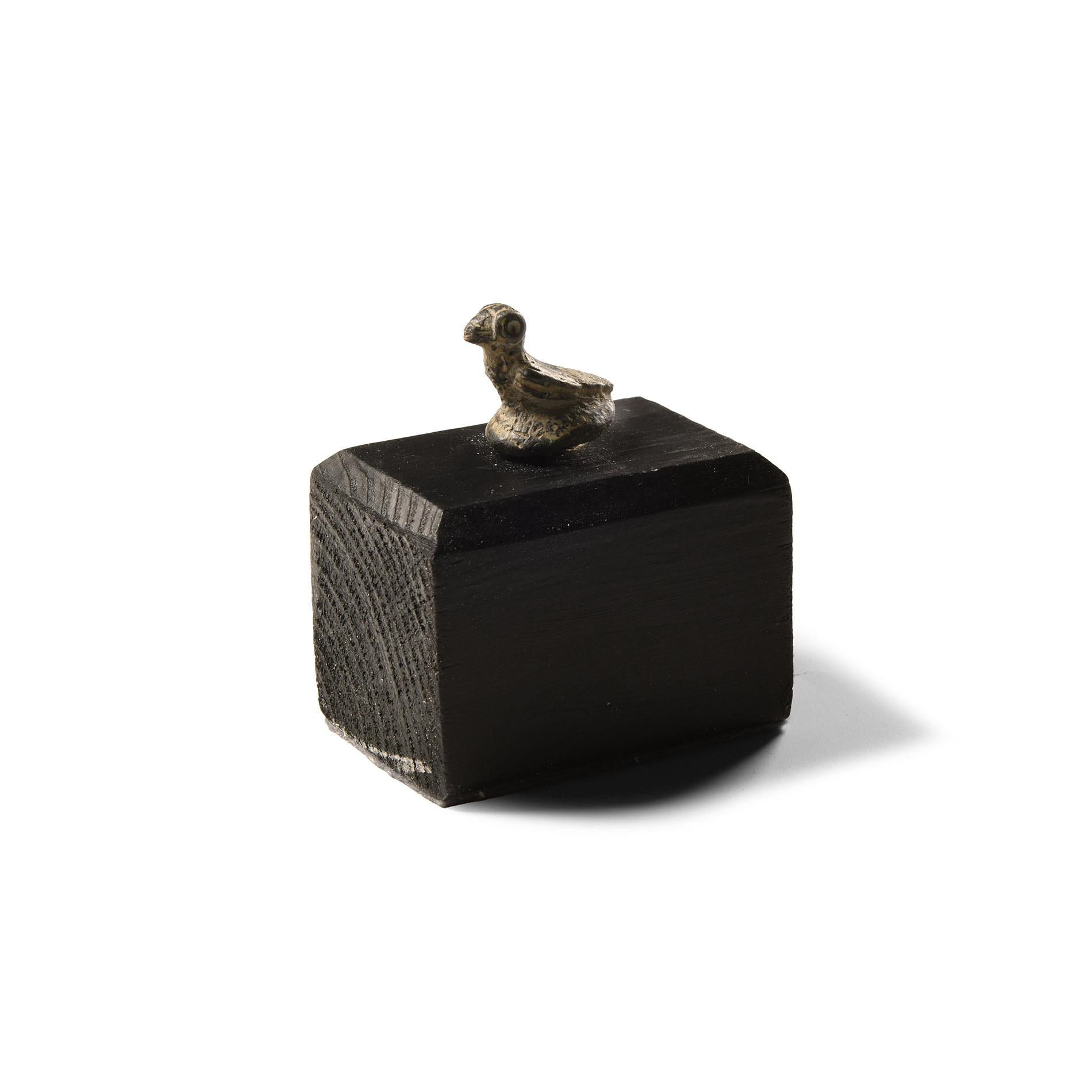
Greek Bronze Owl Finial
4TH-2ND CENTURY B.C.
2 3/4 in. (89 grams total, 70 mm high including stand).
Modelled in the round perched on a discoid base with mounting lug to the underside; the stylised owl with large circular eyes with simple beak and feather detailing, pecked texture to the base; accompanied by a custom-made wooden display stand.
ProvenanceAcquired 1960s-1990s.
From the late Alison Barker collection, a retired London barrister.
TimeLine Auctions follows a vetting process to ensure the authenticity and legality of all items, reinforcing our commitment to integrity and responsible trading. Each antiquity, antique, and coin lot undergoes thorough examination by a vetting committee of at least ten external specialists, professional trade association members, scientists, and archaeologists: Our Vetting Process
AUCTIONS:
TimeLine is a leading auction house specialising in antiquities, ancient art, collectables, natural history, coins, medals, and books. Our auctions offer museums, collectors, historians, and enthusiasts the opportunity to acquire unique and historically significant pieces.
-
.jpg)
Greek Core-Formed Glass Aryballos
Circa 5th-3rd century B.C.Estimate: £800 - 1,000 (+bp*)
Opening Bid: £400
In opaque blue glass, flask shaped with shallow vertical channelling and polychrome feathering, trails to the neck and broad everted rim; iridescent surfaces; restored. 70 grams, 78 mm
Ex Maurice Mathieu. Acquired from Asfar, Lebanon, 1960s. Art Auction, Rémy Le Fur & Associés, 10 October 2012, lot 130. Accompanied by a copy of a French cultural passport no.116789. -
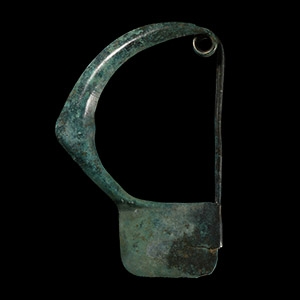
Greek Geometric Period Bow Brooch
8th-7th century B.C.Sold for (Inc. bp): £169
Keeled bow with central bulb, integral pin and large, square catch plate. 55 grams, 95 mm
From the family collection of a Surrey gentleman since before 1960.
The function of this type of fibula was utilitarian and decorative: they were used for woollen clothing (Herodotus V, 87) and they have been found in houses, tombs and as votive offerings in sanctuaries. This typology was introduced in South Italy by the Greeks, and was widespread in the Magna Graecia. Like all female fibulae, it functioned as a clothing fastener, usually worn as a pair on each shoulder. -
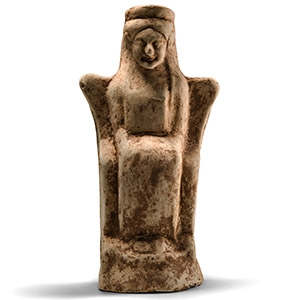
Archaic Greek Terracotta Seated Goddess
5th century B.C.Sold for (Inc. bp): £650
Represented in the typical female attire wearing a long chiton and a polos headgear; seated upon a throne with side horns, hands upon her knees; flat back. 413 grams, 18.5 cm
Acquired in Europe before 1996.
The typical 5th century B.C. terracotta female figurine was a standing or seated woman wearing a chiton and a himation. It usually represented the goddess Demeter, and it was a votive figure offered to the shrines or temples. Attica was one of the principal centres of figurine production, but Corinth continued to produce solid standing or seated females with moulded fronts and flat backs.
