
Loading, please wait...
LOT 0543
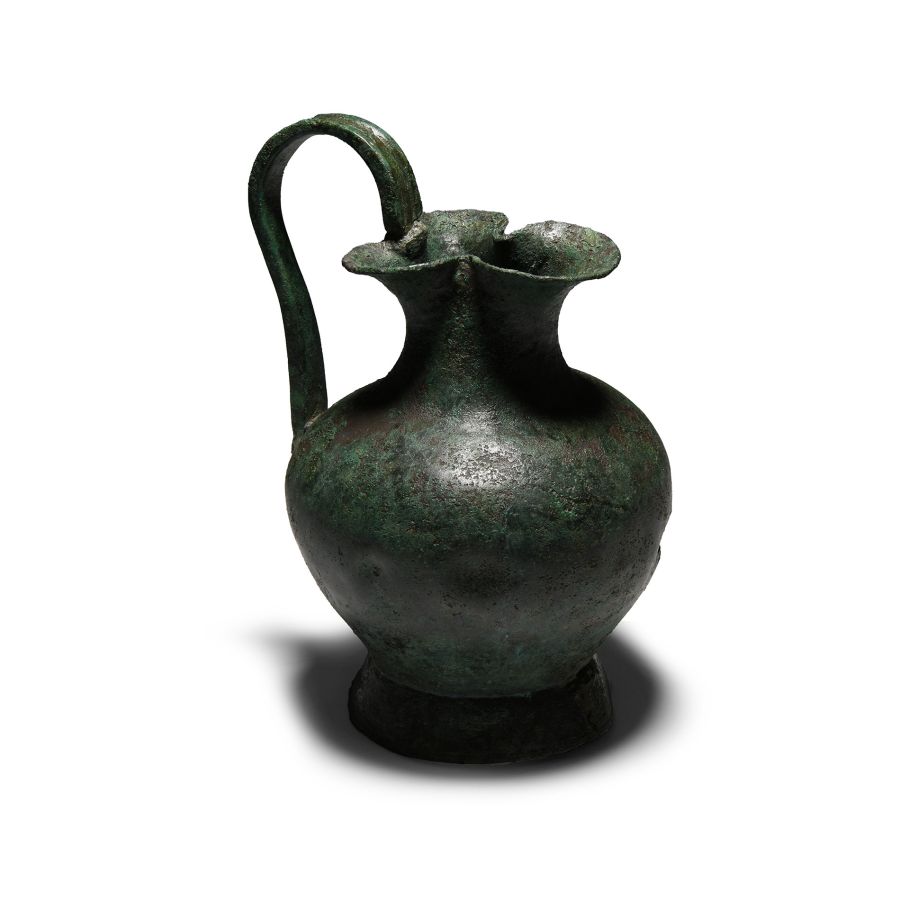
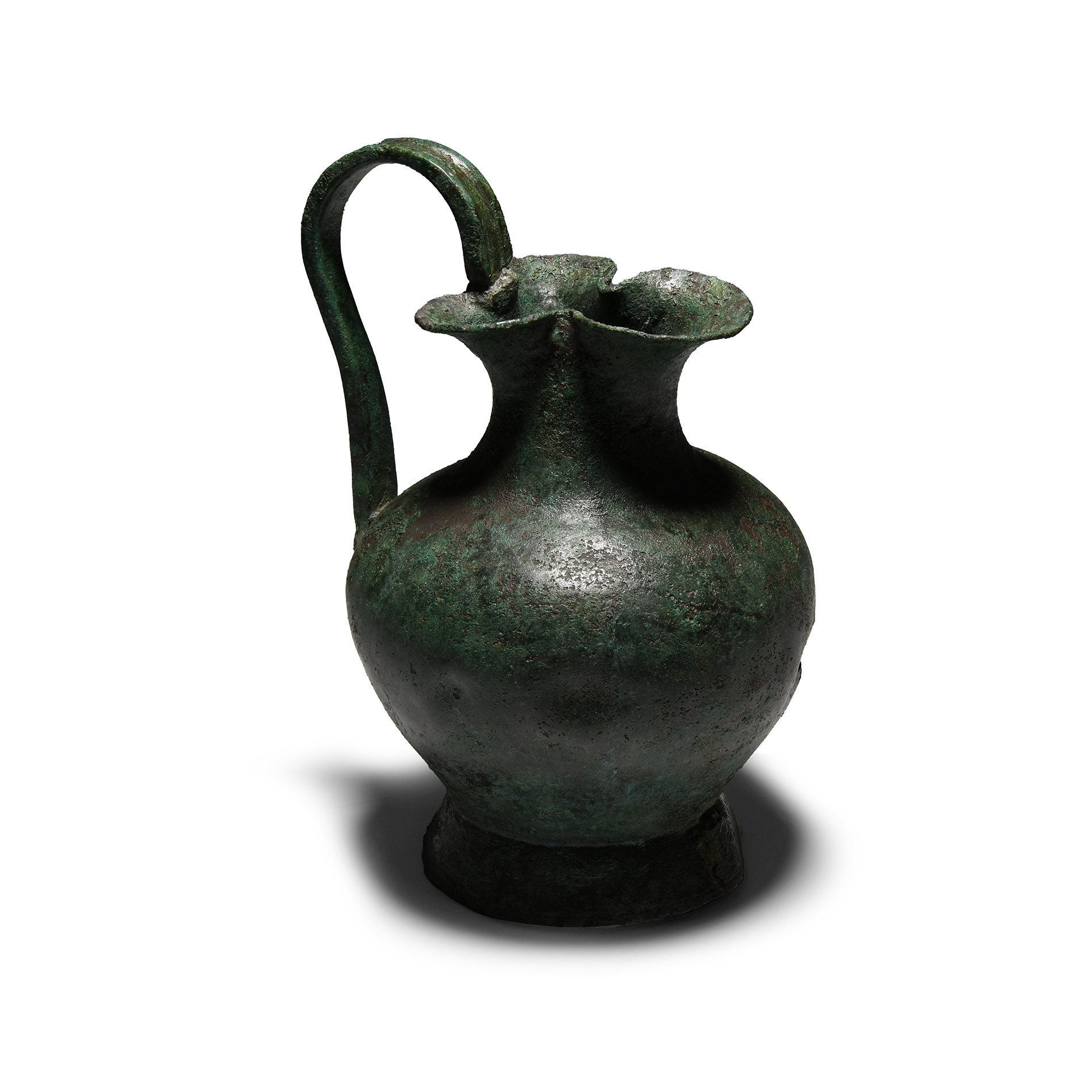
Greek Bronze Oinochoe
3RD-2ND CENTURY B.C.
7 7/8 in. (747 grams, 20 cm high).
With piriform body, strap handle, trefoil mouth with broad pouring lip.
ProvenanceEx old English collection.
London art market, 1980s.
Cf. similar in the collection of the British Museum under accession no.1886,0312.1.
CONDITIONTimeLine Auctions follows a vetting process to ensure the authenticity and legality of all items, reinforcing our commitment to integrity and responsible trading. Each antiquity, antique, and coin lot undergoes thorough examination by a vetting committee of at least ten external specialists, professional trade association members, scientists, and archaeologists: Our Vetting Process
AUCTIONS:
TimeLine is a leading auction house specialising in antiquities, ancient art, collectables, natural history, coins, medals, and books. Our auctions offer museums, collectors, historians, and enthusiasts the opportunity to acquire unique and historically significant pieces.
-
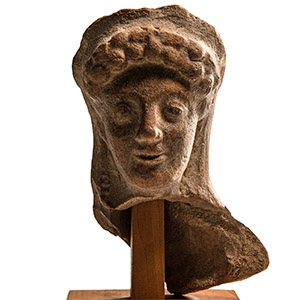
Greek Archaic Terracotta Head of Kore
6th-5th century B.C.Sold for (Inc. bp): £975
Modelled in the round wearing a diadem or headdress, either a Kore or Aphrodite, hollow-formed; accompanied by a custom-made display stand. 229 grams, 12 cm (263 grams total, 13.5 cm high including stand)
Acquired in the 1970s. Ex European private collection.
The type belongs to the evolution of the ‘Aphrodite Group’ that was distributed and copied by local workshops in Ionia and the rest of Greece. The figurines of this type are found in sanctuaries of female deities, as well as graves (eg. in Molyvoti). Similar figurines have also been found in Thassos. -
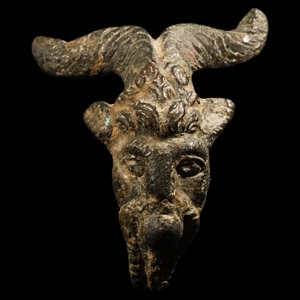
Greek Bronze Handle with Human-Headed Ram
4th-3rd century B.C.Sold for (Inc. bp): £234
Featuring stylised horn and tufted coat detailing, the ram's face with humanesque features; curved profile. 22.2 grams, 39 mm
Collected from 1969-1999. From the collection of the late Mr S.M., London, UK. -
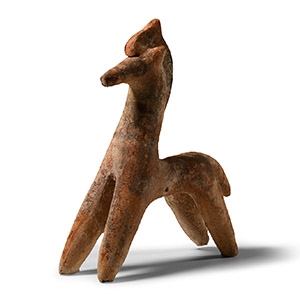
Cypriot Bichrome Ware Terracotta Horse Model
Circa 850-750 B.C.Sold for (Inc. bp): £611
Modelled in the round, detailed in black and crimson. 168 grams, 13 cm high
Lt. Col. H.A. Hill, R.A.M.C. while stationed in Cyprus as S.M.O in the 1920s, thence by descent.
