
Loading, please wait...

LOT 0109
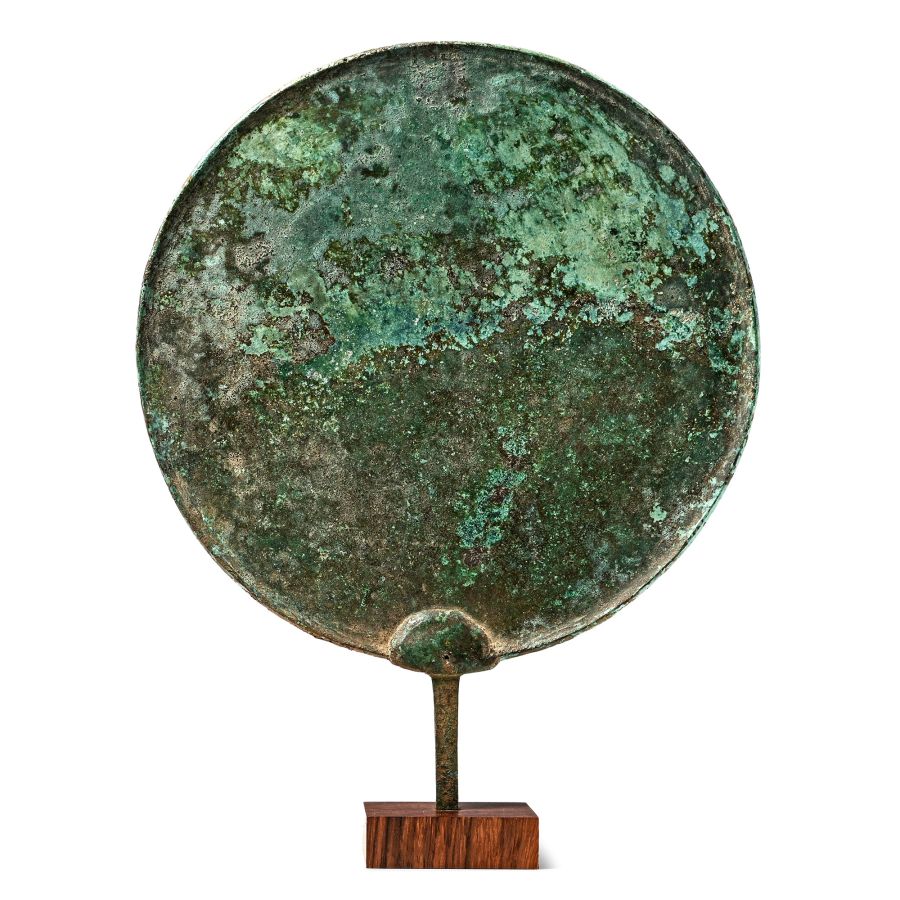
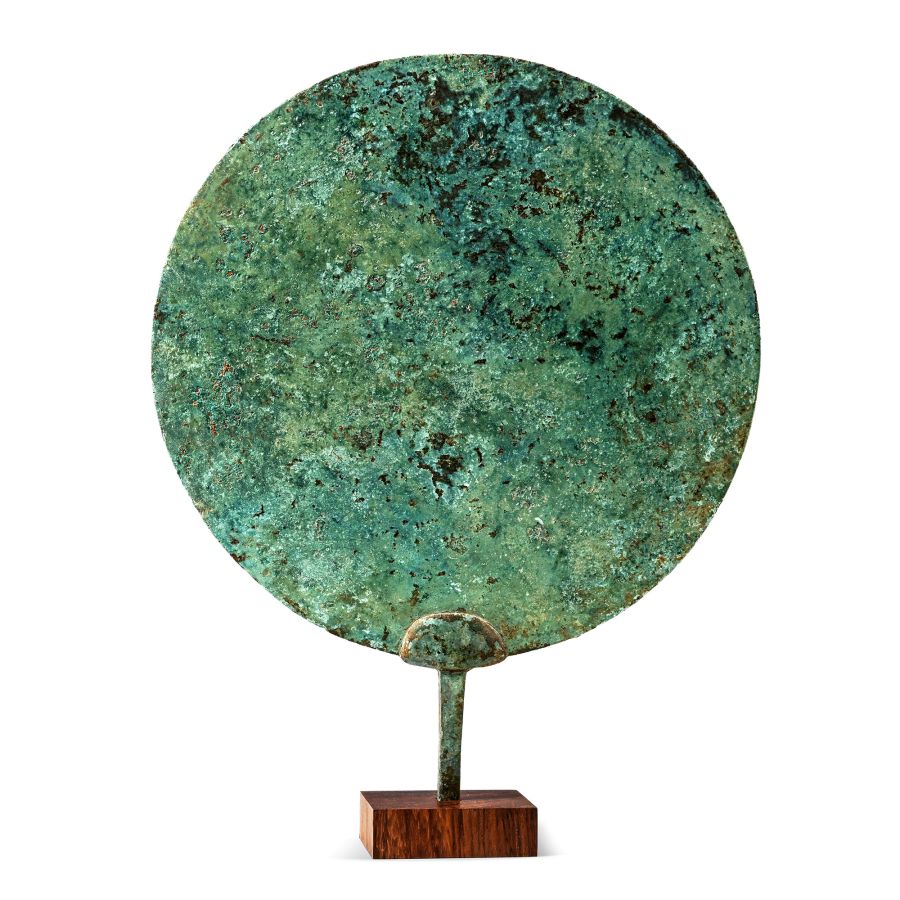
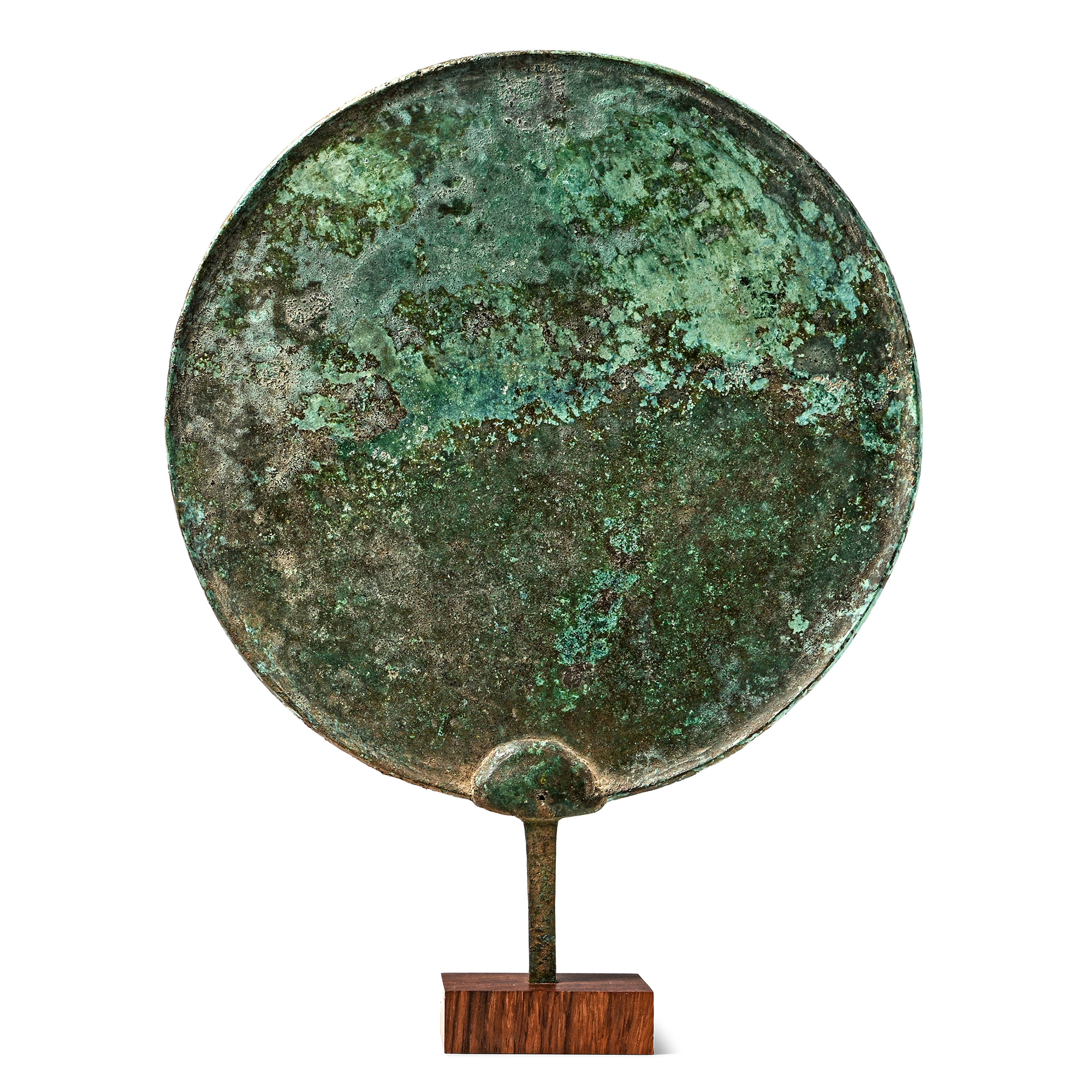
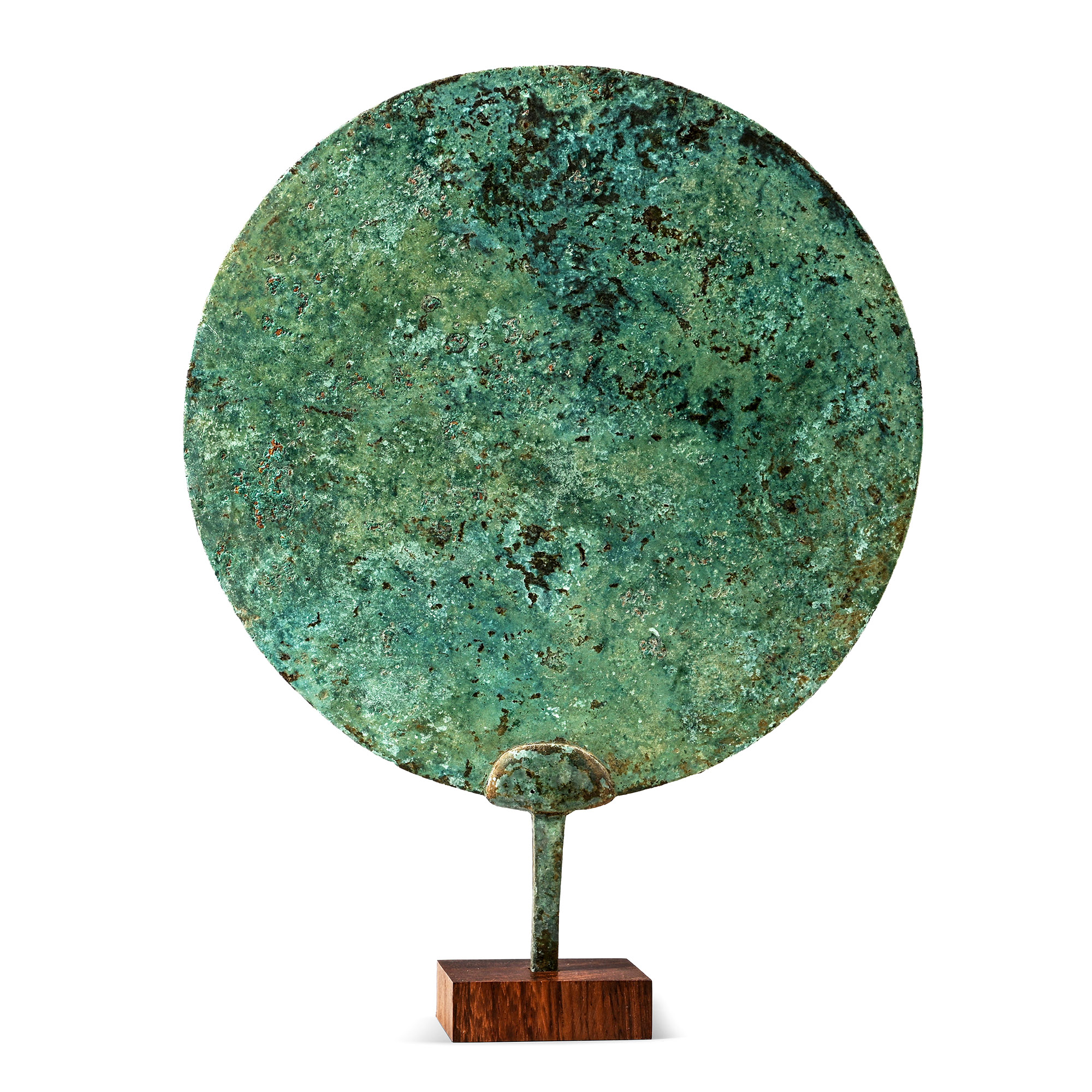
Greek Bronze Mirror
5TH-4TH CENTURY B.C.
8 in. (210 grams total, 20.1 cm high including stand).
Discoid with slightly raised rim and square-section tang, mounted on a custom-made stand.
ProvenanceEx André Lorenceau (1930-2019), Baselland, circa 1960s-2000.
LiteratureSee The British Museum, item number 1842,0728.669, for the disc type.
CONDITIONTimeLine Auctions follows a vetting process to ensure the authenticity and legality of all items, reinforcing our commitment to integrity and responsible trading. Each antiquity, antique, and coin lot undergoes thorough examination by a vetting committee of at least ten external specialists, professional trade association members, scientists, and archaeologists: Our Vetting Process
AUCTIONS:
TimeLine is a leading auction house specialising in antiquities, ancient art, collectables, natural history, coins, medals, and books. Our auctions offer museums, collectors, historians, and enthusiasts the opportunity to acquire unique and historically significant pieces.
LOT 0109
Greek Bronze Mirror
Estimate £600 - 800€700 - 930 (for guidance only)$810 - 1,080 (for guidance only)
Opening Bid
£320 (EUR 371; USD 432) ‡+BP*
-
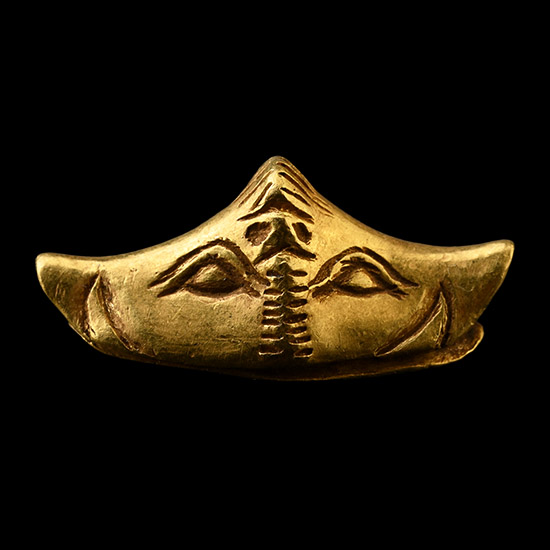
Greek Gold Double Boar Seal with Inscription
Circa 5th-3rd century B.C.Estimate: £1,200 - 1,700 (+bp*)
Opening Bid: £600
Hollow pendant formed as two triangular-section boar heads with finely carved tusks and eyes, ribbed bristles to the top of their heads; inscription to the bottom 'AHO?'. 2.37 grams, 18 mm
From the collection of a UK gentleman, London, UK, by descent from his family collection, 1970s. -
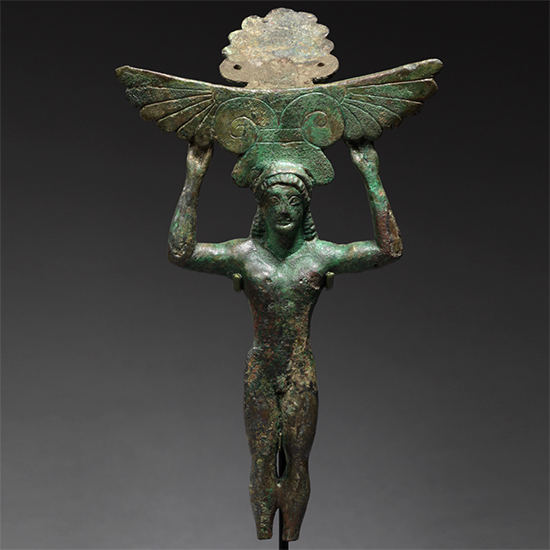
Greek Bronze Patera Handle in the form of a Naked Youth
5th century B.C.Estimate: £4,000 - 6,000 (+bp*)
Opening Bid: £2,000
Formed as a nude kouros, hands raised to touch the elaborate palmette sitting atop the boy's head, his face framed by a thick fringe, his hair, held by a band, falling down his back in serpentine waves; the figure standing with legs held close together, broken at mid-shin; a palmette-shaped fixing plate projecting at the back with two holes for rivets to attach to the broad, shallow dish which would have been used for libations. 178 grams total, handle: 17.3 cm high, 23.5 cm high including stand
Private collection UK (N.E.), acquired prior to 1970, and thence by descent. This lot has been checked against the Interpol Database of stolen works of art and is accompanied by search certificate no.13550-263433.
Anthropomorphic handles with images of young naked boys connected with animals were widespread and used for mirrors. The object, in particular, is part of the group of mirrors and paterae with standing youths (male and female, probably symbolising athletes) and nude female mirror caryatids (Mitten-Doeringer, 1968, figs.87-88) serving as vertical handles. -
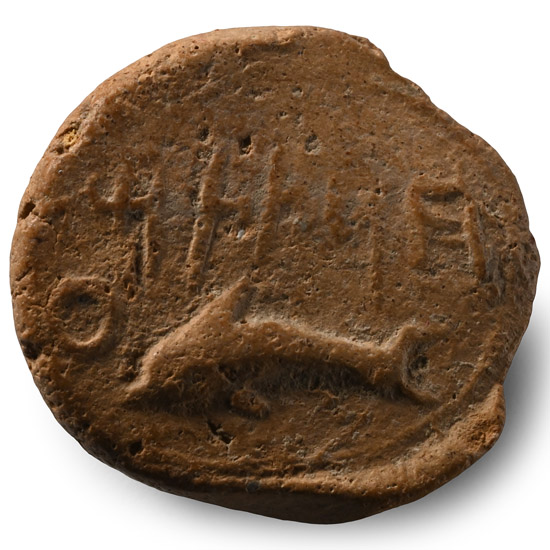
Phoenician Terracotta Bulla with a Dolphin
5th century B.C.Estimate: £100 - 140 (‡+bp*)
Opening Bid: £50
Plano-convex in profile with impressed dolphin and legend. 1.05 grams, 17.71 mm
Acquired in 1994. Private collection, Switzerland, thence by descent. Private collection, since the late 1990s.
This Phoenician terracotta bulla, decorated with a dolphin, reflects the strong maritime identity of the Phoenician world. Bullae were typically used to seal documents or goods, serving both a practical and symbolic function in trade and administration. The dolphin, a creature closely associated with the sea, would have held particular meaning for the Phoenicians, whose culture and prosperity were deeply tied to seafaring and commerce across the Mediterranean. Often seen as a symbol of protection, guidance, and safe passage, the dolphin adds an additional layer of meaning to the object, suggesting not only its use in everyday transactions but also a connection to the wider beliefs and environment of the ancient coastal world.
