
Loading, please wait...


LOT 0765
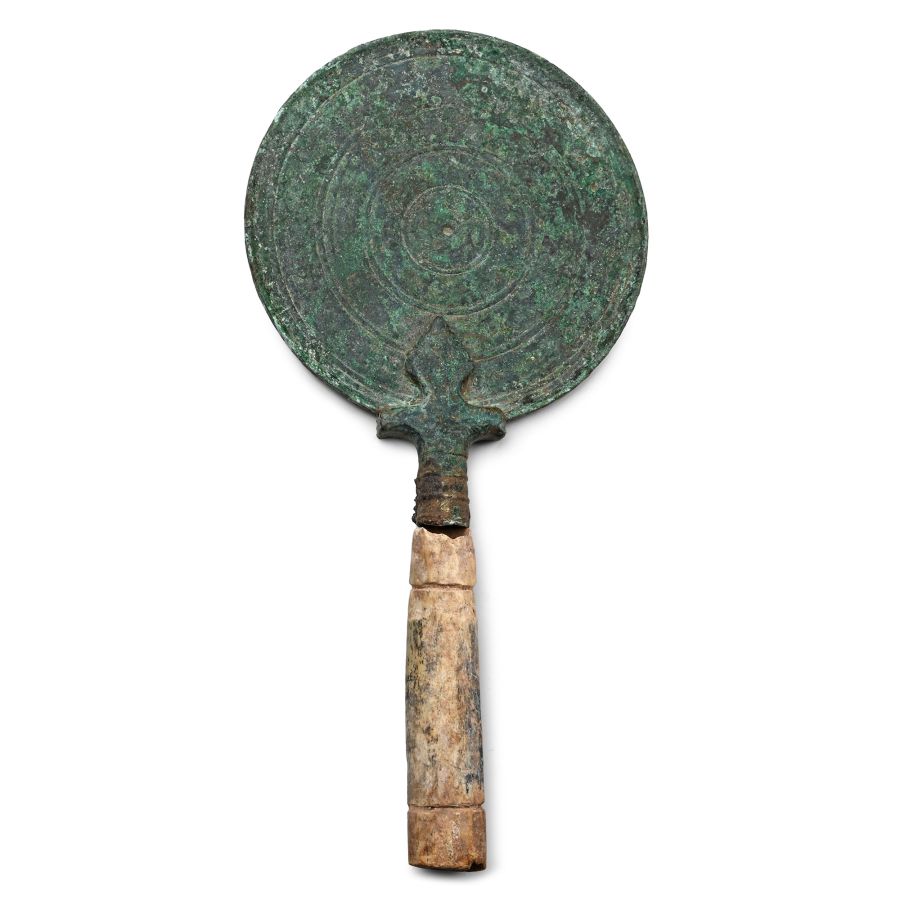
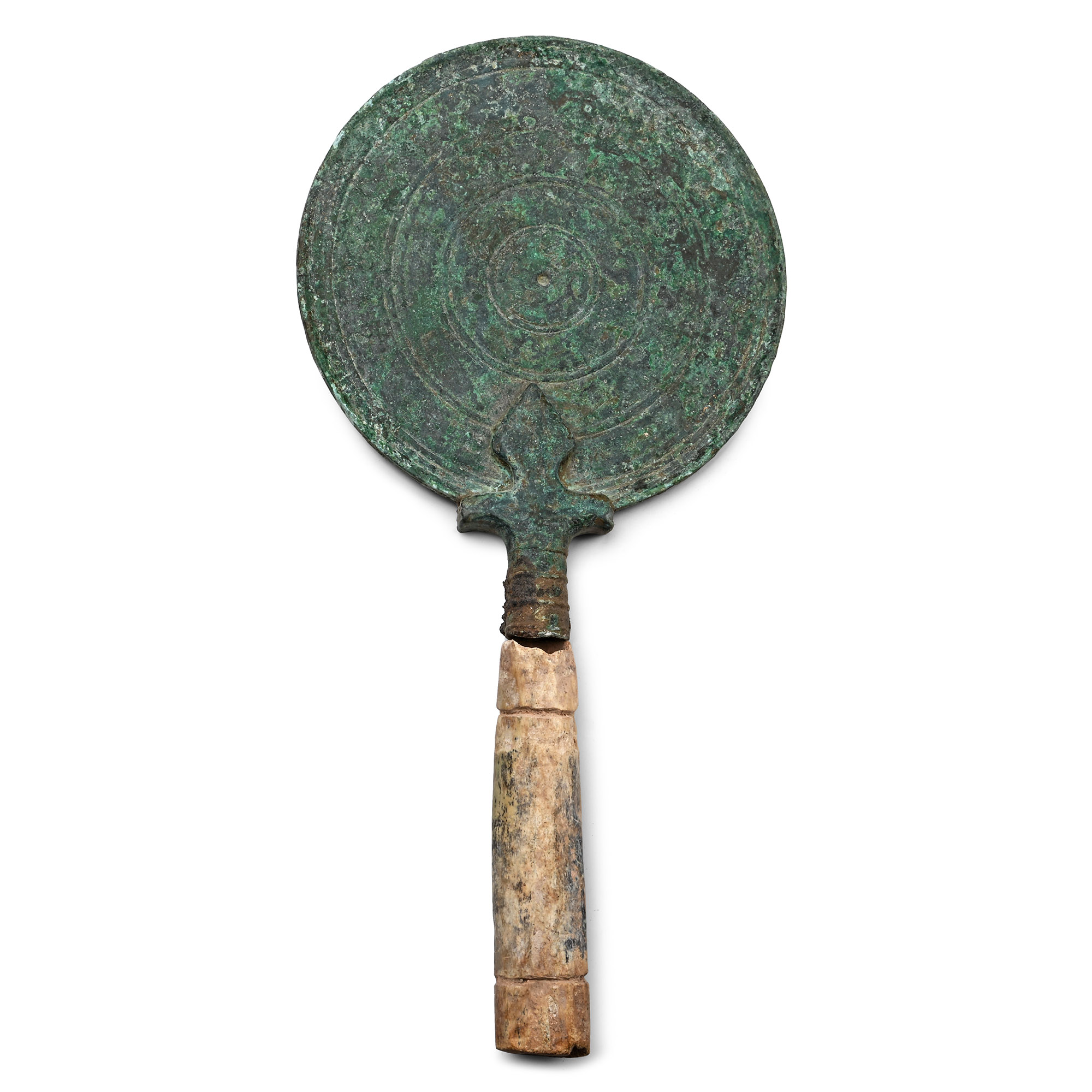
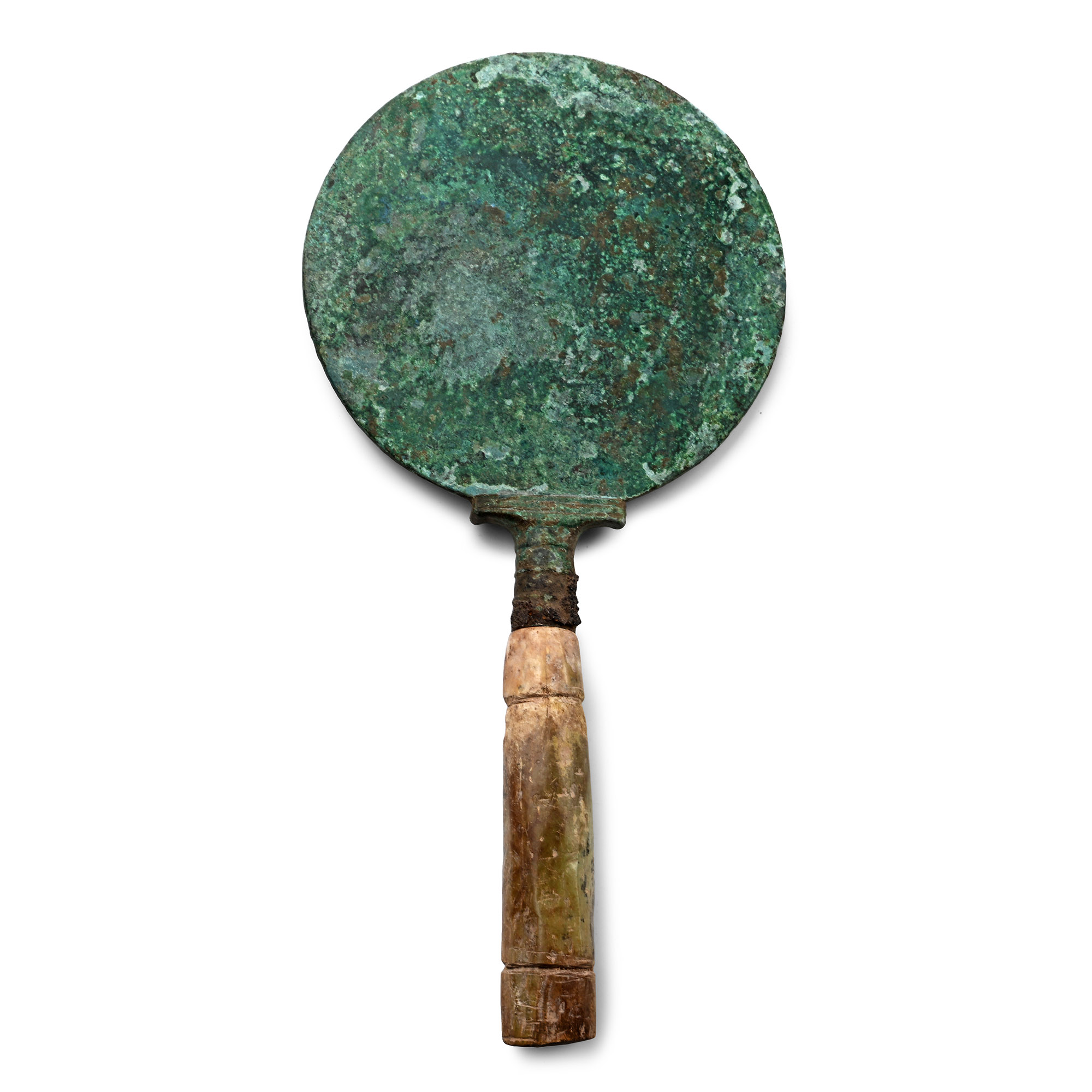
Greek Bronze Mirror with Bone Handle
HELLENISTIC, 3RD-1ST CENTURY B.C.
3 5/8 - 5 1/2 in. (205 grams total, 9.2-14 cm).
Comprising a discoid mirror with concentric rings to one face, a round-section ribbed shaft with triangular mount; tubular bone handle with two incised lines. [2]
ProvenanceEx German art market, 2000s.
Acquired from an EU collector living in London.
From the collection of a Surrey, UK, gentleman.
See The Walter Arts Museum, Accession Number 54.1160; The Metropolitan Museum of Art, Object Number 74.51.5405 and 07.255.
CONDITIONTimeLine Auctions follows a vetting process to ensure the authenticity and legality of all items, reinforcing our commitment to integrity and responsible trading. Each antiquity, antique, and coin lot undergoes thorough examination by a vetting committee of at least ten external specialists, professional trade association members, scientists, and archaeologists: Our Vetting Process
AUCTIONS:
TimeLine is a leading auction house specialising in antiquities, ancient art, collectables, natural history, coins, medals, and books. Our auctions offer museums, collectors, historians, and enthusiasts the opportunity to acquire unique and historically significant pieces.
LOT 0765
Greek Bronze Mirror with Bone Handle
Estimate £300 - 400€350 - 460 (for guidance only)$410 - 540 (for guidance only)
Opening Bid
£150 (EUR 174; USD 203) +BP*
-
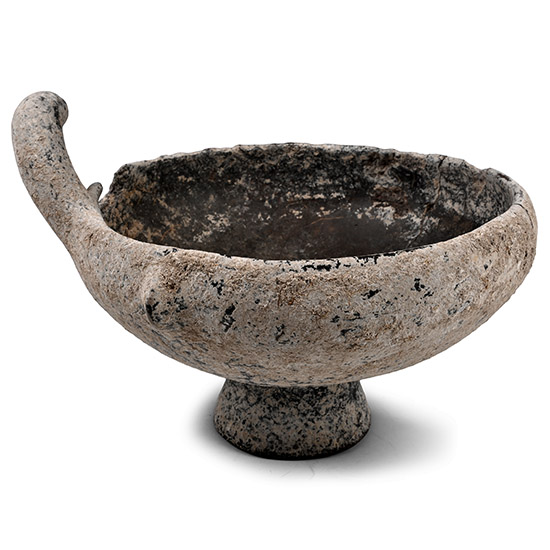
Villanovan Terracotta Stemmed Bowl with Handle
9th-8th century B.C.Estimate: £180 - 240 (‡+bp*)
Opening Bid: £90
Conical in profile with broad foot and inturned rim; single thick loop handle partly absent. 1.33 kg, 23.5 cm
Ex Prof. Kurt Alder, Riehen; thence by descent. -
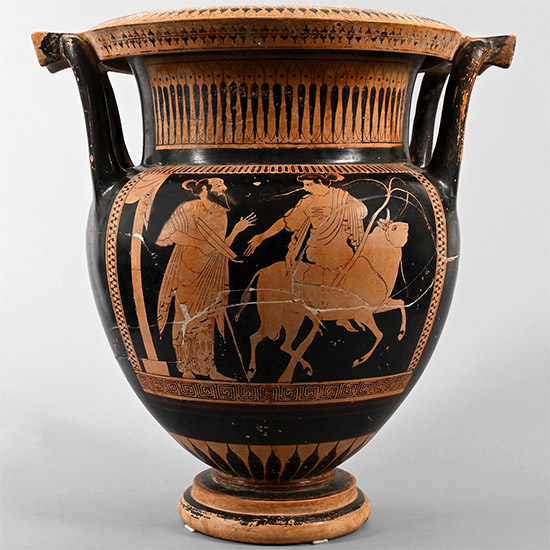
Very Large Greek Red-Figure Column Krater with Bull and Rider
Attic, 5th century B.C.Estimate: £25,000 - 35,000 (‡+bp*)
Opening Bid: £12,500
With a flared and stepped foot, poppy-head border around the lower body and neck, strap handles with palmettes to the upper faces opening to two columnar legs; red-figure scenes to the neck and body: Side A, Europa's abduction: standing bearded figure in profile wearing a loose himation holding the lid of a krater in one hand facing a female figure in draped himation revealing one breast, turning to face the male while mounted on an advancing bull and carrying a frond; Side B, Dionysiac scene: satyr standing nude, playing a lyre beside a standing robed male wearing a laurel wreath in his hair, dancing female in active pose with musical instruments in each hand, turning to face the robed figure; some restoration. 5.85 kg, 44.5 cm high
Red-figure technique, with certain details highlighted in a wine-colored hue. The surface has taken on a light yellow hue throughout. Some cracks, and the varnish is chipped in some place.
German private collection (870632). Anonymous sale, Hampel Fine Arts auction, Munich, 21 September 2012, no.625. Private collection, acquired on the German art market. Accompanied by an academic report by Dr Jacques Chamay. This lot has been checked against the Interpol Database of stolen works of art and is accompanied by search certificate no.13218-249222.
The two figurative scenes are of equal importance. The Dionysian scene depicts the god, in the centre, between a satyr playing a lyre and a dancing maenad. The other scene depicts a well-known subject: the abduction of Europa. This is the daughter of Agenor, king of Tyre in Phoenicia. Of great beauty, she is desired by Zeus. He approaches her in the form of a white bull while she is playing on the beach. Initially frightened, the young woman begins to caress the animal, then becomes more daring and climbs onto its back. Zeus immediately abducts her and rushes out to sea, toward Crete. There, he will be united with Europa, who will bear him three children, including Minos. -
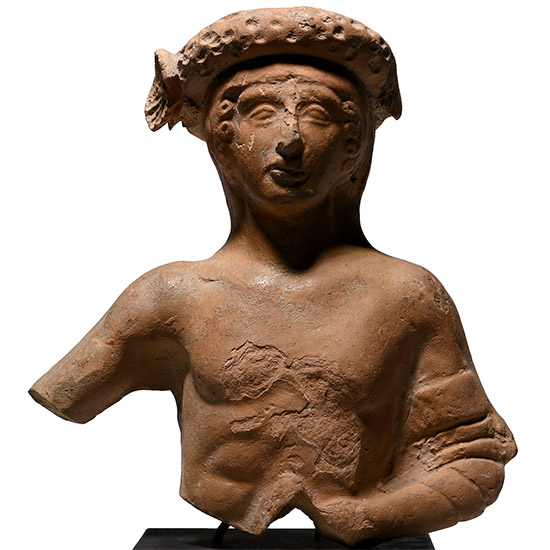
Greek Terracotta Figure of Young Dionysos
5th century B.C.Estimate: £1,200 - 1,700 (‡+bp*)
Opening Bid: £675
Modelled as a hollow torso nude of a youthful male, with a beardless face, full lips, tall nose and almond-shaped eyes; short curly hair with a thick wreath including a rosette, folded fabric draped over the right hand; mounted on a custom-made stand. 327 grams total, 15 cm including stand
Ex Prof. Hans Dahn (1919-2019), Lausanne; acquired 12 March 1954 from Donati in Basel (Dahn's list no.105).
It remains a matter of debate who these clay symposiasts- characterised by their specific, sometimes very imaginative headdresses- represent. They have been variously interpreted as Dionysos, heroised deceased persons or representative images of the urban elite. The type was particularly popular in Taranto. The recumbent man probably held a kantharos in his left hand and wore a coat that was tightly wrapped around his left arm.
