
Loading, please wait...
LOT 0534
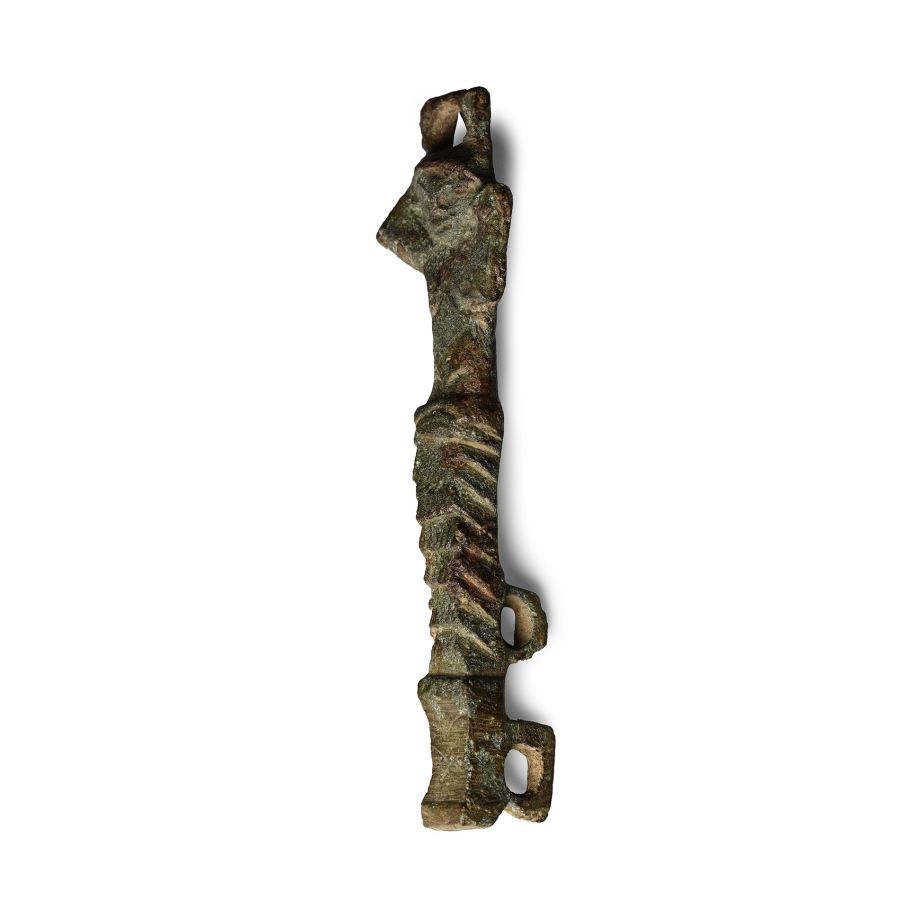
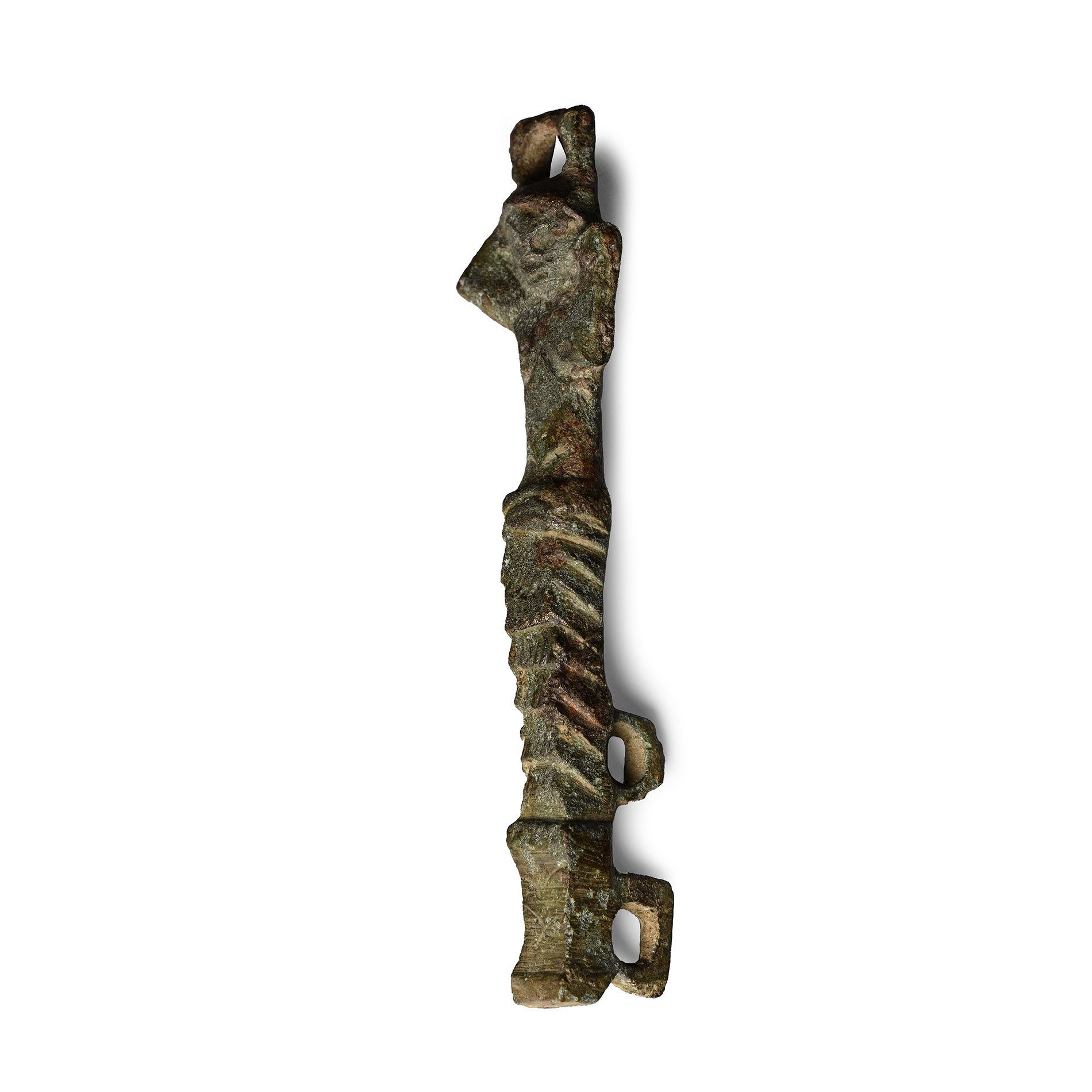
Greek Bronze Lockplate Figure
4TH-3RD CENTURY B.C.
3 in. (22.9 grams, 74 mm).
Formed as a locking-mechanism plate with two pierced lugs to the reverse, figural handle of Aphrodite with raised arms dressing her hair, loop above. [No Reserve]
ProvenanceAcquired on the London art market in the late 1980s-1990s.
From the family collection of an East London, UK, gentleman.
This lot is accompanied by an illustrated lot declaration signed by the Head of the Antiquities Department, Dr Raffaele D’Amato.
TimeLine Auctions follows a vetting process to ensure the authenticity and legality of all items, reinforcing our commitment to integrity and responsible trading. Each antiquity, antique, and coin lot undergoes thorough examination by a vetting committee of at least ten external specialists, professional trade association members, scientists, and archaeologists: Our Vetting Process
AUCTIONS:
TimeLine is a leading auction house specialising in antiquities, ancient art, collectables, natural history, coins, medals, and books. Our auctions offer museums, collectors, historians, and enthusiasts the opportunity to acquire unique and historically significant pieces.
-
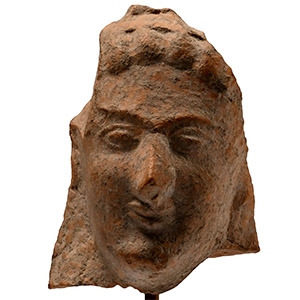
Greek Terracotta Female Protome
6th-5th century B.C.Estimate: £400 - 600 (‡+bp*)
Opening Bid: £180
Head of a girl with long hair and curls framing the forehead; elongated, oval face with almond-shaped eyes, slender nose and round chin; the lips forming an Archaic smile; mounted on a custom-made display stand. 33 grams total, 79 mm including stand
with Herbert A. Cahn, Basle, 1990s. Accompanied by a copy of an Art Loss Register certificate no.S00075470. This lot is accompanied by an illustrated lot declaration signed by the Head of the Antiquities Department, Dr Raffaele D’Amato.
Small mould-made heads were used for female divinities, sphinxes and sirens, or attached to pottery as plastic ornaments. The figure was wearing a polos, a small, drum-shaped headdress designating in this period a divinity. -
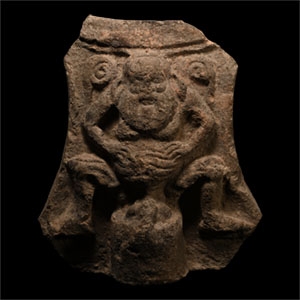
Etruscan Relief Fragment with Papposilenus
Circa 5th century B.C.Sold for (Inc. bp): £624
Roughly bell-shaped in profile with scooped rear face and socket to base; rim to upper edge above facing image of a grotesque bearded male with arms angled and hands on his wrinkled abdomen. legs bent to each side, genitals resting on a stele; old collector's label 'L-16434' to top; Etruscan or Italic. 1.53 kg, 18 cm
The Erotica Collection Christian von Faber-Castell, Küsnacht ZH, Switzerland, since the late 1970s. This lot is accompanied by an illustrated lot declaration signed by the Head of the Antiquities Department, Dr Raffaele D’Amato.
Christian von Faber-Castell (born 1950) is a renowned German entrepreneur and art collector, best known as a member of the prominent Faber-Castell family, famed for their iconic writing instruments. A passionate advocate for art and culture, Christian von Faber-Castell curated an extensive and diverse private collection of erotica, spanning centuries and cultures. His collection reflects a deep appreciation for the interplay of beauty, sensuality, and artistic expression, bringing together rare and unique works that explore themes of intimacy and human connection. Pieces from this collection have been featured in notable exhibitions and are celebrated for their artistic and historical significance. This offering represents a rare opportunity to acquire works from one of the most fascinating and eclectic private collections of its kind. -
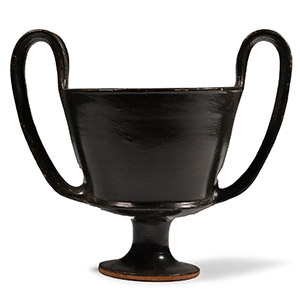
Greek Terracotta Black Glazed Kantharos
Boeotia, 5th century B.C.Estimate: £800 - 1,000 (‡+bp*)
Opening Bid: £360
With a tall flared foot, tapering body and two lateral high strap handles, the sidewall set off from the foot by a carination; reassembled from fragments. 360 grams, 19.5 cm wide
Ex Mr Bohler, Bern, Switzerland, prior 2001. Accompanied by a copy of an Art Loss Register certificate no.S00074898. This lot is accompanied by an illustrated lot declaration signed by the Head of the Antiquities Department, Dr Raffaele D’Amato.
