
Loading, please wait...
LOT 0613
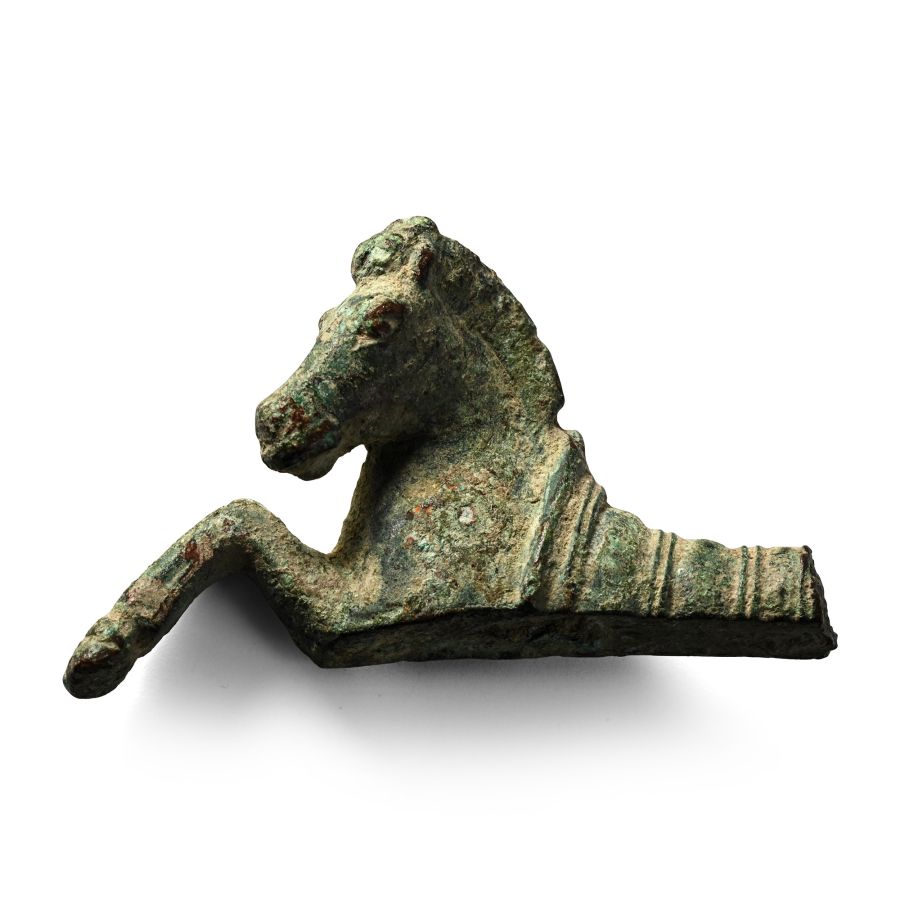
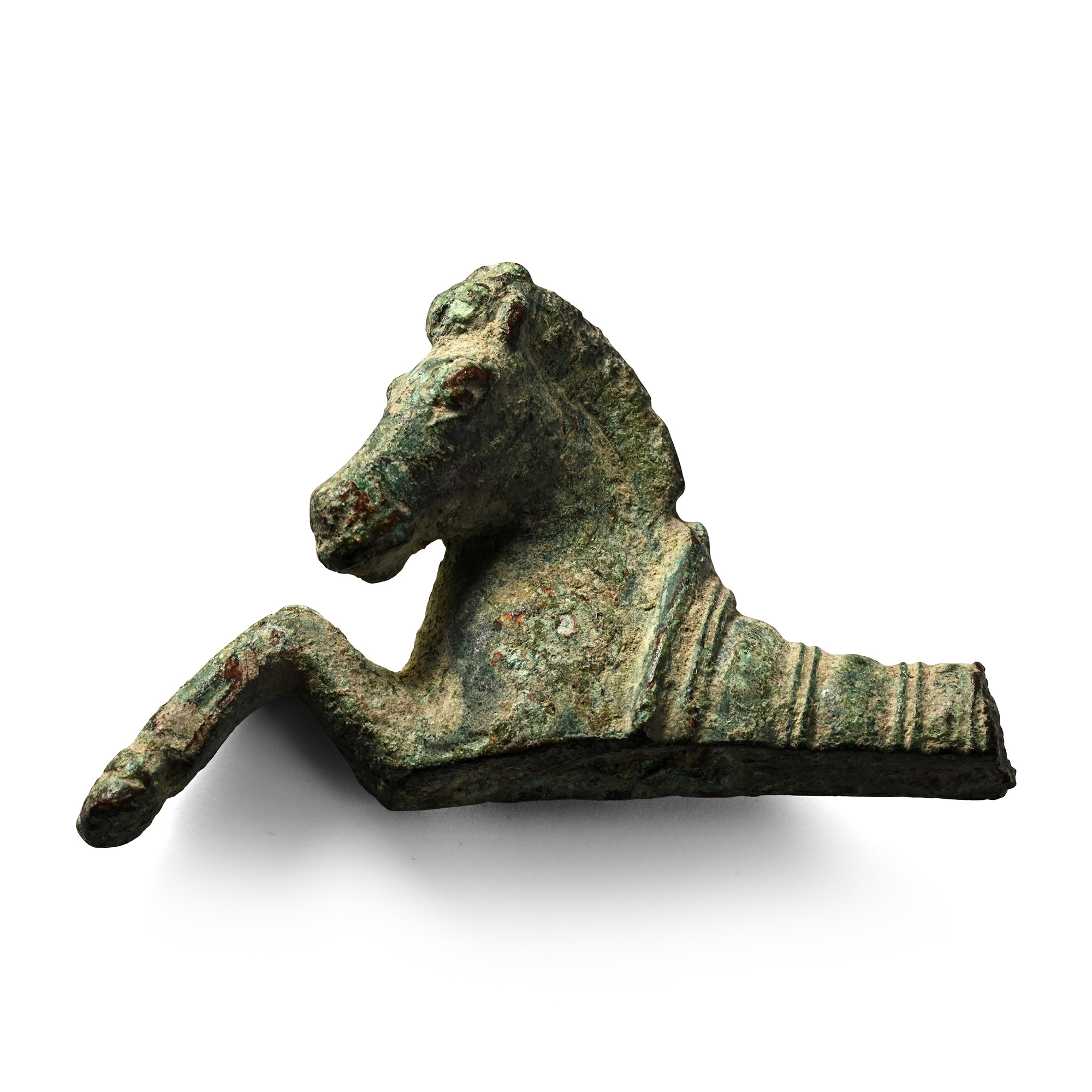
Greek Bronze Laconian Horse
5TH-1ST CENTURY B.C.
2 in. (27.8 grams, 49 mm).
Protome formed as the upper body of a horse with forelegs bent and head turned; ribbed saddlecloth to the back; remains of attachment peg to underside.
ProvenanceAcquired by a Swiss family in the mid-1980s to late 1990s, thence by descent.
Private collection, Switzerland, since the late 1990s.
TimeLine Auctions follows a vetting process to ensure the authenticity and legality of all items, reinforcing our commitment to integrity and responsible trading. Each antiquity, antique, and coin lot undergoes thorough examination by a vetting committee of at least ten external specialists, professional trade association members, scientists, and archaeologists: Our Vetting Process
AUCTIONS:
TimeLine is a leading auction house specialising in antiquities, ancient art, collectables, natural history, coins, medals, and books. Our auctions offer museums, collectors, historians, and enthusiasts the opportunity to acquire unique and historically significant pieces.
-
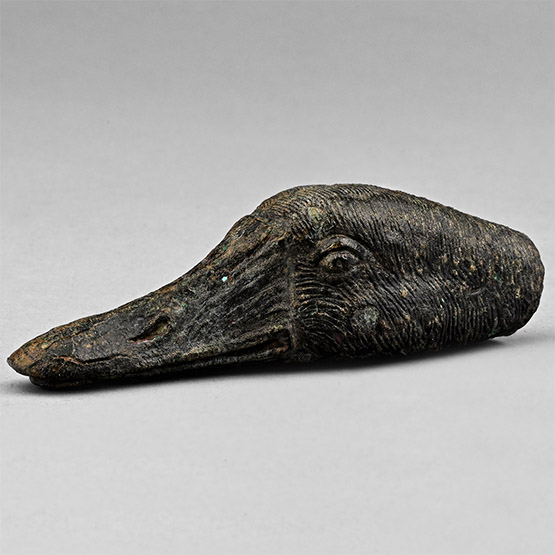
Greek Bronze Duck's Head
3rd-2nd century B.C.Sold for (Inc. bp): £1,690
Modelled in the round with realistic features, textured plumage, rounded beak. 236 grams, 10.1 cm
Acquired in the mid 1980s-1990s. Private collection, Switzerland, thence by descent. Private collection, since the late 1990s. This lot has been checked against the Interpol Database of stolen works of art and is accompanied by a search certificate number no.12378-226677. -
.jpg)
Parthian Terracotta Horse-Head Finial
2nd-3rd century A.D.Sold for (Inc. bp): £247
A hollow-formed horse-head finial with ribbed mane to the arched neck, elaborate bridle strap detail. 62 grams, 79.5 mm
Fine condition.
From an important central London collection formed since the mid 1960s; thence by descent. From the private collection of John Meredith, acquired since the 1990s; thence by descent. -
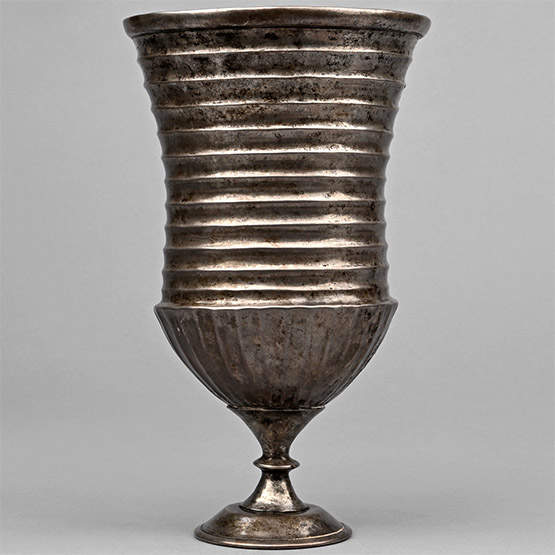
Large Graeco-Parthian Ribbed Silver Goblet
Graeco-Parthian or Gandharan, 1st century B.C.-1st century A.D.Estimate: £20,000 - 30,000 (+bp*)
Opening Bid: £10,000
With carinated ribbed walls, the upper portion cylindrical, the lower ovoid, with a separately made footed base, with the foot characterised by a central horizontal groove. 695 grams, 20 cm high
Robert Haber, New York, 1992. Accompanied by an academic report by Dr Raffaele D'Amato. This lot has been checked against the Interpol Database of stolen works of art and is accompanied by a search certificate number no.13036-248075.
