
Loading, please wait...
LOT 0060
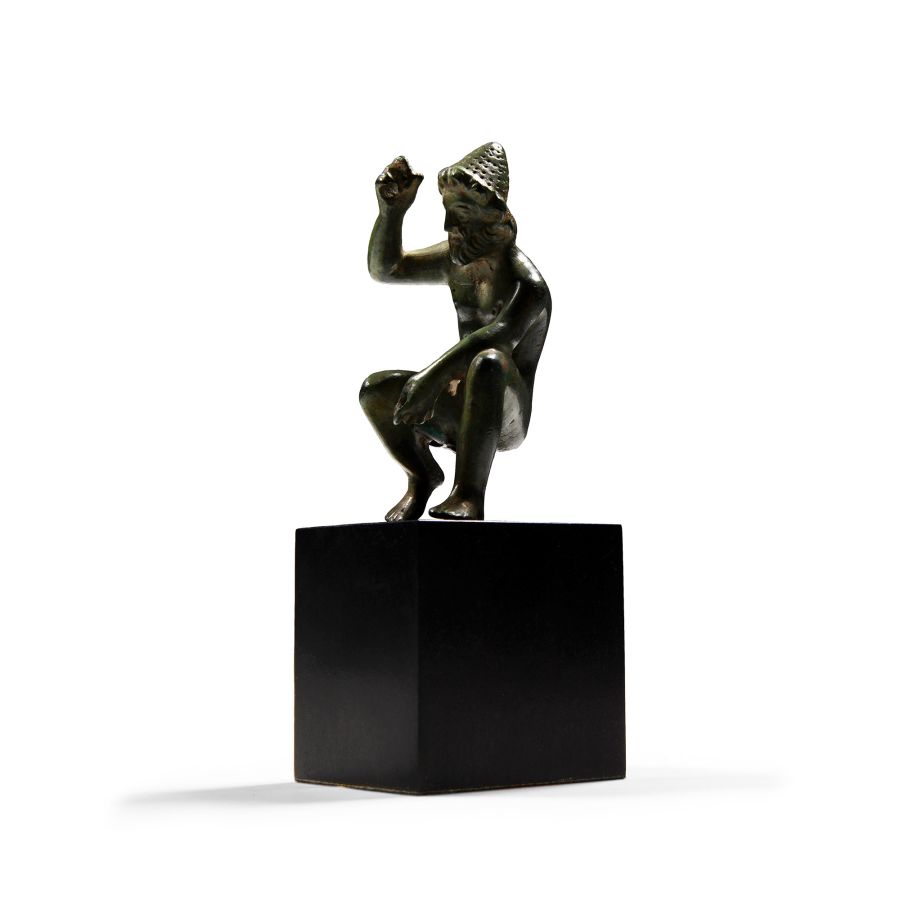
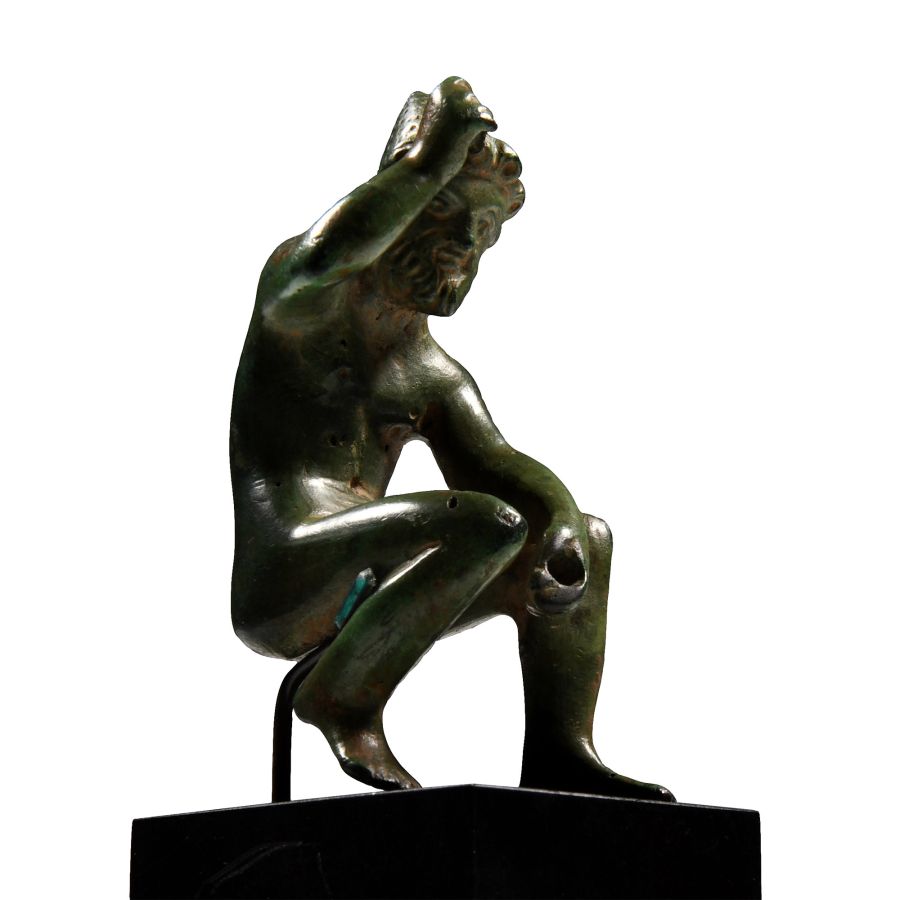
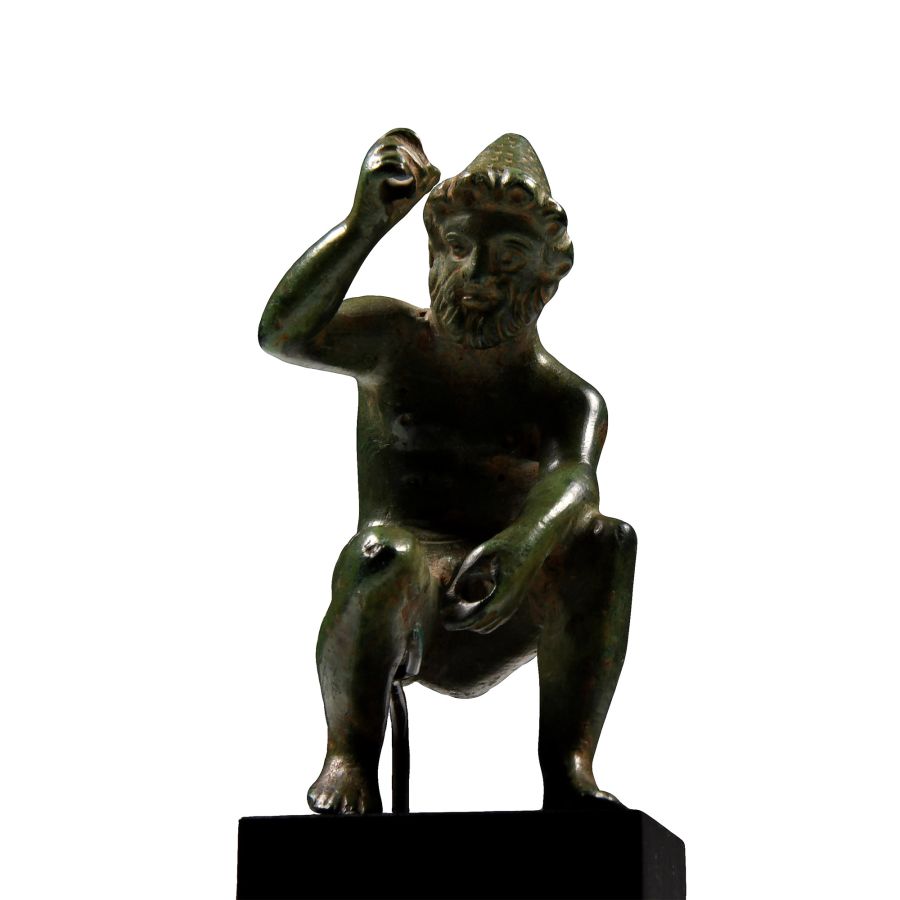
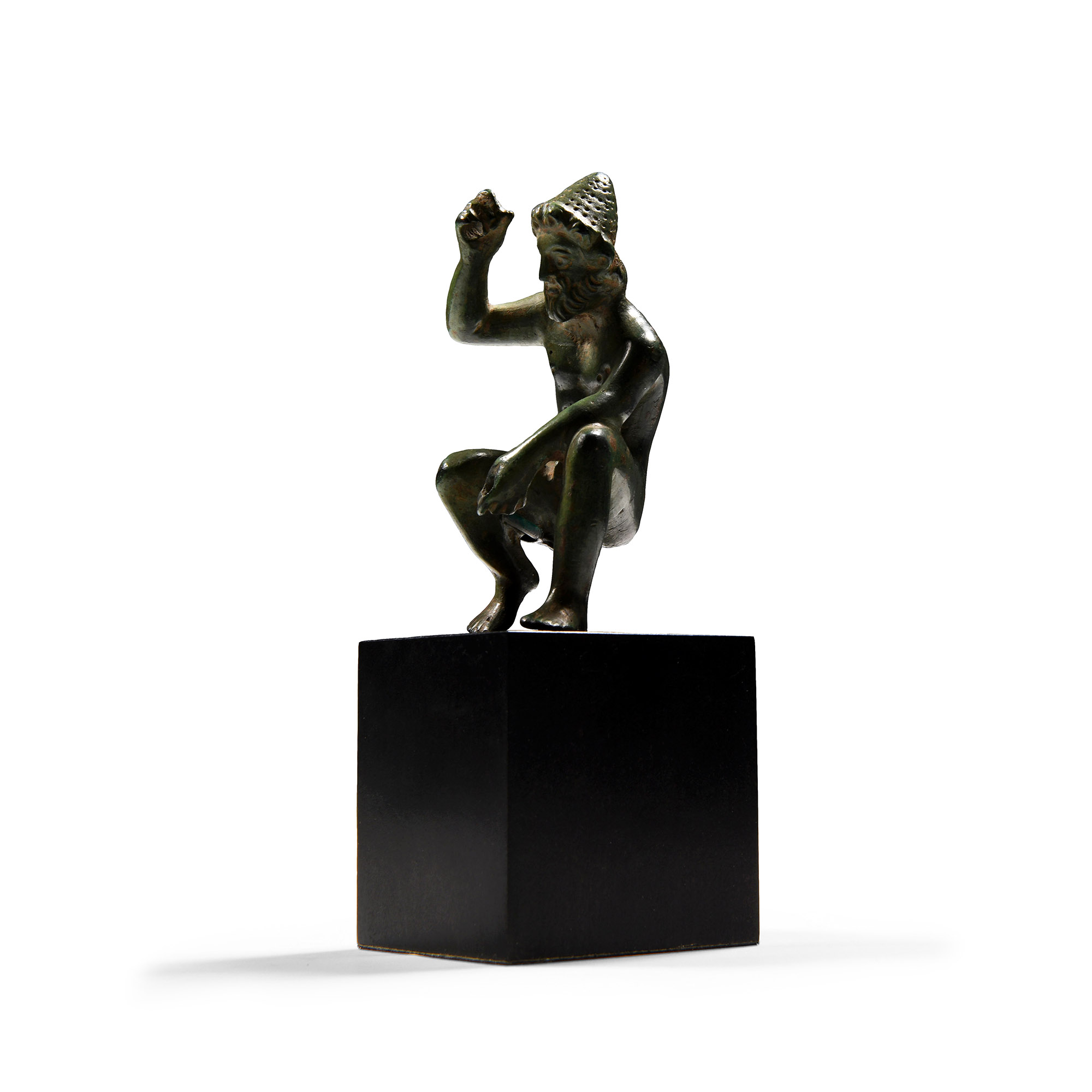
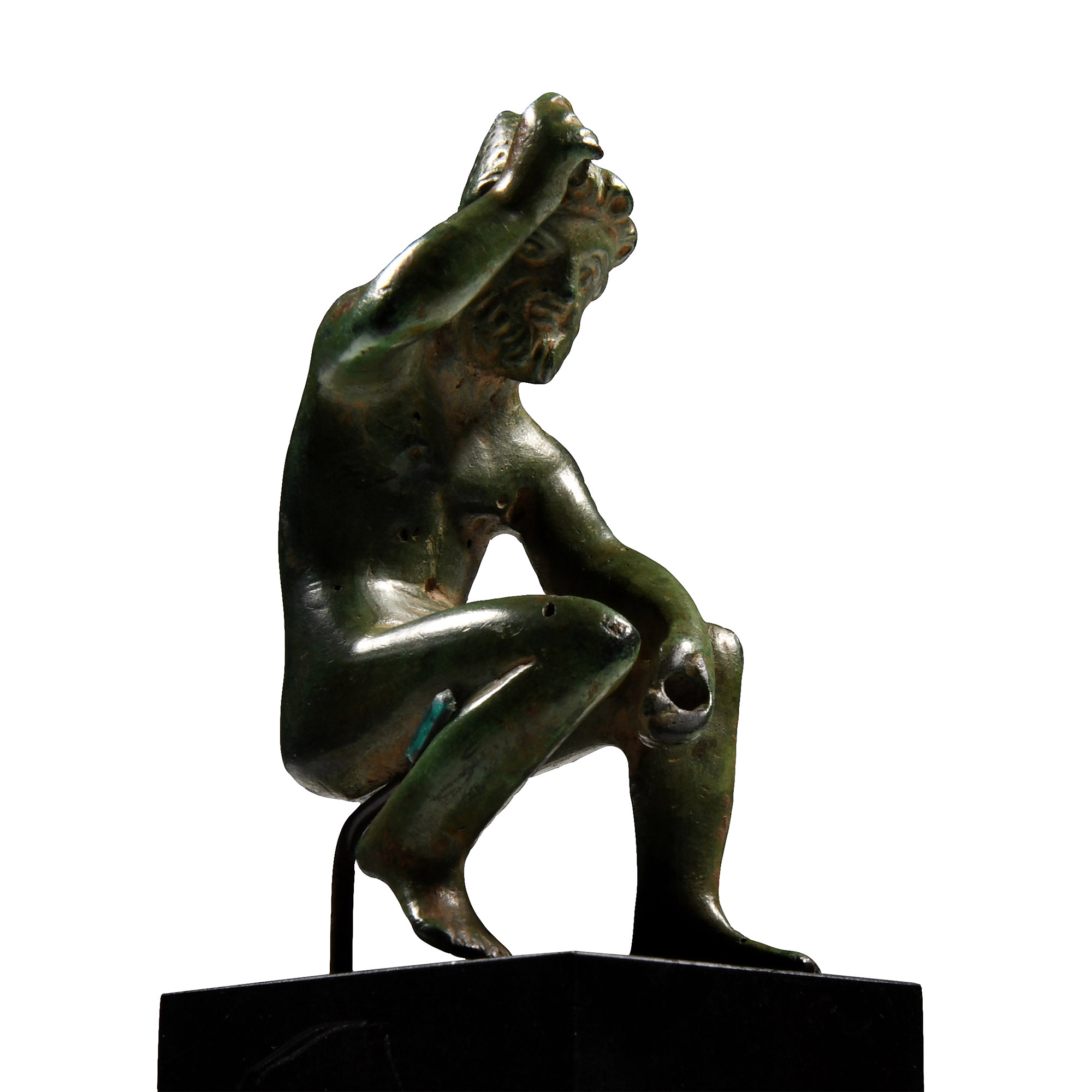
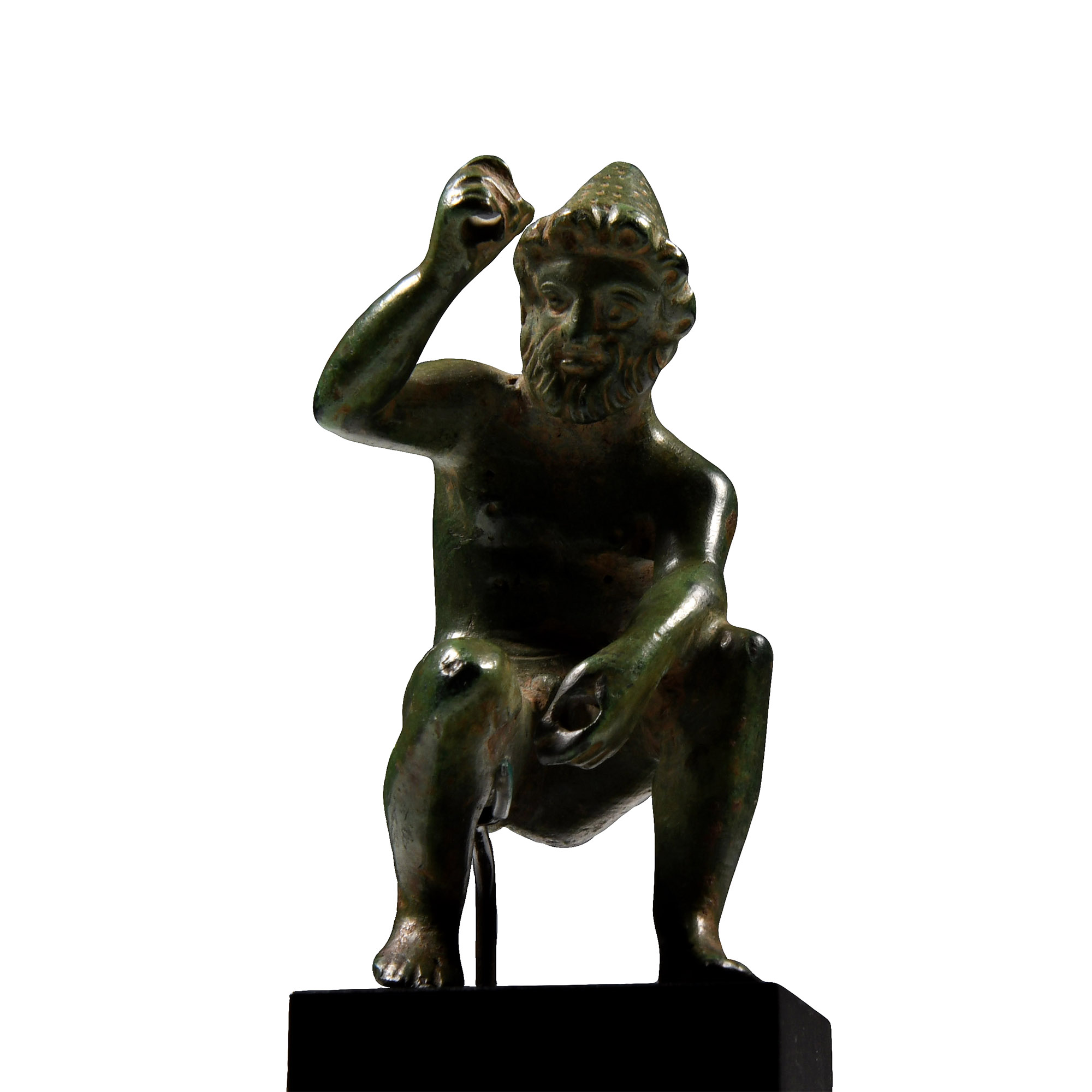
Greek Bronze Hephaistos Statuette
CIRCA 5TH CENTURY B.C.
5 1/4 in. (294 grams total, 13.5 cm high including stand).
The elegant figure depicting the Greek god of fire and metalworking seated and nude except for the pilos on his head, lean body with naturalistic detailing, shown bearded and with curly hair emerging beneath the cap; he would have once held a pair of tongs in his left hand and a hammer in his right hand; accompanied by a custom-made display stand.
Provenancewith Elie Borowski, Basel.
Subsequently in the collection of Denys Sutton (1917-1991), London, acquired from the above on 11 October 1963.
Thence by descent.
with Sotheby's, New York, 6 December 2012, lot 11.
Accompanied by an academic report by Dr Raffaele D’Amato.
This lot has been checked against the Interpol Database of stolen works of art and is accompanied by search certificate number no. 11827-207739.
See Reinach, S., Repertoire de la statuarie grecque et romaine, Paris, 1930, pp.39-40, for the Hephaistos iconography; Hensly, C., ‘Proceed to Olympus: the iconography of the Return of Hephaestus’ in Undergraduate Research Awards. 14, Hollins, 2013, fig.5.
FootnotesAccording to legend, Hephaistos was thrown into the ocean by his mother Hera and raised by the sea nymph Thetis. Upon his return to Olympus, he took his revenge by imprisoning his mother and obtaining the hand of the most beautiful of the goddesses, Aphrodite. He became the blacksmith of the gods. Sculptural depictions of the god, known as Vulcan to the Romans, are very rare. Hephaistos was the armourer of the heroes, and certainly his greatest artwork was making Achilles' armour.
CONDITIONTimeLine Auctions follows a vetting process to ensure the authenticity and legality of all items, reinforcing our commitment to integrity and responsible trading. Each antiquity, antique, and coin lot undergoes thorough examination by a vetting committee of at least ten external specialists, professional trade association members, scientists, and archaeologists: Our Vetting Process
AUCTIONS:
TimeLine is a leading auction house specialising in antiquities, ancient art, collectables, natural history, coins, medals, and books. Our auctions offer museums, collectors, historians, and enthusiasts the opportunity to acquire unique and historically significant pieces.
LOT 0060
Greek Bronze Hephaistos Statuette
Estimate £20,000 - 30,000€23,200 - 34,800 (for guidance only)$27,000 - 40,500 (for guidance only)
-
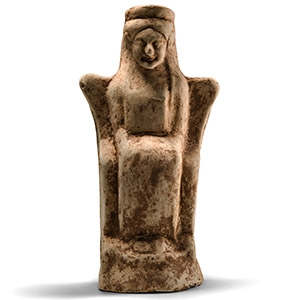
Archaic Greek Terracotta Seated Goddess
5th century B.C.Sold for (Inc. bp): £650
Represented in the typical female attire wearing a long chiton and a polos headgear; seated upon a throne with side horns, hands upon her knees; flat back. 413 grams, 18.5 cm
Acquired in Europe before 1996.
The typical 5th century B.C. terracotta female figurine was a standing or seated woman wearing a chiton and a himation. It usually represented the goddess Demeter, and it was a votive figure offered to the shrines or temples. Attica was one of the principal centres of figurine production, but Corinth continued to produce solid standing or seated females with moulded fronts and flat backs. -
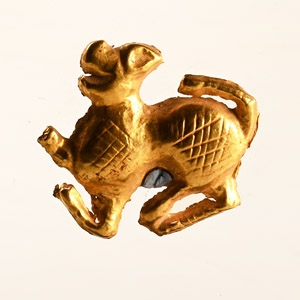
Scythian Gold Appliqué
Late 1st millennium B.C.Sold for (Inc. bp): £546
Formed using sheet-gold in the shape of an animal bounding left, incised detailing to the coat; accompanied by a display mount. 33.78 grams total, 71 mm including stand
Ex Symes Gallery, Mayfair, London, UK. Exhibited in 'Schythian Gold', pre 1999. -
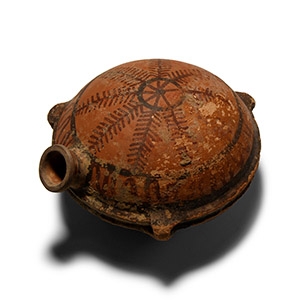
Eastern Mediterranean Flattened Terracotta Vessel with Bichrome Decoration
6th-4th century B.C.Estimate: £300 - 400 (+bp*)
Opening Bid: £150
Composed of a flask-shaped body with three loop handles to the equator for a carry cord, short spout, the upper or outer body displaying a bichrome painted geometric motif. 483 grams, 17 cm wide
Ex Rabi gallery, 1990s. Private collection of Iranian art.
