
Loading, please wait...


LOT 0064
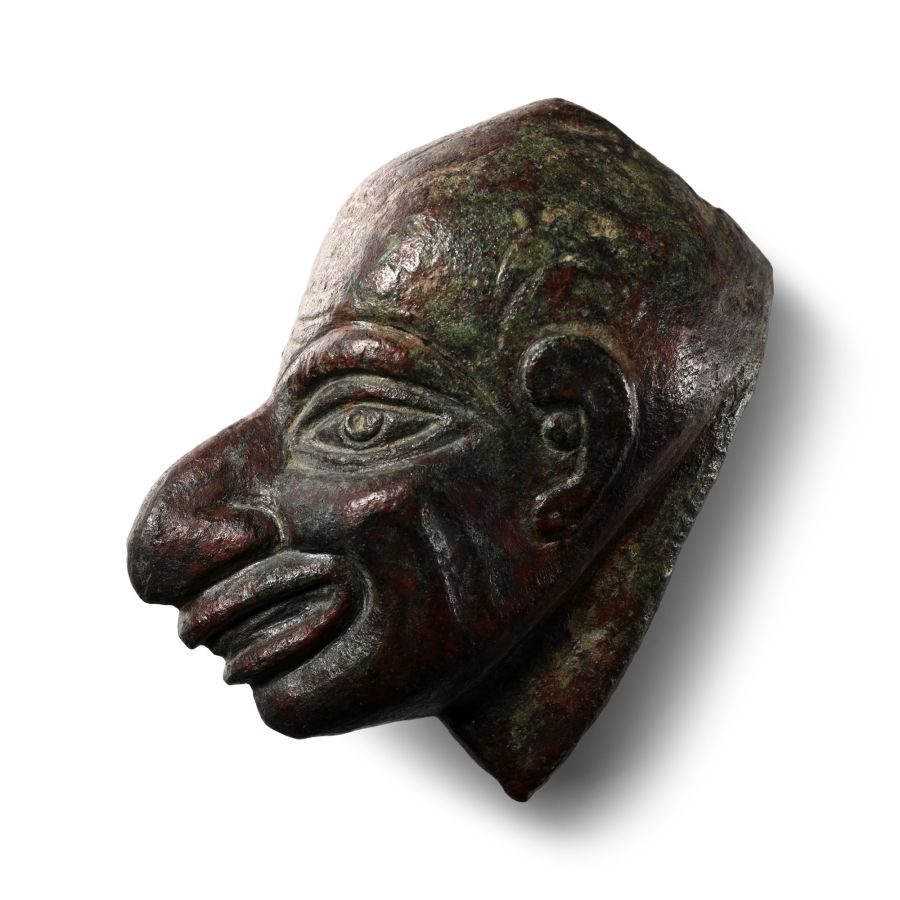
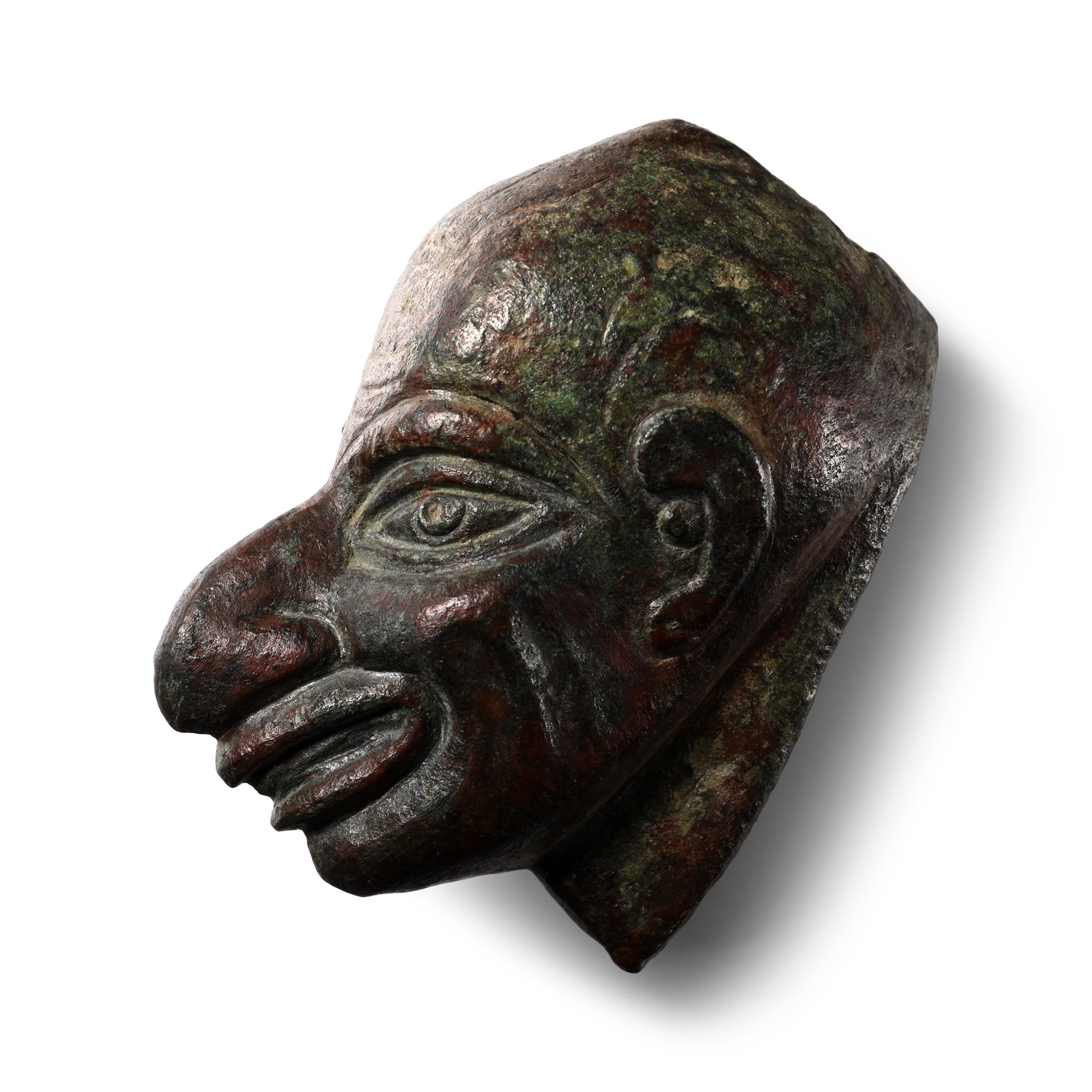
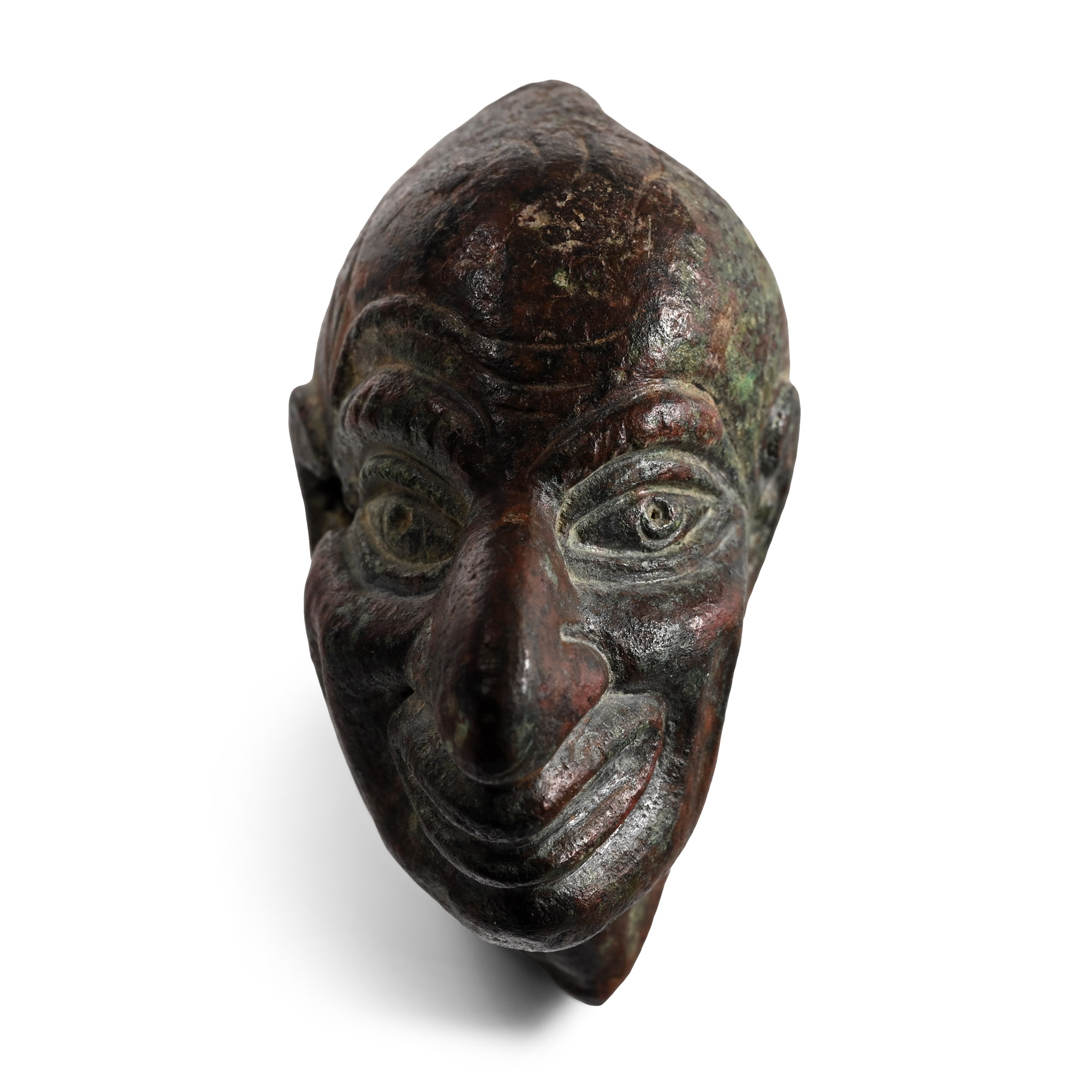
Greek Bronze Head of a Grotesque Man
3RD CENTURY B.C.
1 7/8 in. (67 grams, 48 mm).
Hollow-formed 'moneybox' with exaggerated nose and lips, small crescent-and-pellet ears, low-relief eyes with impressed pupils, small lock of hair to the scalp, vesica-shaped socket to the underside; pierced at the scalp and at the right ear.
Provenancewith Artemis Gallery, Munich, before 1998.
Acquired by the present owner from the above in 2003.
This lot has been checked against the Interpol Database of stolen works of art and is accompanied by search certificate number no.12212-222320.
This lot has been cleared against the Art Loss Register database, and is accompanied by an illustrated lot declaration signed by the Head of the Antiquities Department, Dr Raffaele D'Amato.
Cf. Rolland, H., Bronzes Antiques de Haute Provence, Paris, 1965, item 196.
CONDITIONTimeLine Auctions follows a vetting process to ensure the authenticity and legality of all items, reinforcing our commitment to integrity and responsible trading. Each antiquity, antique, and coin lot undergoes thorough examination by a vetting committee of at least ten external specialists, professional trade association members, scientists, and archaeologists: Our Vetting Process
AUCTIONS:
TimeLine is a leading auction house specialising in antiquities, ancient art, collectables, natural history, coins, medals, and books. Our auctions offer museums, collectors, historians, and enthusiasts the opportunity to acquire unique and historically significant pieces.
LOT 0064
Greek Bronze Head of a Grotesque Man
Estimate £2,000 - 3,000€2,320 - 3,480 (for guidance only)$2,700 - 4,050 (for guidance only)
-
.jpg)
Greek Apulian Black-Glazed Epichysis with Eros
South Italic, circa 325-300 B.C.Sold for (Inc. bp): £975
Blackware with spool base, domed upper face, tall neck with spout and strap handle to the rear; the spool with laurel-leaf band in white, the upper face with tendrils in cream and ochre, winged Eros crouching holding up a mirror; repaired with some repainting. 255 grams, 17 cm
From the private collection of a Canadian gentleman living in Essex, UK, formed since the 1920s-circa 1990. Property of an Essex lady until the late 1990s; thence by descent. From the private collection of an Essex gentleman since the late 1990s. This lot is accompanied by an illustrated lot declaration signed by the Head of the Antiquities Department, Dr Raffaele D'Amato. -
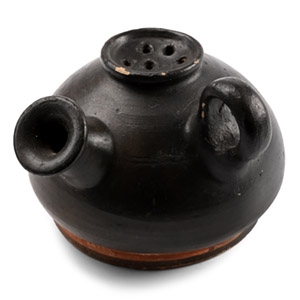
Greek Black-Glazed Guttos with Strainer
South Italic, circa 4th century B.C.Sold for (Inc. bp): £169
Discoid in plan with trumpet-shaped spout and one loop handle; strainer to centre. 130 grams, 10 cm
From the private collection of a Canadian gentleman living in Essex, UK, formed since the 1920s-circa 1990. Property of an Essex lady until the late 1990s; thence by descent. From the private collection of an Essex gentleman since the late 1990s. This lot is accompanied by an illustrated lot declaration signed by the Head of the Antiquities Department, Dr Raffaele D'Amato. -
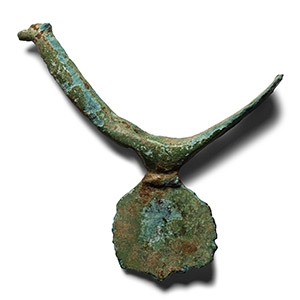
Greek Geometric Votive Gift in the Form of a Bird
8th century B.C.Estimate: £150 - 200 (‡+bp*)
Opening Bid: £50
Comprising a columnar neck with pinched detailing to the head and spatulate tail, discoid plate below. 8.47 grams, 46 mm
with Christie's, London, 25 January 2001, no.263 [Part]. Accompanied by a copy of an Art Loss Register certificate no.S00034403. This lot is accompanied by an illustrated lot declaration signed by the Head of the Antiquities Department, Dr Raffaele D’Amato. This lot is accompanied by an illustrated lot declaration signed by the Head of the Antiquities Department, Dr Raffaele D'Amato.
