
Loading, please wait...


LOT 0063
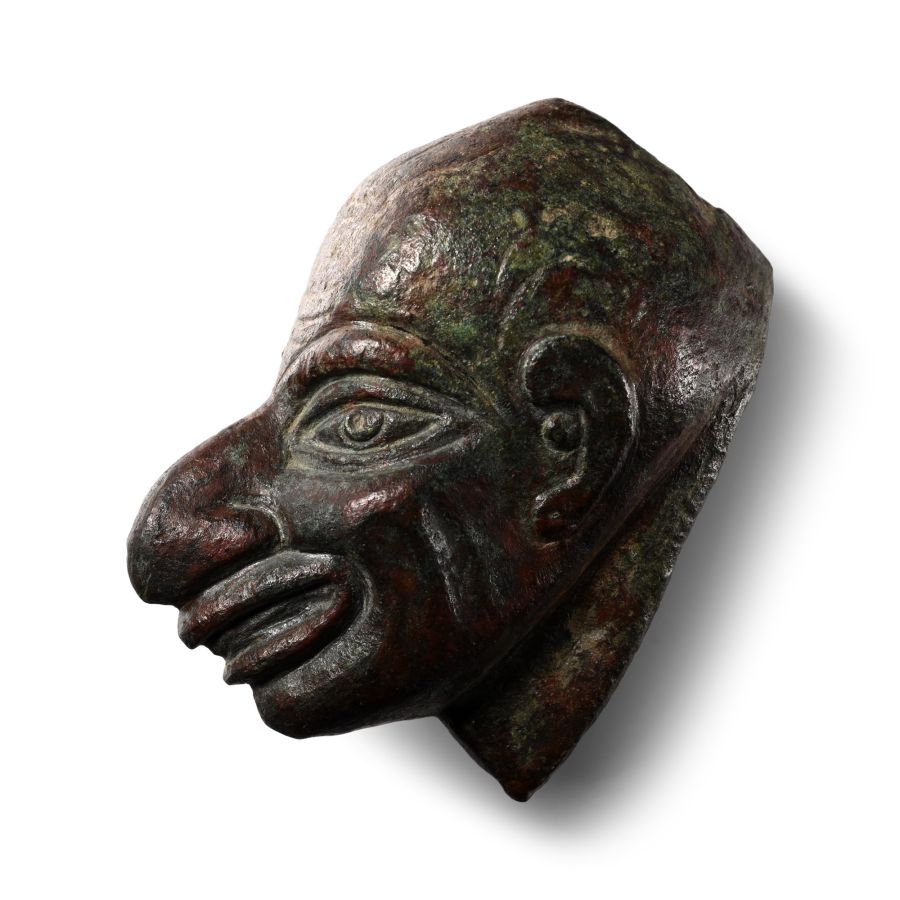
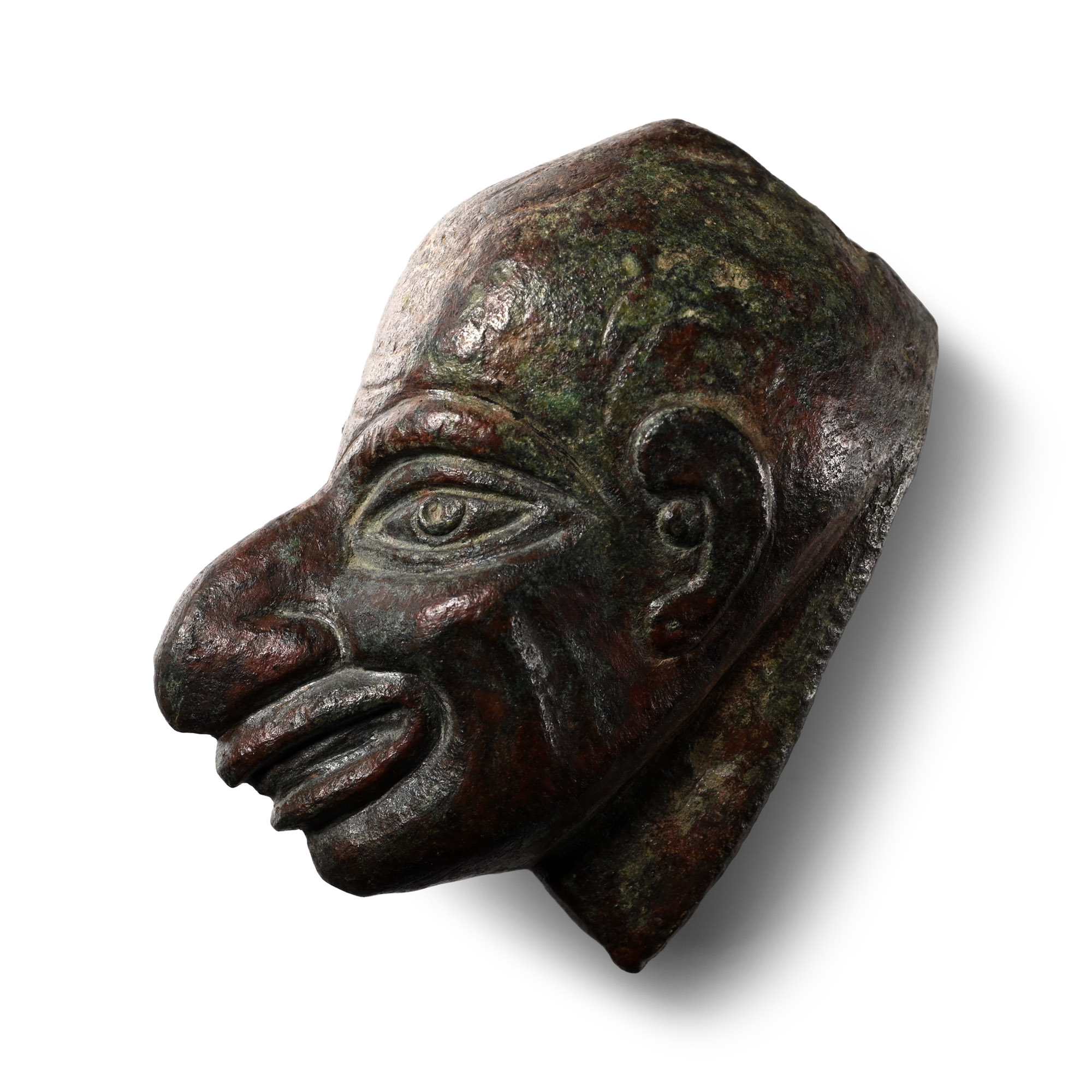
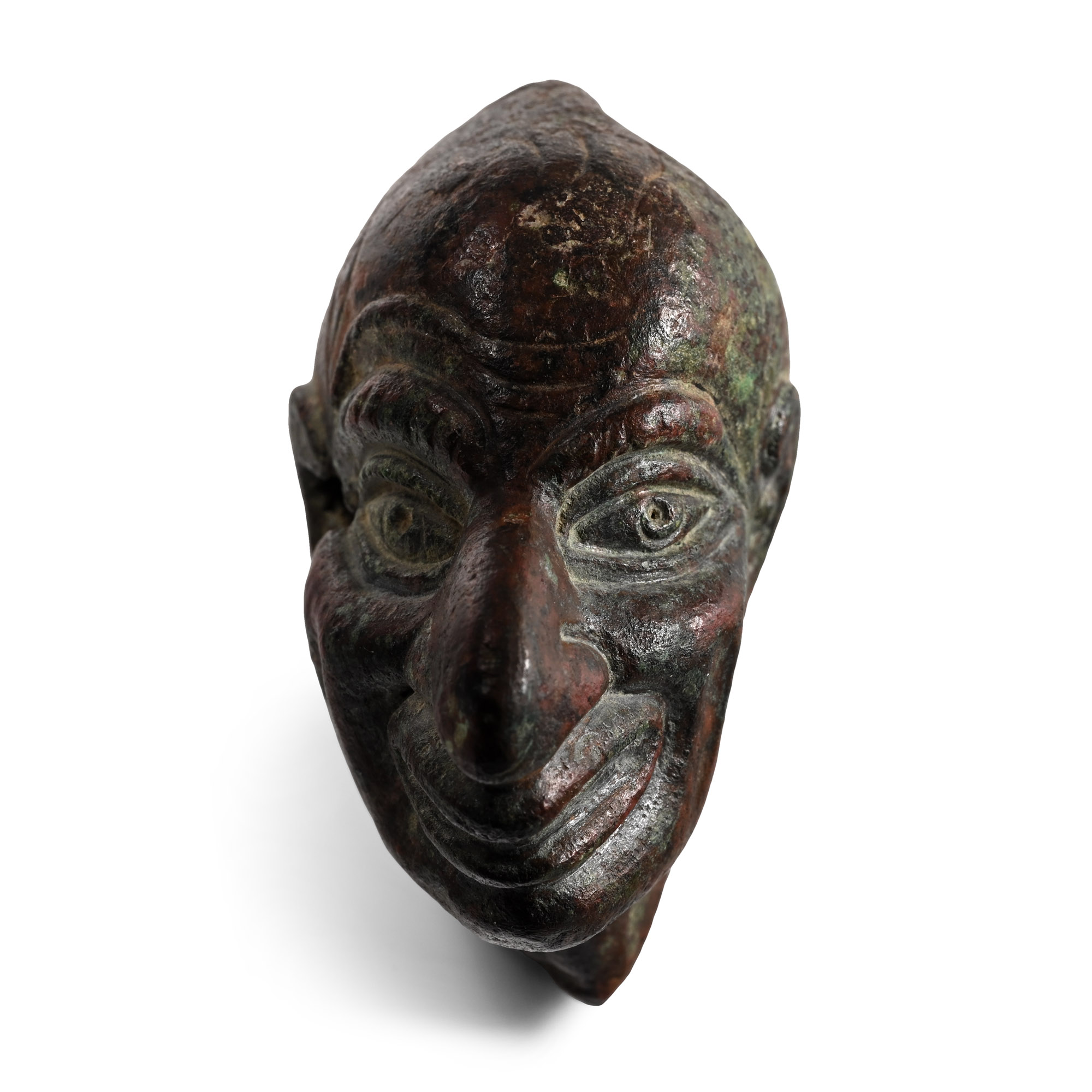
Greek Bronze Head of a Grotesque Man
3RD CENTURY B.C.
1 7/8 in. (67 grams, 48 mm).
Hollow-formed 'moneybox' with exaggerated nose and lips, small crescent-and-pellet ears, low-relief eyes with impressed pupils, small lock of hair to the scalp, vesica-shaped socket to the underside; pierced at the scalp and at the right ear.
Provenancewith Artemis Gallery, Munich, before 1998.
Acquired by the present owner from the above in 2003.
This lot has been checked against the Interpol Database of stolen works of art and is accompanied by search certificate number no.12212-222320.
This lot has been cleared against the Art Loss Register database, and is accompanied by an illustrated lot declaration signed by the Head of the Antiquities Department, Dr Raffaele D’Amato.
Cf. Rolland, H., Bronzes Antiques de Haute Provence, Paris, 1965, item 196.
CONDITIONTimeLine Auctions follows a vetting process to ensure the authenticity and legality of all items, reinforcing our commitment to integrity and responsible trading. Each antiquity, antique, and coin lot undergoes thorough examination by a vetting committee of at least ten external specialists, professional trade association members, scientists, and archaeologists: Our Vetting Process
AUCTIONS:
TimeLine is a leading auction house specialising in antiquities, ancient art, collectables, natural history, coins, medals, and books. Our auctions offer museums, collectors, historians, and enthusiasts the opportunity to acquire unique and historically significant pieces.
LOT 0063
Greek Bronze Head of a Grotesque Man
Estimate £2,500 - 3,500€2,900 - 4,060 (for guidance only)$3,380 - 4,730 (for guidance only)
-
Hellenistic Bronze Protome of a Maenad
3rd-2nd century B.C.Sold for (Inc. bp): £4,420
Modelled in the half-round as a maenad or Artemis, hollow to the reverse with diadem of ivy leaves with clusters of berries at the centre, exaggerated lentoid eyes, peplos dress secured at her left shoulder by a disc brooch and at her right with a cloven hoof. 541 grams, 14 cm
Acquired before 1983. Ex London gallery, 1990s. This lot has been checked against the Interpol Database of stolen works of art and is accompanied by a search certificate number no.12519-231946. This lot has been cleared against the Art Loss Register database, and is accompanied by an illustrated lot declaration signed by the Head of the Antiquities Department, Dr Raffaele D’Amato.
The Greek deity Artemis was the goddess of hunting, associated with wild animals and woodland as well as childbirth. She was often linked with folk magic and witchcraft due to her role as goddess of the moon. She was identified by the Romans with the goddess Diana. Artemis was born, with her twin brother Apollo, on the island of Delos, daughter of Zeus and Leto. Homer refers to her as Artemis Agrotera, Potnia Theron: "Artemis of the wildland, Mistress of Animals". Her best-known cult sites were on the island of Delos, in Attica at Brauron and Mounikhia, and in Sparta. She was often depicted in paintings and statues in a forest setting, carrying a bow and arrows, and accompanied by a deer. In Greek classical art, she is usually portrayed as a maiden huntress: young, tall and slim, clothed in a girl's short skirt, with hunting boots, a quiver, a bow and arrows. When portrayed as a moon goddess, Artemis wore a long robe and sometimes a veil covering her head. Her darker side is revealed in some vase paintings, where she is shown as the death-bringing goddess whose arrows fell young maidens and women, such as the daughters of Niobe. Artemis was also identified with the ancient mother goddess at Ephesus in modern-day Turkey and it was there that a huge temple was built in her honour, long recognised as one of the Seven Wonders of the World. -

Hellenistic Silver Child's Bracelet
1st century B.C.-1st century A.D.Sold for (Inc. bp): £286
Decorated on the central round bezel with the head of a youth surrounded by a laurel wreath; external face decorated with pattern of alternating lozenges, lines and S-shaped motifs; twisted closure at the back. 4.80 grams, 8 mm
Ex property of a London lady; from her family collection formed in the 1970s. Property of a Bedfordshire, UK, private collector. Accompanied by an illustrated collector's identification tag. This lot is accompanied by an illustrated lot declaration signed by the Head of the Antiquities Department, Dr Raffaele D’Amato. -

Greek Apulian Black-Glazed Prochous
Circa 320 B.C.Sold for (Inc. bp): £845
With pedestal base, piriform body, tapering neck with beak-like spout and tall strap handle to the rear; the body painted in a series of bands of strokes, ovolo motifs, waves, pellets and pendant vineleaves in white, cream and ochre; label to underside 'Apulian Gnathian Prochous CA. 320 B.C.'. 176 grams, 18.3 cm
Ex Fred Bentley Sr. GA (1926-2019). with Ahlers & Ogletree Inc., USA, 10 November 2023, no.343. Private collection, UK. This lot is accompanied by an illustrated lot declaration signed by the Head of the Antiquities Department, Dr Raffaele D’Amato.
