
Loading, please wait...
LOT 0521
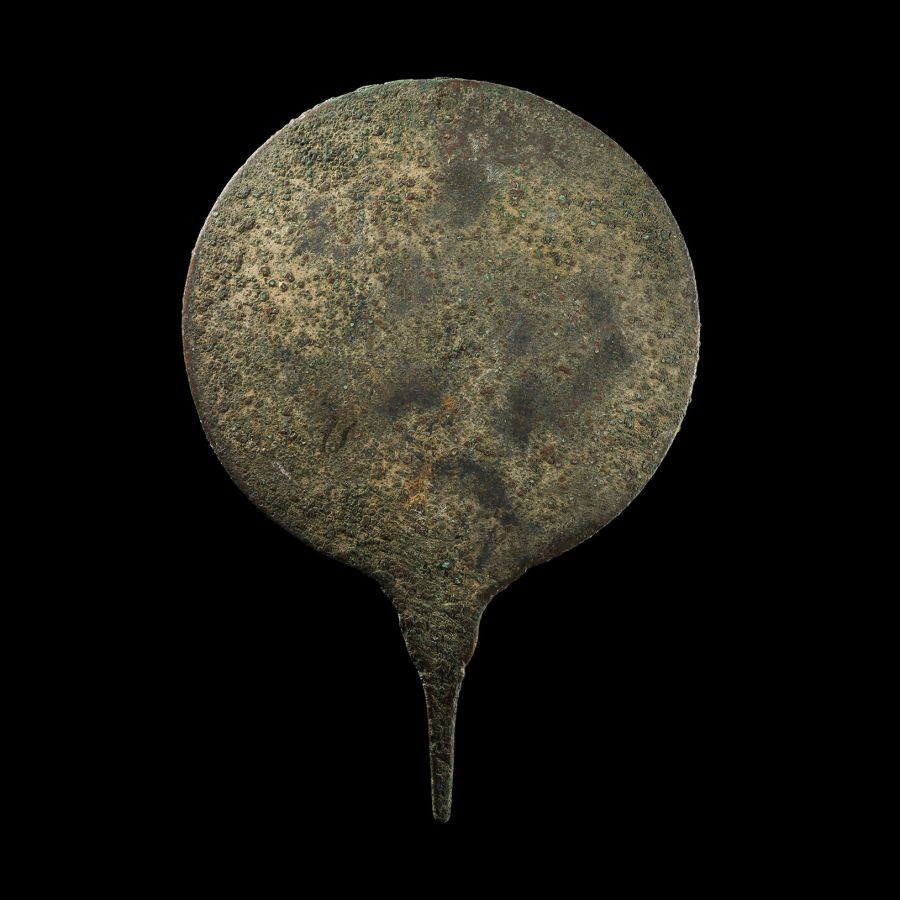
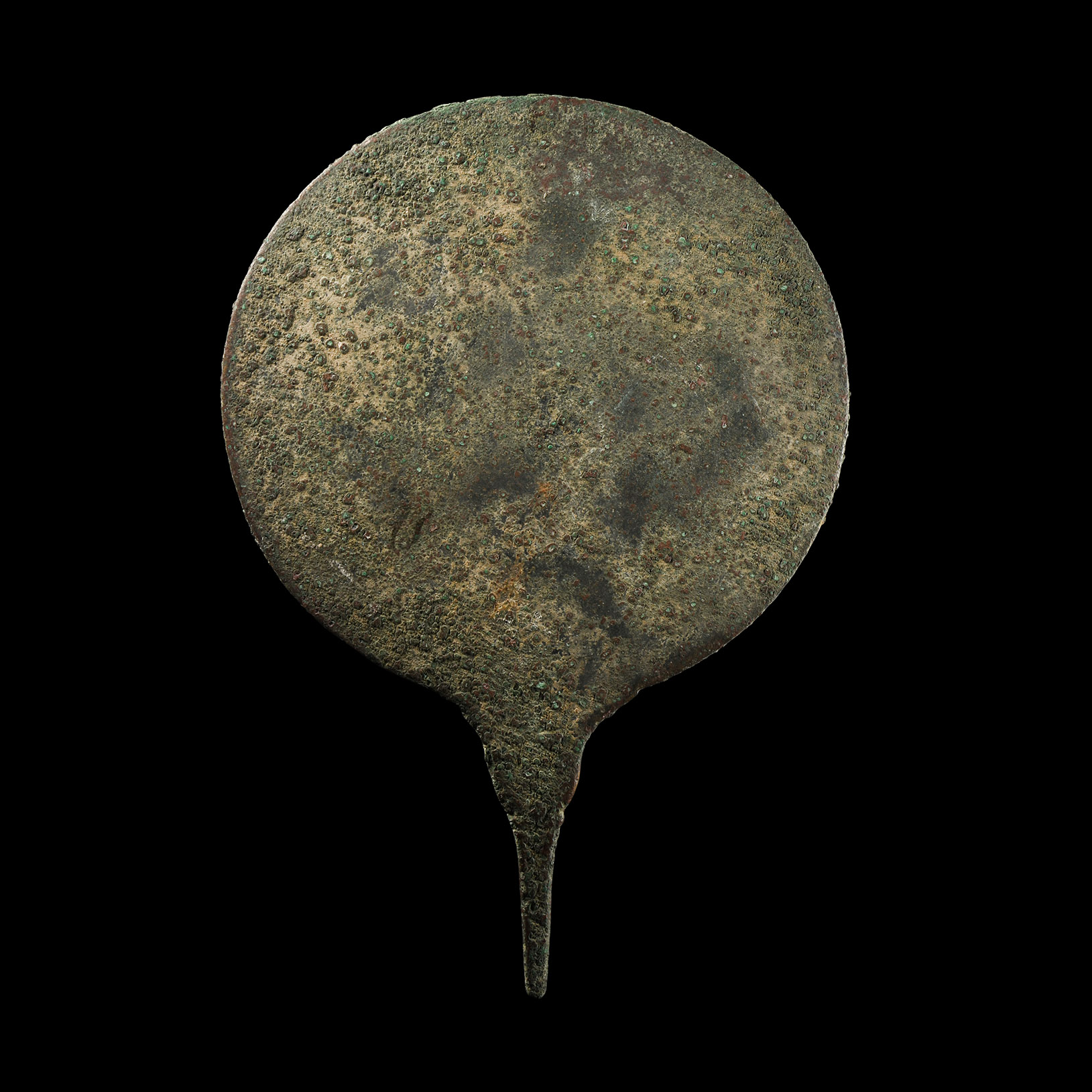
Greek Bronze Handled Mirror
5TH CENTURY B.C.
8 5/8 in. (350 grams, 22 cm).
The discoid head with waisted neck and tapering tang, slightly recessed to one face.
ProvenanceAcquired in Europe before 1990.
CONDITIONTimeLine Auctions follows a vetting process to ensure the authenticity and legality of all items, reinforcing our commitment to integrity and responsible trading. Each antiquity, antique, and coin lot undergoes thorough examination by a vetting committee of at least ten external specialists, professional trade association members, scientists, and archaeologists: Our Vetting Process
AUCTIONS:
TimeLine is a leading auction house specialising in antiquities, ancient art, collectables, natural history, coins, medals, and books. Our auctions offer museums, collectors, historians, and enthusiasts the opportunity to acquire unique and historically significant pieces.
LOT 0521
Greek Bronze Handled Mirror
Estimate £300 - 400€350 - 460 (for guidance only)$410 - 540 (for guidance only)
-
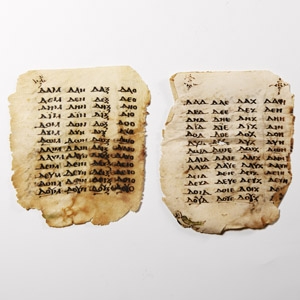
Vellum Manuscript Page Group
Coptic, circa 6th-9th century A.D.Sold for (Inc. bp): £2,860
Two pages from a codex each with four columns of Greek script text, possibly part of an alphabetical listing. 22 grams, 11 x 9 cm each
Acquired 1970s-1996. Property of a North American collector. London collection, 2016. -
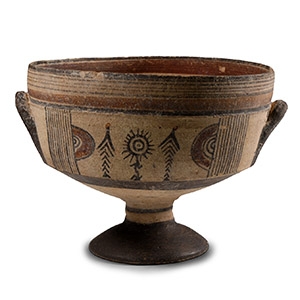
Cypriot Decorated Kylix
850-750 B.C.Sold for (Inc. bp): £2,470
With domed foot and short stem supporting a broad bowl with carination below the rim and two lateral ledge handles; bands of painted concentric rings to the inner face in black and red, similar to the shoulder above panels of vertical stripes, arrows and other motifs; median Maltese cross to one face and bull's eye motif to the other. 685 grams, 21 cm wide
With Sotheby's London, antiquities sale, 17 May 1983, lot 132. Acquired from the above by Mr Leinonen, by descent to his son, Stan Leinonen. On loan to the Detroit Institute of Arts 6 December 1983-24 April, 2019. On view in Hallway East of Rivera Court circa 1989 and again in European Medieval and Renaissance in the 2000s. -
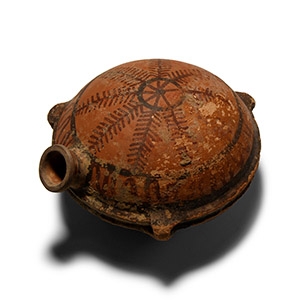
Eastern Mediterranean Flattened Terracotta Vessel with Bichrome Decoration
6th-4th century B.C.Estimate: £300 - 400 (+bp*)
Opening Bid: £150
Composed of a flask-shaped body with three loop handles to the equator for a carry cord, short spout, the upper or outer body displaying a bichrome painted geometric motif. 483 grams, 17 cm wide
Ex Rabi gallery, 1990s. Private collection of Iranian art.
