
Loading, please wait...
LOT 0506
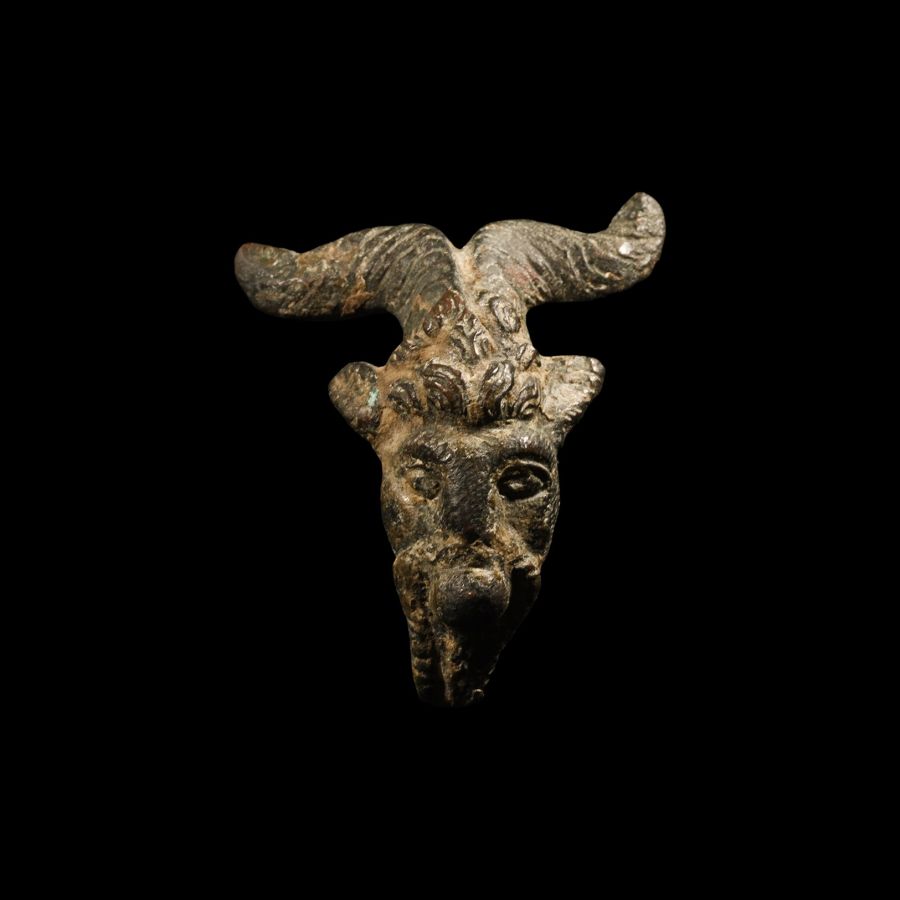
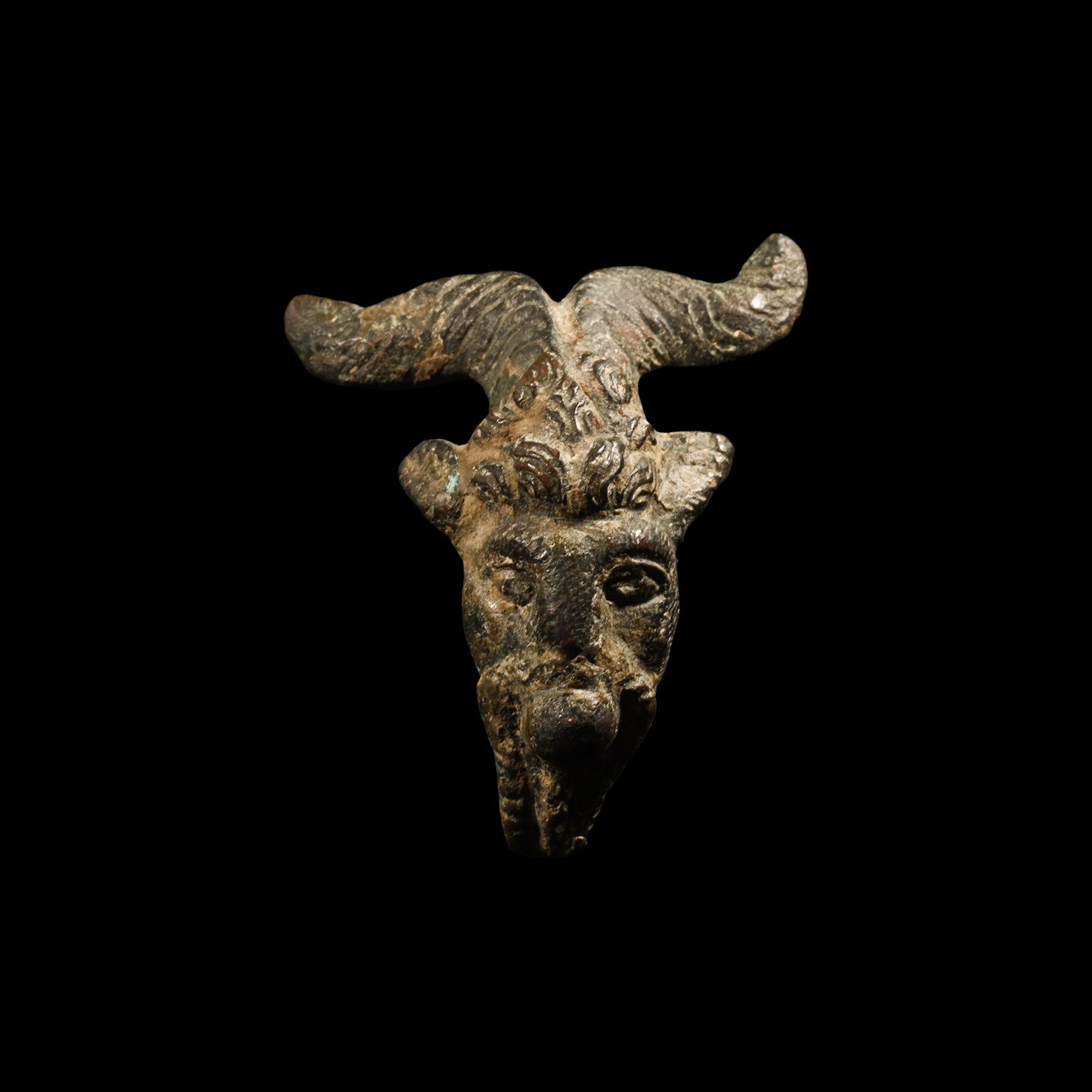
Greek Bronze Handle with Human-Headed Ram
4TH-3RD CENTURY B.C.
1 1/2 in. (22.2 grams, 39 mm).
Featuring stylised horn and tufted coat detailing, the ram's face with humanesque features; curved profile.
ProvenanceCollected from 1969-1999.
From the collection of the late Mr S.M., London, UK.
TimeLine Auctions follows a vetting process to ensure the authenticity and legality of all items, reinforcing our commitment to integrity and responsible trading. Each antiquity, antique, and coin lot undergoes thorough examination by a vetting committee of at least ten external specialists, professional trade association members, scientists, and archaeologists: Our Vetting Process
AUCTIONS:
TimeLine is a leading auction house specialising in antiquities, ancient art, collectables, natural history, coins, medals, and books. Our auctions offer museums, collectors, historians, and enthusiasts the opportunity to acquire unique and historically significant pieces.
-
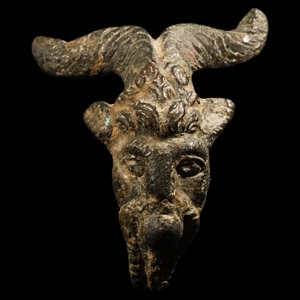
Greek Bronze Handle with Human-Headed Ram
4th-3rd century B.C.Sold for (Inc. bp): £234
Featuring stylised horn and tufted coat detailing, the ram's face with humanesque features; curved profile. 22.2 grams, 39 mm
Collected from 1969-1999. From the collection of the late Mr S.M., London, UK. -
.jpg)
Villanovan Impasto Biconical Urn
Circa 8th century B.C.Sold for (Inc. bp): £650
Black burnished ceramic urn with conical lower body, two flared loop handles, bell-shaped upper body and flat everted rim; band of incised chevrons to the equator, horizontal linear bands and ropework key patterns; one handle restored. 2 kg, 25 cm high
Ex private Orange Country collection. with Ancient Resources Auctions, Auction 34, 14 September 2014, lot 246. Accompanied by a detailed collector's catalogue pages including description and photograph.
Such urns were often deposited with the cremated remains inside, one handle broken off (perhaps part of the funerary rites) and in some case a bronze crested helmet placed over the top of the urn. -
.jpg)
Greek Red-Figure Fragment with Athletes Attributed to the Euaion Painter
Circa 460 B.C.Sold for (Inc. bp): £3,900
From a kylix, the inside painted with two young naked athletes within a medallion, conversing and cleaning their bodies with a strigil, the edge of the medallion decorated with a series of meanders and four crosses; the outside with two naked athletes and other figures, divided by foliage ornaments and volutes. 121 grams, 15.2 cm
Acquired in before 2005. Private collection, Europe. This lot has been checked against the Interpol Database of stolen works of art and is accompanied by search certificate no.11805-206818.
The Euaion painter was a prolific artist of about 460 B.C. His painting - already in the manneristic period of the Attic red figures vases - was more nearly classical in style, although the ancestry of his small-headed, slim figures, is very evident. He introduced a high, sometimes patterned ground line for an upright two-figure group, and preferred the old elaborately patterned borders for tondos and the ground lines outside cups.
