
Loading, please wait...

LOT 0569
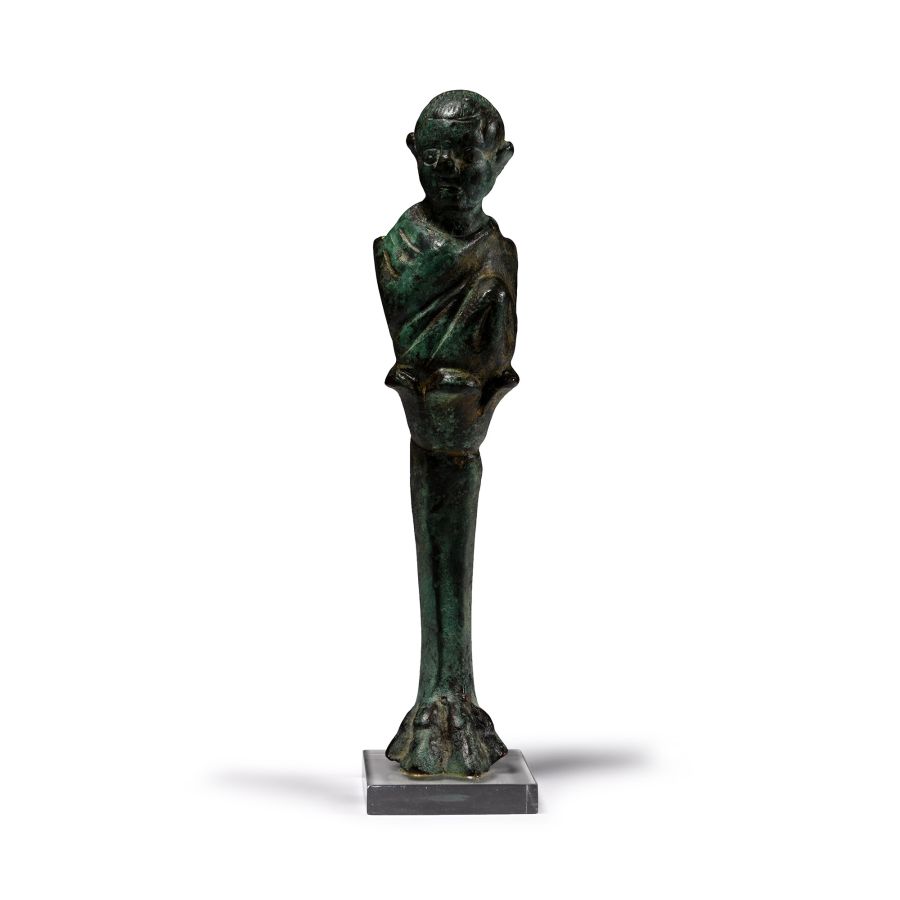
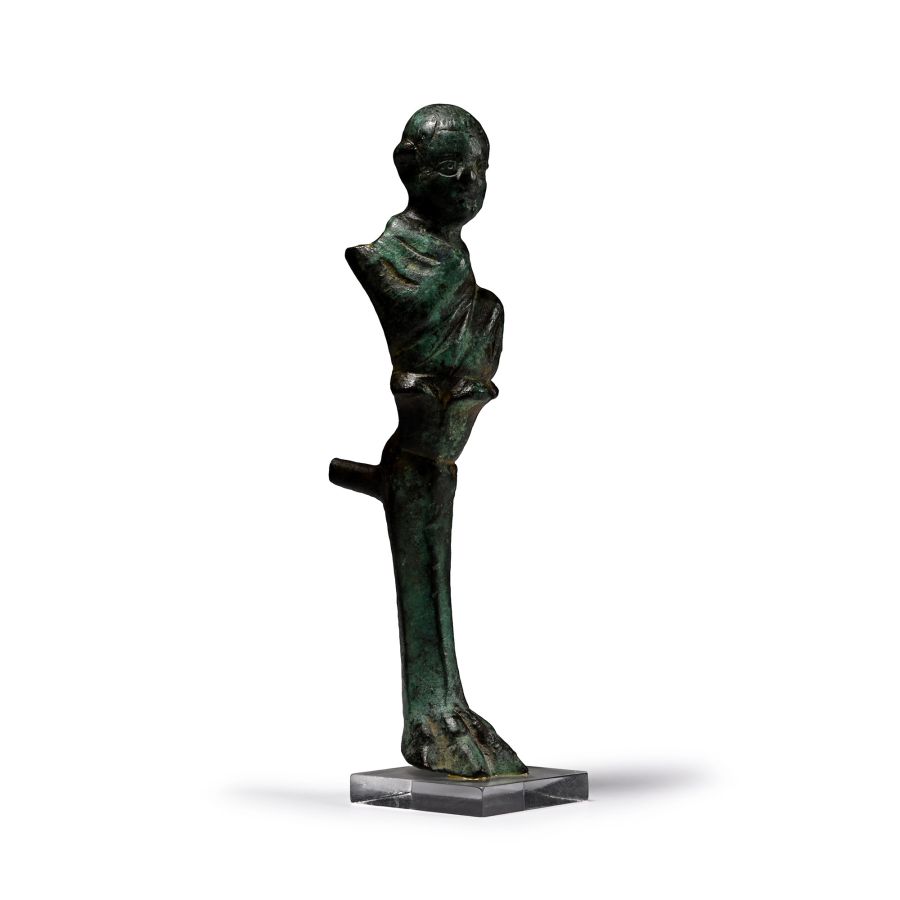
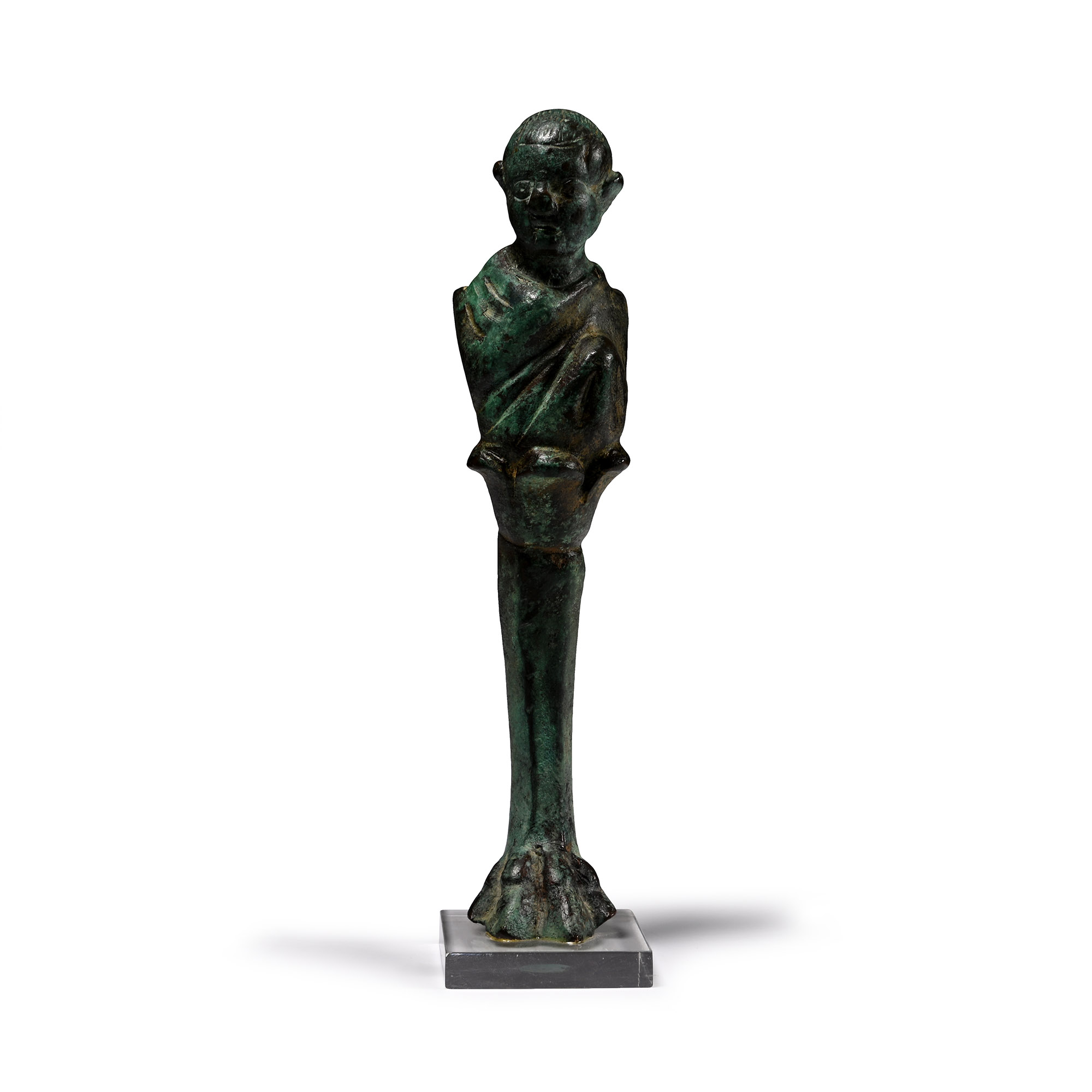
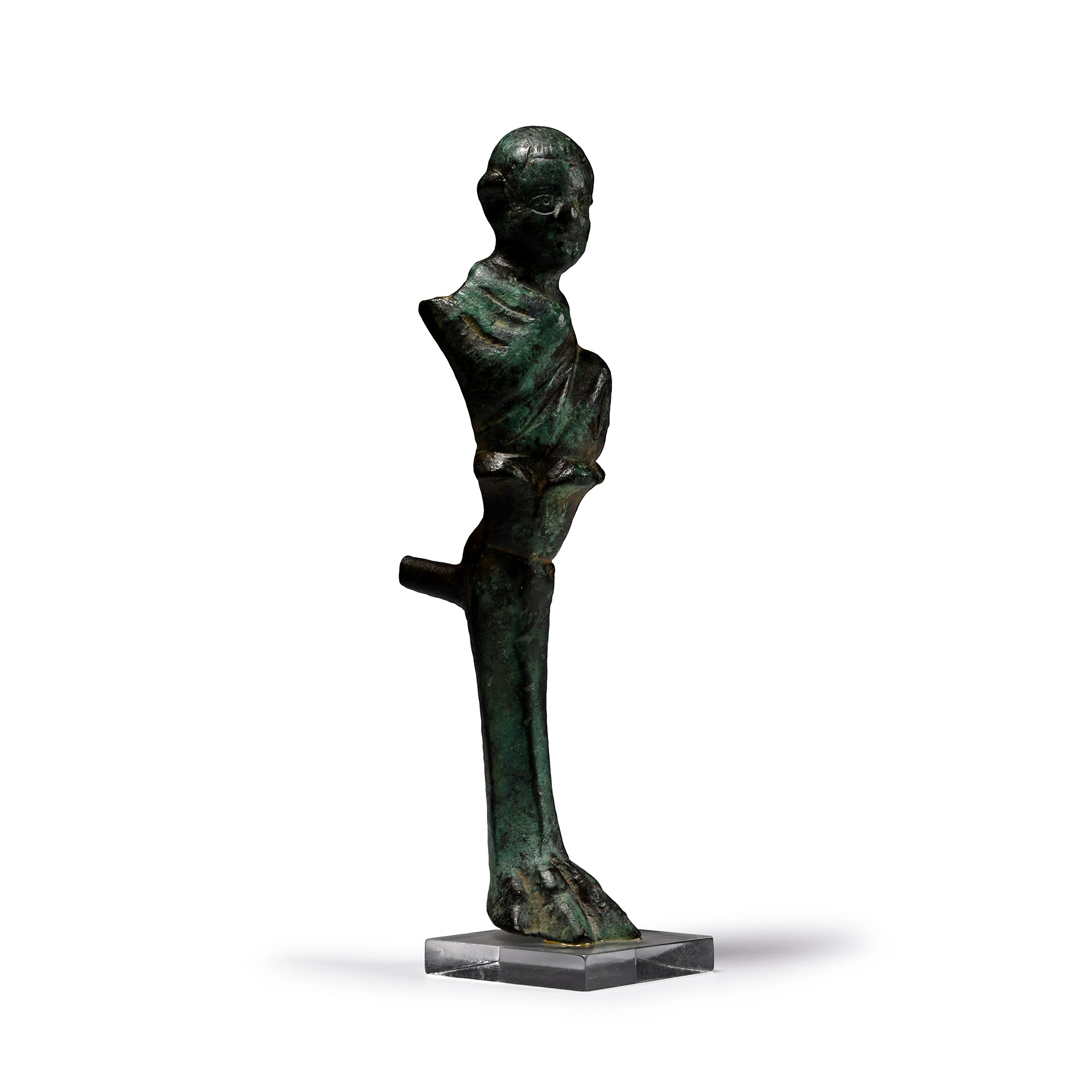
Greek Bronze Furniture Mount with Mime Actor
HELLENISTIC, ALEXANDRIA, 1ST CENTURY B.C.
4 3/4 in. (130 grams total, 11.9 cm including stand).
Modelled with large prominent ears and neatly cut short hair, rounded facial detailing with large eyes and flattened nose, the upper body and hands wrapped inside a pleated cloak, hollow to the reverse; the bust emerging from a lotus flower resting atop a lion's claw foot with a mounting spike on the reverse; mounted on a display stand. [No Reserve]
ProvenanceCollection of Ambassador G.P., nr.126, before 1965.
with Galerie Rhéa, Zurich, Switzerland.
TimeLine Auctions follows a vetting process to ensure the authenticity and legality of all items, reinforcing our commitment to integrity and responsible trading. Each antiquity, antique, and coin lot undergoes thorough examination by a vetting committee of at least ten external specialists, professional trade association members, scientists, and archaeologists: Our Vetting Process
AUCTIONS:
TimeLine is a leading auction house specialising in antiquities, ancient art, collectables, natural history, coins, medals, and books. Our auctions offer museums, collectors, historians, and enthusiasts the opportunity to acquire unique and historically significant pieces.
-
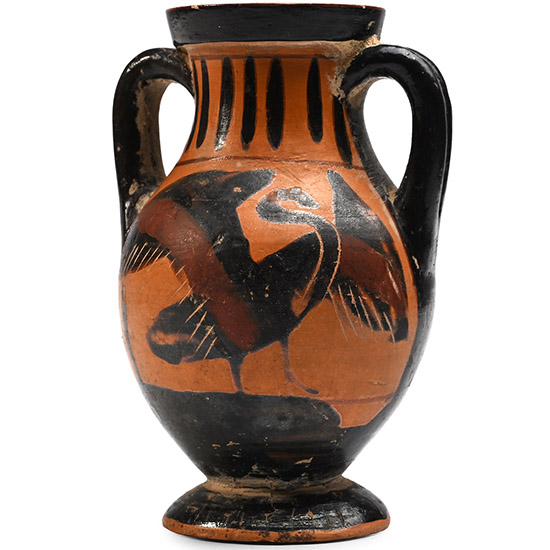
Greek Black-Figure Miniature Amphora with Swan
Attic, 6th-5th century B.C.Estimate: £4,000 - 6,000 (‡+bp*)
Opening Bid: £2,000
With two handles and an everted rim; parallel, vertical strokes on the neck and below a swan with its wings open and neck elegantly curved, a staff on the background. 57.1 grams, 76 mm
Swiss private collection, assembled in the 1960s and 1970s. Acquired by the present owner in 2004. Accompanied by an academic report by Dr Raffaele D’Amato. This lot has been checked against the Interpol Database of stolen works of art and is accompanied by a search certificate number no.13019-246754.
The swan was a favoured motif in Greek art, admired for its elegance and associations with divinity and beauty. In mythology, the bird was sacred to Apollo, god of music and light, whose chariot was said to be drawn by swans on his annual journey to the land of the Hyperboreans. It was likewise linked to Aphrodite, symbolising love and sensuality, and appears in scenes celebrating harmony and the ideal of beauty. The swan also featured prominently in the myth of Leda and the Swan, in which Zeus, transformed into the bird, inspired numerous representations across Greek art. -
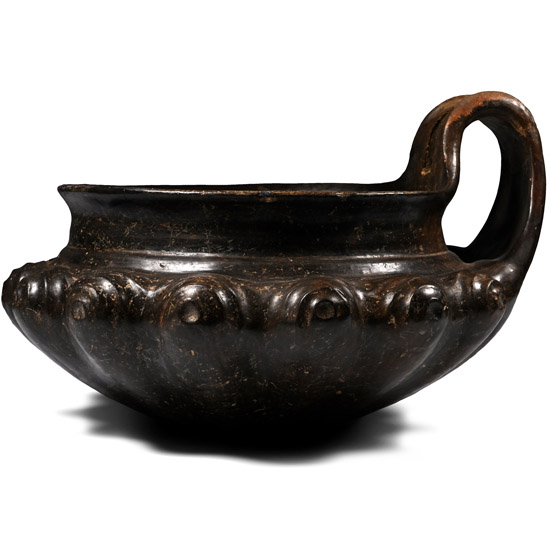
Monumental Early Etruscan Impasto Kyathos
7th century B.C.Sold for (Inc. bp): £975
Fluted body tapering to a narrow foot, the shoulders decorated with tiered bosses, short neck with flared mouth; wide handle perforated with a triangle. 1.18 kg, 25 cm wide
Estate of Mr Bruno Fellinger (1926-2016), Küsnacht, Switzerland. with Galerie Rhéa, Zurich, Switzerland. This lot has been checked against the Interpol Database of stolen works of art and is accompanied by a search certificate number no.12648-236390.
Buccheroid impasto is the name attributed by modern archaeologists to wheel thrown pottery. The clay in these specimens is less refined, and the firing techniques less precise than in the later bucchero ware. -
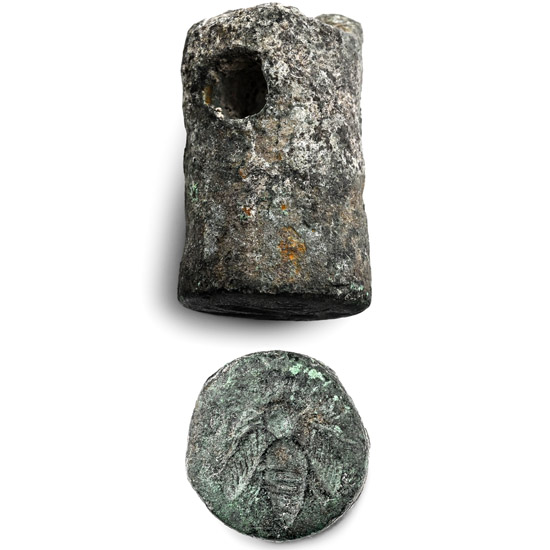
Greek Die with Ephesus Bee
2nd-1st century B.C.Sold for (Inc. bp): £468
A copper-lead alloy columnar block with broad piercing, a transverse channel to the upper face; incuse bee image with enigmatic text. 13.71 grams, 19 mm
From the collection of a gentleman, acquired on the London art market in the 1990s.
