
Loading, please wait...
LOT 0050
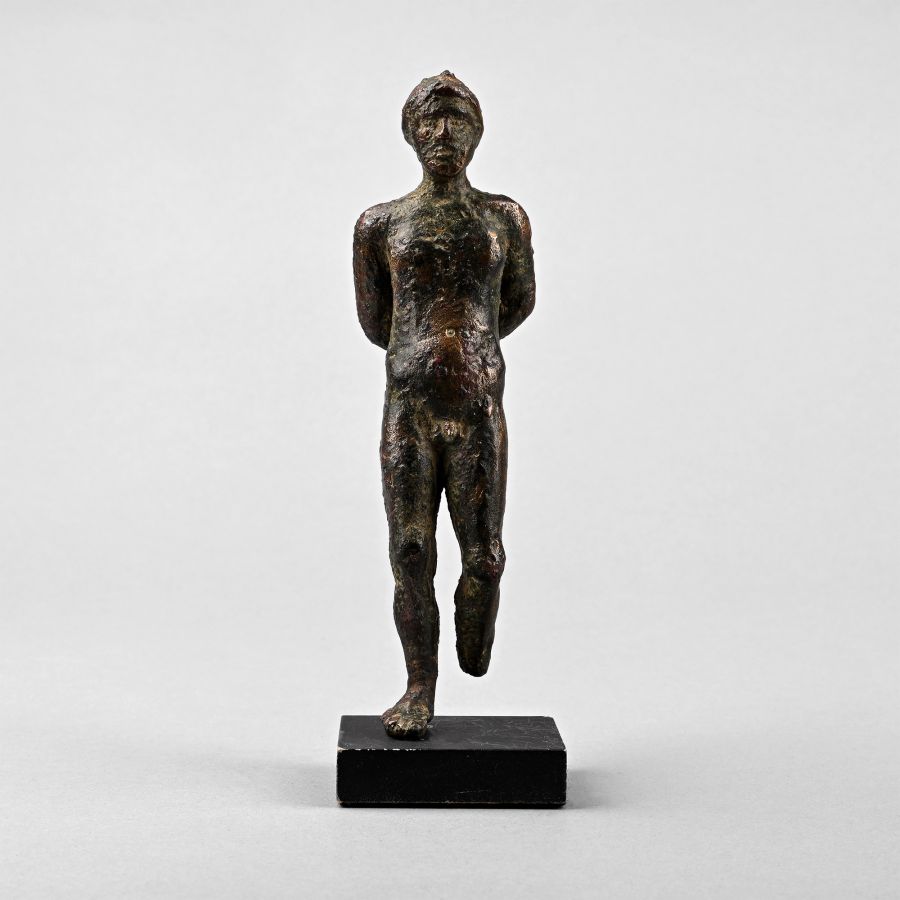
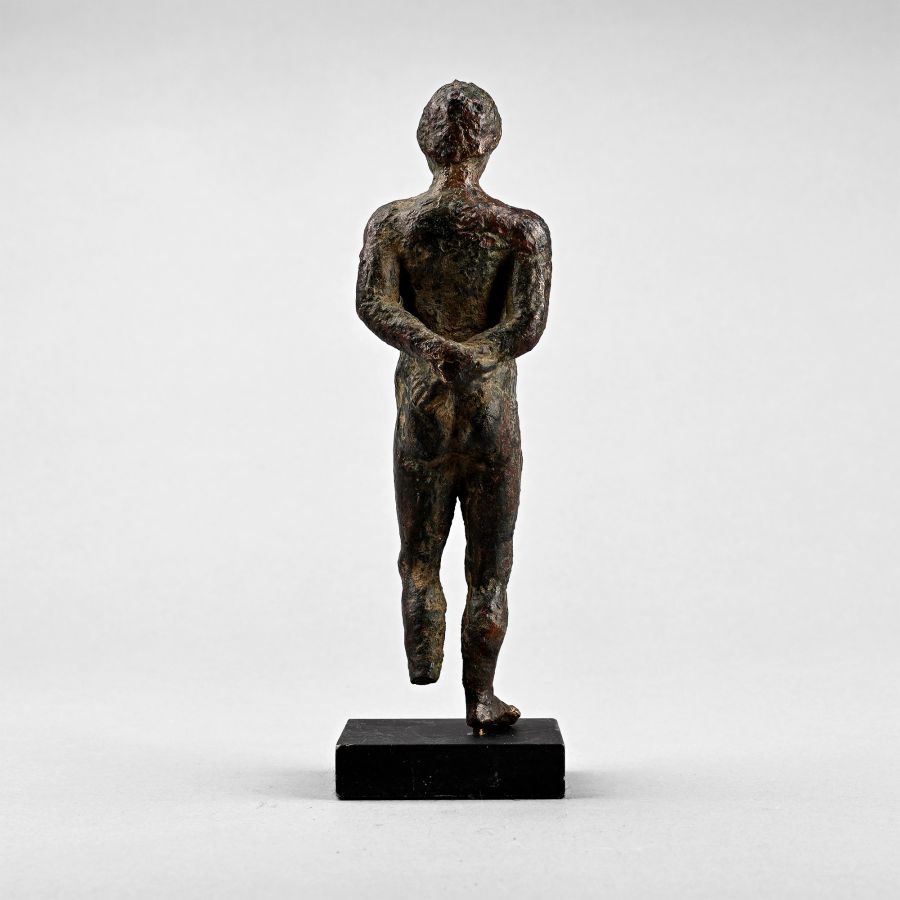
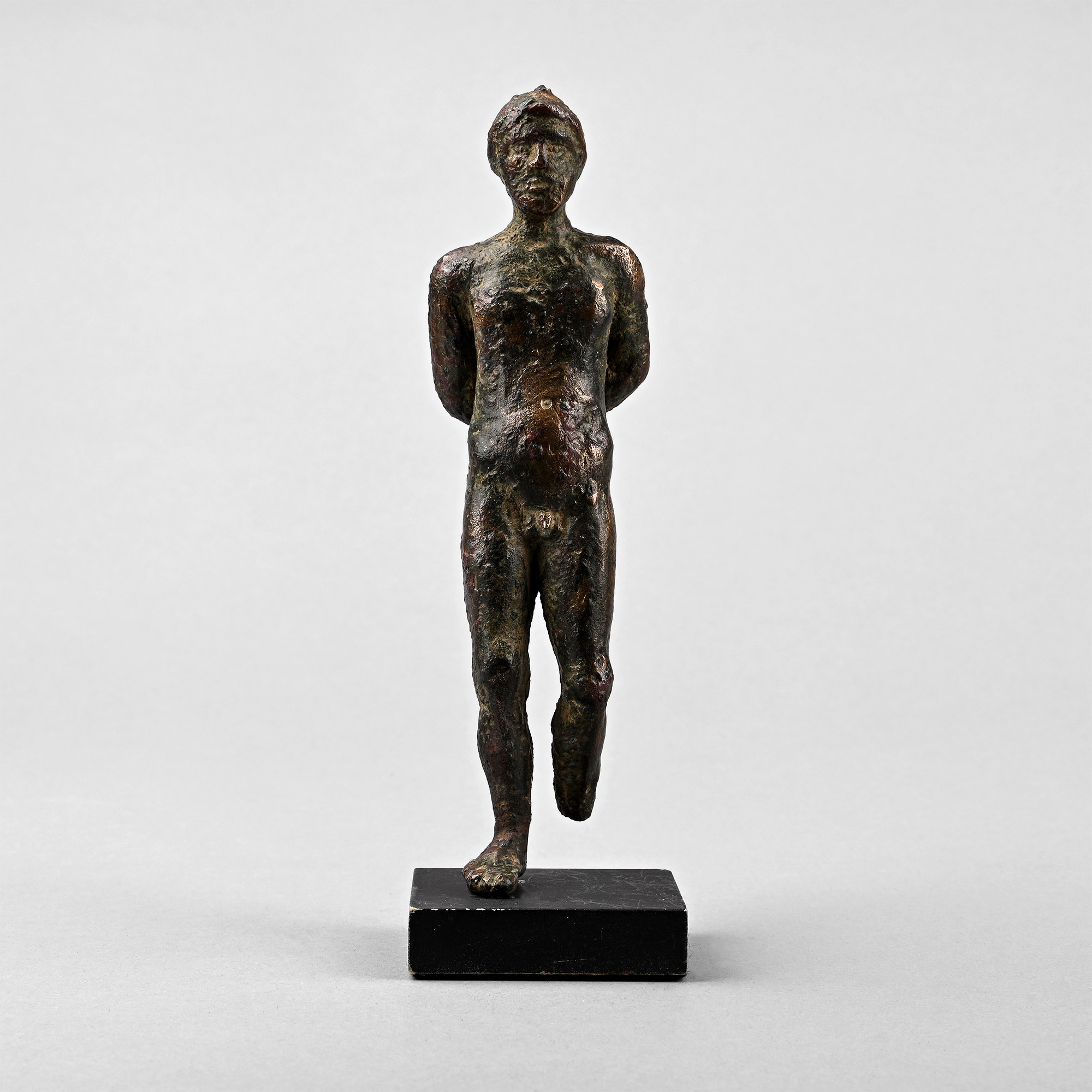
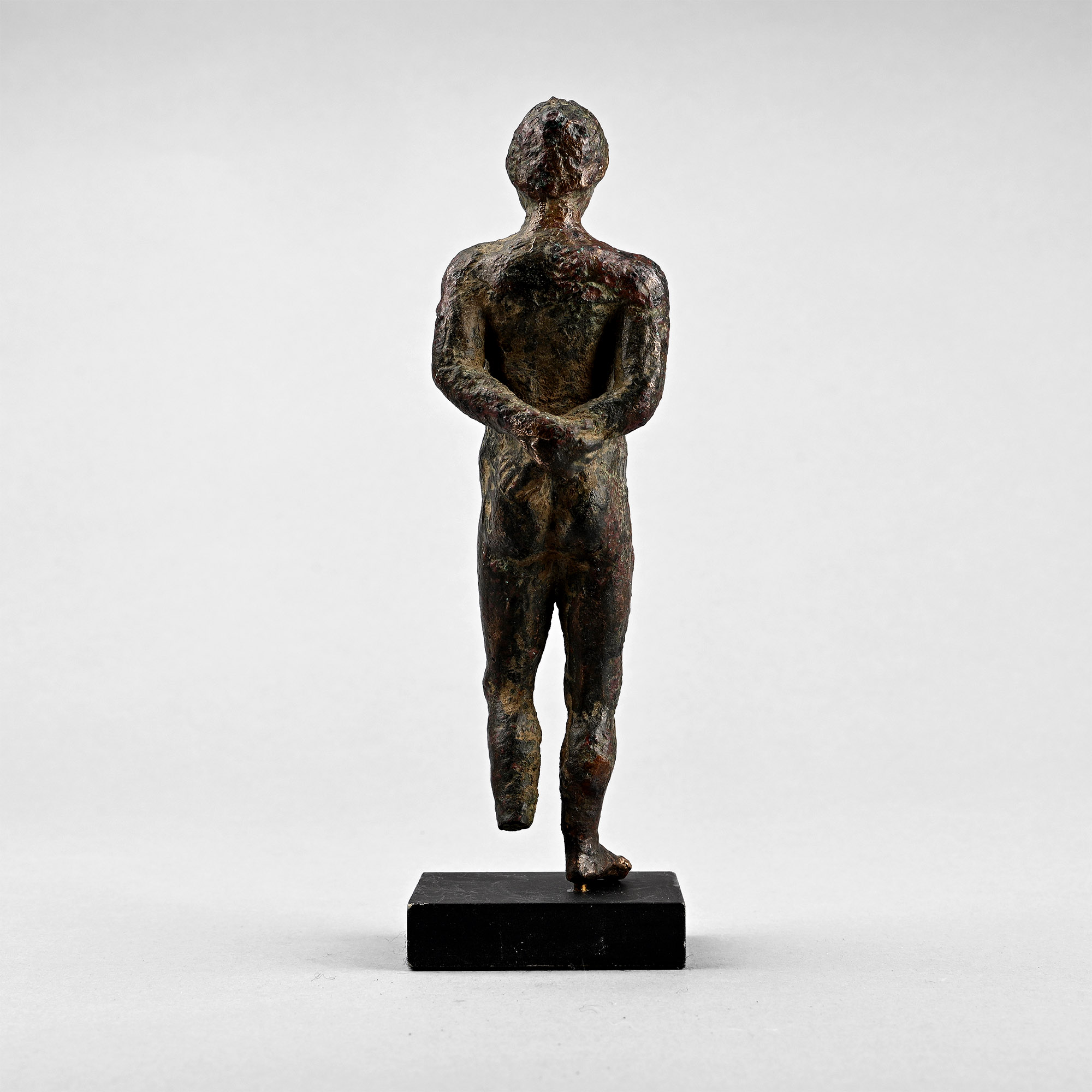
Greek Bronze Figure of a Bound Captive
HELLENISTIC, 2ND CENTURY B.C.
6 5/8 in. (491 grams, 17 cm including stand).
Modelled in the round nude male standing with hands bound behind his back; with short cropped hair and slender figure; left foot absent; mounted on a custom-made stand.
ProvenanceEx S.K. collection.
Acquired on the German art market, July 1995.
Accompanied by an academic report by Dr Raffaele D'Amato.
This lot has been checked against the Interpol Database of stolen works of art and is accompanied by a search certificate number no.12518-232076.
Cf. Bienkoski, P., Les Celtes dans les arts mineurs Gréco-Romains, avec des recherches iconographiques sur quelques autres peoples barbares, Cracovie, 1928, figs.11, 87.
FootnotesThe character's hairstyle of the statuette is simple, and his hair is short, not treated with chalk like that of the famous ‘dying Galatian’ from Pergamon. The gaze is fixed on the distance, while the bony, beardless, long-limbed figure conveys the prisoner's energy. The nose here takes on a strong characteristic together with the broad jaw, which is also recognisable in later statuettes of Roman age. These characteristics, combined with those of nudity, allow us to recognise the figure of the prisoner as a Celtic warrior.
CONDITIONTimeLine Auctions follows a vetting process to ensure the authenticity and legality of all items, reinforcing our commitment to integrity and responsible trading. Each antiquity, antique, and coin lot undergoes thorough examination by a vetting committee of at least ten external specialists, professional trade association members, scientists, and archaeologists: Our Vetting Process
AUCTIONS:
TimeLine is a leading auction house specialising in antiquities, ancient art, collectables, natural history, coins, medals, and books. Our auctions offer museums, collectors, historians, and enthusiasts the opportunity to acquire unique and historically significant pieces.
-
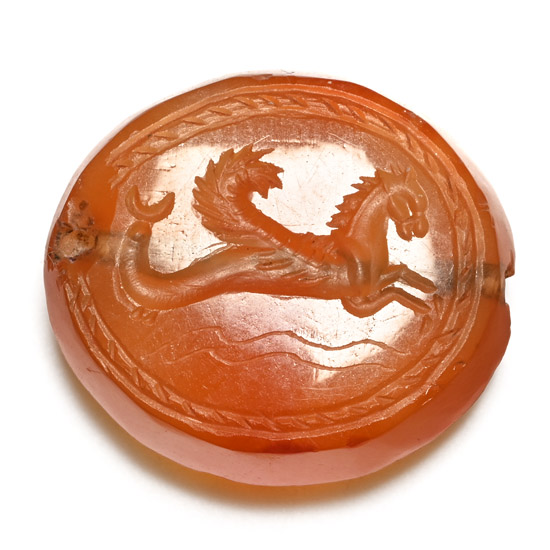
Greek Carnelian Gemstone with Hippocamp
4th century B.C.Sold for (Inc. bp): £650
Scaraboid type with incuse design to the underside of a winged hippocamp inside a ropework border, possibly later engraved water waves; supplied with a museum-quality impression. 2.29 grams 16 mm
From the private collection of a European gentleman (1942-2024), formed since the 1970s. -
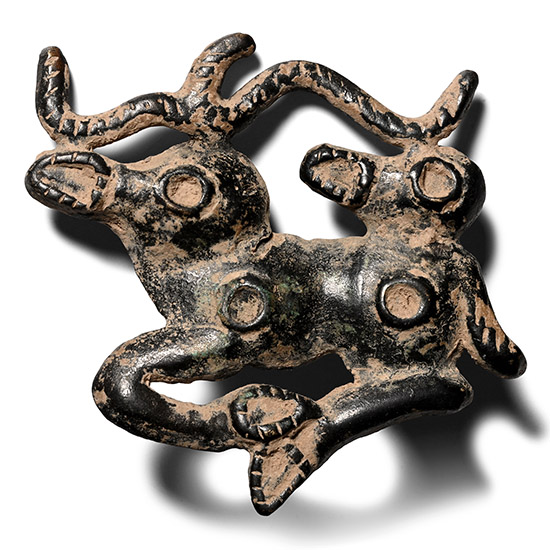
Scythian Bronze Galloping Stag Strap Decoration
Circa 5th-3rd century B.C.Estimate: £200 - 300 (+bp*)
Current Winning Bid: £100
Modelled as a stylised quadruped with its legs folded beneath the body, long curving horns and circular cells on the body and eye, two lugs on the reverse. 24.3 grams, 51 mm
Ex Abelita collection, 1990s. -
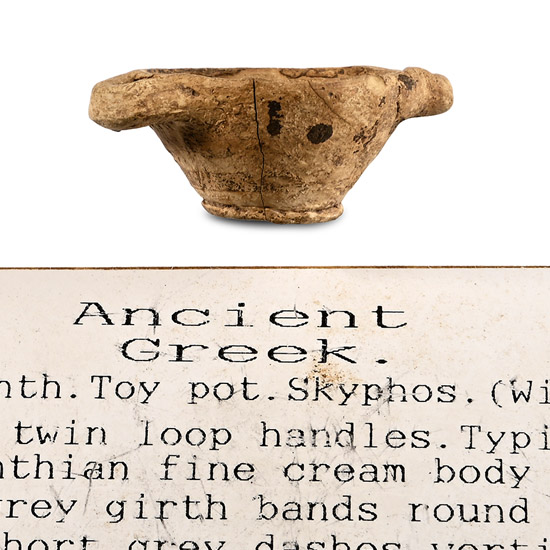
Greek Terracotta Toy Skyphos
Corinthian, circa 600 B.C.Sold for (Inc. bp): £52
Miniature skyphos with loop handles to the rim, painted horizontal bands to sidewall and vertical slashes; supplied with old collector's record card. 4.46 grams, 40 mm
From the collection of the late Bernard C. Pickard, Hampshire, UK, the owner of Bernard C. Pickard Antiquities, which closed in 1987, he had been collecting since the mid 1950s.
Bernard Pickard was a close friend of Richard Hattatt, the renowned author of several books on ancient brooches. Hattatt acknowledges in his first book, Ancient & Romano-British Brooches, published in 1982, that Mr Pickard first aroused his interest in brooches and inspired him in writing his books during his retirement. Mr Pickard also wrote the foreword to the section on Roman animal brooches, op. cit. p.158-160.
