
Loading, please wait...
LOT 0565
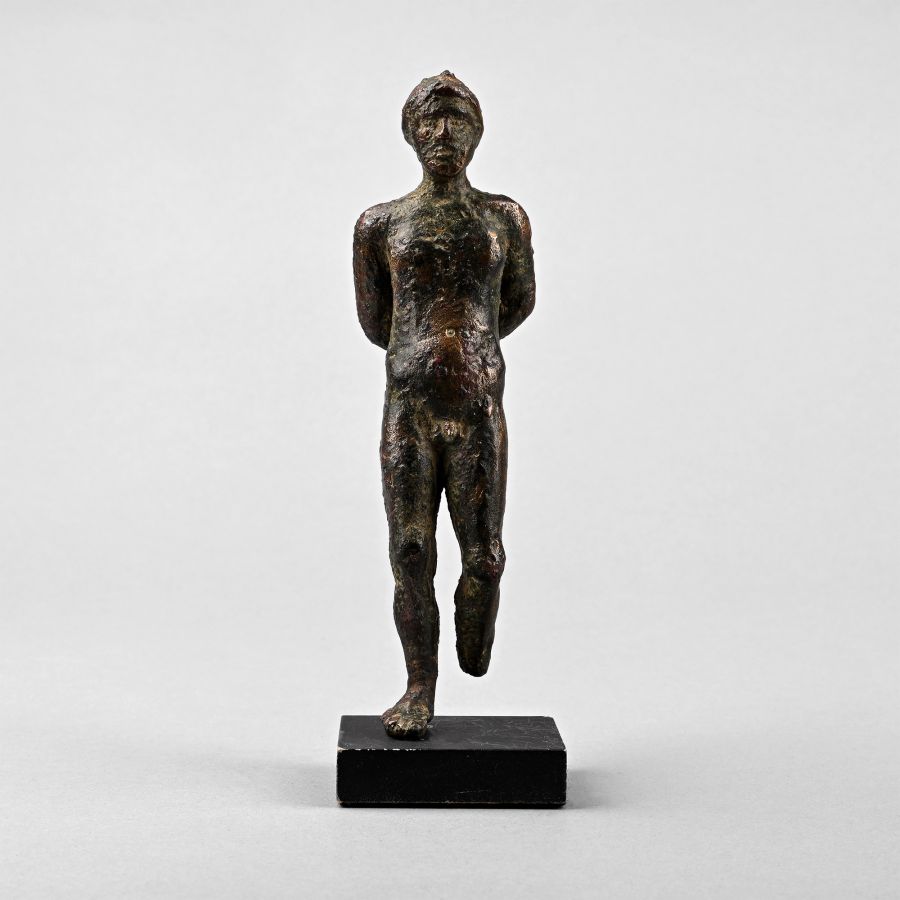
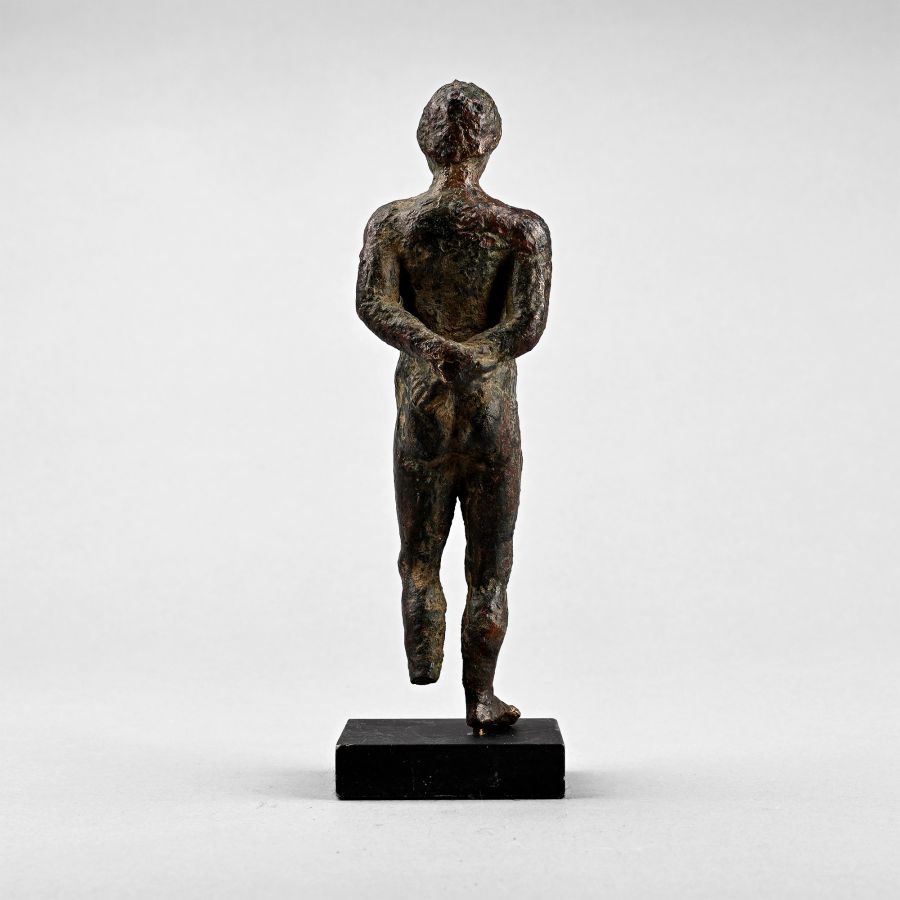
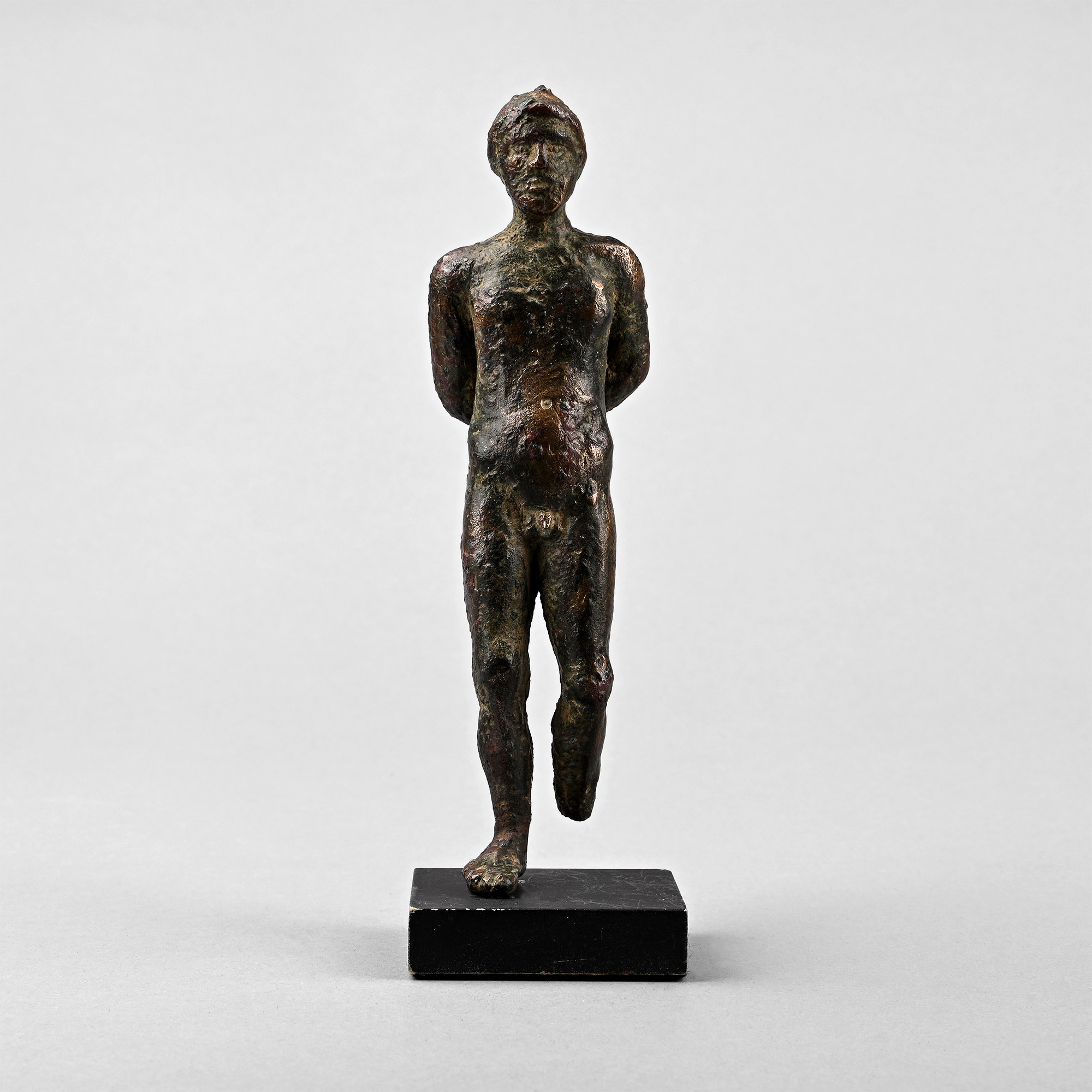
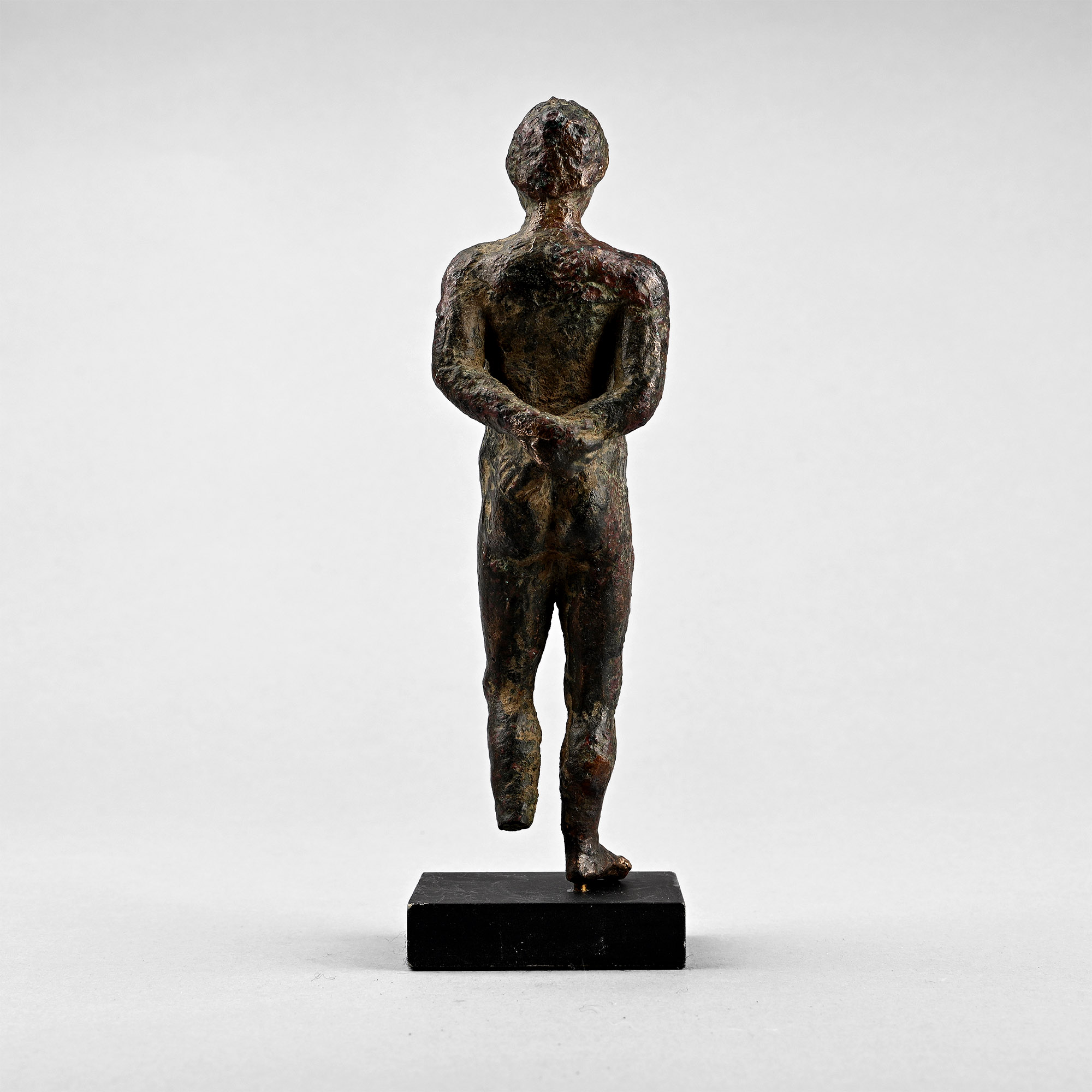
Greek Bronze Figure of a Bound Captive
HELLENISTIC, 2ND CENTURY B.C.
6 5/8 in. (491 grams, 17 cm including stand).
Modelled in the round nude male standing with hands bound behind his back; with short cropped hair and slender figure; left foot absent; mounted on a custom-made stand.
ProvenanceEx S.K. collection.
Acquired on the German art market, July 1995.
Accompanied by an academic report by Dr Raffaele D'Amato.
This lot has been checked against the Interpol Database of stolen works of art and is accompanied by a search certificate number no.12518-232076.
Cf. Bienkoski, P., Les Celtes dans les arts mineurs Gréco-Romains, avec des recherches iconographiques sur quelques autres peoples barbares, Cracovie, 1928, figs.11, 87.
FootnotesThe character's hairstyle of the statuette is simple, and his hair is short, not treated with chalk like that of the famous ‘dying Galatian’ from Pergamon. The gaze is fixed in the distance, while the bony, beardless and long-limbed figure expresses the prisoner's energy. The nose here takes on a strong characteristic together with the broad jaw, which is also recognizable in later statuettes of Roman age. These characteristics, combined with those of nudity, allow us to recognize the figure of the prisoner as a Celtic warrior.
warrior.
TimeLine Auctions follows a vetting process to ensure the authenticity and legality of all items, reinforcing our commitment to integrity and responsible trading. Each antiquity, antique, and coin lot undergoes thorough examination by a vetting committee of at least ten external specialists, professional trade association members, scientists, and archaeologists: Our Vetting Process
AUCTIONS:
TimeLine is a leading auction house specialising in antiquities, ancient art, collectables, natural history, coins, medals, and books. Our auctions offer museums, collectors, historians, and enthusiasts the opportunity to acquire unique and historically significant pieces.
LOT 0565
Greek Bronze Figure of a Bound Captive
Estimate £3,000 - 4,000€3,480 - 4,640 (for guidance only)$4,050 - 5,400 (for guidance only)
-
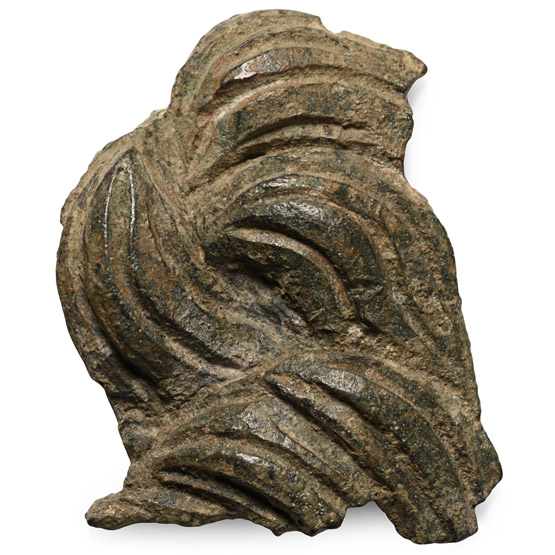
Greek Bronze Beard Fragment from a Life-Size Statue
Hellenistic, 2nd-1st century B.C.Sold for (Inc. bp): £169
Section from a groomed beard showing neatly arranged curls with incised striations. 20.77 grams, 46 mm
London, UK, art market, 1980s. Private collection, London, UK. -
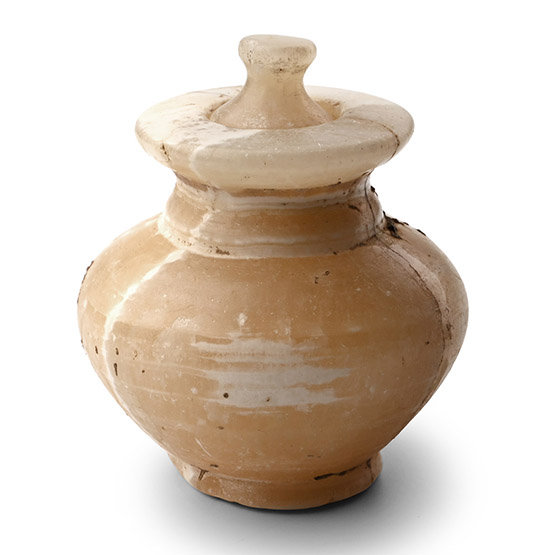
Greek Alabaster Pyxis
Mid 1st millennium B.C.Estimate: £350 - 450 (‡+bp*)
Opening Bid: £175
Barrel-shaped in profile with flared foot, broad shoulder and gusseted neck, flange to the mouth; knop handle to lid. 168 grams, 68 mm
Collection Mr. K. Ex collection Mr. H, acquired in Switzerland in the early 2000. Private collection, 2010. -
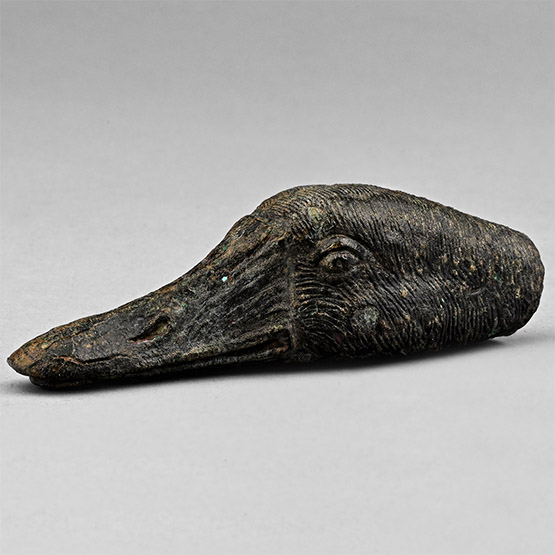
Greek Bronze Duck's Head
3rd-2nd century B.C.Sold for (Inc. bp): £1,690
Modelled in the round with realistic features, textured plumage, rounded beak. 236 grams, 10.1 cm
Acquired in the mid 1980s-1990s. Private collection, Switzerland, thence by descent. Private collection, since the late 1990s. This lot has been checked against the Interpol Database of stolen works of art and is accompanied by a search certificate number no.12378-226677.
